Author

Darcy Smith - page 12

Darcy Smith has 283 articles published.

Bringing History into Modern Cider-Making at Twin Island Cider
in 2021/Grow Organic/Marketing/Spring 2021/Tools & Techniques

Katie Selbee

“Natural” has always been a concept at the centre of our cider production, and over the past year I have been able to bring that ideal into our most basic equipment: fermentation vessels.

Just over a year ago, we were at a point of deciding whether to invest in more wood barrels or stainless-steel tanks for our production space, when I stumbled upon a documentary about ancient Georgian wine qvevri. Qvevri are large earthenware vessels used for fermenting and storing wine. These huge, hand-built clay pots are still being made today in Georgia just the same as they have been made for thousands of years, even down to the native clay they dig themselves.

This launched me on an investigation into whether our native Gulf Islands clay—Twin Island Cider is based on Pender Island—might be usable for low-fire earthenware, too. Luckily, a few test firings confirmed that it was.

Though I haven’t worked much with clay in the past, I am also lucky to have a professional potter living next door (Nancy Walker of talkingclay.ca). As I learn from her advice as well as footage of Georgian qvevri-building, I have been hand-building pots and gradually scaling up to vessels that hold around 150 litres, measuring about 35 inches tall. When I can problem-solve finding or building a larger sized kiln, I will scale up to larger sizes. For now, we are busy experimenting with fermenting and aging in the earthen clay and learning as much as we can about its effects on the finished cider.

It’s hard to say what impact using qvervi will have on the cider itself at this point as we’ve only made one batch and have been occasionally tasting another that is still aging in the clay. The first batch we made has a wonderfully punchy, tangy character, and we did notice it has a more mature profile than other ciders would be at its young age, likely due to the micro-oxidation effects mellowing the acids faster. We’ll do more comparative batches as we go—aging the same batch in stainless with clay to compare. It is safe to say this is a direction we will wholeheartedly be pursuing and improving on for the long term.

The main reason we are excited about clay is that it imparts less flavour than most wooden barrels, but it still allows some micro-oxidation—unlike stainless steel. And it also adds another layer of “terroir” that makes so much sense for our hyper-local cider: fermenting and aging in the material of its home.
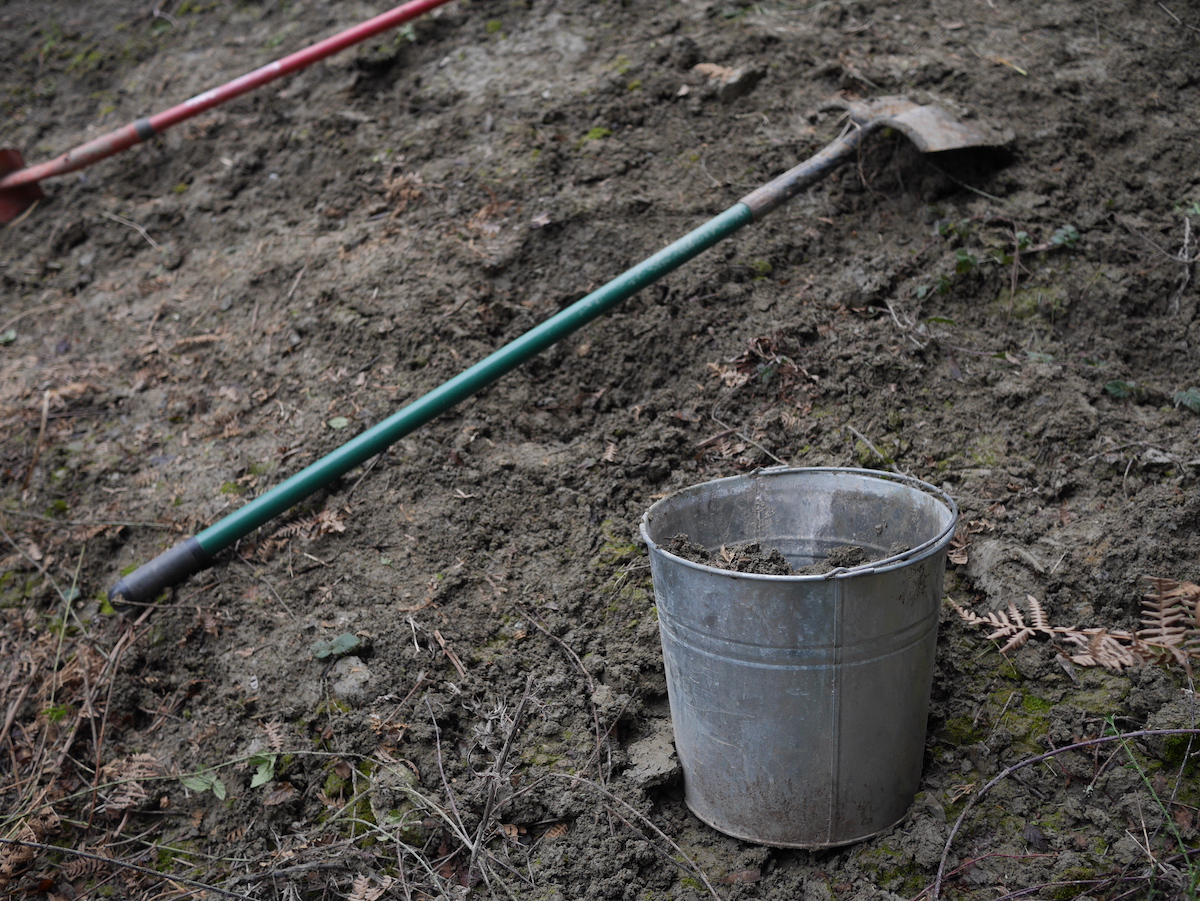
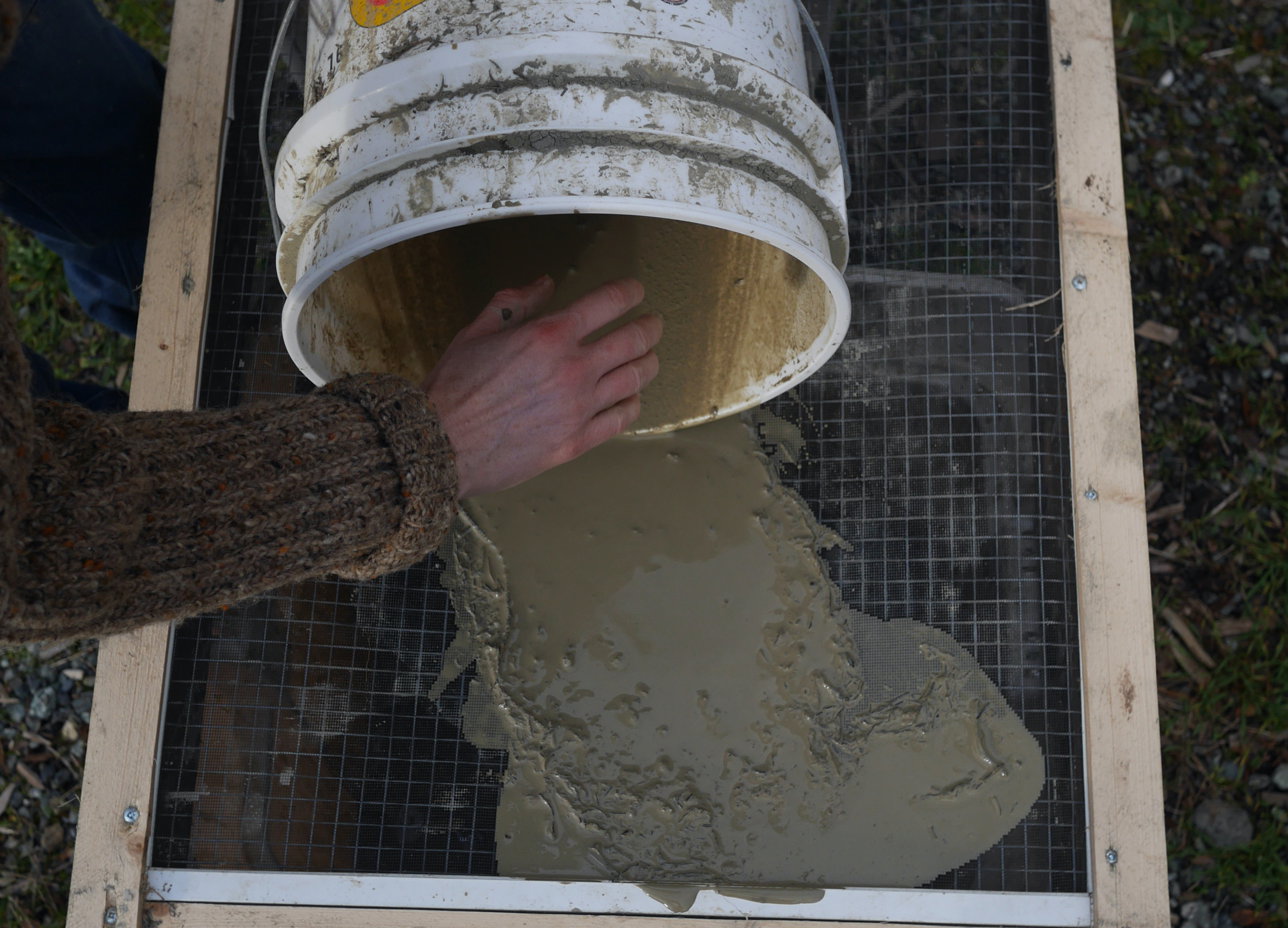
Raw clay is collected from a large pile of clay, unearthed some years ago when our cidery partners/landholders Sandra and Noel had an irrigation pond dug.


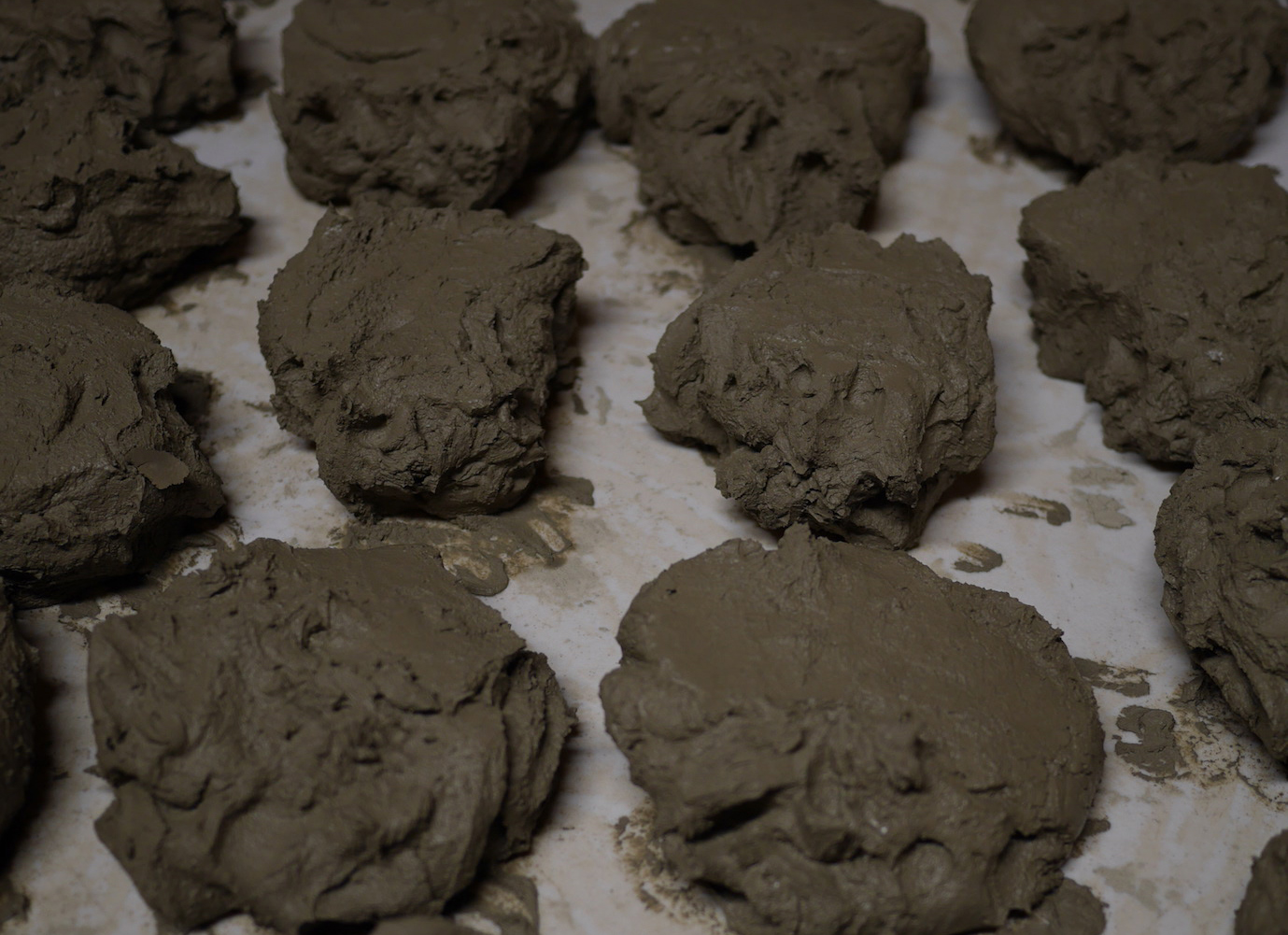
The clay is mixed with water into a slurry and then poured through a fine mesh to remove any coarse particles and rocks.


The clay is then settled-out and allowed to dry until it is elastic and workable.


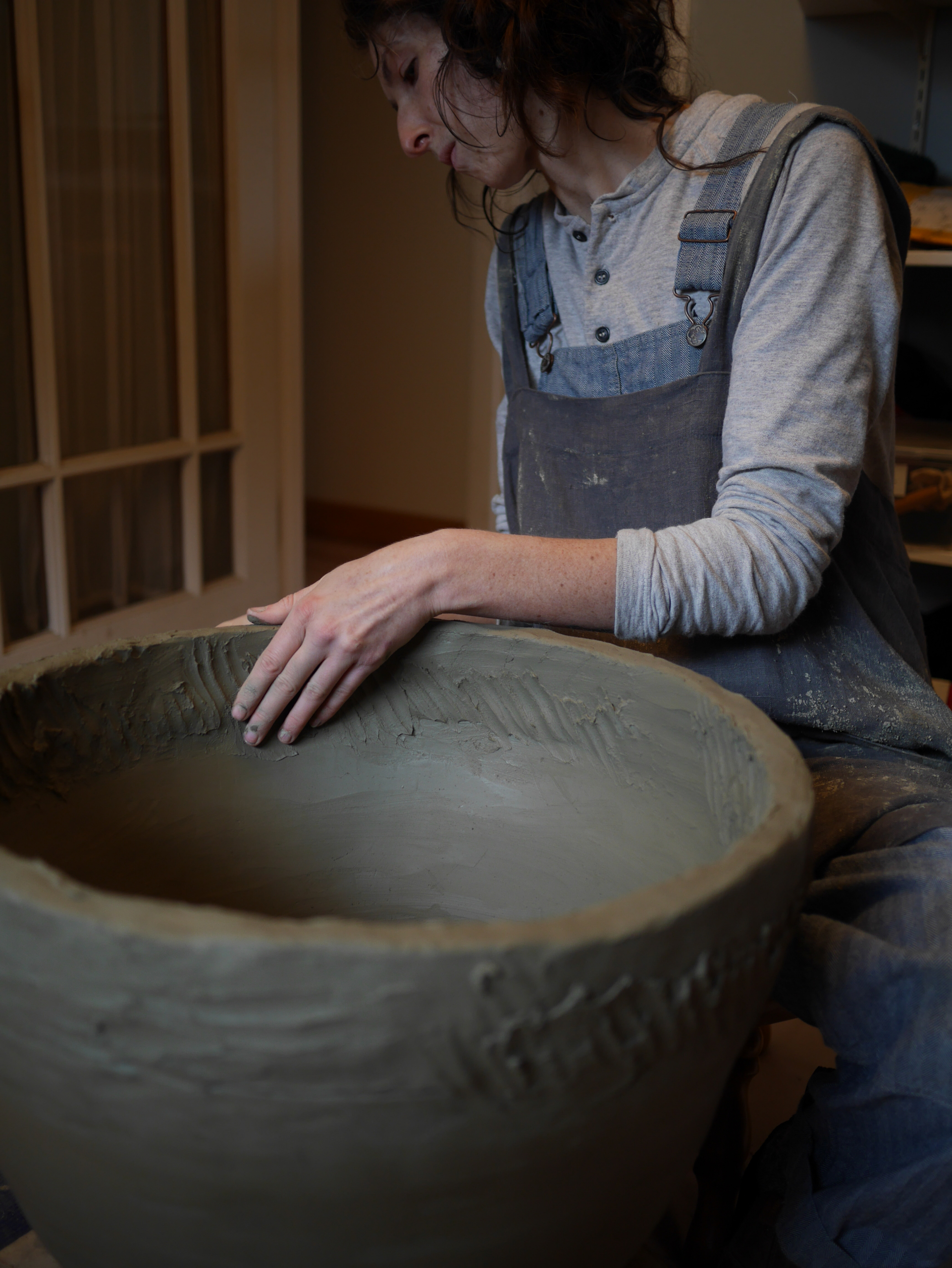
The vessels are hand built without a pottery wheel, in the traditional style of Georgian qvevri. One 3-inch layer is added per day. A 150-litre pot takes about 12 days total.


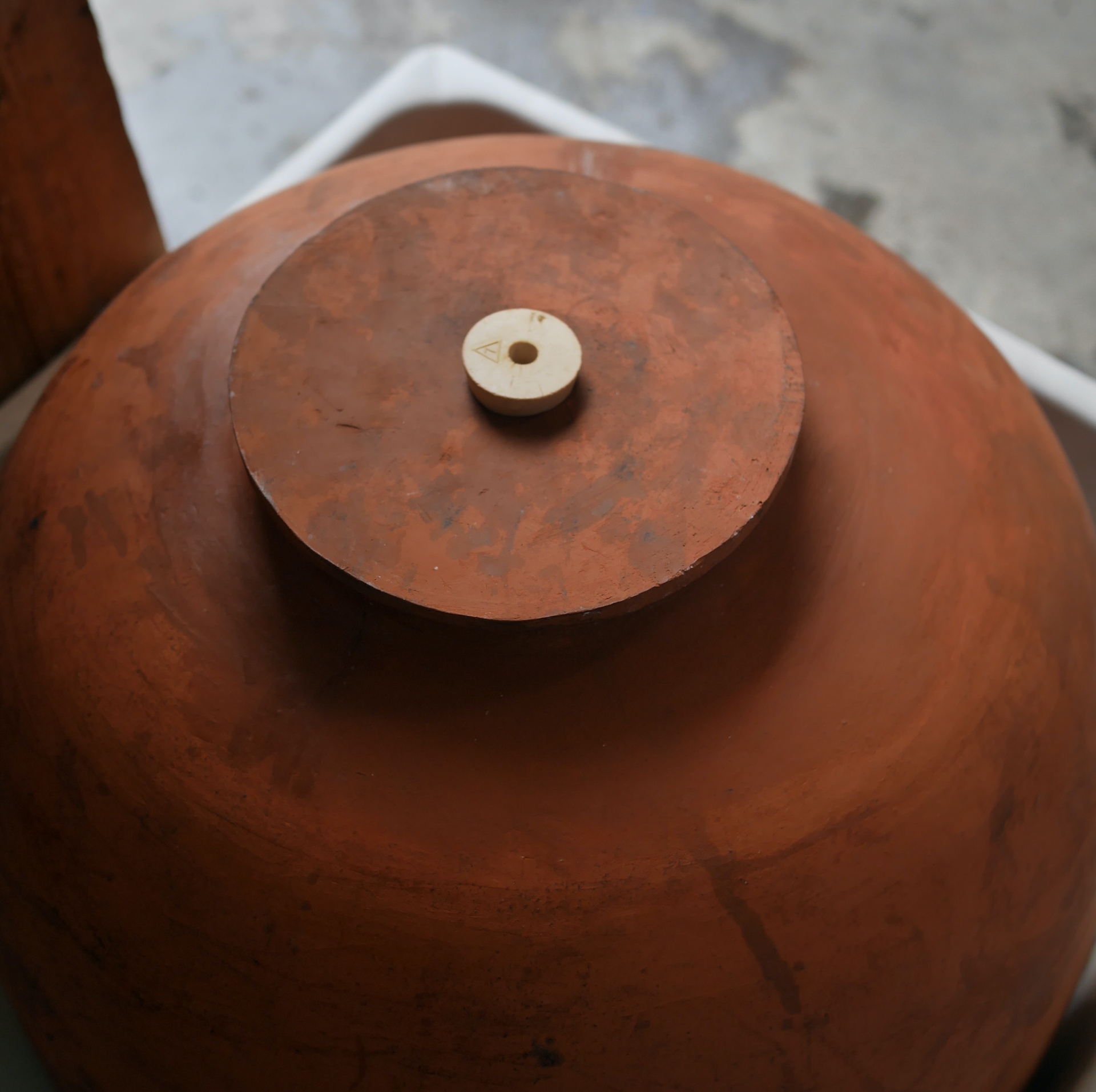
Once dry, the vessels are kiln-fired to 1060 degrees Celsius. Most native, hand-processed clays like this cannot be fired much higher or they will warp and melt. This clay turns a beautiful terracotta colour once fired.


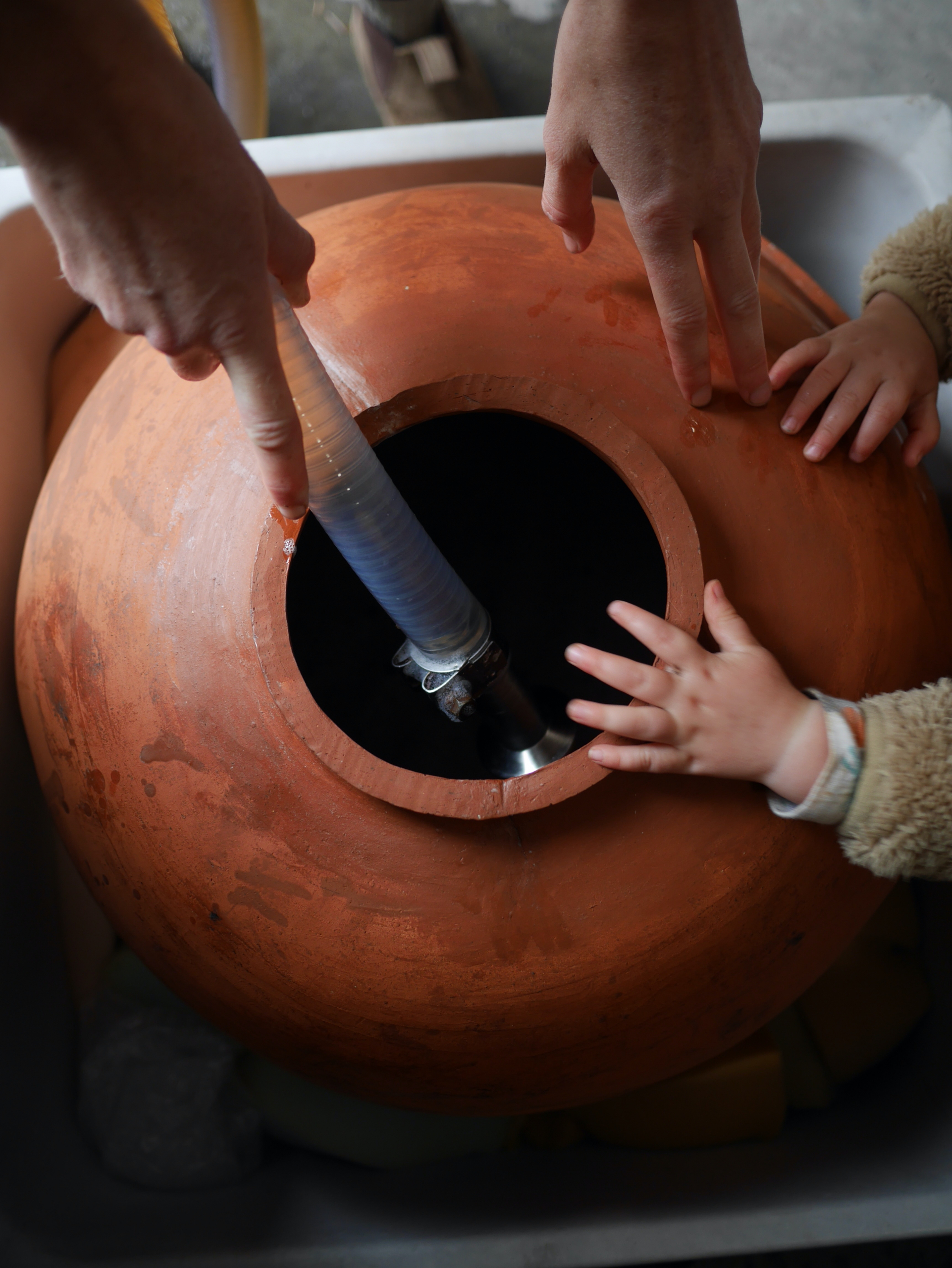
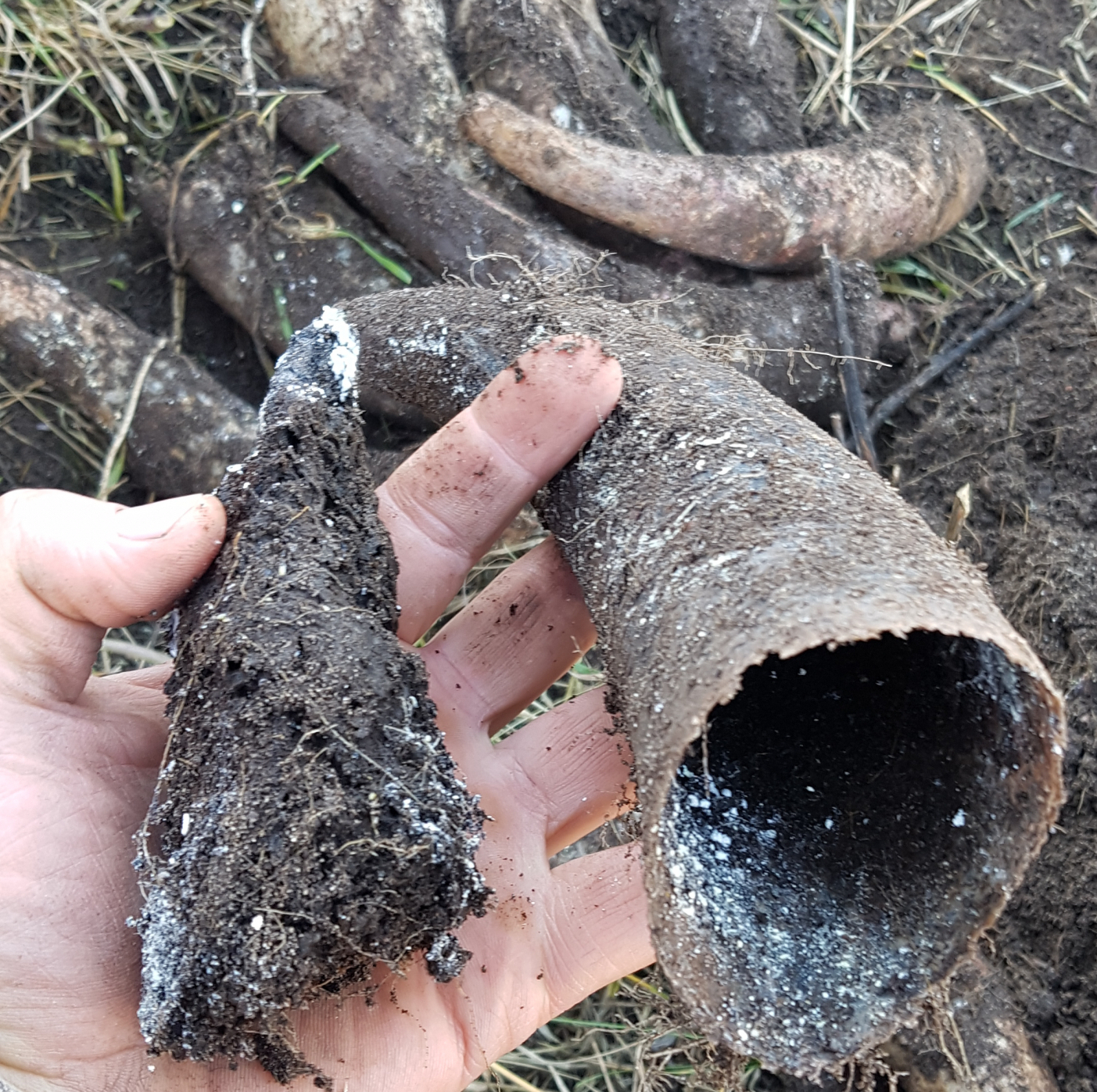
After firing, they are re-warmed and lined with melted beeswax, also a traditional Georgian method. The heating opens up the larger pores of the clay, allowing them to absorb the wax while still leaving smaller pores open to allow micro-oxidation and direct clay contact.


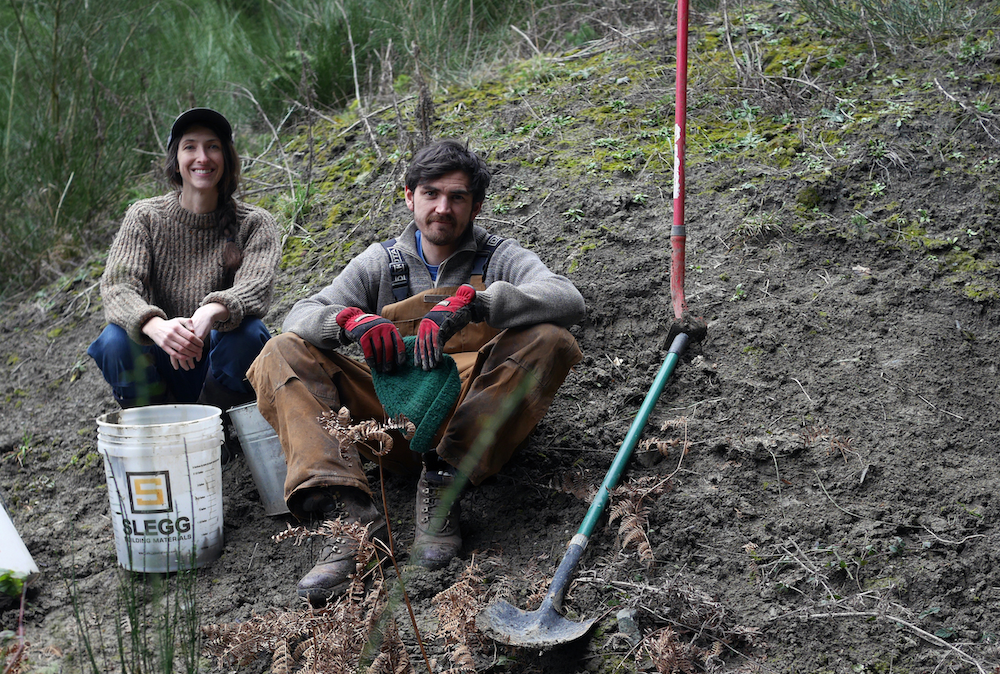
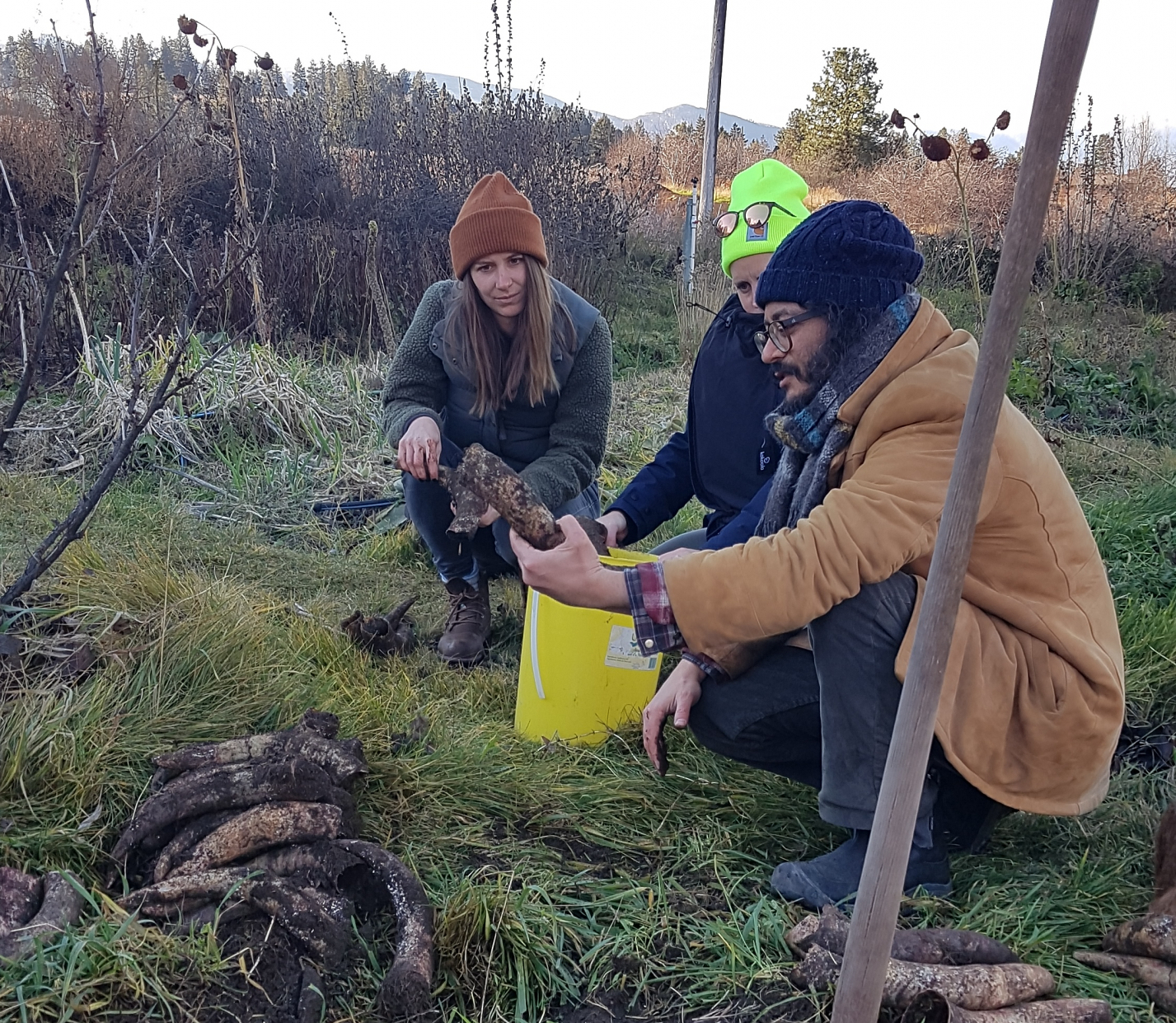
Katie Selbee and Matthew Vasilev at their clay harvest site.


Katie Selbee and her partner Matthew Vasilev are the cider-makers and co-founders of Twin Island Cider on Pender Island, blending hands-on experience and training in cider-making, orcharding, and farming. Twin Island Cider began with making cider on a basket press with family and friends, using apples from old orchards and the Vasilev’s family trees on Pender Island before developing into a land-based cidery in 2016 when they partnered with landholders Sandra MacPherson and Noel Hall. They are immersed in operating the cidery year-round, from pruning and harvesting dozens of island orchards, pressing, blending and bottling, to pouring the cider at the tasting room. They care for and harvest from dozens of century-old settler orchards on North and South Pender Islands to create their fine, low-intervention cider and perry fermented only with native yeasts—cider which seeks to communicate the land, the lost varieties and the stories of the place we live.

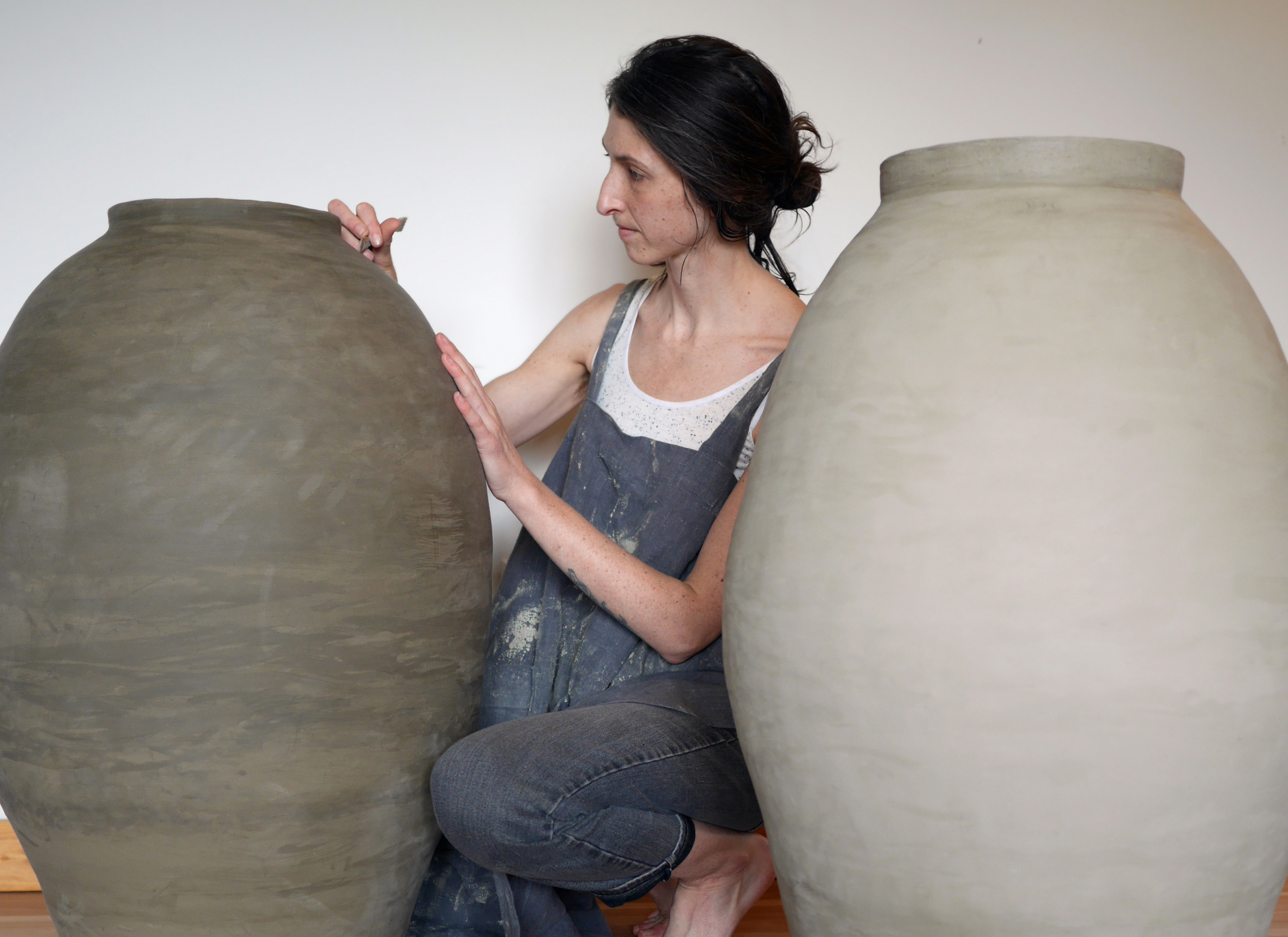
Featured image: Katie Selbee putting the finishing touches on two Qvevri.

Ask an Expert: BC Farmers & Ranchers Learning Together

in 2021/Ask an Expert/Crop Production/Grow Organic/Land Stewardship/Soil/Spring 2021/Tools & Techniques

Emma Holmes

The Sustainable Agricultural Landscapes (SAL) Lab at UBC’s Faculty of Land and Food Systems is taking a collaborative approach to research that supports producers in making management decisions that are science-based and regionally grounded.

I recently had the opportunity to catch up with Sean Smukler, DeLisa Lewis, Amy Norgaard, and Raelani Kesler from the SAL Lab to get an update on their Organic Vegetable Nutrient Management and Climate Resilient Vegetable Farming research projects.

Something that stood out to me, and that I feel is especially pertinent to this issue, is the mentorship and collaborative, on-farm approach the SAL Lab is taking. The research design includes two demonstration “mother sites” at UBC Farm in Vancouver and Green Fire Farm on Vancouver Island, as well as 20 “sister sites” on working organic farms in the Fraser Valley, Pemberton Valley, Vancouver Island, and the Kootenays.

The mother sites are controlled and replicated—they allow for the collection of scientifically rigorous data so that the researchers can tease out trends and gain a deeper understanding of how different elements in the system are interacting and impacting each other.

While a rigorous approach is important, it is very difficult to implement one on working farms because farmers are already trying to manage so much complexity in terms of crop rotation, timing, etc. Adding a full-blown research project with rigorous controls can take away from the primary goal of running a profitable business.

The sister sites are simpler experiments, without controls and replicates, that are done on multiple working farms in different regions of the province. They provide insights into regional and site variability, and allow us to see whether trends from the mother sites are true across different regions in BC The regional sister sites also create the opportunity for farmers to participate in the research by pointing SAL researchers to key practical challenges and unanswered questions.

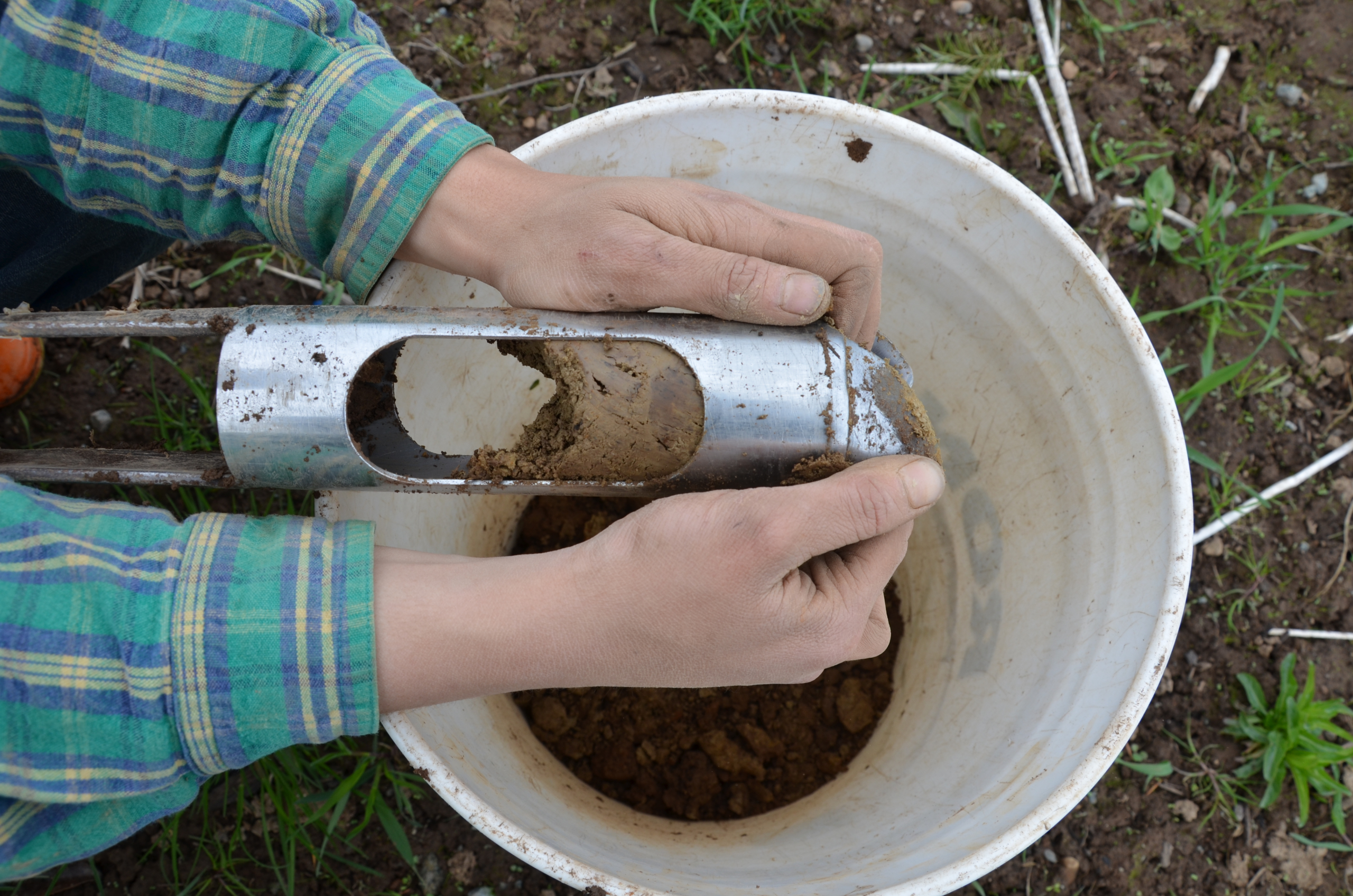
Collecting soil samples with a soil auger; hundreds of soil samples were collected for the regional field trials. Credit: Amy Norgaard.

Organic Vegetable Nutrient Management

The SAL Lab recently shared the results from their two-year Organic Vegetable Nutrient Management Project regional field trials, where they assessed organic nutrient management strategies that are most likely to balance goals of crop production and environmental stewardship.

A key takeaway is the importance of regionally-specific nutrient management recommendations due to the big differences in soil types, availability, and cost of amendments. Taking soil tests and applying nutrients based on a farm-specific soil management strategy is important for land stewardship across all regions, but regional variances due to differing soils, climate, and access to and cost of amendments are important considerations.

For example, the abundance of nutrient-rich animal manures in the Fraser Valley increases the possibility of unintentionally over applying nitrogen (N) and phosphorus (P). This can result in post-harvest nitrate and phosphorous concentrations that can compromise well water quality and wetland health in the area, and are higher than what is permitted under BC’s new Agricultural Environmental Management Regulation.

There are also cost implications of over-applying nutrients. On Vancouver Island, where amendments are relatively expensive, targeted nutrient applications based on soil testing and matching crop nutrient demand can allow for significant savings compared to applying amendments without that knowledge.

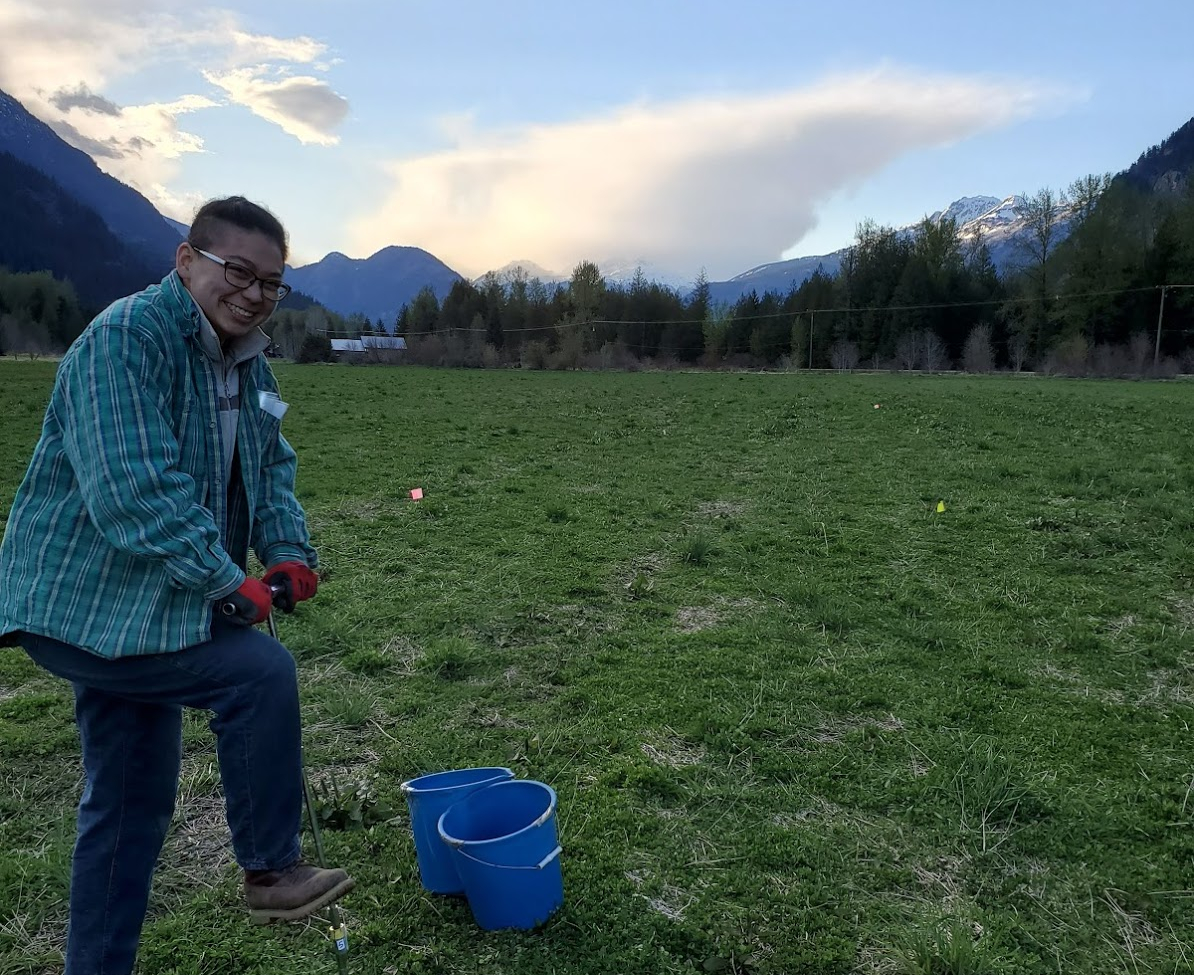
Carmen Wong collects soil samples from research plots on an organic vegetable farm in Pemberton, BC for the UBC nutrient management regional field trial study Credit: Amy Norgaard.

Climate Resilient Vegetable Farming

SAL’s Climate Resilient Vegetable Farming research project is studying the interactions between organic nutrient management and water issues (e.g. too much, too little, wrong timing) on organic farms. Increased fall and spring precipitation shortens the soil workability time window, thus shortening the growing season and increasing the challenge of establishing and incorporating cover crops as part of a nutrient management strategy.

Raelani Kesler, Master of Science student, explained that the Climate Resilient Vegetable Farming research project hopes to quantify the impact of three alternative approaches to soil management: fall application of organic amendments, tile drains, and overwinter tarping. Silage tarps are increasingly being used to cover soil in places where it is difficult to establish or maintain a cover crop. With tarping, the soil is protected from erosion, but there are no inputs from cover crop biomass. Drainage tiles are being used to manage moisture but this too can lead to losses. The project is currently gearing up for its second field season.

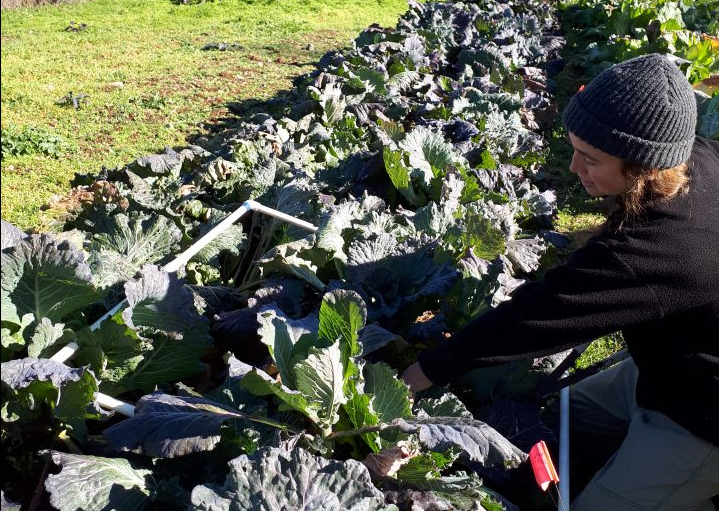
Amy Norgaard in the field. Credit: Kira Border.

Knowledge Sharing

The benefit of having the research on-farm extends beyond the access to regional data. Including farmers as partners allows for horizontal learning between both researchers and farmers, as well as supporting farmer-to-farmer knowledge exchange.

Amy Norgaard, a Master of Science student in SAL, spoke to the knowledge-sharing elements of the project. “I was able to be physically on farm having conversations with the farmers and learning from them about what they do and why, and was able to incorporate each farm’s unique amendment strategy into the study,” she said. “Farmers were able to see how their ‘business as usual’ compost and fertilizer applications compared to strategies targeting N and P crop demand, and also saw how their strategies compared to other farmers.”

Chris Bodnar, a project farm partner, said “The on-farm research and collaborative sharing of results was incredible for us to be part of”.

Although not a direct goal of the program, Norgaard shared that getting out and having conversations with partner farmers allowed her to gain useful information that she was then able to share across the community. “I really enjoyed the relationship building and knowledge sharing aspects of the program and wish I could continue doing it even though my two-year research project has come to an end. I think there is a lot of value there.”

In the Kootenays, SAL was able to partner with Rachael Roussin of the Kootenay Boundary Farm Advisors (KBFA) program. KBFA has been providing extension services for farmers for several years, and Kesler said the established relationships and close contact Rachael had with growers made it much more feasible to conduct regional field trials in the Kootenays. For example, Rachael was able to reach out to her network to recruit farm research partners. Her existing relationships and proximity to the growers made it easier to check in about details, such as when they were planning on removing their tarps so she could get to the farm to take a soil sample. Coordinating on this level would be very difficult to do from UBC and so having a partner like KBFA opens up regional on-farm research possibilities that wouldn’t exist otherwise. Kesler hopes to see more regions across BC adopt similar extension programs that would allow for these forms of university-farm partnerships to become more widespread.

Similar Approaches Happening Across Canada

The topic of collaborative on-farm research with mother-sister sites, and the many benefits of approaching agricultural research this way, also came up at a recent meeting I attended for provincial and federal organic specialists. The Quebec organic specialists spoke highly of the mother-daughter model to ensure a constant exchange and mutual learning between farmers and researchers.

In 2019 Agriculture and Agri-Food Canada announced a new Living Laboratory Initiative. Similar to UBC’s SAL lab, it will use mother-sister sites as part of a “collaborative approach to research that will bring stakeholders together on working farms to develop, test and adopt new practices and technologies that will tackle important environmental issues.”

You can find more details about this announcement here.

Further reading:

Organic Vegetable Nutrient Management Project

BC’s New Agricultural Environmental Management Regulation

The Organic Vegetable Nutrient Management Project and the Climate Resilient Vegetable Farming Project were funded in part by 1) the Farm Adaptation Innovator Program (FAIP), a program through the BC Climate Action Initiative and funded by the Canadian Agricultural Partnership, a five-year federal-provincial-territorial; and 2) the Organic Science Cluster 3 under the AgriScience program of Agriculture and Agri-Food Canada.


Emma Holmes is the Organics Industry Specialist with the BC Ministry of Agriculture, Food, and Fisheries. She studied Sustainable Agriculture and Soil Science at UBC, and then farmed on Salt Spring and worked on a permaculture homestead on Orcas Island. She now lives in Vernon with her partner and toddler, and loves spending time in the garden. She can be reached at: Emma.Holmes@gov.bc.ca

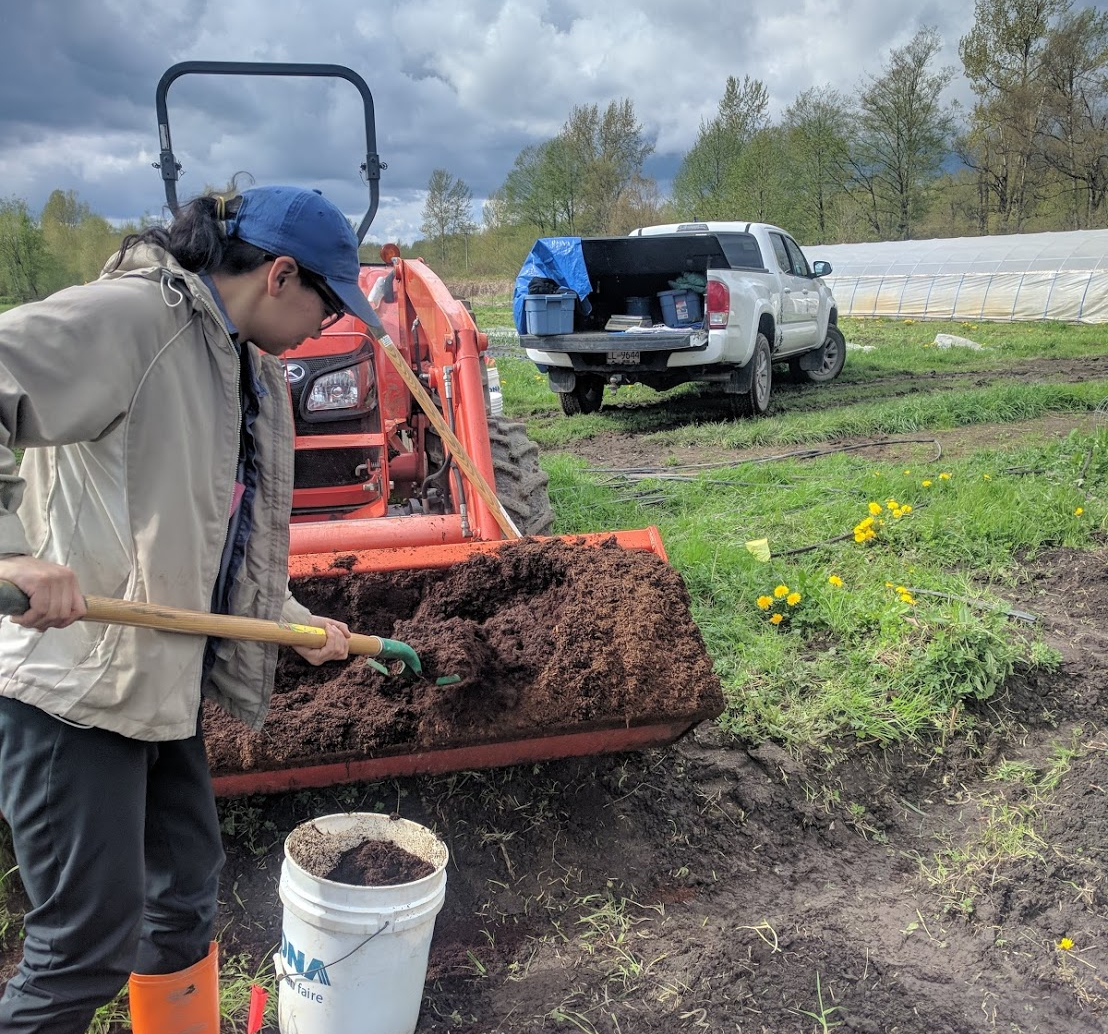
Feature image: Carmen Wong weighing amendments (compost and organic fertilizer) to apply to research plots on an organic vegetable farm in the lower Fraser Valley for the UBC nutrient management regional field trial study. Credit: Amy Norgaard.

Organic Stories: Tulaberry Farm – Syilx, Sinixt, and Ktunaxa Territory, Passmore, BC

in 2021/Land Stewardship/Organic Community/Organic Stories/Spring 2021

The Year the Butterflies Came Back: A Story of Transition at Tulaberry Farm

Hailey Troock

I picked up the phone one cold winter day in 2019 to a request from the owners and operators of Tulaberry Farm in the picturesque riverside community of Passmore, BC. Judi Morton and Alex Berland wanted to find some young and enterprising farmers to continue the legacy of their certified organic farm. After decades of farming in the Slocan Valley, where they raised their family and had become integral members of the local community, they had a beautiful space and knowledge to share.

A little more than a year later, Emily Woody and Nathan Wiebe, two farmers operating Confluence Farms out of Kelowna, BC, were searching for land. They had a dream to relocate their market garden and bakery start-up to the Kootenays, somewhere near Nelson, where they could establish roots for the long-term. In one season they had grown out of the backyard space they had started their farm on, selling through CSA shares and delivery.

All I had to do was introduce the two couples through the BC Land Matching Program (BCLMP), and the rest seemed to fall effortlessly into place—truly a confluence.

As Tulaberry and Confluence start down the path of transition together, it’s worth considering what farm transition is all about.

For me, it’s a million things. Last fall, our team at Young Agrarians released the BC Transition Toolkit for Non-Family Farm Transfer, and the process of researching and creating this resource provided us all with an in-depth understanding of a pretty complex topic: how do we transfer farms from one generation to the next, outside of the family? Something that stuck with me is how the mentorship available within the process of transition can be a fundamental part of the success of the incoming farm business.

New farmers face myriad challenges in today’s agricultural, economic, and climatic landscapes. It can take years to build up clientele, pay off start-up costs, establish secure sales channels for your products, learn the land and soil, mitigate increasing climatic variability, and more. Transitioning into an established farm can ease this learning journey, as the outgoing farmer passes along this critical information to their successors.

Nathan Wiebe and Emily Woody. Credit: Confluence Farm.

Judi came to be the steward of Tulaberry Farm when she purchased the land in 1968. She lived there for a few years before leaving, then coming back for a second stint. This is when Alex came into the picture in 1974. After 12 years together on the land they left to pursue other careers in Vancouver, where they stayed for two decades. Eighteen years ago, they relocated back to Tulaberry for good. Judi went from being an intensive care nurse at the children’s hospital to diving full-time into farming. She says the transition felt natural; though “people think they are unrelated, both are nurturing roles.”

Judi’s most prominent memory from her early years on the farm centre around her second season stewarding the land full-time. She refers to this as “the year the butterflies came back.” The planting of perennials, shrubs, and fruit bushes—food for the beautiful pollinators—breathed new life onto the land. Judi and Alex’s farming philosophy speaks to this. She says we “sought to leave the land better than we found it” and that they, like all of us, are stewards of the land we inhabit. They don’t feel they own the land: “though we bought it, we get the privilege to steward it,” she says.

Judi’s experience living in their community has evolved since those early years. “When we were first at Tulaberry before we left for 20 years, we were deeply embedded in our community. When we came back, we picked up much of the same community but also many new friends who had moved there.” Though many of the “old guard from 70s and 80s remain good friends,” she says, referring to her original cohort, “much of my social circle has centered around farming over the years.” Judi is also excited about the young families she has seen moving into the area over the past decade.

The Kootenay Organic Growers Society has played a big part in her farming community specifically. “Farming is a very lonely business,” she says, “and you are working alone a lot. Going to market was my social life; I was always so excited to see other farmers. When it was slow, we would congregate to the centre to share information and talk.”

The market garden at Tulaberry Farm. Credit: Tulaberry Farm

When Judi is 90, she says, “I want friends who are 60 and 70.”  Her strong attachment to the land she stewards and her desire to want to die there are part of the reason they pursued a land match. They had been looking for people to transition into Tulaberry to for more than a decade; aging in place remains important to them but it is “hard to watch fencing fall down on the land when you no longer have the energy to deal with it.”

For Judi and Alex, the BCLMP plays an important role, as “many young farmers need a leg up to get going, and retiring farmers want to age in place.” Working with hands-on support made them think about things that hadn’t come to mind and how to word things. She reflects on it as a great process, getting through negotiations to the point where “everyone was happy.”

Emily and Nathan came into farming at different times in their lives. Nathan was inspired by Emily. After growing up in a big city, he “was feeling burnt out and unhappy and wanted to be closer to nature and work that really mattered to me. The idea of growing food for a living had never crossed his mind until he met her,” he says, meaning Emily (on a dance floor, six years ago, no doubt!). He reflects on how Emily “showed me what was possible through farming and together we made our dreams of starting a farm a reality.”

Emily came to farming for a combination of reasons. “I wanted to do good in the world, felt a strong calling to do something about climate change and the state of the environment, and really liked good food.” She says she “had grown up with a big garden on an acreage and was always involved in growing food throughout my formative years. When I went to college, I began to explore my passion for food and farming more deeply. The work was so nourishing to me, I knew I wanted to be a farmer.”

While Nathan’s formal education is in business, marketing, and holistic nutrition and Emily studied ecological agriculture and community development, some of the soft and hard skills that have helped them in their farming career have surprised them. Nathan notes that “taking the time to really understand marketing, branding, and website design has helped immensely,” and recommended reading How to Build a Story Brand by Donald Miller and anything by Seth Godin.

“Baking skills have really come in handy, surprisingly! I’ve always had a passion for sweets and spent a year working for a small bakery in Edmonton,” says Emily. “I’ve spent a lot of time developing recipes that utilize what we are growing on the farm. Our value-added products have really helped to set us apart and bring a more diversified income stream to the farm.”

Before meeting Emily and Nathan, Judi compared finding compatibility between Tulaberry’s goals and those of new farmers to “waiting for a unicorn.” Over the years, they had lots of great young people out there working with them. She says she “saw a lot of people get into it and then realize how much work it is.” That’s why for her, finding farmers with a couple of years under their belt was important, so that she felt confident this was something they wanted as a long-term lifestyle.

Nathan, Emily, Judi, and Alex. Credit: Tulaberry Farm.

Compared to the idea she had of who she was looking for to transition the farm to, Judi says Emily and Nathan are, in short, “they are everything we ever wanted.” In more detail, she listed out the qualities that have been the most important for them and that Emily and Nathan embody in spades:

Good communication skills: “If you can’t talk together, it’s not going to work. If people harbour feelings and don’t communicate what’s bugging them or what they’re happy about, how do you make a relationship work?”

Experience in farming: They “didn’t want to start from scratch,” and Emily had four years of farming under her belt.

Off-farm income: “It’s hard to make a living on farming here; farms are small. I wasn’t convinced it can’t be done but it can present a huge hurdle if you don’t have something on the side. Nathan has his Level Up business to help support the farm in start-up.”

Being a generous spirit: “When I make dessert, I bring over some for them and they do the same. Their generosity of spirit matches ours.”

Reliability: “If someone says they will feed the chickens, we need to be able to walk away and know they will do it. Emily and Nathan have done everything they say they are going to do and more.”

Enthusiastic and energetic: Self-explanatory!

Judi says that having new farmers on their land has changed the way they experience it. “Like having a kid, you see the world fresh through their eyes. As snow melts and things come up, they are seeing it with fresh eyes and enthusiasm and I feel like my own has increased because of being able to see the farm through their eyes.”

For their first season on the farm, Emily and Nathan are planning on offering 20 different value-added products throughout the season and are particularly excited about having Judi and Alex as their mentors. “Mentorship means having someone to go to for support and guidance who is dedicated to helping us succeed,” Emily says. Having mentors has “really helped boost our confidence and given our farming operation a huge advantage over where we were last year. Judi and Alex have been farming in the Kootenays for so long and have such a great reputation in the community. Just by being associated with Tulaberry Farms we have noticed that people are a lot more receptive to us and are excited to see our new partnership.”

As a mentor, Judi sees her role this season “to work with them when they want me to work with them. It’s important that they don’t feel that they are being micromanaged or I’m looking over their shoulders.” She is confident that they know what they’re doing but not necessarily on this land, and that is where she sees her role in mentorship—though she also knows that on transplanting days, “having three sets of hands can make a big difference!”

Judi is inspired by the idea that “mentorship is something that flows both ways”—Emily has shown Judi how to make sourdough bread and frosting out of maple syrup and butternut squash—and in turn, Emily and Nathan are inspired by Judi and Alex’s “life story and dedication to their land.” “They essentially bought a raw piece of land more than 30 years ago and through sheer hard work and determination they slowly built a home in the woods and a farm, structure by structure, until it became the beautiful property that is it today.” This has shown the new farmers that “even if your dream lifestyle seems daunting to achieve, if you stick with it long enough and don’t give up, you can accomplish almost anything.”

This winter, their first on the farm, they were busy! “We added a bakery section to the online shop so that we can offer more than just vegetables,” says Emily. “We use chicken eggs from the farm, local cream when available, and locally-sourced grain that we mill using our Komo mill. This has helped to differentiate our business as well as increase our sales when we don’t have a lot of vegetables to sell throughout the winter. We’re doing row crops and Judi is teaching us how to do broiler chickens.”

Reflecting on the experience of sharing land with Emily and Nathan so far, Judi says she has been “pleasantly surprised with their generosity of spirit,” while Emily and Nathan spoke to how “easy and seamless it has been. Judi and Alex have been incredibly generous from the very beginning and we could tell they just want to see us succeed.”

Emily and Nathan aspire to one day transition from farmers markets and CSAs to a farm-to-table bakery they plan to call Pantry. “Our dream would be to be able to grow and produce as many ingredients for the bakery as we can to make it a true farm-to-table experience,” Emily says. As for where Judi sees herself and the farm in 20 years, she says, “at the age of 93, I hope to be taking care of chickens, even if I am not farming too much, but I hope the farm remains. I see so many possibilities—instead of withdrawing my energy, this new life on the farm is expanding it.”


The BC Land Matching Program is funded by the Province of British Columbia, with support from Columbia Basin Trust, Real Estate Foundation of BC, Bullitt Foundation, and Patagonia.

Hailey Troock grew up in the small agricultural community of Oyama, located in the Okanagan. Now based in Nelson, she spends her time connecting farmers, landholders, and allies in the Columbia Basin region as a Land Matcher with the BC Land Matching Program delivered by Young Agrarians.
Feature image: Tulaberry Farm nestled in the mountains. Credit: Tulaberry Farm
Biodynamic Farm Story: What Steiner Said

in 2021/Crop Production/Grow Organic/Land Stewardship/Organic Community/Spring 2021
Anna Helmer

I exhibit a strong spring Biodynamic practice. I have all the time in the world for stirring BD 500, tending to compost piles, and dutifully attempting to follow the planting calendar. In the summer things will likely slide, and the fall is very Biodynamically weak for me. Winter comes and at that point it’s out of my hands as that’s when the influence of the distant planets of the cosmos takes effect in the soil. For real.
But that is neither here nor there, for the purposes of spring. Don’t get hung up on that. What’s important now is that this spring I have already vacuumed the farm truck and washed it twice. I am well on my way to cleaning up the shop and tidying the upstairs of the barn. And I have not lost my interest in learning more about Biodynamic farming.

A couple of earnest, active, and idealistic springs have passed since I decided to develop a more learned and deliberate approach to Biodynamic farming. Prior to that, I had been a willing, but not a very wondering, participant in our farm’s practice. I would have happily kept going like that, but my inability to articulate even the basic concepts was undeniably denting my preferred image as a modern, hip organic potato farmer.

Anna, what is Biodynamic farming? Anna of yester-spring: uh, well, you know how the moon and planets and stuff are there…and the soil is important…you have to look after the soil…and make good soil in compost. It’s sort of homeopathy for the soil. Beyond organics.

You see the problem.

Biodynamically-woke Anna: agriculture involves taking crops off the land and is therefore inherently exploitive. A Biodynamic grower knows this and works to replenish and strengthen the life and energy of the soil so that the crops continue to be imbued with taste and vitality.

Oh well, then. That explains that.

I did not make this up, of course. It is in the lectures, buried deep in Lecture 5. Finally, after countless readings, I have picked up on what Steiner was putting down. If you ask me, he should have led with this idea, rather than launching Lecture 1 with a description of the relative effects of cosmic energy on plants, animals, and humans.

The thing is, though, he didn’t. He died only a year after delivering these lectures and he may have known he was mortally ill at the conference. There may in fact have been a sense of urgency to his delivery. So, he probably started exactly where he meant to start and finding a powerful mission statement in Lecture 5 does not absolve me from figuring out what he is talking about leading up to that point. For now, however, I am agog with dawning comprehension.

Now. You will point out to me that regenerative farming is all about replacing in the soil what has been used, and what’s so special about Steiner saying it? Well, I guess that would be the compost preparations he describes. They are special.

Steiner is not insisting that farmers stop regenerating soil in whatever way they are doing it, from cover cropping to (just short of) using synthetic chemical fertilizers, and the massive number of options in between. He is, however, suggesting that these are not adequate measures. They are driven by science, which is not enough.

The biodynamic method is driven by observation, experience, and a belief in the existence of forces that cannot be immediately seen or measured, but whose presence is proven in the resulting product. It is these cosmic influences, collected in the soil and taken up into the plant, that are removed along with the crop and therefore must be replaced. He is not denying the efficacies and even necessities of science in agriculture but rather saying that it stops short of completing the regeneration necessary to maintain the production of healthy, tasty food.

Steiner’s Lecture 5 describes the Biodynamic Compost Preparations, which when applied in very small doses, enliven and provide stimulus for the soil to again be able to collect the streams of cosmic force. They consist of common and recognizable plants variously treated and applied to compost heaps, the soil of which is then applied to the field or garden. There was no scientific underpinning then, or even now; he expected that the science would catch up eventually.

Look, it is a scientific fact that the moon causes the tides of the ocean and that the sun warms our atmosphere. These influences are easily perceived of course, and science is there to confirm the obvious and fill in the details. Can we propose that other planets and cosmic bodies take effect on earth too, although not in a way we can easily see, feel, touch, or smell? Can we do this ahead of science telling us it is so?

Heavens above, it has taken me a long time to write this article. I had to go back into the lectures quite a bit to see if I was on the right track. I even read a bit of Steiner poetry. I wrote long, meandering paragraphs about the contrasting yet inseparable dualities of matter and spirit, of science and spirituality. I did a lot of deleting.

I’ll have to leave it here. I must go outside and get giddy over spring.


Anna Helmer farms with her family in Pemberton and would like to scientifically prove that the hundred-pound sacks of seed potatoes are getting heavier all the time. helmersorganic.com

Feature image credit: Helmers Organic Farm

Organic Stories: Forstbauer Farm – Stó:lo Territory, Chilliwack, BC

in 2021/Grow Organic/Organic Community/Organic Stories/Winter 2021

The Birth and Evolution of Forstbauer Farm

Natalie Forstbauer

Bare feet, dirty nails, cheeks caked with dry soil, clothes weathered by the elements, the smell of earth lingering on me…getting lost in long grass, playing hide and seek in fields, singing camp songs while pulling out weeds…sitting under a canopy of blueberry branches while filling my mandatory bucket and having the occasional forbidden blueberry fight in the berry fields…

Dishes piled high and floors waxed with freshly-soiled feet as brothers and sisters run in and out of the house to fill tummies and play in between the farm responsibilities of looking after animals, picking beans, sorting carrots, and picking and cleaning blueberries…

The long hot days of summers on the farm had a beat of their own. There was a seamless rhythm that flowed between inward contemplation and outward expression. Creativity and free play were encouraged while routines and expectations were simultaneously enforced.

This was my childhood.

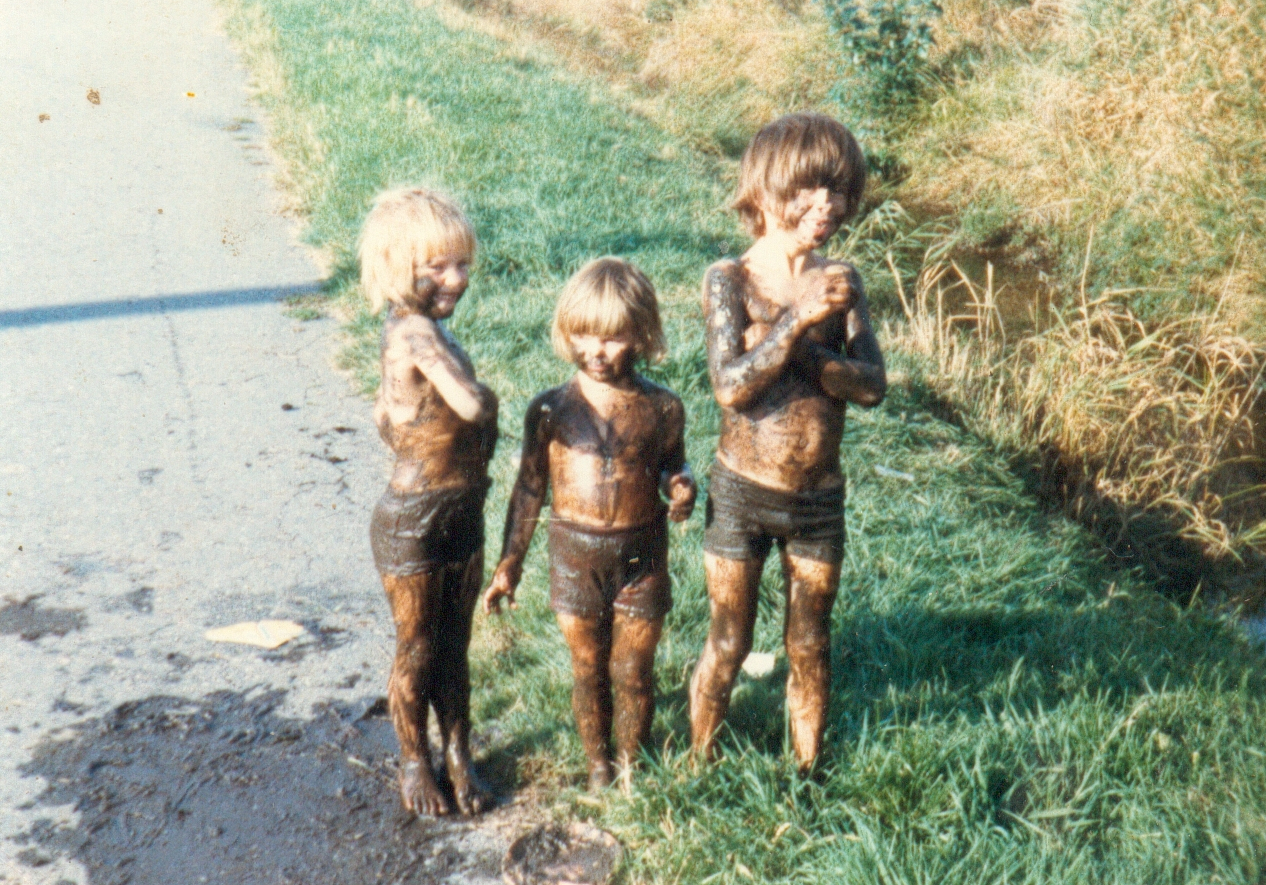
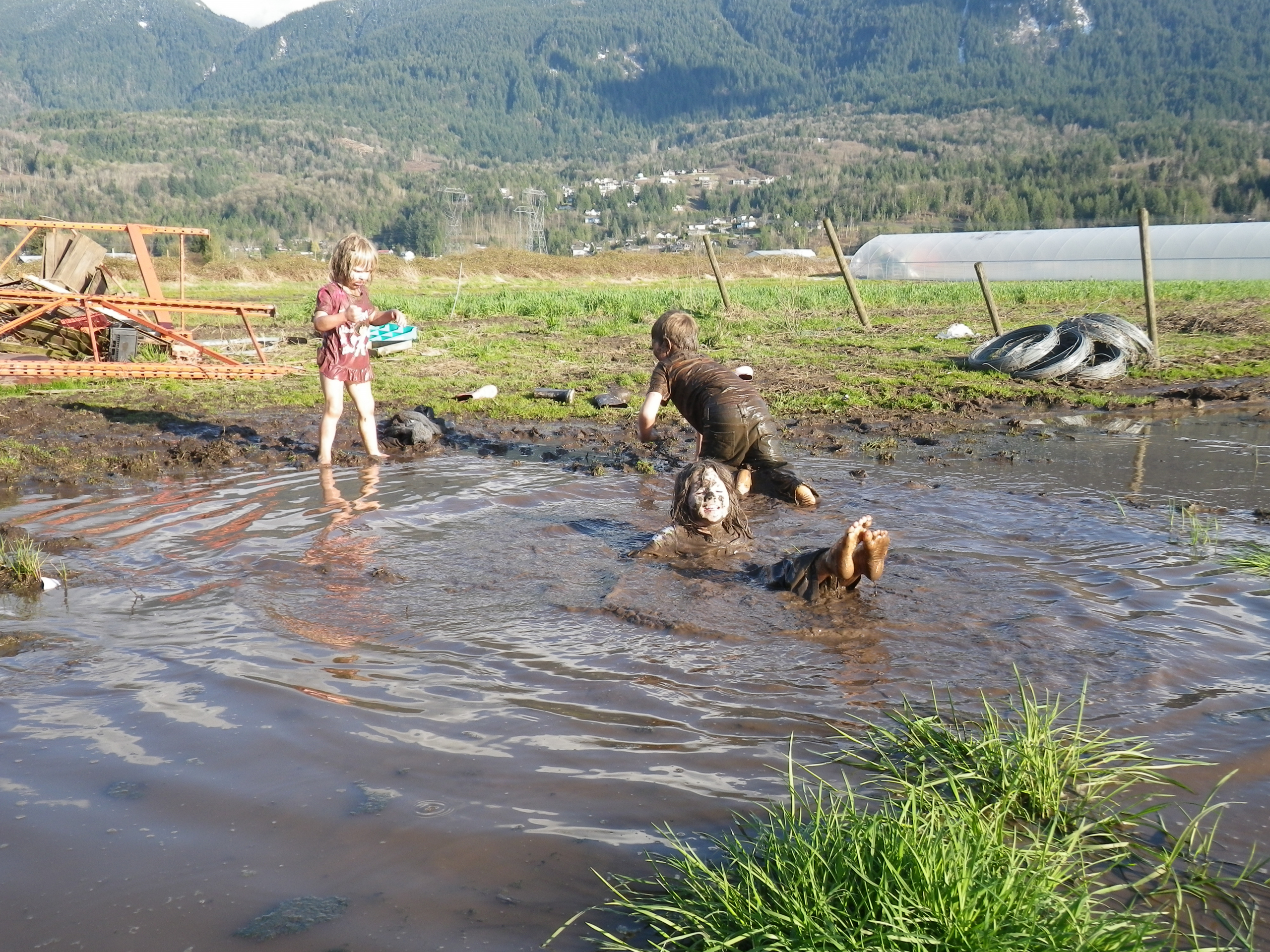
Forstbauer kids play in the mud in the 1970’s. Credit: Forstbauer Farm
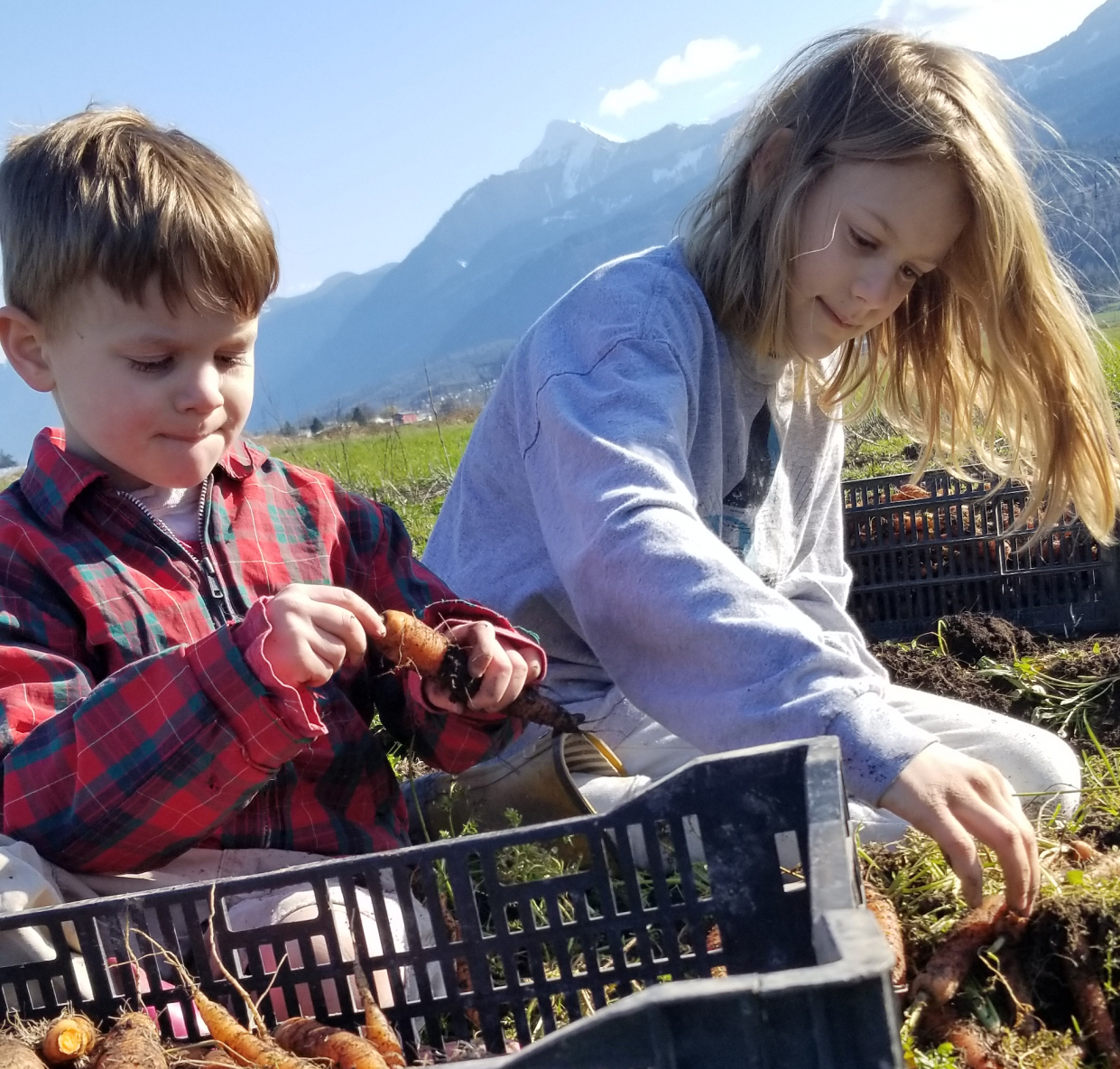
Forstbauer farm kids helping out with the field harvests. Credit: Niklaus Forstbauer.

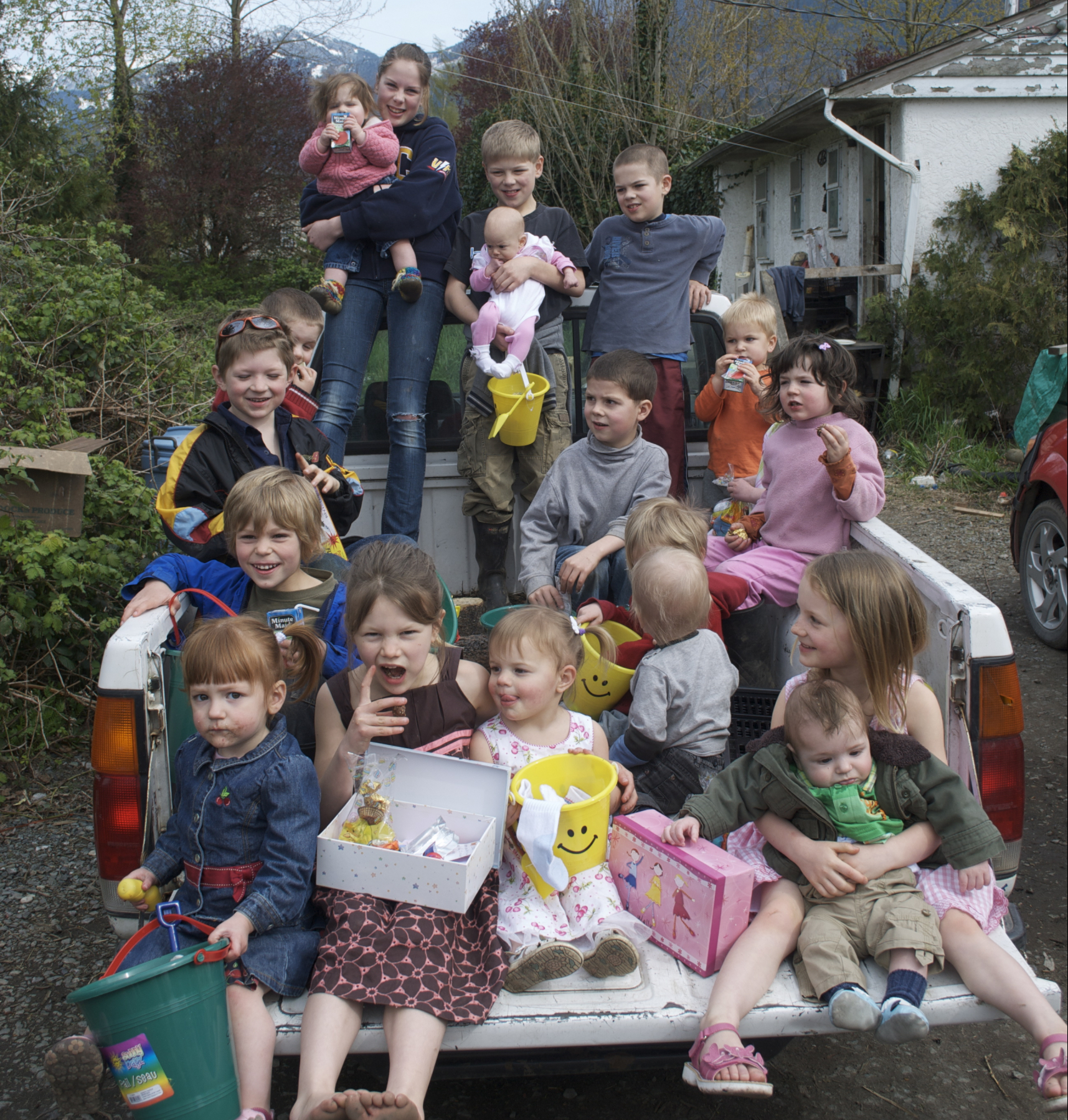
I am the oldest of 12 children from Mary and Hans Forstbauer. Growing up on Forstbauer Family Natural Food Farm with soil built up between my toes was a journey of connection, advocacy, and flow. The farm was the fabric that knit the family together and the family in turn melded the farm.

My dad was the rock that laid the foundation for the farm. His gift was stewarding the land while sharing his wisdom, insights, and visions with my mom. My mom was his window to the world. She had the gift of listening, compiling, and generously sharing these insights with communities where they were discussed, explored, and implemented.

My parents, along with their pioneering organic friends and colleagues, knew their regenerative farming practices needed standards and accountability. With due diligence they shaped the inaugural certified organic standards in BC.

The synergistic relationship between my parents was remarkable. While my mom was pioneering the advancement and the amplification of organic food and regenerative organic farming in the public eye, my dad nurtured the soil with grace. He knew healthy food and healthy humans begins with healthy soil.

He worked long days sandwiching his job as a carpenter with work on the farm before sunrise and after sunset. I’m pretty sure his morning began around 4:30 am every day to milk the goat and cows and ended after the sun went down tending to animals and other farm chores.

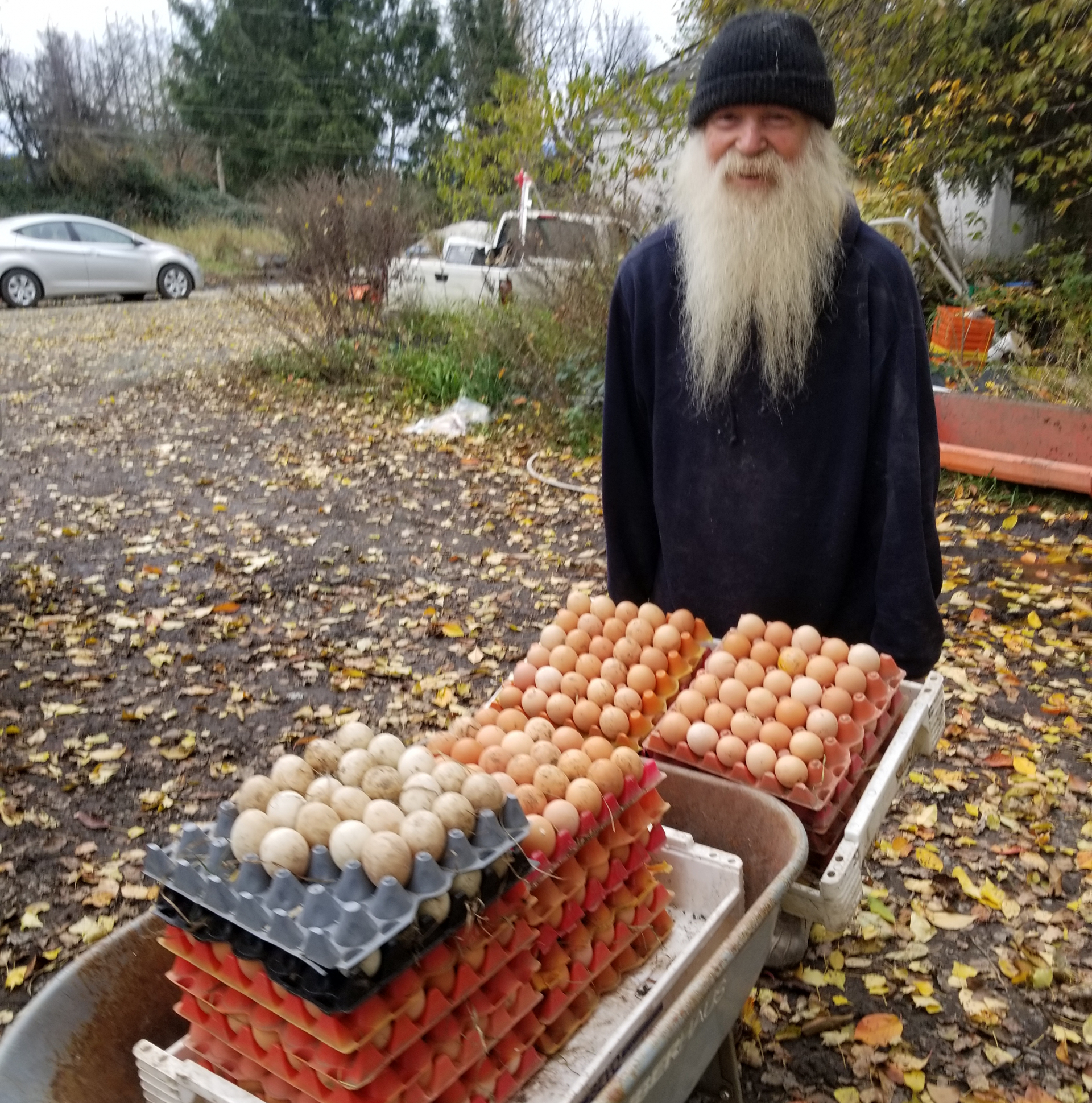
Hans Forstbauer collecting eggs. Credit: Niklaus Forstbauer.
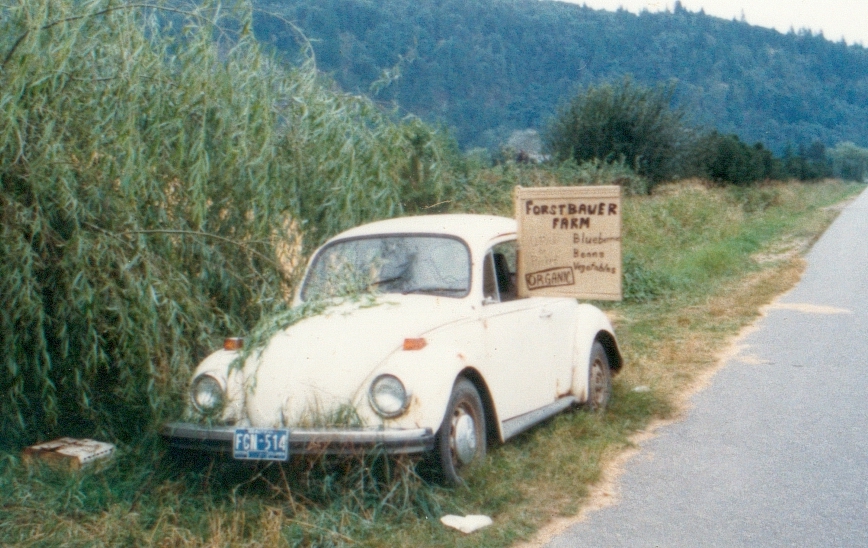
An early advertising strategy. Credit: Forstbauer Farm.

It’s often thought the farm “was started in the mid 1970s,” but my dad passionately shared with me recently that “planting your front lawn into a garden isn’t anything new. I did that when you were a baby and before you were even born.” In my dad’s eyes, that front lawn garden was the birth of Forstbauer Family Natural Food Farm. It’s when he and my mom began their farming journey. The year was 1970.

In 1971, they bought their first acreage in Mission, BC. It was a magical place at the bottom of a mountain surrounded by forest and rolling hills with a fresh stream running through a little valley to the east of the house. An old barn sat up on a hill north of the house and their massive garden was to the west. We had lots of animals: ducks, geese, chickens, a dog, cats, cows, goats, and a pony.

It was exciting when neighbours and friends came for fresh food from the farm. Equally as exciting was when I would go with my mom to make little deliveries to friends when we went into town.

In 1976, my parents sold their little acreage in Mission. They moved to Matsqui Prairies onto 16.5 acres. It was a beautiful spot pressed up against the mountain, home to an old blueberry field that had long been forgotten. My favourite part was the northern border of the farm where a freshwater stream came down the mountain side. The west coast rainforest that bordered the field was an enchanting place where we’d sink knee deep in moss, salmon came to spawn, and large evergreen trees clung to the sky.

Forstbauer kids play in the mud in 2011. Credit: Niklaus Forstbauer.
Forstbauer children gathered for a group photo. Credit: Niklaus Forstbauer.

My dad was industrious and, similar to today’s urban agriculture trend, vegetables were squeezed into every square space. Our first sales were to customers who came to our farm through word of mouth. Even our doctors shopped at our farm. As a young girl, I remember thinking we were doing something important.

My parents worked hard to find markets for their expanding bounty of produce and blueberries. The u-pick was an immediate success with cars lined up and down the rural road and a constant stream of pickers filling their buckets. We made weekly deliveries to Safeway, The Green Apple and other local produce stores.

Always the diligent guy, my dad (with the help of us kids) started making blueberry cuttings to supplement his income. Thousands of blueberry cuttings. It’s how blueberry bushes get their start. We would plant the cuttings, they would grow roots, we would transplant them the next year and then again the year after that and then we would sell them. Many of the older blueberry farms in Matsqui and surrounding Fraser Valley got their start from the cuttings we made.

During these years, Forstbauer Farm played a big role in marketing channels, including selling directly to organic warehouses, stores, and restaurants. We were one of the pioneering farms to sell to Wild West (the first organic warehouse in BC) and to Capers (now Whole Foods).

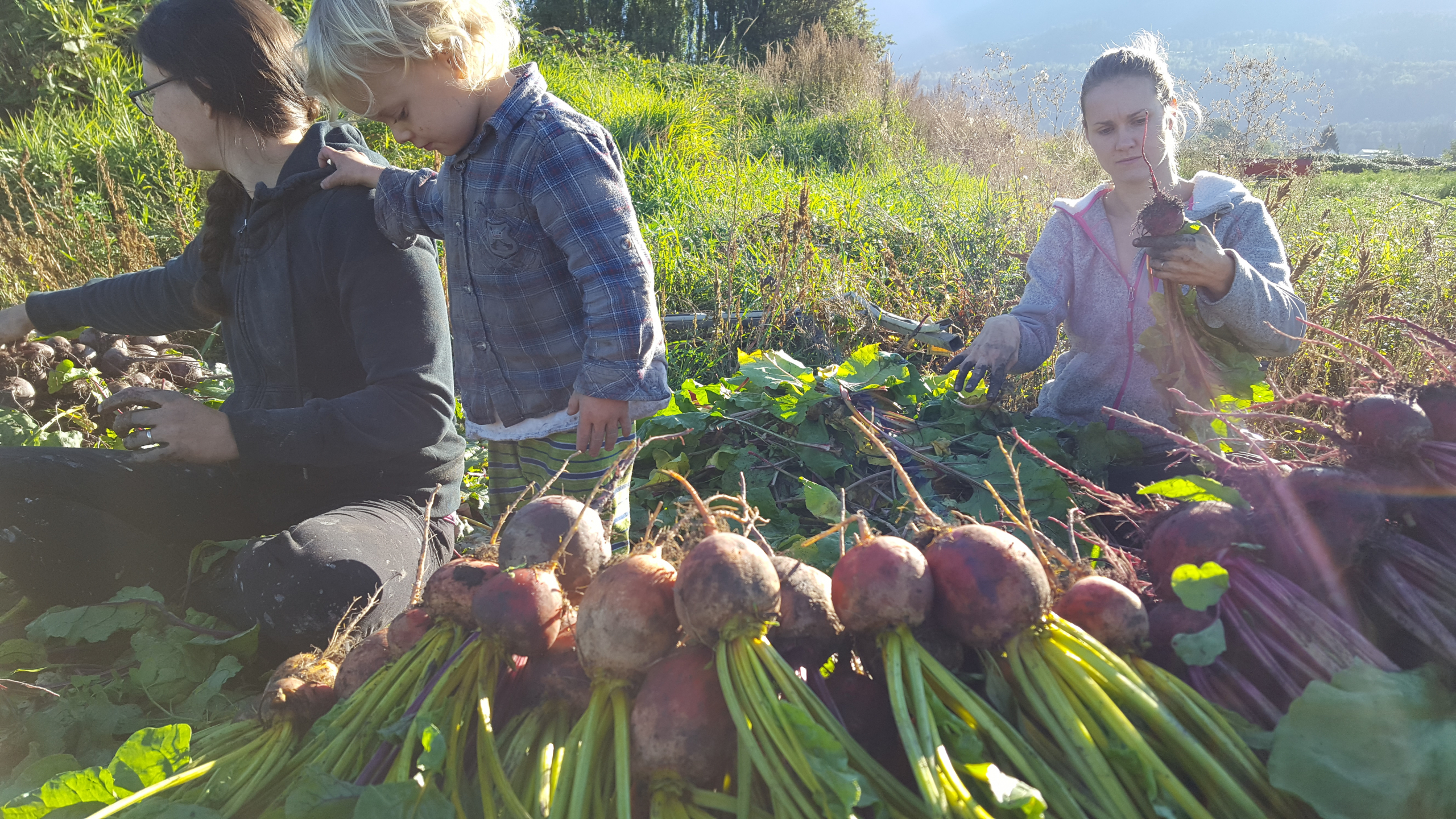
Harvesting beets. Credit: Forstbauer Farm.
Sunny fields. Credit: Forstbauer Farm.

In 1989, my parents made a big move from Matsqui to Chilliwack, BC, expanding their farm to 110 acres. This was huge for all of us. By this time, I was 18 years old and graduating from high school.

In the first year, we had a massive bumper crop of pickling cucumbers with nowhere to sell them. On a tip from one of my mom’s friends, she took them to the Chilliwack Market—and sold out of the cucumbers. We’d have a stand full of fresh vegetables, but the swiss chard and kale craze hadn’t yet started, so we would always come home with everything minus the cucumbers and one or two bunches! The farm has been participating in and helping start up farmers’ markets ever since.

Today, Forstbauer Farm continues the legacy of growing healthy food in healthy soil. Travis, Niklaus, their wives, Katrina and Lindsey, their families, and my sister Rosanna continue in our parents’ footsteps championing organic and biodynamic farming. Between them, they participate on many boards, host biodynamic workshops, donate food to many causes, and sell fresh healthy food at farmers’ markets. Similar to many farms, on any given day, you may find a returning family member or visitor helping out.

Biodynamics lesson with Gabe Cipes. Credit: Niklaus Forstbauer.
Creating biodynamic preparations. Credit: Niklaus Forstbauer.

Being part of the farm has been a blessing to me and my children. Though the world is a different place today where connectivity is at an all-time high and connection at an all-time low, the farm remains a place where the history of connection is deeply rooted. I remember bringing my kids to the farm to see their cousins and to pick carrots, weed beets, and just have fun getting dirty. They would play tag, hide and seek, chase, and they would do talent shows for each other. After a big rainstorm they would play and jump in massive mud puddles deep from tractor tires.

My mom left this earth saying, “My biggest message is to teach children to love the land, to love the food they eat, and they will become great people in the circle of life.” Every farm has a story. Forstbauer Farm’s story is one of innovation, of advocacy, and of family. The farm is not a utopia. Similar to life, along with all the joy, mistakes have been made, hardships have been endured, and hurt has been sustained. Through it all, I am thankful for the lessons I’ve learned on how to live with gratitude and how to find my way through the weeds.

The farm continues to be a place where ideas are born and shared, a place of connection and love, and a place where the rhythm of the land flows. It is a testament that the energy we sow, nurtures the seeds we grow. Though my mom has passed, and my brothers and sisters have gone separate ways, the essence and legacy of Forstbauer Farm continues in those who built it.

Mary Forstbauer sharing the power of organics with COABC in 2015. Credit: Thomas Buchan.
Katrina Forstbauer harvesting beets in the greenhouse. Credit: Niklaus Forstbauer.

My dad speaks highly and thinks fondly of all his children. Eight of us are farming organically or biodynamically, four are teachers, three run their own businesses, one is a naturopathic doctor, and one an engineer. It adds up to more than 12 because some wear two hats! It gives him joy to see how we live our lives and contribute to making this world a better place.

As his wisdom deepens, his insights expand, and his vision sharpens, my dad is slowly letting go of some farming responsibilities and is entering a new chapter in his life. His passion is now channeled into his missions to have GMOs labelled, glyphosate banned, and to bring awareness to the power of nature. His strong conviction is that putting poison in food and changing the structure of nature is destructive and must stop. Simple yet profound shifts are the future for humanity: real food, daily movement, healthy relationships, mindfulness, connection to nature, and love.

COABC featured Mary and Natalie in a series of 2015 videos on organic farming in BC. Check them out!

Wisdom from an Organic Legend

Soil is Life


Natalie Forstbauer is a farmer, author, TEDx Speaker and Editor-in-Chief of Heart & Soil Magazine, edited by Amanda Forstbauer-Bourrie.

heartandsoilmagazine.com

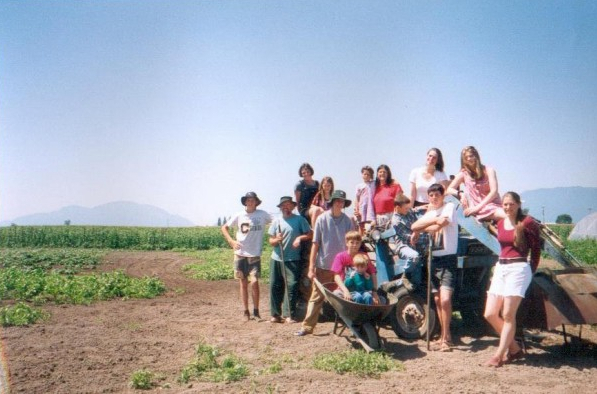
Featured image: Forstbauer farm family. Credit: Forstbauer Farm.

Seeding Local Farm Community

in 2021/Grow Organic/Marketing/Organic Community/Winter 2021

Mary Alice Johnson

When I first ventured into growing fresh produce commercially on lower Vancouver Island in 1991, I was fortunate to connect with a number of folks who were also farming on small acreages in the area. Like myself, they had grown up in rural areas but had followed careers other than farming as young adults. We held in common a longing to be outdoors growing food, and that gave us the audacity to think we could make a living growing food here at this time.

Another common thought was that it didn’t make sense to put poison on the food we were growing but rather to embrace organic practices to grow healthy, beautiful food for our communities. This same group of growers had recently formed the first organization in BC to set organic standards for its members to follow—Islands Organic Producers Association (IOPA).

COG Vancouver Island tour at ALM Farm. Credit: Keeley Nixon. 

I got to know these farmers and their farms when the Sooke Harbour House restaurant asked me to pick up their fresh produce for the restaurant. I saw this as an opportunity to travel around the area to different farms and see what other farmers were doing. I worried that these farmers would see me as a competitor but instead they welcomed me onto their farms and shared information about what varieties to plant, where to find seed, when to plant, harvesting techniques, and pest control. More than half of these famers were women, my peers and relatively new to farming. I had found a strong community right in front of me.

Tina Fraser, one of these farmers, welcomed three of us to form a team to market to restaurants. Before long, the Island Chefs’ Collaborative formed, made up of chefs who wanted to buy from local farmers. These same farmers again came together to help start the Moss Street Market, our chapter of Canadian Organic Growers, and Linking Land and Future Farmers, a land linking program that ran from 1995-2016. Those early years were captured when a UVic Gender Studies student who was apprenticing on my farm produced a film about women organic farmers titled Outstanding in her Fields in 1995, a copy of which can still be found on YouTube.

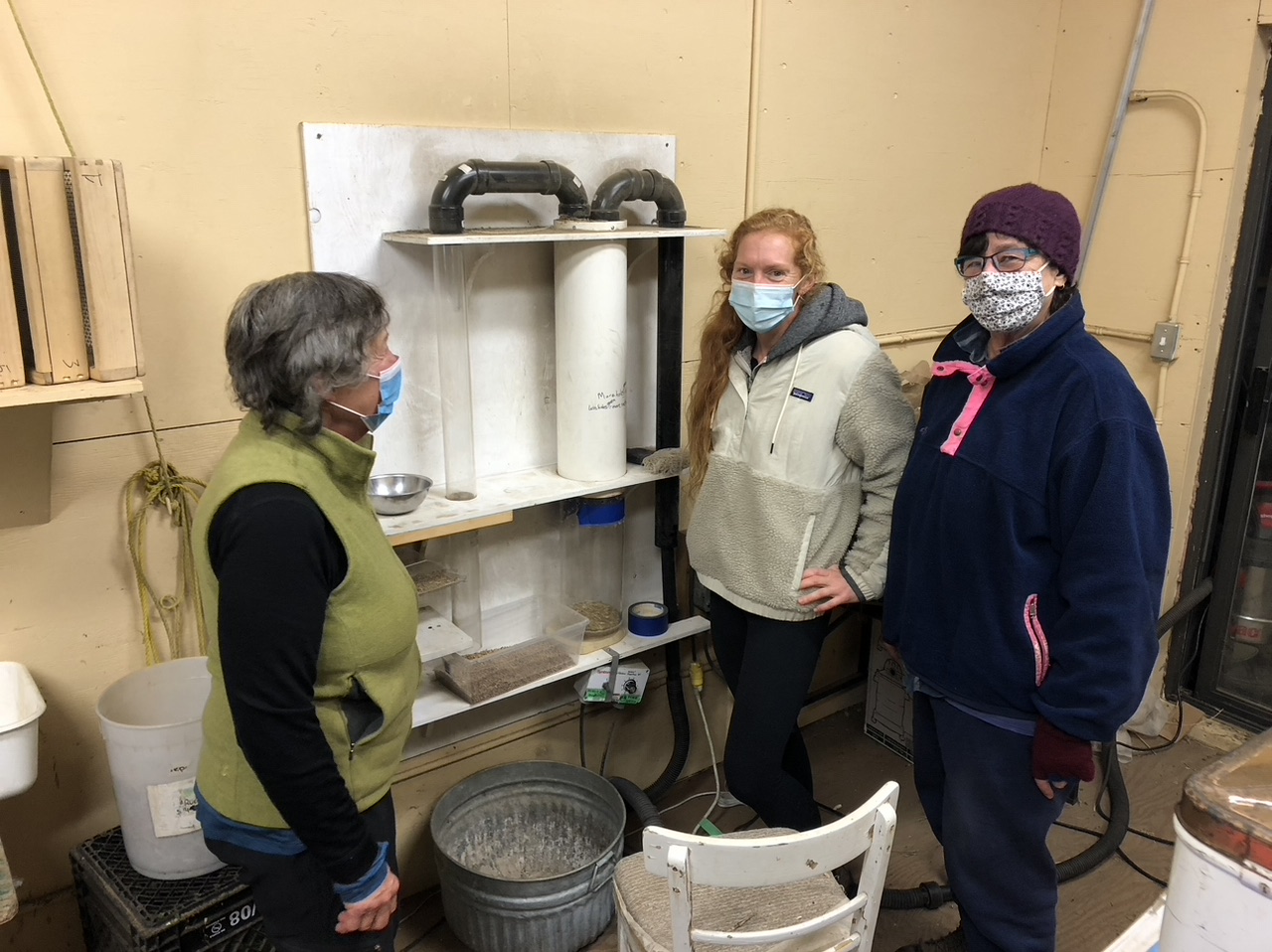
Rebecca Jehn of Rebecca’s Seeds and Teresa Heinekey of Saanich Organics Seeds visit ALM Farm/Full Circle Seeds to use seed cleaning equipment purchased by the farm with a grant from The Bauta Family Initiative on Canadian Seed Security Foundation in 2015. Credit Full Circle Seeds.

While each of us ran our farms, we were also getting into seed saving. We started out by saving seeds on our own. We then came together to form Full Circle Seeds, and operated as a collective of seed producers for several years. I eventually purchased the company as a sole proprietorship and the other three women went on to establish their own seed companies.

Part of our struggle was the coordination of the growing and marketing of over 150 varieties of vegetables, herbs, and flowers in a time before email, Google Drive, and video conferencing. Fast forward 25 years and we now have a group of 20 BC seed growers who came together to form the BC Eco-Seed Co-op in 2014 to increase the quantity of BC grown seed for other farmers, offering hundreds of varieties of seeds available to purchase online.

No longer do budding seed growers have to set up their own seed companies with logos and branding, websites and distribution systems, seed cleaning equipment, germination trials, packaging, and storage. In addition to many local seed growing companies that started in the ’80s and ’90s, we are fortunate to have such a cooperative available in BC. Not only does it mean we have more locally grown seeds, but the quality of the seeds has improved through the collaboration of these seed growers.

I have dozens of stories and memories from these past three decades of farming in Sooke and some of my favourites are those with fellow farmers. The ways we collaborate, connect, and share ideas and frustrations make the challenges of this work more rewarding. I can’t wait to see what is ahead for us with the new projects, collaborations, and coming together to learn, teach, market, and grow together.

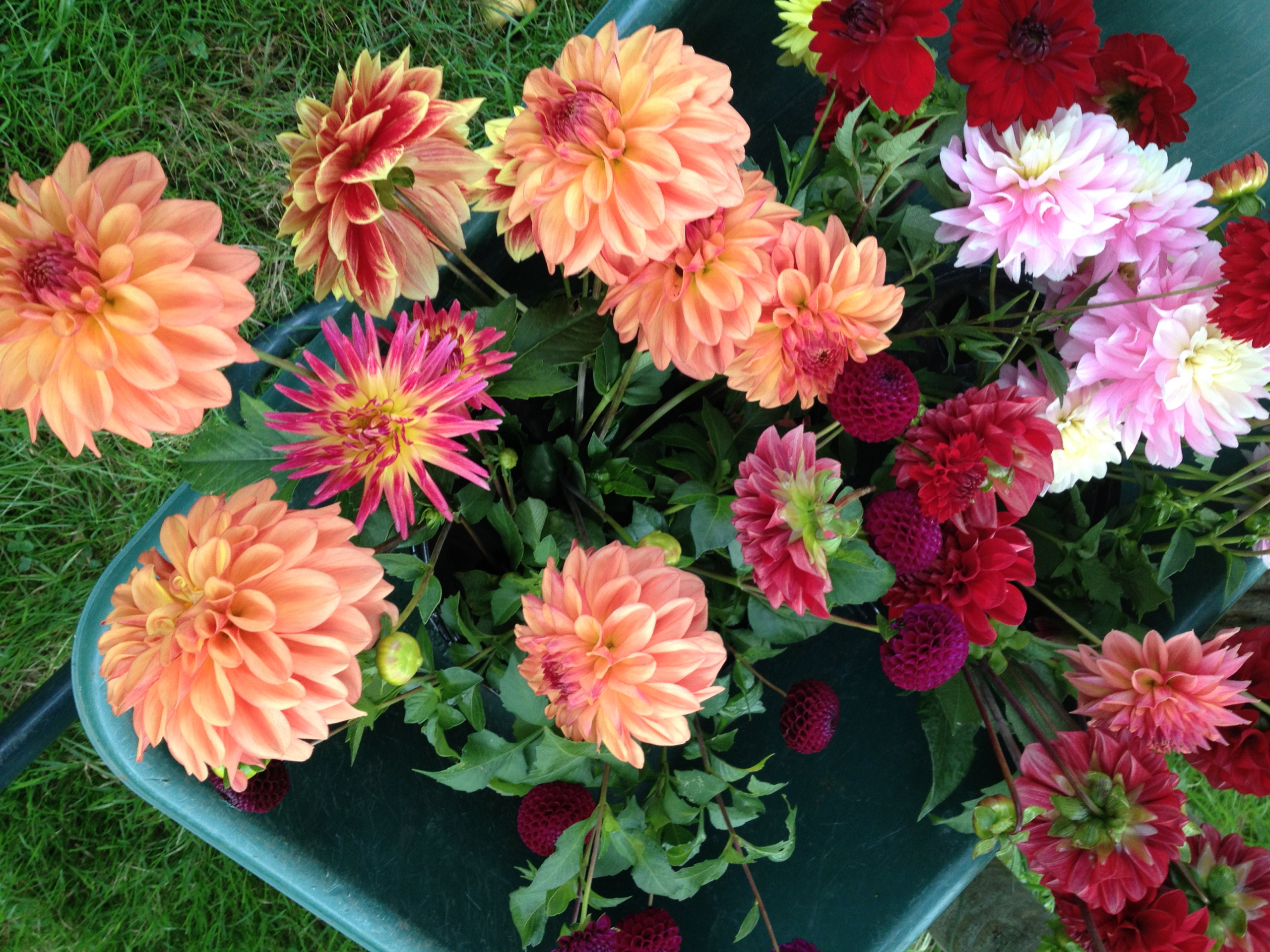
Cut flower harvest. Credit Keeley Nixon.

Mary Alice Johnson is the owner of ALM Organic Farm and Full Circle Seeds. Mary bought a 100-year old farm back in Sooke in 1986 and began farming it in 1990. She helped create Moss Street Market, taught organic farming at Camosun College, and worked with farmers in the Phillipines, China, Laos, Thailand, Cambodia, and Barbados. Mary Alice set up the Vancouver Island Chapter of Canadian Organic Growers and was president of the national organization. Over 200 young people have worked on her farm as apprentices or volunteers over the years, many going on to grow food for themselves and their communities.

Featured image credit: Sam Nixon

Organic Certification Streamlined and Simplified with iCertify

in 2021/Organic Community/Organic Standards/Standards Updates/Winter 2021

Corinne Impey

The start of 2021 marks year two of using iCertify, COABC’s online organic certification system. Last year, over 150 members used iCertify to apply for, or renew, their organic certification.

This year will see more members and more certification bo dies using the system for the first time, while many operators will be returning and benefiting from a simplified renewal process. Behind the scenes, the team has been busy updating the questions to reflect the new organic standards, and developing some new features. The most anticipated update? A database of approved products. Here’s everything you need to know.

iCertify Launches Database of Approved Products

New this year, iCertify will include a database of products that have been pre-approved for use in organic production. This new feature includes a simplified way to request approval for products and the ability to search a database of products already approved by your certification body.

With this new feature you:

  • Don’t have to wait for product approval if it has already been verified by your certification body.
  • Can see expiration dates and supporting documents for approved items.
  • Can search for suppliers of a particular type of product.
  • Can easily share your approved inputs list with verification officers during your inspection.

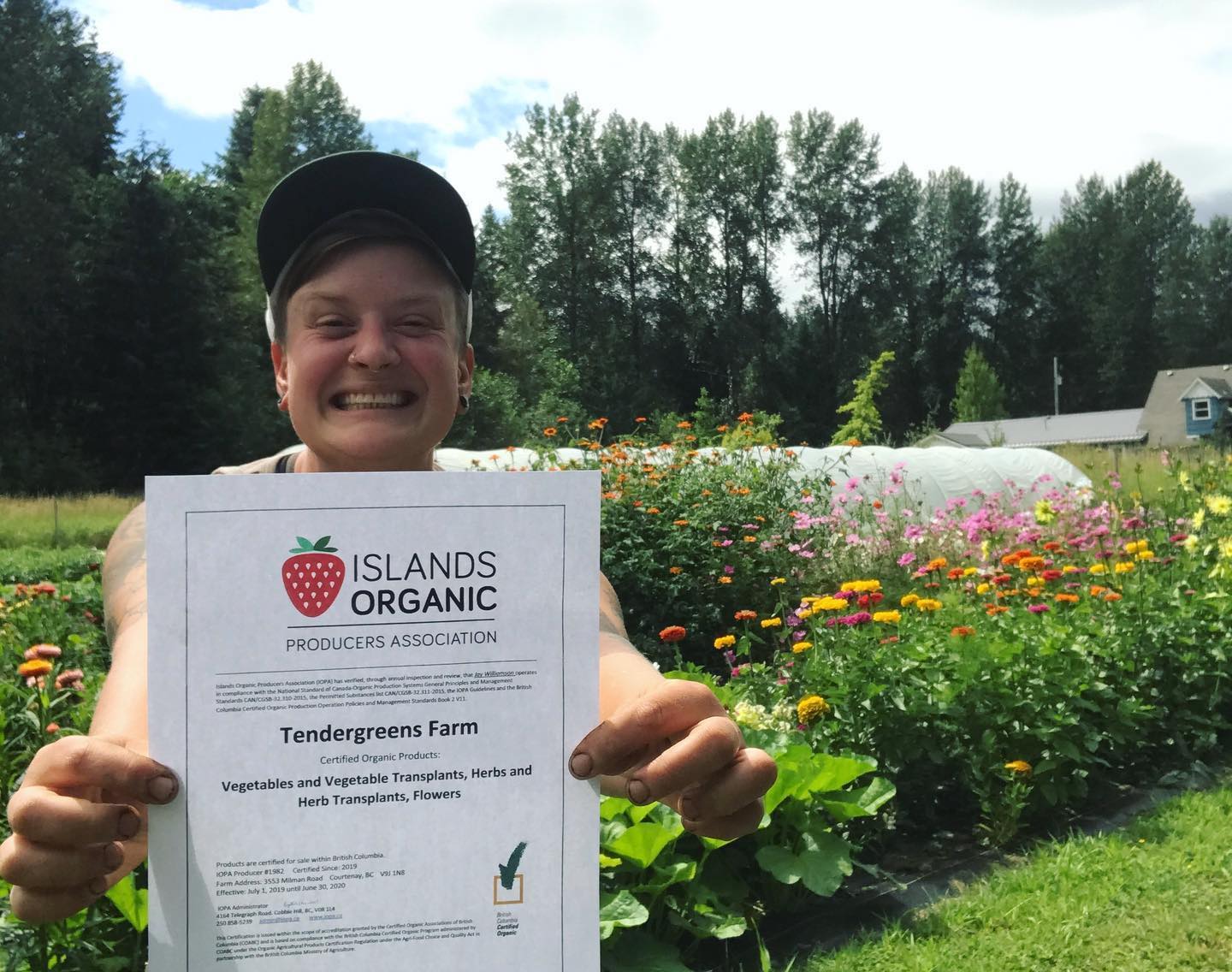
“As both a farmer and a Certification Committee member, I’m very excited for the upcoming database of approved products,” says Jay Williamson of Tendergreens Farm in the Comox Valley, and Certification Committee Chair.

“The ability to search for items in a database of pre-approved products will make it faster and easier for growers to select and source soil amendments and other inputs without having to figure out if products are acceptable for organic use or wait for Certification Committee approval,” says Jay. “It will also greatly reduce the number of product approvals needing to be reviewed by the Certification Committee, and will eliminate a lot of the repetition in the product approval process.”

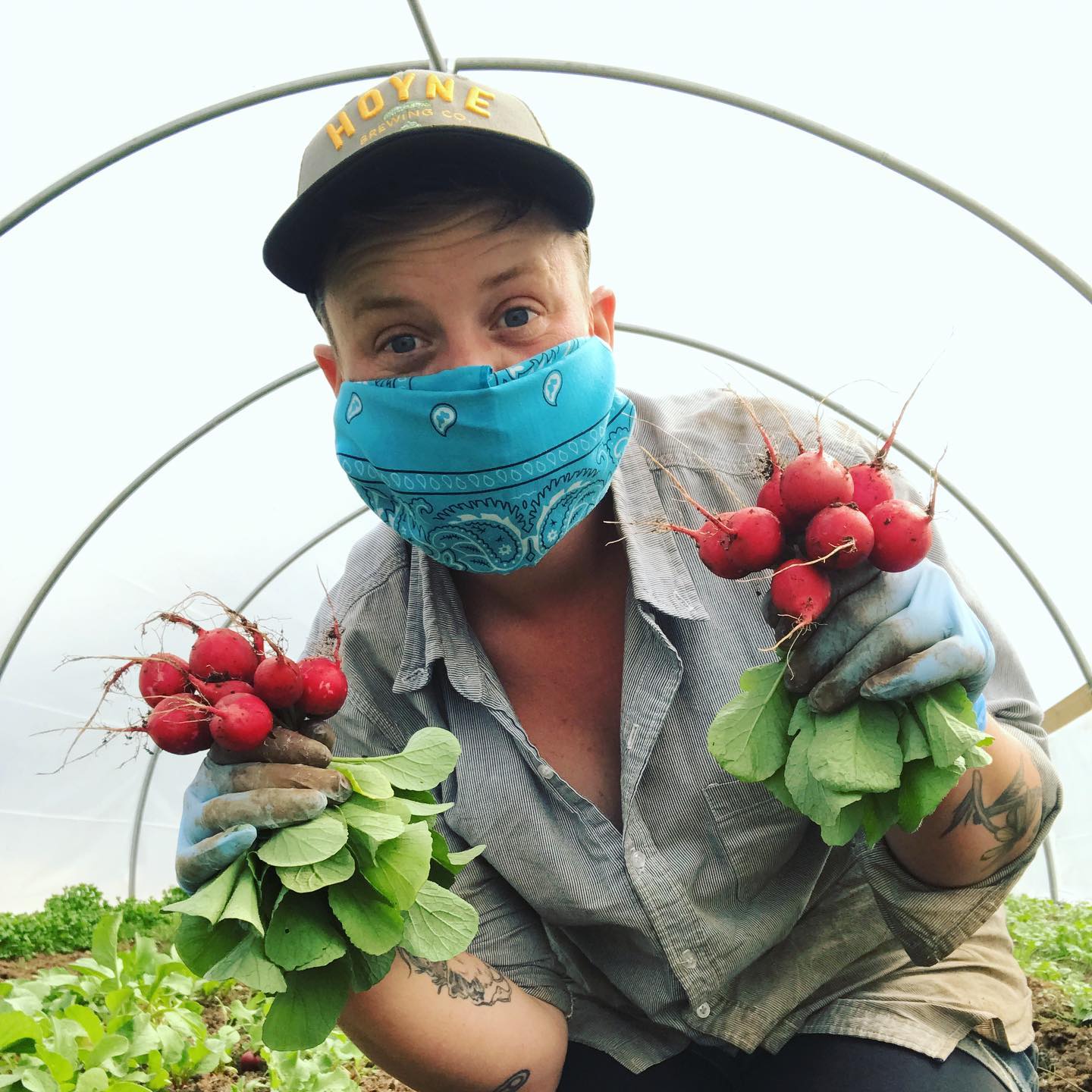
Jay showing off the radish harvest. Credit: Tendergreens Farm

Product Search

From fertilizers to cleaners to pest management products and more, if there is an existing record for the product you want to use, it will appear in the database’s search results. Simply add it to your “My Products” list to see if it has been approved for use by your certification body. Your personalized list will include not only an expiry date, but the ability to renew the approval with the click of a button. During inspection, you can simply log in to your iCertify account and show your inspector your list of approved products and compliance documents, all in one place.

“Over time, as we approve more products and the database grows, it will become an incredibly useful tool not just for existing members, but also for new farmers working towards organic certification,” says Jay.

Requesting New Approvals

You can also use this feature to request new input approvals. Simply follow the steps to upload relevant supporting documents (such as product ingredients list, third party verification, labels, etc.) and request a review directly from within the iCertify system.

Be sure to check with your certification body regarding any fees for these requests, then submit and wait for a decision. You can check on the status of your request at any time, by logging in and reviewing your “My Products” tab.

If the product is approved, it will automatically be added to your “My Products” list complete with any specific instructions or restriction information. Denied products will also be listed with an explanation for denial.

While COABC certification bodies will work together to share product records and compliance documentation, each certification body will approve products for its own members.

Verification officer Megan Halstead. Credit: Megan Halstead.

“Input review questions are one of the most common questions I get asked as a verification officer,” says Megan Halstead. “What a wonderful resource this will be for operators! I feel certain that it will save time and frustration for operators, and hopefully also help make sense of the standards. Since the approved lists will be easy to generate, I think the verification process will be easier during inspections, too.”

This database of approved inputs is managed under the COABC umbrella of certification bodies. It is for and accessible by COABC members only.

Please contact your local certification body directly to confirm if they are using iCertify or the database of approved products this year.

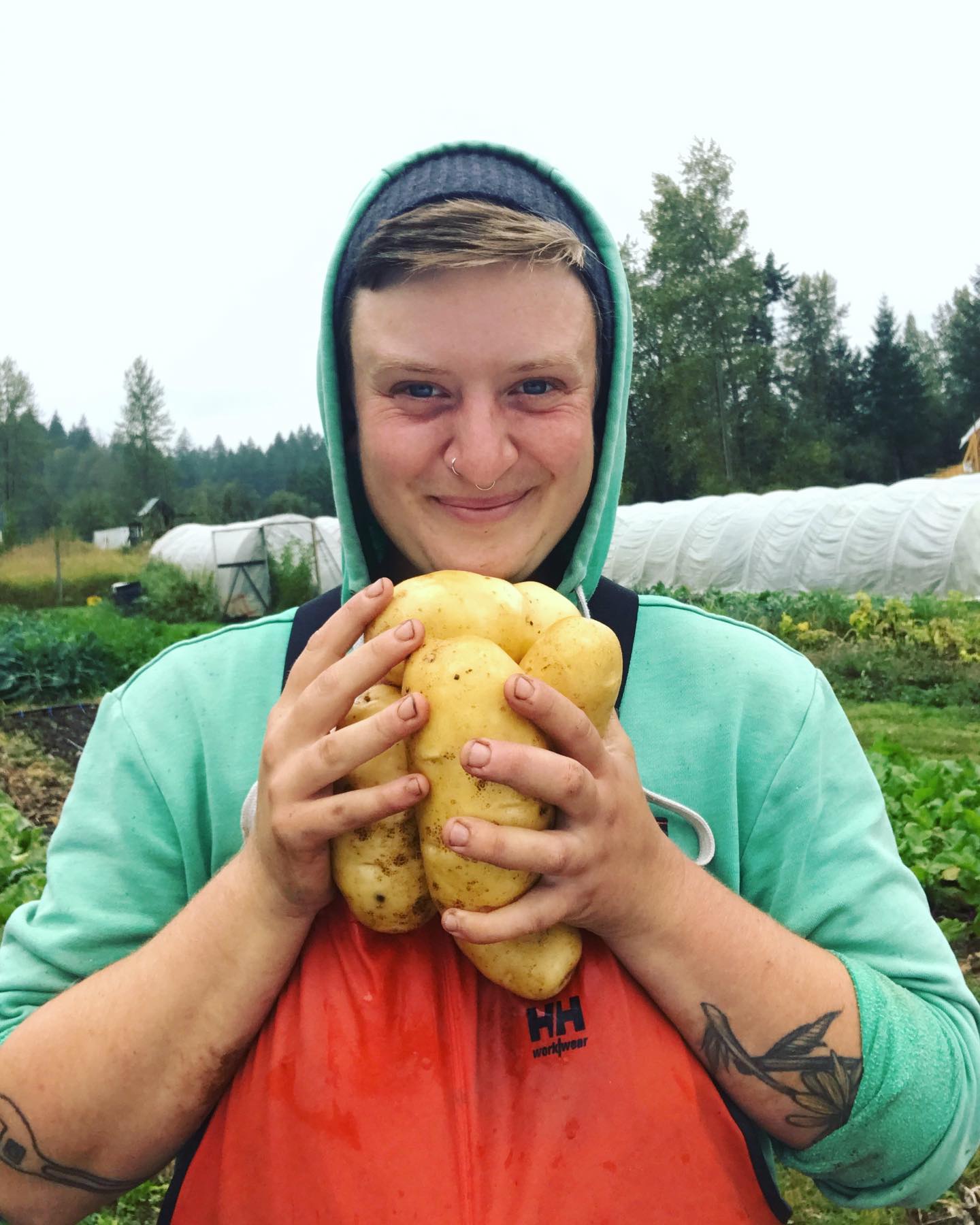
Jay with fresh potatoes. Credit: Tendergreens Farm

Funding for this project has been provided by the Governments of Canada and British Columbia through the Canadian Agricultural Partnership, a federal-provincial-territorial initiative. The program is delivered by the Investment Agriculture Foundation of BC.

Featured image: Farmer Jay Williams beaming with excitement at Tendergreens Farm. Credit: Tendergreens Farm.

Hope for Hemp

in 2021/Crop Production/Grow Organic/Tools & Techniques/Winter 2021

Andrew Adams

As the sun began to exert its warmth upon the land in the late August midmorning hours, I went for a walk through my fields. Every morning I go for this walk. The sweet smell of cannabis plants engulfs me upon arrival. It’s not too overbearing, nor is it “smelly” as some would tell you. Notes of mint, lemon, hops, and even lavender waft in the air with gentle caresses on the flowers, which resemble the black spruce that dot the landscape in our wet and cold climate ecosystem. The senses being stimulated by aromatic compounds and sunlight create a happy nearly euphoric state. My inner 16-year-old can’t believe I have a field brimming with cannabis plants.

While data is still being analyzed on our hemp plots, I hope to give readers a bit of our observational data, the challenges, the triumphs, and just a bit of hope for a crop this farmer believes can become a crop that will not only alleviate the pains of growing crops such as hay but also could spur a new green industry for the region.

After the legalization of recreational cannabis, I visited a licensed producer in the Vancouver area to tour their facility as a part of the Agriculture Land Commission. I soon decided to grow my legal four plants after seeing this greenhouse full of giant plants. I had used Cannabis recreationally as a 20-something in university and enjoyed its effects but when I immigrated to British Columbia the potency was far from enjoyable to me and I had walked away from this botanical miracle plant.

After deciding I wanted to try to grow Cannabis I sought out a variety that was akin to a wild Cannabis plant in Siberia with very low THC, high CBD and a trait known as auto-flowering, or non-photoperiod dominant. Non-photoperiod dominant is simply a plant that does not initiate flowering based on number of daylight hours; rather, the plant runs by its own internal clock. For our long summer days and short season this trait is a must for outdoor growing. The plants grew well, and were shorter than the giants some Cannabis enthusiasts grow in their yards or houses.

While watching my legal four grow it was obvious to me that what the hemp-loving crowd had been screaming for decades was true. These plants have so many uses and require little attention and, most importantly, handle frost well. In our cold climate region known as the SBSvk, which is the coldest and wettest of the biogeoclimatic regions in the Prince George region, frost tolerance is important. As a youth I had thought the Cannabis species was more of a tropical plant so its frost tolerance came as a surprise.

Andrew with hemp harvest. Credit: Hope Farm.

During this experiment I immersed myself in the literature of the species and its controversial history of being made illegal in large part due to racism against Mexicans and African Americans. The more I read the more I wanted to grow hemp almost as a sign of legal protest to the wrongs our society has done in the past.

I attained my license last winter, bought seed, contacted University of Northern British Columbia professor Dr. Lisa Wood, and began the experiment.

Our Class 7 farm has several small microclimates and various soils, most of which can be considered poor. I’ve never let that classification deter me from turning our “poor farmland” into a vegetable farm—nor would I let it deter me from growing hemp.

We chose the earliest of plots to be placed on a south-facing slope that has the best soils as well as the best micro climate. We also planted a late crop in low-lying super clay-dominant plots, which got a summer worth of rain on them. Low-lying clay plus never-ending rain equals ponds. I expected the low plots to fail miserably. The early plots were planted in the last week of May, mostly due to not being able to cultivate the field due to the soil saturation. The low plots were planted a month later.

To my surprise, the low plots caught up to the early plots and by observation (I haven’t gone over exact numbers as of writing this) I would say they did better as they had larger colas (flowering heads) and just looked more vibrant. These were the results I had hoped for but didn’t expect.

My desire to grow hemp, or Cannabis with low THC (lower than .3%), is that of food and fiber production. With climate change causing drastic “weather events,” I hoped that we could plant a crop very late but still harvest a protein-rich food source with excellent fatty acids as well. According to the research prior to planting there appears to be a correlation between higher latitudes and omega fatty acid content. The higher the latitude, the higher the omega-3s and -6s. Lab results will tell us if this is true.

One thing we learned from the early plots is that hemp does not like competition. With the cooler early season temperatures, the hemp grew slow to start while the weeds took over quickly. Planting late, we were able to cultivate out the weeds and as the temperatures were more favorable the hemp grew with astounding speed and outcompeted the weeds. Controlling weed competition, as with most crops, is imperative for a desirable yield.

As we move into year two of trials, we will now plant later for all plots to control weeds, as well as initiate flame weeding to give the hemp an upper hand. We may also be purchasing a small (very small) combine to harvest the crop as I had scythed the experiment that ran this past summer.

The data that we pour over this winter will ultimately tell us which direction we should be moving and we will carry out four more years of trials before we adopt this crop fully on to our little farm. Stay tuned!


Andrew Adams is the co-founder and farmer at Hope Farm Organics in Prince George. Andrew has a Bachelor’s of Science in Agriculture from Kansas State University and his partner Janie has a Bachelor of education. After seeing the state of food security and agriculture in the north the two felt obligated to make real change in the form of organic food production and thus created Hope Farm in 2011.

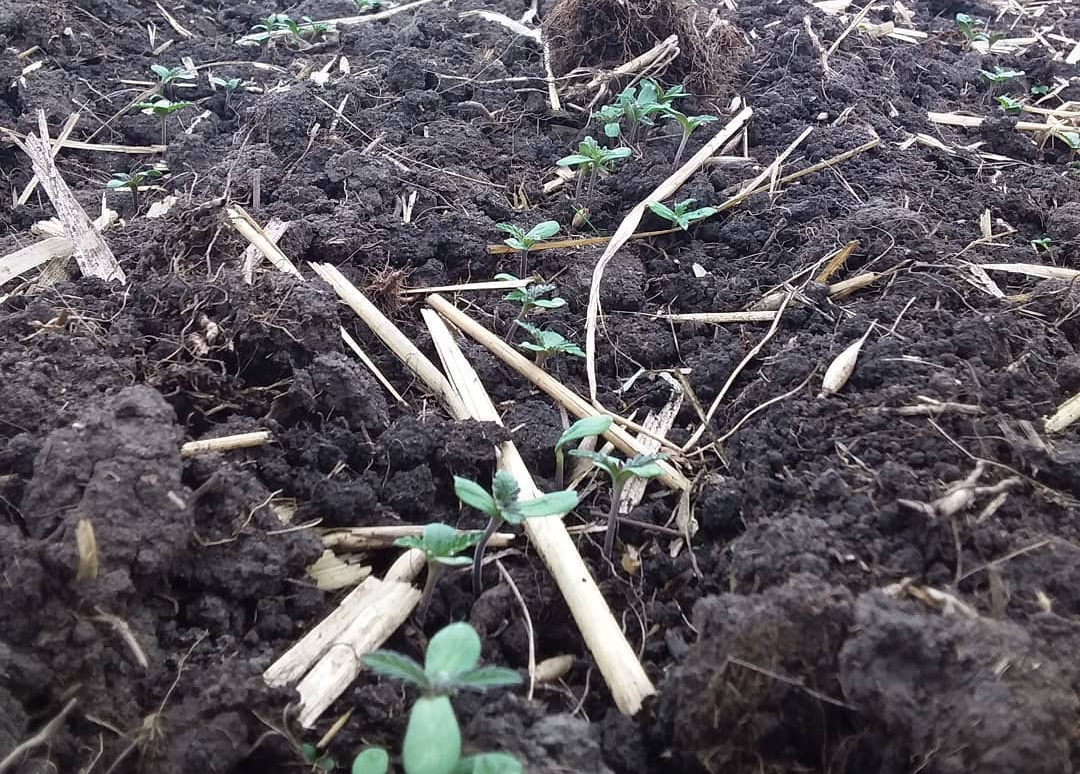
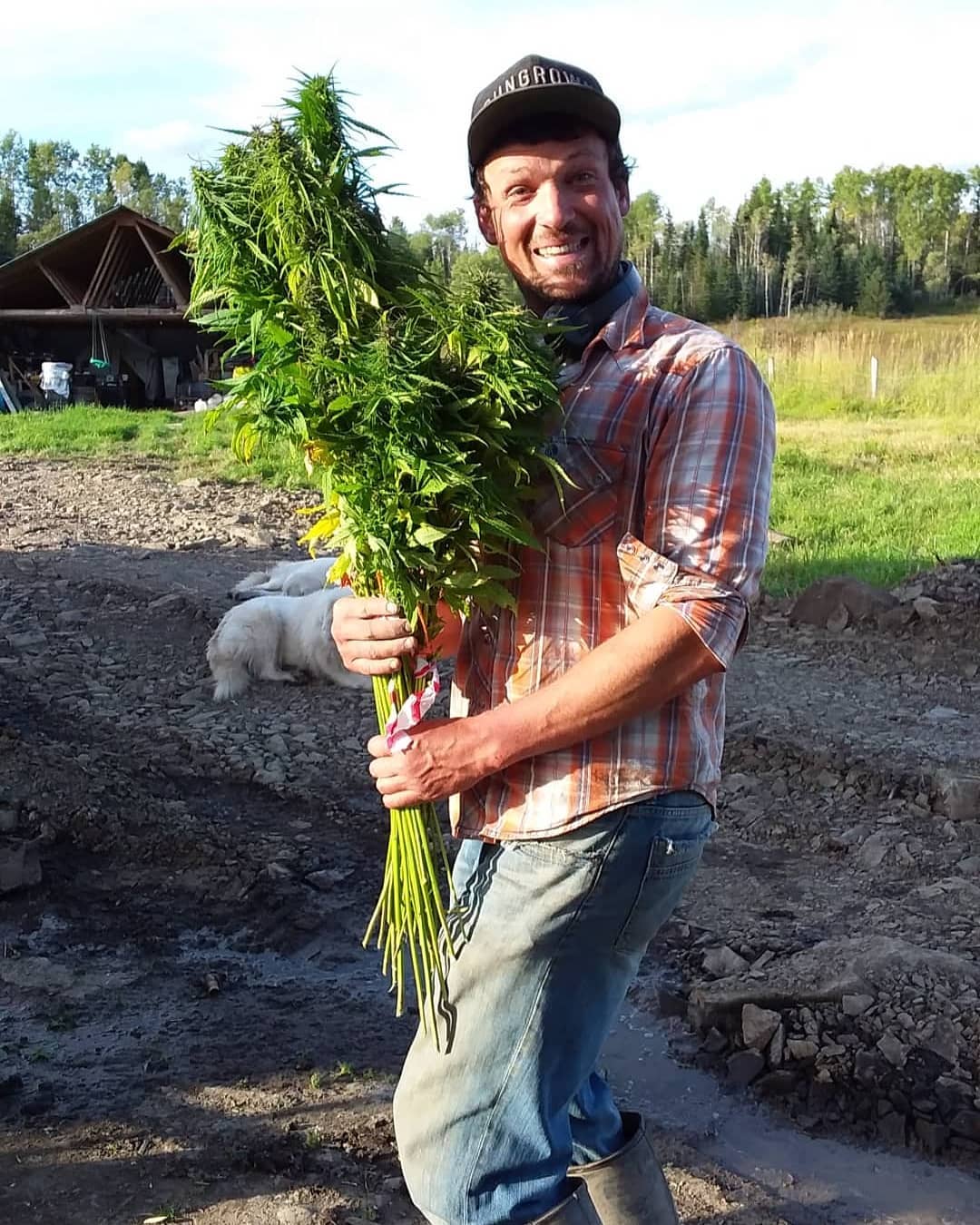
Featured image: Hemp seedlings. Credit: Hope Farm Organics.

Footnotes from the Field: The New Relationship

in 2021/Climate Change/Land Stewardship/Winter 2021

Living in Harmony with Nature

Marjorie Harris

“Biodiversity is biosecurity.” – Paul Stamets

“Living in harmony with Nature by 2050” is the world’s new collective relationship goal. This is an invitation to a new concept of relationship between all of humanity and all of Nature’s ecological biodiversity, both terrestrial and aquatic. This global vision, along with target timeframes, was established at the 2010 United Nations Convention on Biodiversity (CBD) held in Aichi Prefecture, Japan.

The new relationship is asking humanity to live consciously aware, choosing harmony with the biological diversity that powers the planet’s life-support system, including the air we breathe, the water we drink, the food we eat, the beauty we share. To live each day in the awareness of our common heritage, to feel the rhythmic pulse of Nature’s heartbeat synchronizing in our own chests. The pandemic has reminded us all that humanity is but one strand in the scared living web of life on this planet. We are not exempt from our common destiny.

Rachel Carson wrote in reflection on our spiritual bond with Nature: “And so, there is in us a deeply seated response to the natural universe, which is part of our humanity.” Humanity’s enlightened partnership with Nature’s intricately interwoven globally interlinked terrestrial and aquatic ecosystems is to be achieved peacefully, harmoniously, and sustainably.

Heȟáka Sápa, commonly known as Nicholas Black Elk, a wičháša wakȟáŋ, or medicine man of the Oglala Lakota, speaks to life’s oneness: “The first peace, which is the most important, is that which comes within the souls of people when they realize their relationship, their oneness, with the universe and all its powers, and when they realize that at the center of the universe dwells Wakan-Tanka, and that this centre is really everywhere, it is within each of us.”

The AICHI pledge taken by more than 200 countries in 2010 defined 20 ecological biodiversity target objectives to be reached by 2020. AICHI Biodiversity Target 11 is that “at least 17 percent of terrestrial and inland water, and 10 percent of coastal and marine areas, especially areas of particular importance for biodiversity and ecosystem services, are conserved through effectively and equitably managed, ecologically representative, and well connected systems of protected areas and other effective area-based conservation measures, and integrated into the wider landscapes and seascapes.”
Well, it’s 2020, and this September the UN Convention on Biodiversity released a first-decade progress summary. The report concluded that not one of the 200 signatory countries completed any of the 20 listed ecological-biodiversity targets. Progress was stalled across all levels, from governmental biodiversity framework planning and policy development, to on-the-ground implementation. As the planet’s ecosystems plunge headlong into the sixth mass extinction of species, and as biodiversity is being lost at an unprecedented rate, this outcome seems dismal.

According to the World Wildlife Fund, “we’ve caused a 60 percent decline in wildlife populations since 1970, through habitat loss and degradation, overfishing, and overhunting. Guess what’s also happened since 1970? We’ve added more than 4 billion people to the human population. In 1970, there were 3.7 billion people on the planet. Today there are 7.8 billion.”

The words of Rachel Carson once again resonate: “The human race is challenged more than ever before to demonstrate our mastery, not over nature but of ourselves.”

In a recent interview, Elizabeth Maruma Mrema, executive secretary of the UN Convention on Biodiversity, said, “Globally, lessons have been learned. COVID-19 has made us even more aware, giving us a stark reminder of our unsustainable relationship to nature. I hope we will not repeat mistakes of the past…or we will all perish”

Our global consciousness is young. It was only on August 23, 1966 that we saw our home planet for the first time. “Viewed from the distance of the moon, the astonishing thing about the Earth, catching the breath, is that it is alive… Aloft, floating free beneath the moist, gleaming membrane of bright blue sky, is the Earth, the only exuberant thing in this part of the cosmos,” describes Dr. Lewis Thomas in his book, The Lives of a Cell: Notes of a Biology Watcher.

Dr. Thomas goes on to say, “But it is illusion to think that there is anything fragile about the life of the Earth; surely this is the toughest membrane imaginable in the universe, opaque to probability, impermeable to death. We are the delicate part, transient and vulnerable as cilia. Nor is it a new thing for man to invent an existence the he imagines to be above the rest of life; this has been his most consistent intellectual exertion down through the millennia. As illusion, it has never worked out to his satisfaction in the past, any more than it does today. Man is embedded in nature.”

As we continue on this collective journey exploring our new relationship with all living things, China will be hosting the fifteenth session of the Conference of the Parties (COP 15) to the Convention on Biological Diversity (CBD). As an invitational message to us all, Li Ganjie, Minister of Ecology and Environment of the People’s Republic of China, says:
“We only have one earth, on which we all live and upon which we all depend. Biodiversity is the foundation for human survival and development. Protecting global biodiversity is in the interest of every one of us. It is an important part of the vision of building a community of shared future for mankind and also the mission of the Convention on Biological Diversity.

“The Action Agenda is both a challenge and a tool for all those who are committed to safeguarding life on Earth. With this initiative, we are calling on Parties to redouble their efforts to halt biodiversity loss.

“The Action Agenda online platform will allow us and our partners to measure progress on biodiversity goals, assess the impact and identify gaps. This is urgently needed as we work to lay the foundation for a highly ambitious, and yet achievable, global biodiversity framework for the next decade.”

Living (on) planet Earth is our common biological heritage; may we know together, as Nicholas Black Elk suggests, “The first peace, which is the most important, is that which comes within the souls of people when they realize their relationship, their oneness, with the universe and all its powers.”


Marjorie Harris, IOIA VO and concerned organophyte.

Biodynamic Farm Story: Coping Without Cows

in 2021/Grow Organic/Marketing/Winter 2021

Anna Helmer

Lament: No in-person farming conferences and meetings this winter. No chance encounters in the Trade Show, no delightful perusal and purchase at the silent auction, and no (insert acute pang of nostalgia here) food and drink. I regret all the ongoing unfinished conversations with people I see only annually but think about all year—friendships that are continually enriched with shared stories of farming. All this seems lost to me online.

Solace: The online versions will quite likely result in luxuriously languid hours spent sprawled in a chair with tea
and cookies enjoying edification by interesting presenters. That experience, I believe, can be replicated. And there will likely be benefits yet unrecognized—easier to attend? Less driving? Certain efficiencies achieved?

Admission: Farming conferences can be quite boring; by which I mean, nice and boring. Being bored is an aspirational state for me, and farming conferences often deliver. I find it very relaxing. I hope they don’t get too efficient.

Get on with it: I am avoiding talking about what I intend to write about. The theme for this edition of the BC Organic Grower is: Seeding Wisdom: Collaboration & Relationships. Suitable seed beds are necessary for successful seeding and blah blah blah extend the metaphor yourself.
Uncomfortably for me, certain sage seeds are right now being deliberately picked out and set aside and the chickens have come home to roost in the form of cull potatoes.

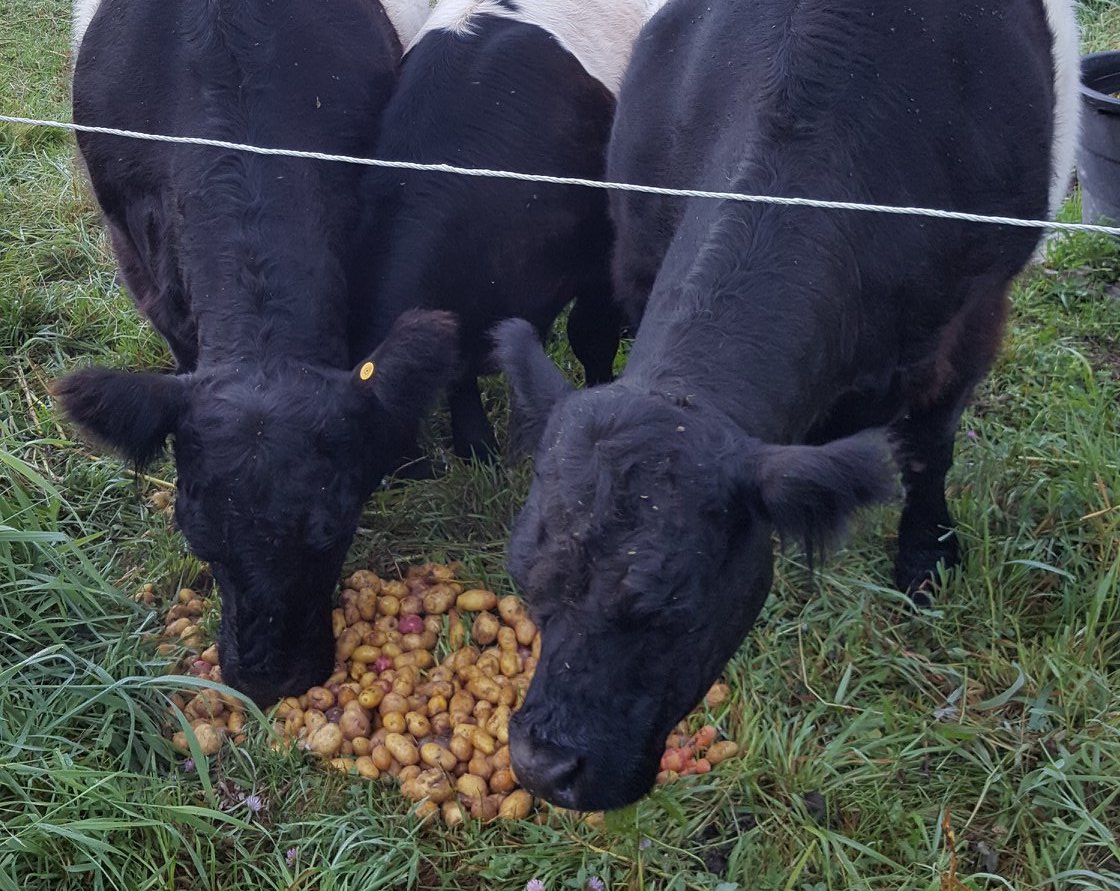
For if there is one bit of wisdom a Biodynamic (or any) farmer would share, it would quite possibly be: keep cows. Cows process things like grass and cull potatoes into valuable usefulness. Grass and cull potatoes might otherwise be useless clutter. Cull potatoes, for example, claim valuable space, bins, and effort, and on a seed potato farm they need to be disposed of so thoroughly that they won’t regrow. Cows excel at this task, daily devouring large volumes in slobbery bliss. Well, we don’t have cows right now and we aren’t getting cows anytime soon. Ergo, wisdom kicked to the curb, problem still exists and getting bigger.

Now I have to build a compost heap that will digest potatoes. The plan is to layer potatoes, old hay, and dirt all winter long. The potatoes will, I think, freeze and thaw a few times in there and turn to mush. I hope the hay will create some pathways through that muck before it totally rots too, which will allow air, worms, microbes, and fungi to spread through and decompose everything. This is not a scientific explanation of what will happen.

No one is coming to me for scientific wisdom, right? Just checking.
I have some other things to throw in there: eggshells that I have been accumulating all summer, and, of course, Biodynamic Preparations 502-507. In the spring, once the root-houses are cleared of potatoes, perhaps the nettles will be up and I’ll cover the pile with all I can get. Finally, in a nod to the wise Biodynamic practice of a million farmers in India, I’ll cap it with a layer of fresh cow dung.

This is the step I am most excited about. I just miss so much the smell of fresh, happy cow manure and I am poised to poach the poop of a few local herds. One of them grazes on an airy grassy knoll with a stupendous view of the local massif, Mount Currie. Surely cows with that perspective will produce some very energizing manure. Another is the herd of a valued mentor. She is the one who taught me that if you don’t want to get behind in farming, you have to do a farming job every day. Even when you don’t want to. Even when there is a thunder-snow rainstorm going on. Especially then.

I am going to spread this manure by hand. That’s how it’s done.


Anna Helmer is going into winter in the Pemberton Valley with no lack of plans.

Feature image credit: Helmers Organic Farm.

1 10 11 12 13 14 29
Go to Top