Author

Darcy Smith - page 20

Darcy Smith has 283 articles published.

Local Food Economies Thrive at Market—Rain or Shine!
in Fall 2018/Farmers' Markets/Marketing/Organic Community

Anna Helmer

The bell rings to start the market day. Relentless and demoralizing rain has been falling since the tents came out of the trailer and we began the set up, two hours ago. The gutters now strung up between the tents are working well, emitting a steady stream of water into the growing pool along the back curb and the tent side walls keep us relatively rain-free inside the stall. The very air seems wet, however, and little can be done about that. Tough morning at market so far.

I’ve been selling my family farm’s produce at Vancouver farmers’ markets for 20 years, so I know how to sell potatoes in the rain. It’s just like how to do it in the sunshine, except it seems mentally harder. The difficulty lies in keeping the stall in a high state of readiness, even though it might be empty and you would prefer to be warm and dry elsewhere. Every sale matters—especially in the rain, if your farm depends on farmers’ market sales.

I squeeze my way past the bins of backstock in the trailer where I have been changing out of sopping wet clothes. I have already traded a few hellos with the neighboring vendors, people I’ve seen every Saturday morning for years, but there’s been no time for more than that. I glance around to make sure all the signs are up and that the display is full: we’ve finished in time. It takes just as long to get set up in the rain as it does otherwise. Longer, of course, if you waste time regretting the situation.

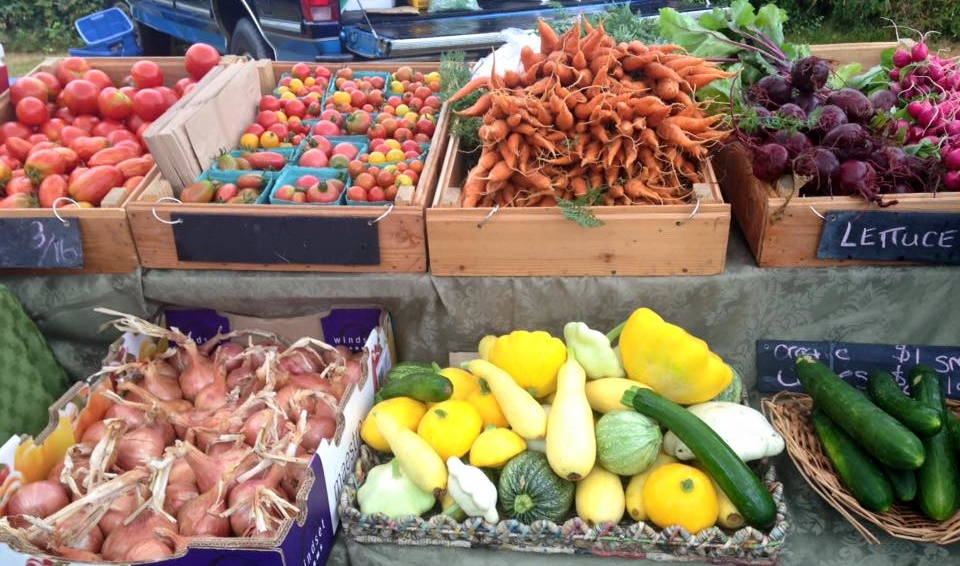
The potatoes look good today, the red Chieftain and yellow Sieglinde sort of glowing in the dim light. My staff, who are making up $5 bags of potatoes and carrots, wisely refrain from discussing the weather. The vast, dripping, emptiness out in the market fairway which would normally be filled with customers eager to start shopping, lining up in advance of the opening bell, is obvious enough.

It is undeniably deserted, and despite the potatoes doing their best to provide sunshine, it feels disheartening. I give my head a shake because I think it’s too early to write this one off.

The first customer materializes. She’s a rain-or-shine regular who gave up on regular grocery stores quite a few years ago. She is followed by another I don’t recognize. A chef splashes his way in. I make sure his 20lb bag weighs at least 25. At the till, we’ll be rounding down more than usual. The customers might not notice but I don’t mind. I am feeling very benevolent towards anyone who turns up this morning.

Before I know it, an hour has passed, and I realize that the potato display tables are hidden from view by the backs of customers filling bags. The stack of now empty bins in the back has risen to a level I hardly thought possible when the opening bell rang. It’s going to be a solid day, despite the rain, which might even be easing up a little.

One of my staff has been coming to market ever since she was a baby, and her mom worked for a farm vendor here before that. She’s on the first till, and I jump behind the second one, a line-up having formed of dripping wet customers who thank us for being here today when they get to the front.

It bears repeating: the rain-soaked customers are thanking us and giving us money for potatoes. In fact, it’s now so busy they are lining up to do so. This, right here, is what makes farmers’ markets tick. People choose shopping in the rain over going to a grocery store. Farmers choose marketing in the rain over selling wholesale.

It’s what leads to the fact that farmers can make a living on an acreage that would otherwise be insufficient because they can get full retail for their produce. The customers keep coming back for more because…well…I just don’t know. Is it the quality of the product? The contact with an actual farmer? The coffee and crepes? It might be magic. Whatever the cause, it provides me motivation to keep farming, and to keep customer service and marketing standards high. It seems like a practical way of showing the customers that I really appreciate their business.

I love being a part of this special relationship, but I worry that it won’t last. It’s so much work, there is so much to learn, and there is so much competition for customers—and surely, they won’t keep coming? I mean, sometimes they must quietly wonder if it is really all that great? The weather, the effort, the cost. All that cooking.

Customers. We need customers to make markets successful. We need to retain existing ones and win new ones who might also shop in the rain. The good news is that we are only tapping a tiny fraction of the people who buy food, so there are plenty more to be had. The bad news is that the competition out there is absolutely fierce, and nowhere else other than at farmers’ markets are customers asked to go out shopping in all sorts of weather, probably park far away, and spend perhaps a little more than they really meant to.

Farmers’ markets enjoy one major competitive advantage however, and that is something I have begun to call “mutual appreciation.” This is an energy generated at the point of contact between primary producer and end consumer at market, most notably at the transaction stage. I take your money, you take my potatoes. We are both appreciative of the other. The feeling builds each week, from season to season and year to year and really can’t be re-created in other retail environments.

The farmer can do much to cultivate the feeling of mutual appreciation in the stall. It’s about a lot more than saying “thank you.” Developing good customer service and merchandizing skills is of prime importance—pre-market preparation, and of course years of practice help too.  In my opinion, it is important to put as much effort into selling the food as you spend growing it. These customers deserve that.

The farmer makes the magic that the people are coming back for. If you can also create this feeling of “mutual appreciation” in your stall, I think you’ll be able to have both tills busy, even in the rain.


Anna Helmer farms in the Pemberton Valley with her family, friends, and relations. Her book is called: A Farmer’s Guide to Farmers’ Markets and is available on amazon.com.

Photo by Moss Dance.

Footnotes from the Field: Intergenerational Soil Stewardship

in Fall 2018/Footnotes from the Field/Grow Organic/Land Stewardship/Organic Standards/Tools & Techniques
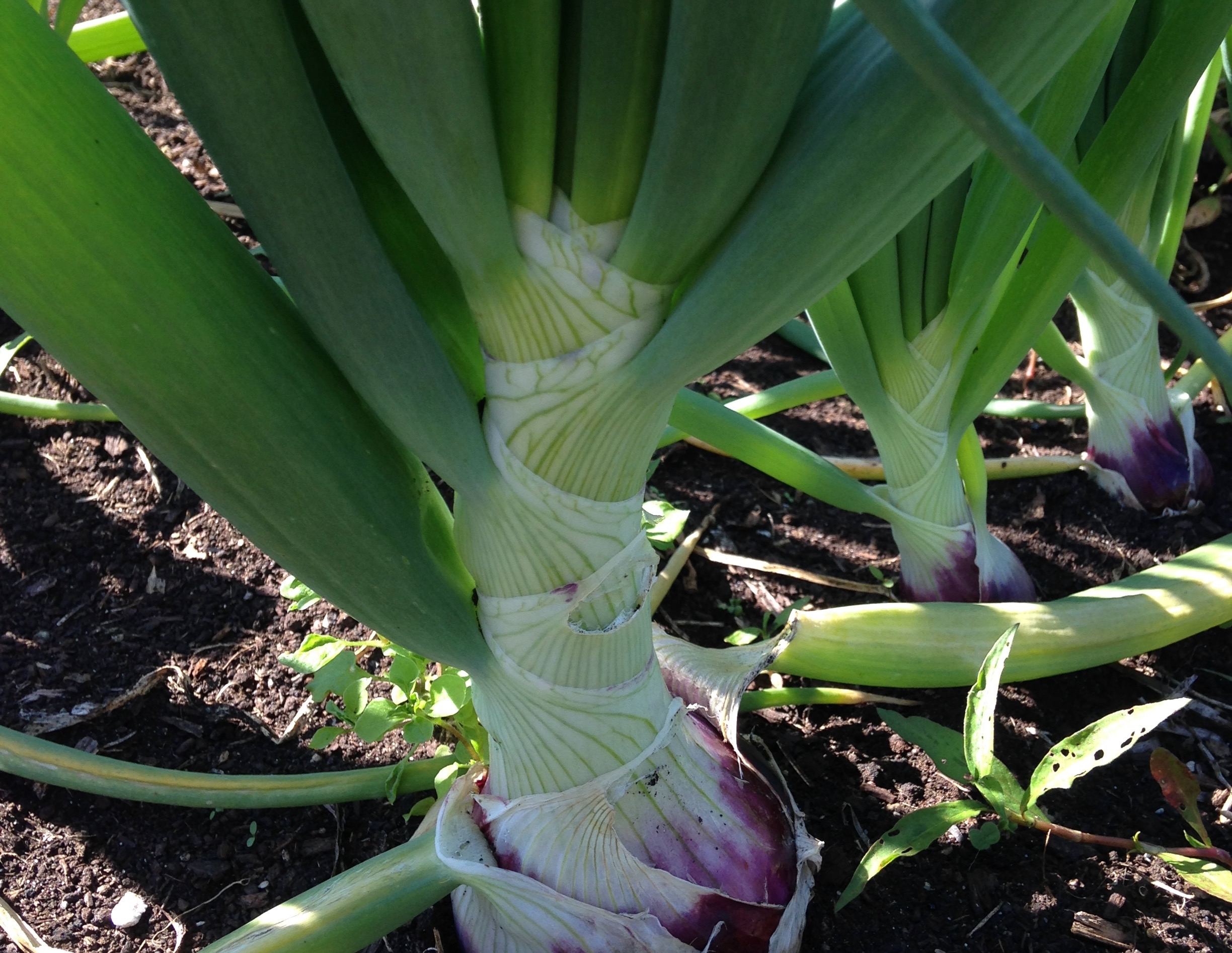
Onions by Moss Dance at Birds and Beans

Intergenerational Soil Stewardship: Our Only Hope?

Marjorie Harris BSc, IOIA V.O. P.Ag

Soil, specifically topsoil, is the foundation of life on this earth. Earth is the only planet with healthy fertile soil on it that we know of yet, in the whole of the universe. Fertile soil is a little-understood mixture of biology and geology whose potential only exists in the topsoil layer. The topsoil layer is composed of the topsoil itself and organic matter in various stages of mineralization and humus production. Degradation and erosion of the topsoil depletes soil fertility, restricting plant growth, vitality, and micronutrient content.

The theme for this month’s BC Organic Grower is: “Bioregionalism: building place based economies.” Agricultural philosopher Wendell Berry suggests that an agrarian economy is based on local adaptation of economic activity to the capacity of the land to sustain such activity.

This is a challenging idea because history shows us that farming as practised in the past and the present always causes topsoil degradation. Through the ages, soil degradation, or erosion, has steered the fate and course of human civilizations and ultimately caused the demise of those civilizations. This story has repeated itself throughout the world and in the history of every type of farming. In the words of Sir Winston Churchill, “Those who fail to learn from history are doomed to repeat it.” No greater historical comment can be made for agriculture: learn or be doomed. All farming societies exhausted their topsoils within 800 to 1700 years.

The Canadian Organic Standards speak to soil conservation and soil fertility specifically in the following sections:
The general principles of organic production in Annex 1:
1. Protect the environment, minimize soil degradation and erosion, decrease pollution, optimize biological productivity, and promote a sound state of health.
2. Maintain long-term soil fertility by optimizing conditions for biological activity within the soil.

Clause 5.4.3 Tillage and cultivation practices shall maintain or improve the physical, chemical and biological condition of soil, and minimize damage to the structure and tilth of soil, and soil erosion.

Principle of Health

Organic agriculture should sustain and enhance the health of soil, plants, animals, humans and the planet as one and indivisible.

We have run out of new lands to discover on planet Earth. In 1995, Dr. David Pimental of Cornell University calculated that we had already lost 30% of the arable land we were farming to soil erosion. With the advent of chemical and mechanical agriculture the soil erosion problem has increased a hundred-fold in areas. As an example, in the past 150 years, one-half the fertile topsoil of Iowa has been lost to erosion.

Topsoil is a strategic and underappreciated resource. Soil can be conserved, made, and lost and it is the balance of these factors that determines the soils fertility. How we manage the soil resource in our generation will affect generations to come. As long as soil erosion continues to exceed soil production, it is only a matter of time before agriculture fails to support Earths humanity.

What Can We Learn from the Trials and Errors of Our Ancestors?

Çatalhöyük, Anatolia (modern Turkey) was home to a Neolithic farming civilization that lasted around a thousand years starting about 7500 BC. Scientists have studied skeletal remains which have provided a highly informative record of human health. From the skeletal health record they have been able to divide this civilization into three distinct health time periods: Early, Middle and Late. During the Middle period the civilization reached its peak in population and health, and then as soil fertility was depleted the human skeletal health parameters demonstrated decline. By the end of the Late period 52% of human births resulted in infant mortality before the age of two months. Similar skeletal health studies have been conducted on the remains of other farming civilizations globally with outcome of human health declining in parallel with topsoil and soil fertility depletion, supporting the assumption that human health is interdependent on topsoil retention and soil fertility.

Dr. David R. Montgomery succinctly identifies the problem and a potential solution in his book Dirt: The Erosion of Civilizations: “Sustaining our collective well being requires prioritizing society’s long term interest in soil stewardship; it is an issue of fundamental importance to our civilization. We simply cannot afford to view agriculture as just another business because the economic benefits of soil conservation can be harvested only after decades of stewardship, and the cost of soil abuse is borne by all.”

What Does a New Sustainable Agriculture Ethic Require from Us?

In Dr. David Montgomery’s more recent publication “Growing a Revolution: Bringing Our Soil Back to Life,” he outlines solutions to soil conservation and topsoil rebuilding techniques he has witnessed applied in the field around the world. He identifies the main culprit of soil erosion in agriculture as the invention of the plow. The plow breaks the soil structure and exposes the underground community of biota to the surface. “The plow is the villain that set the seeds for soil degradation. Only deserts have bare earth and Nature tends to clothe herself in plants.”

Another challenge is that during one generation a farmer can seldom see the effects of topsoil erosion unless a dramatic natural weather event sweeps the soil away. During day to day farming it is difficult to ascertain the minimal yet additive effects of traditional tillage techniques. Fallow land tillage is a traditional technique that leads to desertification and needs to be abandoned and replaced with topsoil preserving methods. Topsoil conservation and rebuilding requires the focused consciousness of Intergenerational Soil Stewardship to guide agricultural sustainability.

Soil is in a Symbiotic Living Relationship with Plants

When plants are actively photosynthesizing they release 30% to 40% of the sugars, carbon compounds, and proteins they manufacture through their roots into the root rhizosphere. The root exudes these nutrients to feed the underground community of fungi and microbes in exchange for micronutrients from fungi and microbial metabolites that act as growth stimulators and plant health promoters.

When plants are fed synthetic N, P, K they grow big on top of the ground but do not invest in growing a big root system and do not deliver as much nutritious root exudates to feed the underground microbial and fungi communities. As a result the plant does not reap the benefits of vitality factors and micronutrients. The plants overall health is less and the plant tissue has demonstratively less micronutrient content to pass on up the food chain. Micronutrient studies demonstrate that under conventional agriculture the plants have lost between 25% to 50% of their micronutrient content in the past 50 years.

The solution to successful topsoil building Dr. Montgomery observed while touring farms around the world required three things to happen at once: no till planting techniques, cover cropping, and adding organic matter to the soil. Dr. Montgomery has coined the method Conservation Agriculture and the methods can be applied in both conventional and organic farms—because when it comes to soil conservation and restoration, everybody needs to get on board.

Principles of Conservation Agriculture:

1. Minimal or no disturbance/direct planting of seeds (e.g., no till)
2. Permanent ground cover: retain crop residues and include cover crop in rotations
3. Diverse crop rotations: to maintain soil fertility and break up pathogen carryover
4. Livestock assisting in topsoil building: mimic bison grazing, move cattle in a tight herd to intensive graze (high disturbance), and move frequently to produce low frequency grazing.

Benefits of Conservation Agriculture, after a short transition period of 2 to 3 years to allow soil organic matter to build fertility:

1. Comparable or increased yields
2. Greatly reduced fossil fuel and pesticide use
3. Increased soil carbon and crop resilience
4. Higher farmer profits

“This is not a question of low tech organic versus GMO & agro-tech….this is about ‘how to apply an understanding of soil ecology to the applied problem of increasing and sustaining crop yields in a post-oil environment’.”

“Agriculture has experienced several revolutions in historical times: the yeoman’s revolution based on relearning Roman soil husbandry and the agrochemical and green revolutions based on fertilizer and agrotechnology. Today, the growing adoption of no-till and organic methods is fostering a modern agrarian revolution based on soil conservation. Whereas past agricultural revolutions focused on increasing crop yields, the ongoing one needs to sustain them to ensure the continuity of our modern global civilization. The philosophical basis of the new agriculture lies in treating soil as a locally adapted biological system rather than a chemical system.”

Intergenerational Soil Stewardship: Society on a global scale based on an agrarian economy adapted to its bioregion dedicated to topsoil conservation and restoration and the development of soil fertility.


Marjorie Harris is an organophyte, agrologist, consultant, and verification officer in BC. She offers organic nutrient consulting and verification services supporting natural systems.

References:
1. Montgomery, D. (2007). Dirt: The Erosion of Civilizations. University of California Press. Montgomery, D. (2017). Growing a Revolution: Bringing Our Soil Back to Life. W. W. Norton & Company.
3. Pimental, D., Burgess, M. (2013). Soil Erosion Threatens Food Production. Agriculture, 3(3), 443-463; doi: 10.3390/agriculture3030443
4. Montgomery, D. (2014). Soil erosion and agricultural sustainability. PNAS. 104 (33) 13268-13272; https://doi.org/10.1073/pnas.0611508104

Ask an Expert: BC Plant Health Laboratory

in Ask an Expert/Crop Production/Fall 2018/Grow Organic/Pest Management

Plant Health Diagnostic Support for BC Producers

Emma Holmes, P.Ag

While we always hope that every farmer has a successful season and bountiful harvests, the reality is that there are endless factors to potentially derail those harvests. For me, the hardest part of farming was finding my crops decimated by pests or struggling to survive after getting hit with a disease. My heart sank when I found my previously healthy cucurbits drooping and turning brown in the greenhouse one morning and I felt panic when the arugula I was counting on for my CSA box was eaten by pests before I managed to snag it for my customers.When problems appear, an accurate and timely diagnosis is crucial. The BC Plant Health Laboratory, along with myself and colleagues at the BC Ministry of Agriculture (AGRI), are here to provide you with plant disease and insect identification support and management advice.The Plant Health Laboratory is located in the Abbotsford Agriculture Centre and has been operating year-round since 1967. The lab is fully equipped with state-of-the-art diagnostic technology and knowledgeable staff to diagnose plant health problems affecting crops and plants grown in BC, including:

  • Plant diseases
  • Non-pathogenic disorders
  • Insect Pests

How to Take Advantage of AGRI’s Diagnostic Services

  1. Send me your field snaps

If you come across an unfamiliar insect or plant health issue, please send me a picture with a description of the problem to my email, Emma.Holmes@gov.bc.ca. I will share internally to see if identification of the issue is possible with a photo alone or if we need a plant sample for further analysis.

  1. Submit a sample to the lab
  • Collect a sample that shows the problem. A whole plant with roots and soil is best. If the plants are small, send several. If insect damage is suspected, collect the insects. Refer to “How to Submit Plant Samples for Diagnosis” for detailed information on collecting and packaging a sample.
  • Submit several plants or plant parts showing the various symptoms. It is better to submit too much of a specimen than too little (sending a whole plant, roots and all, doesn’t hurt).

Instructions on how to package and send a sample to the lab are available on the Plant Health Lab Submission Form available through the following link: https://www2.gov.bc.ca/assets/gov/farming-natural-resources-and-industry/agriculture-and-seafood/animal-and-crops/plant-health/plant_health_laboratory_sample_submission_form_apr_2018.pdf

Fill out the lab diagnostic submission form as thoroughly as possible to assist us in getting a better picture of what is happening in the field. Send (drop in, mail, or courier) packaged samples along with a completed submission form and appropriate payment to the address on the front page.

What information should you provide?

  • Personal contact information (address, phone, fax, or email)
  • Details on symptoms
  • When problem was first noticed
  • Indicate if the problem is spreading
  • Number of plants or percentage of field affected
  • Type of plant, age, condition of surrounding plants
  • Site description (drainage, exposure, weather, irrigation etc.)
  • Pesticide and fertilizer use (type, rate and date)
  • Past and future crops grown on site

Shipping samples

There are multiple options for getting your samples to the Plant Health Laboratory. All samples should be delivered to the laboratory as early in the day as possible, and as early in the week. Samples should be adequately packaged to ensure that they are well-preserved and in a suitable condition for analysis when they arrive at the lab.

Please contact the laboratory with any questions.

Who may submit samples?

If you are a producer, home gardener, consultant, or industry group you can send samples to the lab.

Who receives the diagnostic report?

Results are sent to the submitter unless otherwise requested. Information on individual submissions is kept confidential.

What services are not available through the BC Plant Health Lab?

Analysis for soil, tissue, nutrient, or chemical residue is NOT available.

What services are available through AGRI staff?

If and operator reaches out to AGRI then we are able to provide some extension in the way of information resources, management advice, and a farm visit if feasible. This can really vary depending on the location, whether the problem is ongoing, the type of operation and, of course, what the issue is.

Sometimes the issue at hand is something that is abiotic (i.e. not caused by a pathogen or insect pest). In those cases, what the lab can do is rule out a pest issue as best as possible. It is then up to the operator and AGRI staff to do some brainstorming (and this is often based on crop history, past management, and also information resources that AGRI staff are able to provide) about what the issue could be and ways to make some changes in management and come up with some management options.

The BC Plant Health Lab is a useful resource for producers across B.C. Please don’t hesitate to be in touch with me if you have questions about the lab, or are interested in using it to get to the bottom of a plant health issue.
Example from the Field

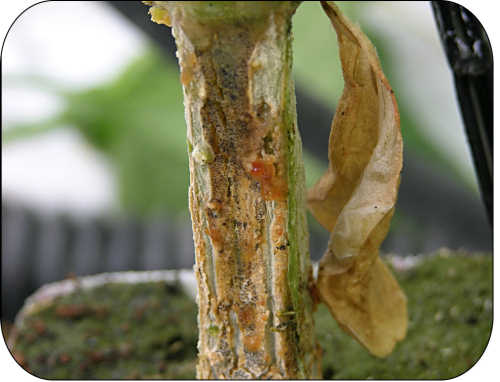
Chris Bodnar of Close to Home Organics had noticed his cucumbers had scorched stems. He guessed it had to do with sun scorching the stems after transplanting, and decided to bring a sample to the lab for diagnosis.

He followed the sampling steps detailed earlier in this article, and the lab was able to determine the cause of the scorched stems was actually Gummy Stem Blight, a cucurbit rot disease caused by the fungal plant pathogen Didymella bryoniae. Gummy stem blight can be seed borne, and can be introduced to fields with infected seeds, seedlings, or transplants.

On learning the root cause, Chris connected the issues with his cucumber crop to a previous incident. “I remembered that the problem started one season when I bought cucumber plants from another farmer. The plants had stem issues and I’ve had this problem ever since.” Didymella bryoniaesurvives season to season if host plants are present, and can survive at least two years in the absence of host plants. It also survives on infected crop debris and weeds. It may also be spread around during picking and other field activities.

Susan Smith, AGRI Field Vegetable Specialist, advised picking from the rest of the field before picking from the infected plants. She also recommended using dedicated picking equipment (knives) for that section and sterilizing thoroughly before and after using them. Soil sterilization (ex. Solarisation), sanitation (for seeds greenhouse starts), and crop rotation are the best methods of preventing infection. Overhead irrigation should be avoided. Fall disking of crop debris (as deep as possible) and extended rotations can significantly reduce the amount of inoculum in infested fields.

“I’m glad to have a better idea of how to manage this issue moving forward,” explained Chris. “By knowing the cause of these problems, we can better develop a management plan on the farm to reduce the likelihood of gummy stem blight in the future.”


Emma Holmes has a BSc in Sustainable Agriculture and an MSc in Soil Science, both from UBC. She farmed on Orcas Island and Salt Spring Island and is how the Organics In- dustry Specialist at the BC Ministry of Agriculture. She can be reached at: Emma.Holmes@gov.bc.ca

All photos provided by the B.C. Ministry of Agriculture.

Organic Stories: Gathering Place Trading Company

in 2018/Organic Community/Organic Stories/Summer 2018

From Farmer to Family

Renée Hartleib

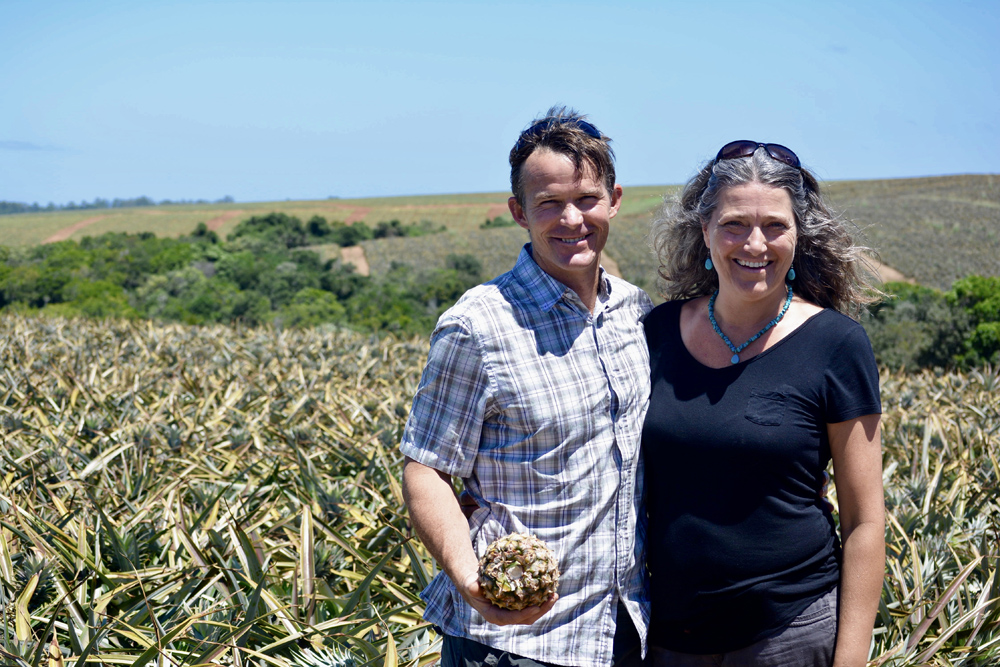
There can be major advantages to getting lost. Just ask Lovena and Ryan Harvey, owners of Gathering Place Trading Company, a family run company in BC.

Fifteen years ago, they were travelling in South Africa, Ryan’s birthplace, in their vintage VW camper van. On an afternoon jaunt through the countryside, they got lost and ended up asking for directions at an organic Rooibos farm. At the time, the Harveys were organic farmers back in Canada, so this felt like an interesting coincidence.

It soon turned into much more than that. The farmer invited them in, and the couple were treated to the best cup of tea they had ever tasted. Being tea connoisseurs, Lovena and Ryan were full of questions. What made this tea so different? They discovered that the farmers took the time to harvest their certified organic tea by hand, fermented it in small batches, and then sun dried it, resulting in a superior quality Rooibos.

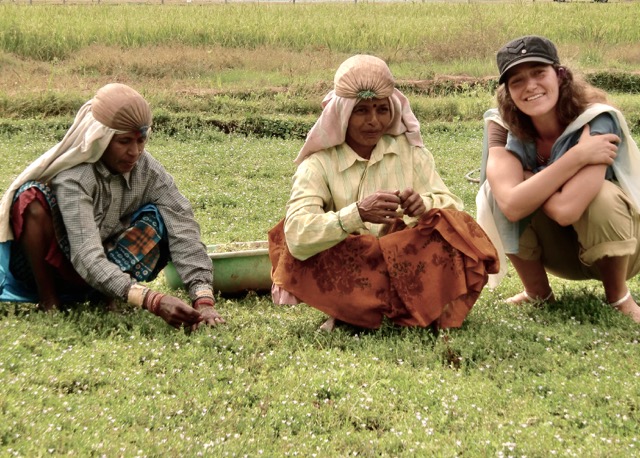
Women farmers harvesting herbs in India

A friendship was formed that culminated in Lovena and Ryan deciding to try their hand at tea selling back in Canada. They proposed an unorthodox trade. A ton of tea for the VW camper van that their new South African friends had fallen in love with.

The rest, as they say, is history. But first, the Harveys had to figure out how to actually transport a ton of tea across the ocean. Their decision to use ocean freight rather than air was in line with how they lived, as good stewards of the Earth. Over time, this has become one of their company’s pillars, one that easily distinguishes them from their competition. The company never ships by air, despite the convenience and ease this would undoubtedly allow.

Lovena and Ryan set up shop on their Cortes Island homestead and opened for business with a single product—a 100g bag of loose Rooibos. They sold the tea at local Farmers’ Markets, and to restaurants and natural food stores in their area. “I basically pounded the pavement all the way up and down Vancouver Island,” says Lovena. “I went from one natural food store to the next, telling our story.”

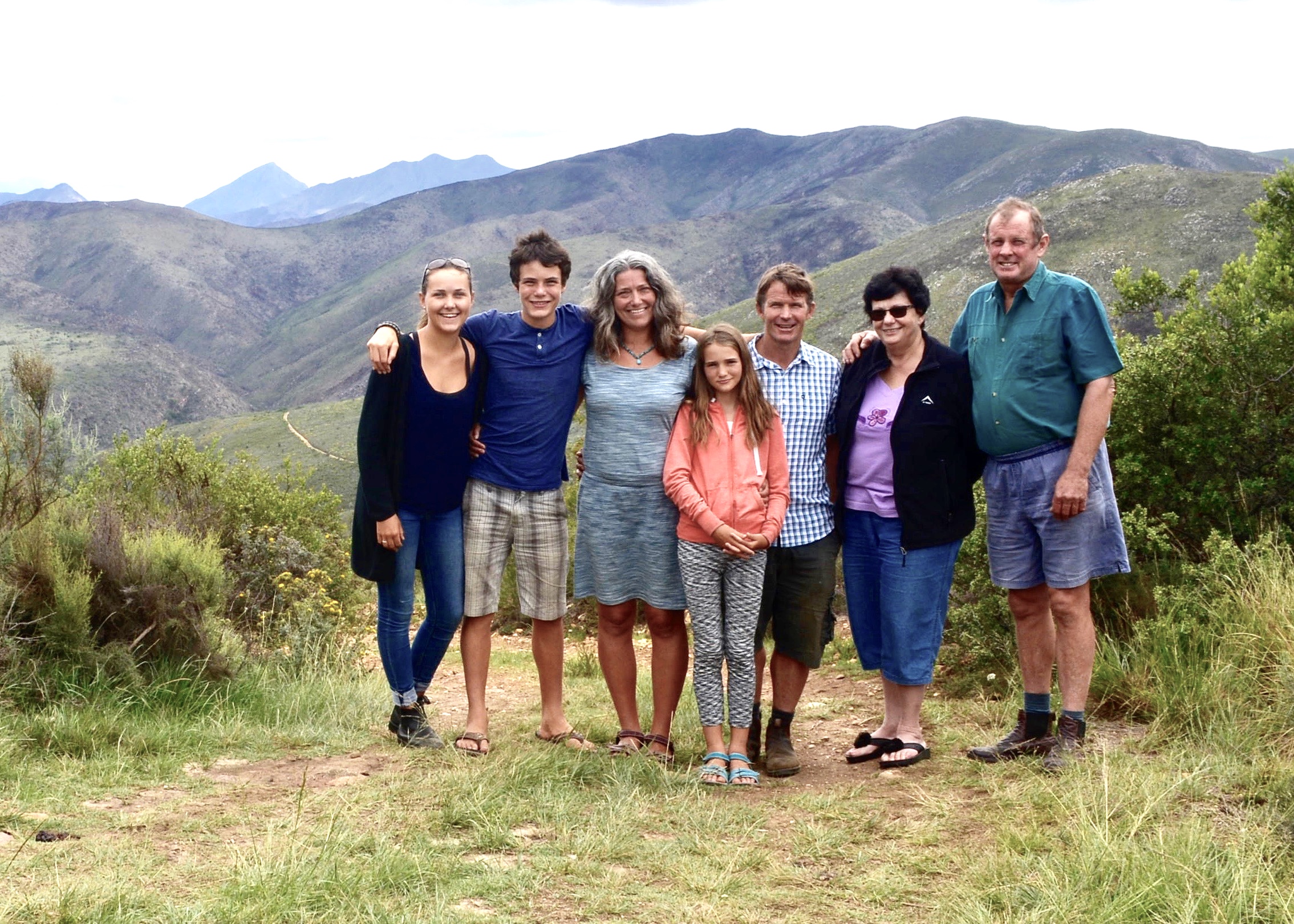
Harvey family with Wild Mountain Honeybush farmers in South Africa

And people responded. From the get-go, it was this personal connection, plus their rock solid company values that attracted customers to Gathering Place products. In addition to their commitment to the environment, the Harveys also stand out for the way they live the term “family business.” Their three children have always been involved in the running of the company. “We bring our kids sourcing with us, we consult them in our decisions, and we rely on their opinions,” says Lovena.
As their product line has grown to include certified organic spices, vanilla, coconut, and more teas, as well as farmer-direct dried fruits and dried Kalamata olives, their founding business decision—to direct source—remains unwavering. They favour certified organic farms, as their company gained certification three years ago, but do consider farms that grow organically but haven’t been able to afford certification. The company never sources from distributors, and goes to great lengths to find just the right family or cooperative farmer to supply their products.

This has meant travelling to South Africa and India, where the bulk of their products are grown. “When we meet with people face-to-face, we immediately get a vibe for the farm and the integrity of the operation,” says Lovena. “We look for strong environmental policies and an amazing product that is harvested carefully.” The Harveys also ensure that workers on-site are being treated and paid fairly.

Lovena's daughter Asha with a woman farmer and her mother in India
Lovena’s daughter Asha with a woman farmer and her mother in India

It was on one of these trips to India that Lovena and Ryan encountered the small-scale cooperative that would end up supplying their company with a whole new spice line. “That was a real turning point for us,” says Lovena. “Having a direct source for spices meant a much higher quality, fresher product, and customers really noticed.”

Lovena explains that with other spice companies or with big grocery chains who use middle men, the spices often sit in the country of origin for more than a year, and upon import, might sit in a warehouse for another year. “By the time you buy your spice package, it could already be two years old,” she says. “Ours are always the current year’s harvest and are very distinct and vibrant in colour.”

When the time came to expand their spice line to include a greater array of culinary herbs, the Harveys had a chance to put another of their founding company values to work. “Right from the get-go, we made a decision to never import anything to Canada that would compete with Canadian farmers,” says Lovena. In this case, the company could have easily sourced cheap thyme from China or oregano from Turkey, but instead they turned to Canadian organic growers.

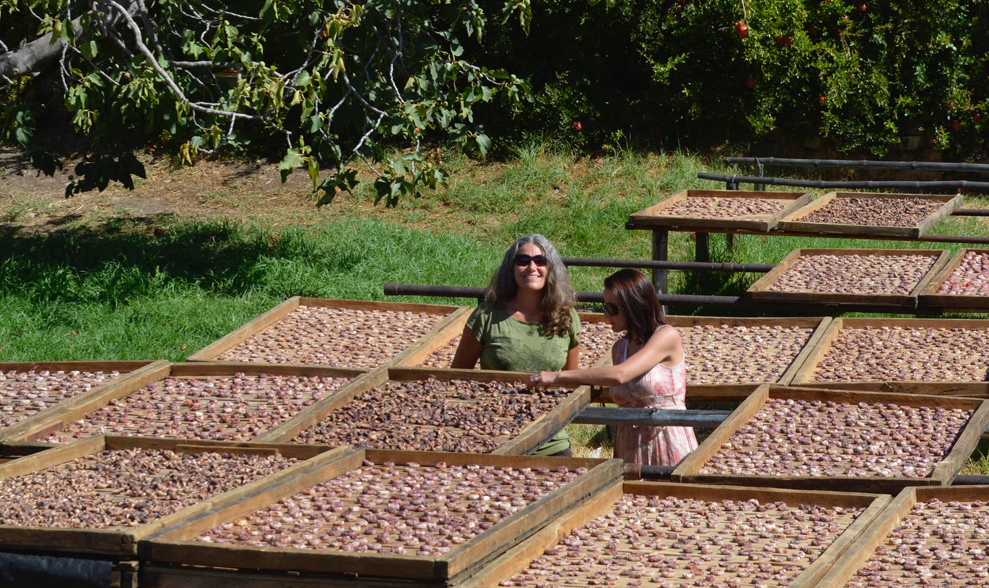
Heritage figs on racks in the sun at a sixth generation Fig Farm in South web
Heritage figs on racks in the sun at a sixth generation Fig Farm in South

After contacting dozens of small operations, they found a multi-generational, certified organic, family farm in Alberta who now grows their thyme, oregano, dill, sage, and basil. Another small farm in Saskatchewan grows the brown and yellow mustard seeds that Gathering Place uses to create a beautiful mustard powder at their packaging facility in Campbell River.

To bring the company values and story full circle, Lovena and Ryan actually grow the rosemary and bay leaves they sell to customers at their home on Cortes Island! “We’ve had incredible consumer response to these Canadian-grown herbs and spices,” Lovena says, noting their sales have doubled in the last year alone.
From a ton of tea garnered through a trade to over 70 tonnes of product shipped annually, the Gathering Place takes their motto, “From Farmer to Family,” seriously. “We love knowing our farmers and wouldn’t have it any other way,” says Lovena. She and Ryan also love being able to trust the impeccability of their products for their own family and for all the other families who have come to trust the Gathering Place name.

According to Lovena, the basis of all of their business decisions is simple. “We only bring in foods that we want to feed our family.” Full stop.
gatheringplacetrading.com

Gathering Place Farm on Cortes Island where they grow the Bay and Rosemary that they dry, package and sell

Renée Hartleib is a professional writer, editor, and writing mentor based out of Halifax. Although she lives in Nova Scotia, Renée visits BC every summer and consider it her second home. To see more of her work, and some of the online writing programs Renée offers, check out her website: www.reneehartleib.ca.
Weeds: Don’t Shoot the Messenger

in 2018/Crop Production/Grow Organic/Land Stewardship/Organic Standards/Pest Management/Summer 2018
(Not Until You Understand the Message)

Av Sing

This article first appeared in The Canadian Organic Grower, with thanks.

All too often when farmers start talking weeds, a common first question is “How do I get rid of a bad case of…?” when a more appropriate question is “I wonder why my field has a bad case of…?”

The subtle difference in the above question requires a surprisingly dramatic paradigm shift in your view of weeds. Weeds must shed their role as problems, pests, and sources of frustration, and instead take on the role of symptoms, storytellers, and healers. Weed advocates consider weeds as plants with a mission and look to learn what the weeds can tell us about our soil conditions (e.g. pH, drainage, compaction, etc.) or our management practices (e.g. crop rotation, row spacing, stocking rate, tillage, etc.).

Weeds Redefined

Nicolas Lampkin, in Organic Farming, stresses that it is the human activity of agriculture that generates weeds. He defines a weed as “any plant adapted to man-made habitats and interferes with human activities.” For weed spin doctors, even that definition is too harsh because it focuses too much on the negative. The first step in our weed propaganda is to begin viewing the appearance of weeds as beneficial.

We are all familiar with the saying nature abhors a vacuum. Well, cultivation essentially creates a vacuum where whole communities of plant and soil life are disrupted and/or destroyed. Nature responds with weeds. Within days, pioneer plants such as pigweed, lamb’s quarters, and purslane grow rapidly and thickly. They anchor the soil and generate organic matter that feeds the soil life. These fast-growing annuals also provide shade, hold moisture, and moderate soil temperatures that allow other plants, such as biennials and perennials (including grasses), to initiate growth. If left for another season, this land will have fewer fast-growing annuals and favour later successional plants.

In our fields, the soil is in an unnatural state of continuous disturbance and as a result we primarily deal with the early colonists. Most of these fast-growing annuals grow without associated mycorrhizal fungi (primarily because their life cycle is too short to benefit from a symbiotic partnership). Expectedly, soils rich with mycorrhizal fungi (e.g. pastures, forest floors, agricultural soils rich in organic matter, especially through the use of compost) have fewer annual weeds. Elaine Ingham of Soil Foodweb Inc. suggests that the presence of the fungi serves as a signal that keeps annual weeds from germinating.

Learning From Your Weeds

Now that we better appreciate why weeds appear in our farms and gardens, we can take a closer look at how we can use weeds as indicators for our soil conditions. It is important to note that many weeds can tolerate a wide range of conditions and therefore the appearance of a few individual weeds are not necessarily proof of an underlying soil condition. For example, both perennial sow thistle and dock indicate poor drainage, but dock prefers more acidic soils, while thistle favours a higher pH. You can however learn about the conditions if the weed population is dominated by several species that all prefer similar conditions. For example, if plantain, coltsfoot and ox-eye daisies are the predominant weeds, this could indicate that the soils are waterlogged or have poor drainage.

Agricultural practices such as cultivation, fertilization and grazing management can have a great impact on the soil and, in turn, on the appearance of particular weed species. Frequent tillage will disturb the billions of viable seeds in the soil seed bank and, with sunlight, these will germinate and occupy bare soil. Weeds such as lamb’s quarters and redroot pigweed can produce 75,000 to 130,000 seeds per plant (respectively), which can remain viable in the soil for up to 40 years.

The presence of legumes, such as vetch, medic and clover, may suggest that the soil is lacking nitrogen. In contrast, weeds growing on the same soil that appear pale yellow and/or stunted also indicate low fertility. Overgrazing of pastures may lead to compacted soils and then the presence of perennial bluegrass species and bentgrasses may predominate.

The lack or imbalance of calcium can allow soils to become compacted and without the proper biology in the soil (fungi in the case of calcium), calcium will not stay in the soil.

Soil pH

In addition to helping protect and improve the organic matter content of the soil, weeds can also indicate the acidity or alkalinity of the soil. Most agricultural crops do best in a slightly acidic soil (pH of 6 to 6.5). An increasing presence of weeds such as plantain, sorrel or dandelion may suggest that the pH is dropping below a desirable level. However, having acidic soils should not be viewed as detrimental. Much of Albrecht’s work highlighted that poor plant performance on low pH soils was in fact a consequence of low soil fertility or an imbalance of soil nutrients, rather than soil pH. For example, many alfalfa growers have witnessed a dramatic invasion of dandelions after spreading high levels of potash. Essentially, the potash had suppressed calcium levels in the soil. The deep-rooted dandelion scavenges calcium from lower depths and upon its death released the calcium at the soil surface. The appearance of dandelions may be interpreted as indicating acidic soils when in fact the ratio of calcium to potassium caused their appearance.

Extreme Weed Makeover: Look for the Positive in Weeds

  • Weeds can act as a green manure or cover crop.
  • Weeds can serve to cycle nutrients from the subsoil (e.g. deeprooted weeds such as dandelions or burdock).
  • Deep-rooted weeds can break up hard pans, thereby regulating water movement in the soil.
  • Weeds can conserve soil moisture.
  • Weeds can provide habitat for beneficial organisms.

An imbalance of magnesium relative to calcium can lead to tight soils and eventually anaerobic conditions. Calcium causes soil particles to move apart, providing good aeration and drainage; fungi help to prevent the leaching of calcium out of the soil. Magnesium makes particles stick together and if soils become too tight, oxygen becomes limited and beneficial forms of soil life disappear. In such conditions, organic residues in the soil do not decay properly, and increased carbon dioxide in the soil favours fermentation of the organic matter, resulting in byproducts such as alcohol and formaldehyde. These substances inhibit root penetration as well as create favourable conditions for soil diseases such as pythium and phytophora. Fermentation can also create methane gas which is conducive to the appearance of velvetleaf, or ethane gas which helps jimsonweed to prosper. Grasses with their fine and numerous roots attempt to break up tight soils, while the presence of many grassy weeds may indicate tight soils.

Mycorrhiza is a symbiotic association between fungi and plant roots. Most agricultural crops depend on, or benefit from, their associations with mycorrhizae. In exchange for carbon from the plant, mycorrhizal fungi make phosphorus more soluble and bring soil nutrients (N, P, K) and water to the plant. The Cruciferae family (e.g. broccoli, mustard) and the Chenopodiaceae family (e.g. lamb’s quarters, spinach, beets) do not form associations with these fungi. Frequent tillage, fungicides and high levels of N or P will inhibit root inoculation. Similarly, the practice of fallowing will reduce levels of mycorrhizae because the plants that establish following tillage usually do not form associations with the fungi.

This article is based primarily on the knowledge and observations of farmers who wanted to better understand the connection between what was growing in their soil and the various management practices they were employing.

The American poet Emerson once wrote, “What is a weed? A plant whose virtues have not yet been discovered,” perhaps referring to their greatest virtue to farmers as messengers of the soil.

Recommended reading (available from the COG library): 

Pfeiffer, E.E. (1981). Weeds and what they tell. Biodynamic Farming and Gardening Assoc, USA.

Soil Association. (1982). The Value of Weeds. Soil Association, UK.


Av emphasizes farmer-to-farmer knowledge exchange and works to hone farmer intuition in making management decisions. Currently, Av serves as a cannabis cultivation advisor to many Licensed Producers in North America and the Chief Science Officer with Green Gorilla (a Hemp and Cannabidiol Company). Av is also serving as the Vice-President of the Canadian Organic Growers and is proud to be a member of Slow Food Canada, Food Secure Canada, and the National Farmers’ Union. Av is also a faculty member at Earth University (Navdanya) in India where he delivers courses on agroecology and organic farming. Av can be reached for questions or comment at 902-698-0454 or av@fs-cannabis.com.

SaveSave

A New Model for Integrated Habitat Development

in 2018/Crop Production/Grow Organic/Land Stewardship/Summer 2018

For Bees, Birds, and Fish (IEHD-BBF)

Saikat Kumar Basu

Global bee populations are showing an alarming decline due to a number of factors like environmental pollution, indiscriminate use and over applications of various agro-chemicals, industrial agricultural practices detrimental to nature, changes in the land use patterns, and parasitic diseases of bees as well as lack of adequate supply of nectar and pollens for different bee species due to lack of suitable of bee foraging plants and natural melliferous flora. The challenges are not just restricted to honey bees and/or native bee species, but also to other insect pollinators such as moths, butterflies, and certain species of pollinator-friendly flies and beetles. Under these circumstances it is important to conserve the endangered bee species and other pollinator insects, mollusks (snails and slugs), birds (certain humming bird species), and mammals (bats) helping in the process of natural cross pollination.

A large number of global food and industrial/commercial crops, forage crops, wildflowers, ornamentals, vegetables, and forest species are dependent on biological agents or vectors of cross pollination for their successful reproduction and survival. The yield loss due to lack of suitable pollinators for cross pollination is a serious threat to the future of global agriculture as well as for maintaining the balance of our natural ecosystems. Loss of honey bees are having detrimental socio-economic impacts on the apiculture industry; and thereby impacting the livelihood and social security of millions of individuals around the planet.

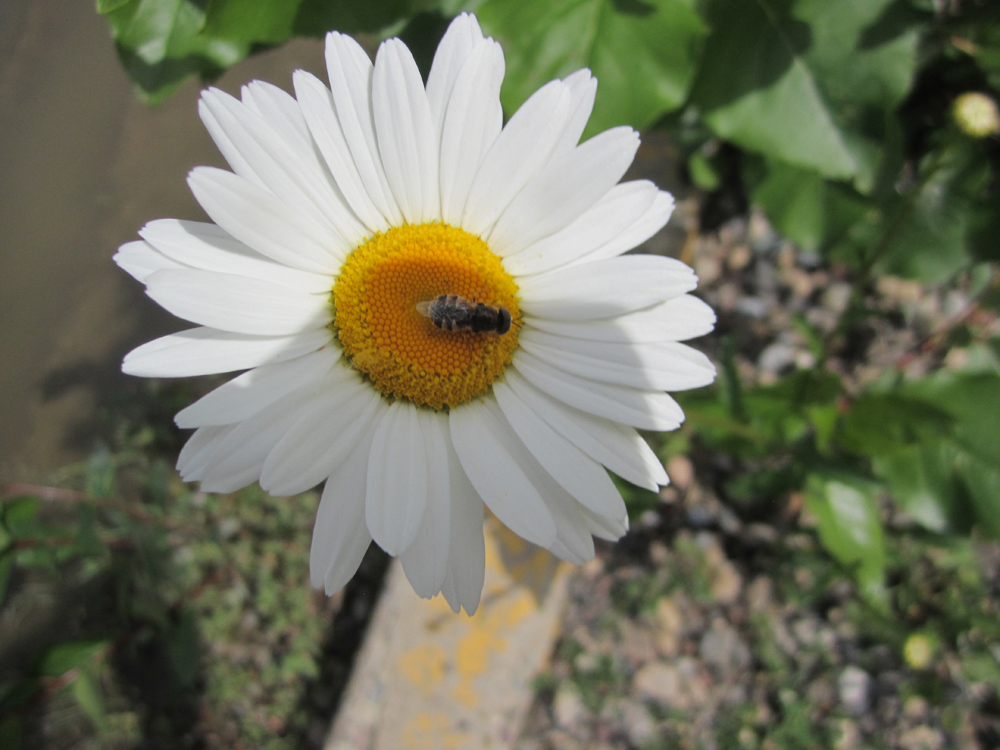
A Stratiomyid fly foraging on wild chamomile flower. Photo credit: Saikat Kumar Basu

Establishing suitable pollinator (bee) gardens or habitats or sanctuaries at suitable sites could prove to be instrumental in both bee and other pollinator insect conservation from a long term, ecological perspective. Using suitable pollinator mixes comprising of native grasses, wildflowers as well as annual, biennial, perennial forage crops (forage grasses, legumes, different Brassica family members) can help in establishing pollinator gardens, habitats, or sanctuaries in perimeters of forested areas, under used or unsuitable agronomic lands, unused and available rural locations, city and municipal parks and gardens, lawns, kitchen gardens, unused or hard to farm areas, in sites adjacent to natural or artificial waterbodies like ponds, pools, ditches, swamps, bogs, streams, or irrigation canals.

Aquatic Habitats

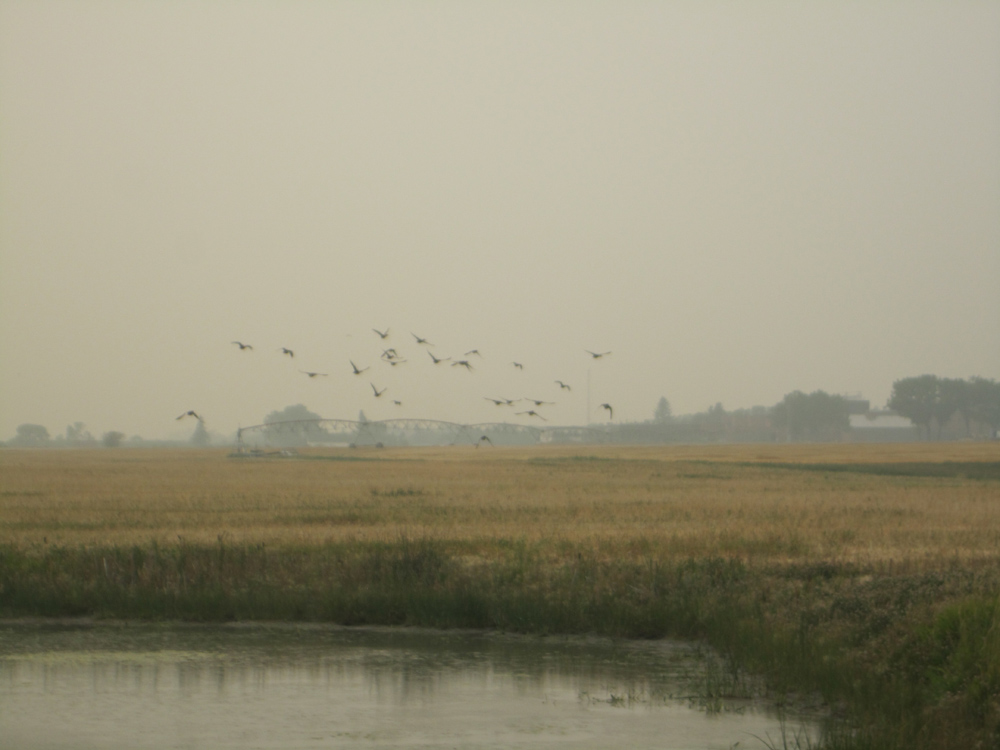
Freshwater wetland habitats need to be protected to conserve the aquatic ecosystems, the rich biodiversity associated with itand to protect nature for our future generations. Protecting freshwater wetlands does not necessarily require huge expertise, funding, or high levels of technology applications, but rather. simple innovation, creativity, awareness, and the desire to develop comprehensive multi-layer conservation strategy in the line of Multiple Tier Conservation Model (MTCM). A well managed and carefully planned freshwater aquatic habitat conservation strategy could be establishing Integrated Ecological Habitat Development for Bees, Birds and Fishes (IEHD-BBF). This proposed model targets multiple trophic levels within a dynamic natural or artificial freshwater ecosystem to conserve multiple species simultaneously.

Aquatic habitat integrated with pollinator conservation can provide multi level species protection for bees, birds, and fishes. Photo credit: Saikat Kumar Basu

Natural or artificial aquatic habitats like pools, ponds, ditches, swamps, bogs, lakes, canals, etc… could be targeted for ecological restoration by planting short or high grasses, salt tolerant aquatic plant species, and grasses along with pollinator mixes comprising of annual and/or perennial legumes, wildflowers, and related pollinator friendly plant species or melliferous flora around target fresh water habitats. Such mixes will not only restore aquatic habitats, but also attract small and medium sized land birds and a wide diversity of pollinator insects like honey bees, native bees, moths, butterflies, certain species of pollinator beetles, and flies for nectar foraging, nesting, and breeding purposes.

From Flora to Fauna

If the waterbodies are well stocked with indigenous fish species, well protected grassy aquatic habitats will also attract a wide diversity of aquatic birds to nest, forage, and breed in such unique environmentally restored ecosystems. An integrated Bees, Birds and Fishes Conservation Model (BBFCM) can be extremely useful in protecting multiple species at the same time and location.

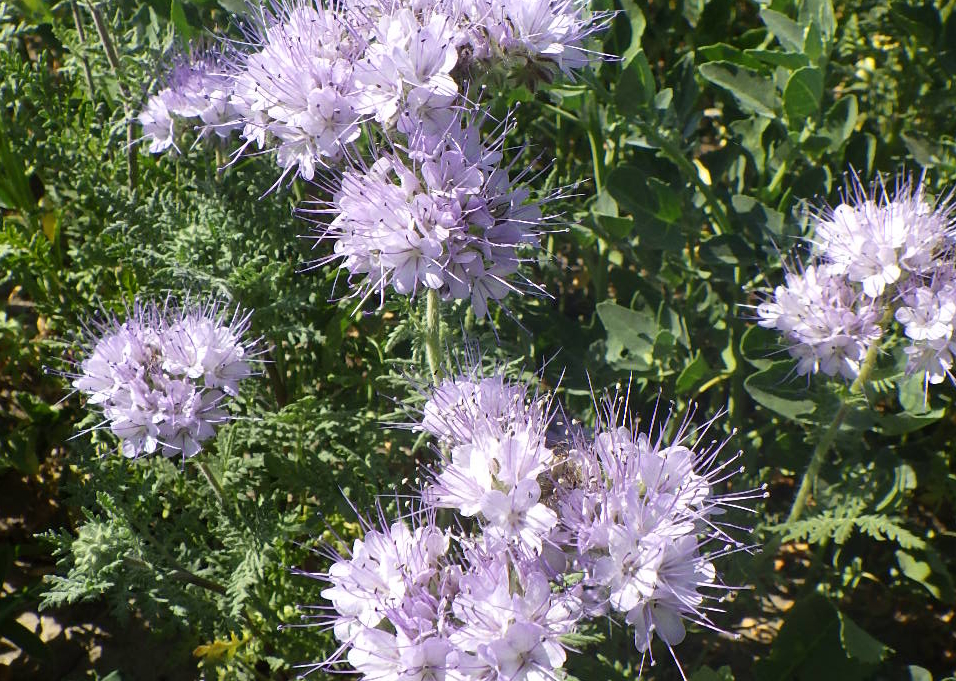
Ideal pollinator foraging plants can help build sustainable pollinator sanctuaries. Photo credit: Saikat Kumar Basu

Grasses in the mixes can help in soil erosion and restoration, as well as phytoremediation, while legumes will enrich the soil with natural nitrogen resources without application of any synthetic fertilizers. Care must be taken to avoid using any pesticides in such habitats to prevent chemical pollution. Over time, such aquatic habitats will also attract local wildflowers and aquatic plants to grow and thrive in these ecosystems attractive to various species of both terrestrial and aquatic insects including active pollinators, along with small to medium sized terrestrial and aquatic birds to nest and forage in such restored aquatic habitats. Well stocked waterbodies with native fish species will promote native fish conservation and at the same time provide a stable food source for a number of aquatic birds.

Small and medium sized mammals, reptiles, and amphibians will also be able to establish in such ecosystem utilizing the growing complex food chains and food webs over time. Overall, the innovative and multi-trophic level Integrated Ecological Habitat Development for Bees, Birds and Fishes (IEHD-BBF) model has huge potential for restoration and reestablishment of natural and artificial aquatic ecosystems with minimal care, attention, management and funding. Such ecological restoration using the IEHD-BBF model can serve the needs of dwindling bees and insect pollinator populations, along with local resident and migratory birds and indigenous fishes to successfully multiply in an integrated multi-species catering dynamic ecological system.

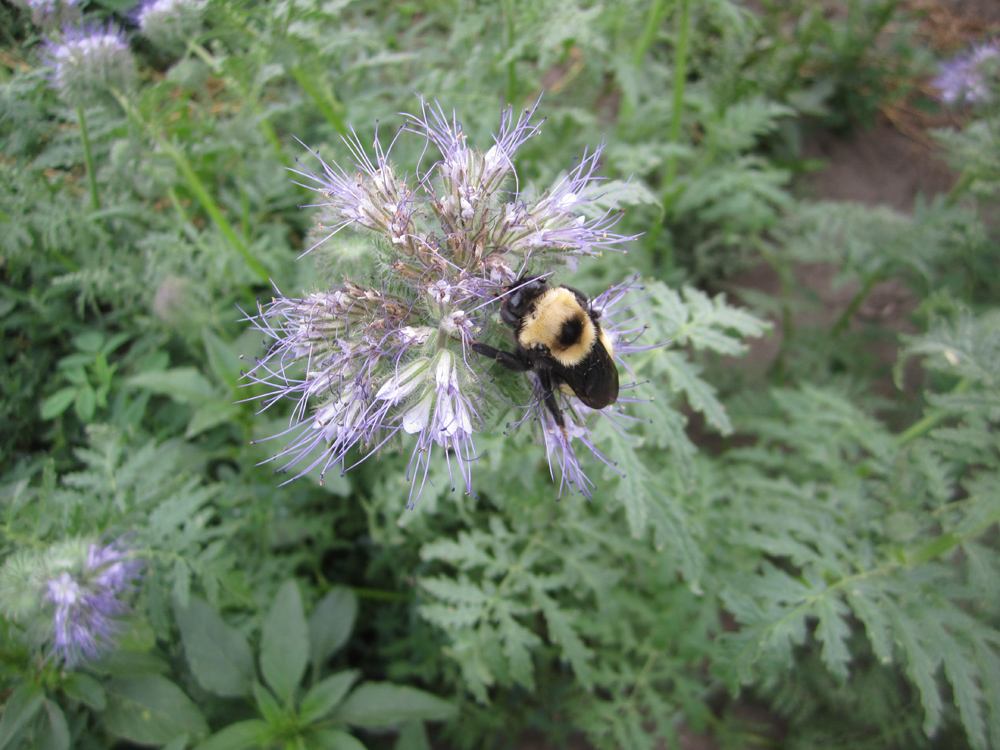
Nevade bee foraging on Phacelia in a restored ecosystem. Photo credit: Saikat Kumar Basu

Regionally Specific Ecological Restoration

It is important however to note that plant yield and adaptation varies according to different ecosystems and agro-climatic conditions. It is also important to note that plants exhibit a strong Genotype X Environment interaction (G X E or GE effect). As a consequence, it is not advisable to use same pollinator mix at different locations and habitats for integrated habitat development. Locally adapted biodiverse pollinator mix selected through multi-location trials under varied geographical, geological, ecological, and climatic variations across different latitudes needs to be seriously evaluated for optimal results. Locally adapted pollinator mix with their unique combination of diverse species suited and adapted for individual agro-climatic and ecosystem regions has the potential to yield optimal results.

The flowering periods of the components of the pollinator mix need to be thoroughly investigated and tested against specific environment to evaluate what diversity of natural insect pollinators they are attracting and how well the plants included in the pollinator mix are adapting to the local parameters, withstanding competition against local weeds under field conditions. It will be important to identify the plant species that are performing best under natural conditions at different agro-climatic conditions with respect to establishment, regeneration, and attracting natural insect pollinators. If judicious selection of appropriate plant species is made with local adaptation to agro-climatic variability across different families; and with different flowering period; the resultant pollinator mix will be more suitable and yield optimal results in protecting and conserving pollinators as well as help is establishment or restoration of natural ecosystems.

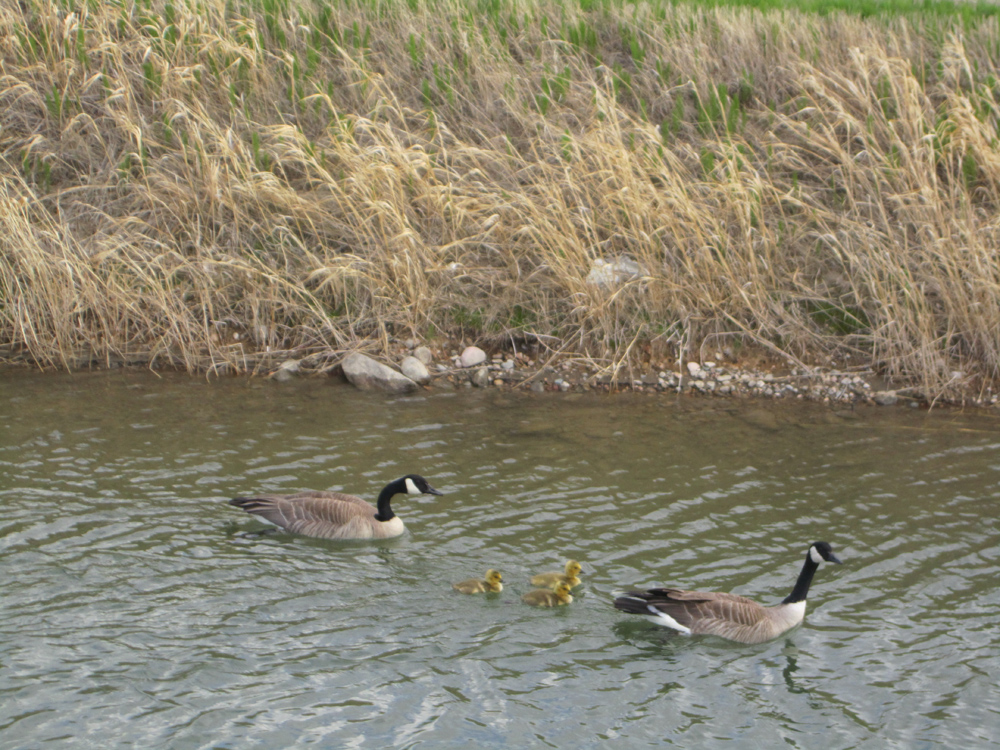
Canada geese family in restored habitat. Photo credit: Saikat Kumar Basu
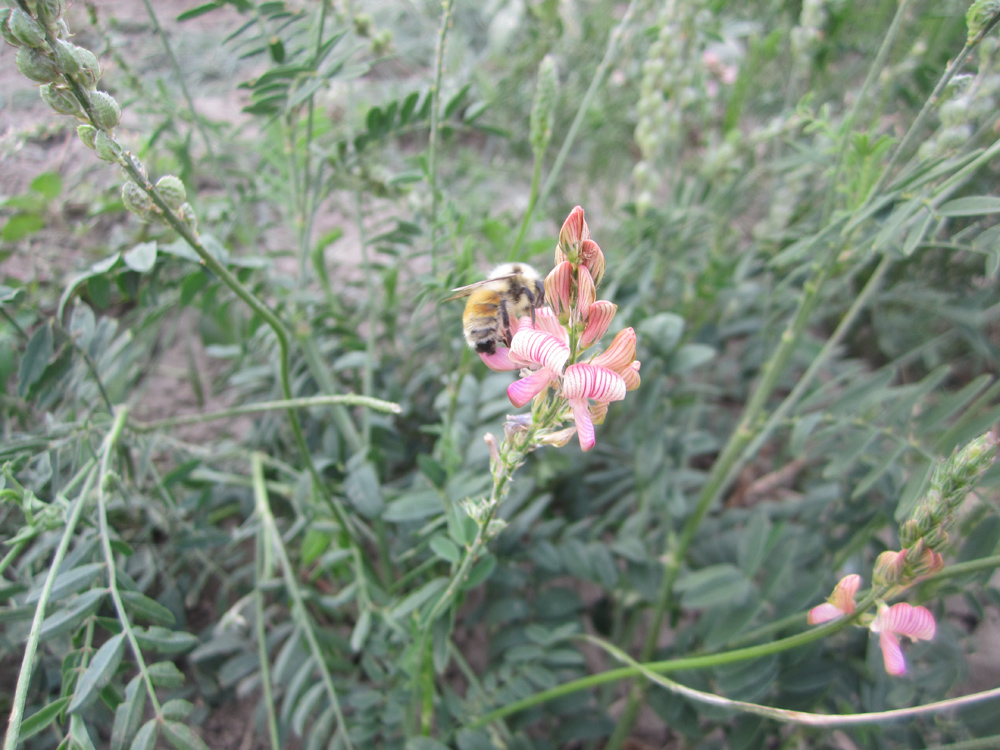
Bee foraging on sainfoin flower. Photo credit: Saikat Kumar Basu

Saikat Kumar Basu has a Masters in Plant Sciences and Agricultural Studies. He loves writing, traveling, and photography during his leisure time and is passionate about nature and conservation.

Feature photo: Pollinator sanctuaries can help establish small ecological units over time. Credit: Saikat Kumar Basu

SaveSave

Footnotes from the Field: Celebrating the Flight of the Bumblebee

in 2018/Footnotes from the Field/Land Stewardship/Organic Standards/Summer 2018

Marjorie Harris BSc, IOIA V.O. P.Ag

When I think of the ‘wholeness’ of a bioregional ecosystem and imagine the inner workings to identify which biological organisms could have the greatest influence on the entire system, nothing seems to compete with the influential power of the domesticated honey bee.

This industrious pollinator flies great distances to gather nectar and pollen. The Canadian Organic Standards (COS) Clause 7.1.10 recognizes the prodigious flying capacity of the honey bee by requiring apiaries to be protected by a three kilometre buffer zone from pesticides, GMO crops, sewage sludge, and other environmental contaminants. I decided to calculate just how big of an area a three kilometre radius would cover—an astounding 28.27 square kilometers! Wow! The domesticated honey bee’s influence in a bioregion extends over a huge pollination territory.


RELATED ORGANIC REGULATIONS

CAN/CGSB-32.310 7.1.10 Location of hives
Where sources or zones of prohibited substances are present, that is, genetically engineered crops or environmental contamination, apiaries shall be protected with a buffer zone of 3 km (1.875 mi.).

CAN/CGSB-32.310 7.1.7 When bees are placed in wild areas, impact on the indigenous insect population shall be considered.


In stark contrast to the honey bee’s huge domain is the relatively small realm of influence the humble bumble bee commands. There are well over 450 native bee species in British Columbia and 45 of those are bumble bees.

The bumble bee is the only other social bee that makes honey. Bumble bee colonies are very small containing between 50 to 200 bees. Seventy percent of the colonies are formed by ground nesters, while others nest in cavities of dead wood or pithy stems.

The average bumble bee species will only travel 100 to 200 m from the home nest to collect nectar and pollen. The average domain of pollination influence for a bumble bee is between 0.031 km2 and 0.13 km2. Putting this all into perspective, for each honey bee colony’s influence domain of 28.27 km2 there could be between 200 to 900 humble bumble bee ground nesting colonies competing for many of the same nectar and pollen resources!

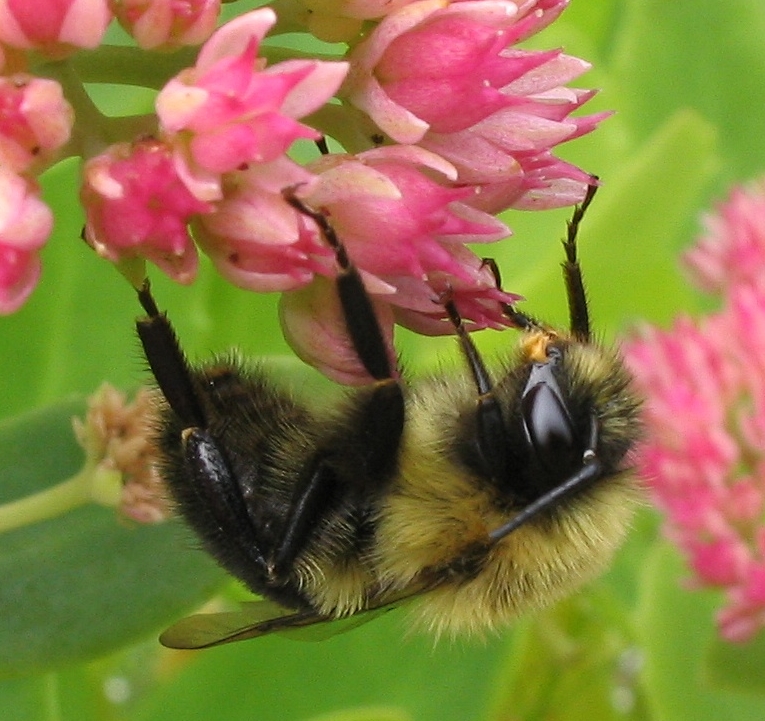
Frisky bumblebee. Credit: Gilles Gonthier

The good news for bumble bees is that many of them are specially designed to harvest nectar and pollen from native flowers that honey bees can’t access. The bad news is that native bee populations are in decline due to loss of native foraging habitat, pesticides, and mechanized farming destroying nests by tilling the soil.

Social bee colonies form ‘super organisms,’ with all individuals working for one home. The honey bee’s ‘super organism’ even exceeds in bioregional influence the largest organism on planet Earth, a honey fungus that extends its reach over 10.36 km2 of the Malheur National Forest in the Blue Mountains of Oregon. Honey fungus is a plant parasite that manages its domain by selecting which plants live within its territory. The fertilization by pollination of plants by the bee has a similar selection effect on the ecosystem. By geographic area, one domestic honeybee hive has three times the bioregional influence of the largest organism on earth.

COS clause 7.1.7 recognizes that imported domestic honey bees have an impact on the indigenous insect populations. I would say that even though the vast majority of farmers cannot qualify to produce organic honey themselves, it should be recognized that the conventional production of honey is having a major impact on our native pollinators. Taking the lead from clause 7.1.7, we can conscientiously strive to protect and provide forage habitat and safe nesting sites for the humble bumble bee and other native pollinators.

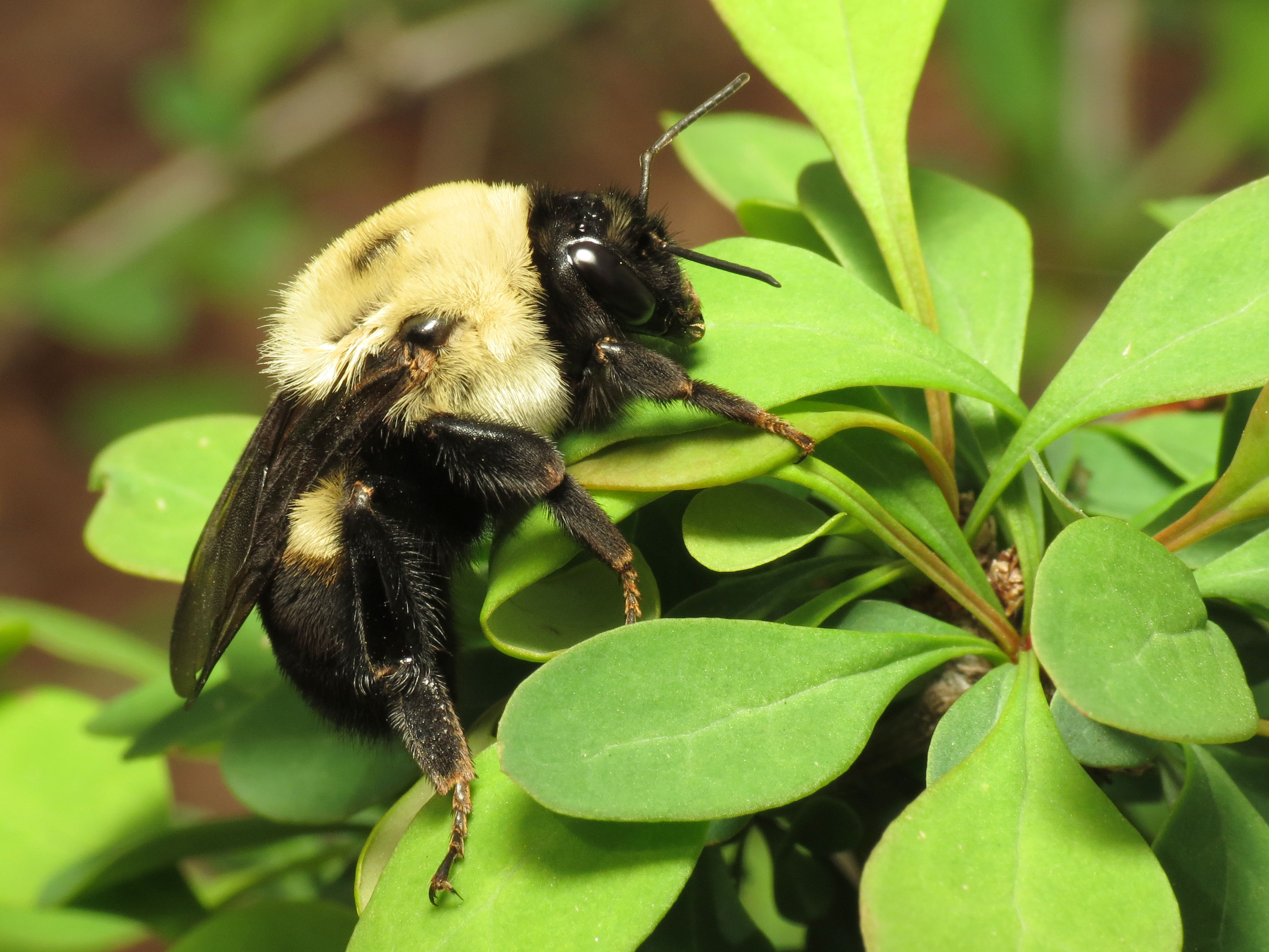
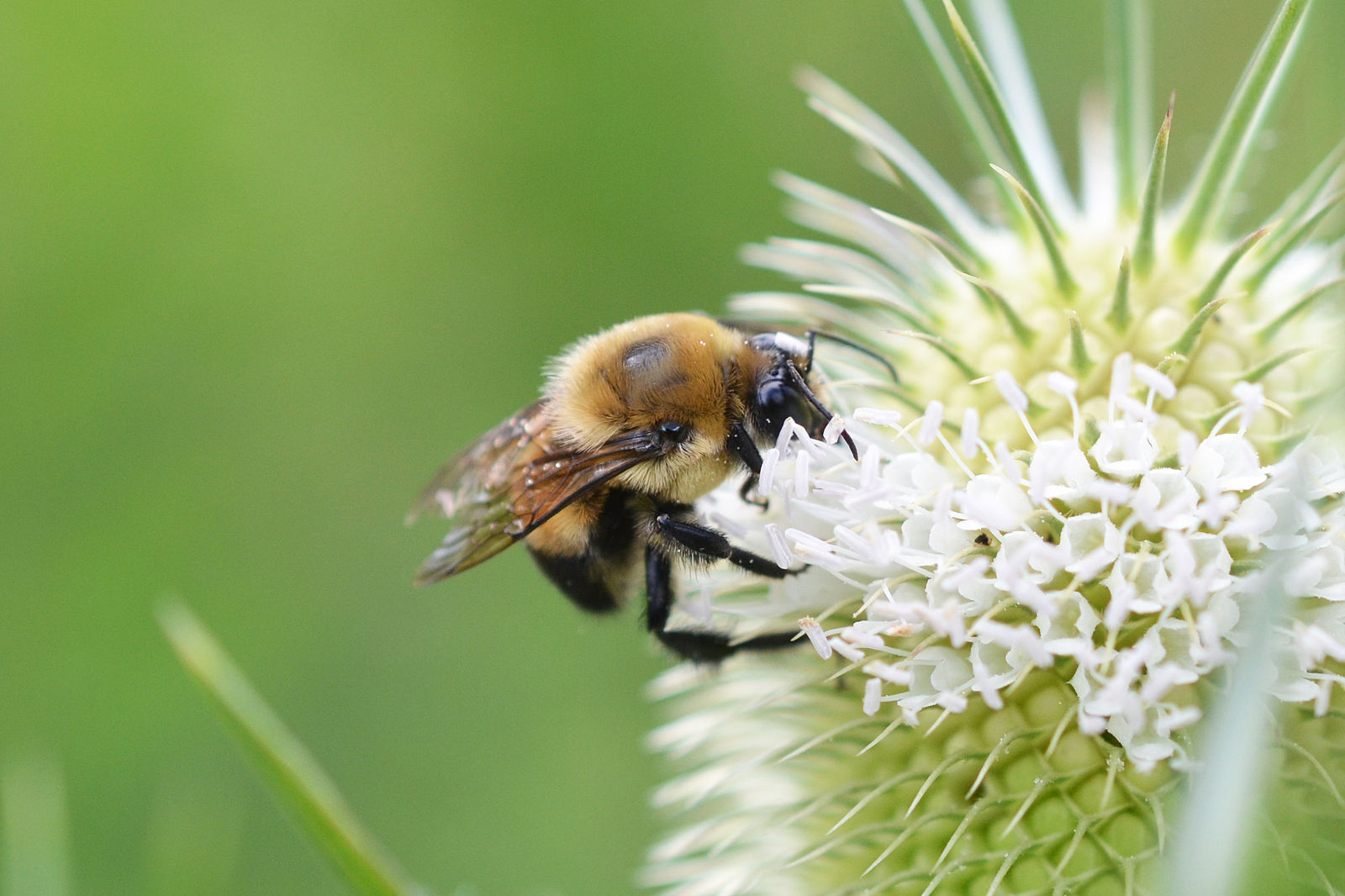
Brown-belted Bumble Bee (Bombus griseocollis). Credit: Andrew C

By providing forage habitat and safe nesting sites for bumble bees, we are having a direct influence on the health and wealth of our home bioregional ecosystem. As an environmentally conscious and active community, we can have a positive impact in our bioregion by providing for our indigenous insect pollinators as we mobilize ourselves to address the environmental needs of these indigenous insects.

There are so many delicious wild berries that need the bumble bee. The flowers on these berries are enclosed so it takes a bumble bee’s specialized long “tongue” to get to the plant’s nectar. As the bumble bee ‘buzzes’ on these flowers the muscles it uses for flying releases the flower pollen and sticks to its long body bristles to be transferred to other flowers.

Buffer zones are an excellent starting place to plant native vegetation, trees, shrubs, and flowers that will become oases of survival for the humble bumble bees.
If you need further inspiration, think about the near extinction of the native bee pollinator for the vanilla orchid, which produces vanilla beans, the shiny green orchid bee. All commercial vanilla bean operations must now employ hand pollination!

Another shocker in the news is that Walmart and other interested corporations have been patenting designs for robotic pollinators. I’d rather keep the robots out of the pollination equation, especially since we can set aside buffer zones and wild areas and gradually restore unfragmented sections of land devoted to a wide diversity of native pollinator vegetation, undisturbed nesting locations, and overwintering sites for bumble bee queens.

Check out the link below for a library of seasonal listings for pollinator plants to build your pollinator gardens. Celebrate the amazing bumble bee!

seeds.ca/pollinator/plant_canada/index.php


Marjorie Harris is an organophyte, agrologist, consultant, and verification officer in BC. She offers organic nutrient consulting and verification services supporting natural systems.

Feature photo: Bombus Impatiens. Credit: Katja Schulz

SaveSave

SaveSave

SaveSave

SaveSave

From the Chilcotin Wildfire Front: A Rotational Grazer’s Story

in 2018/Grow Organic/Land Stewardship/Livestock/Summer 2018/Tools & Techniques
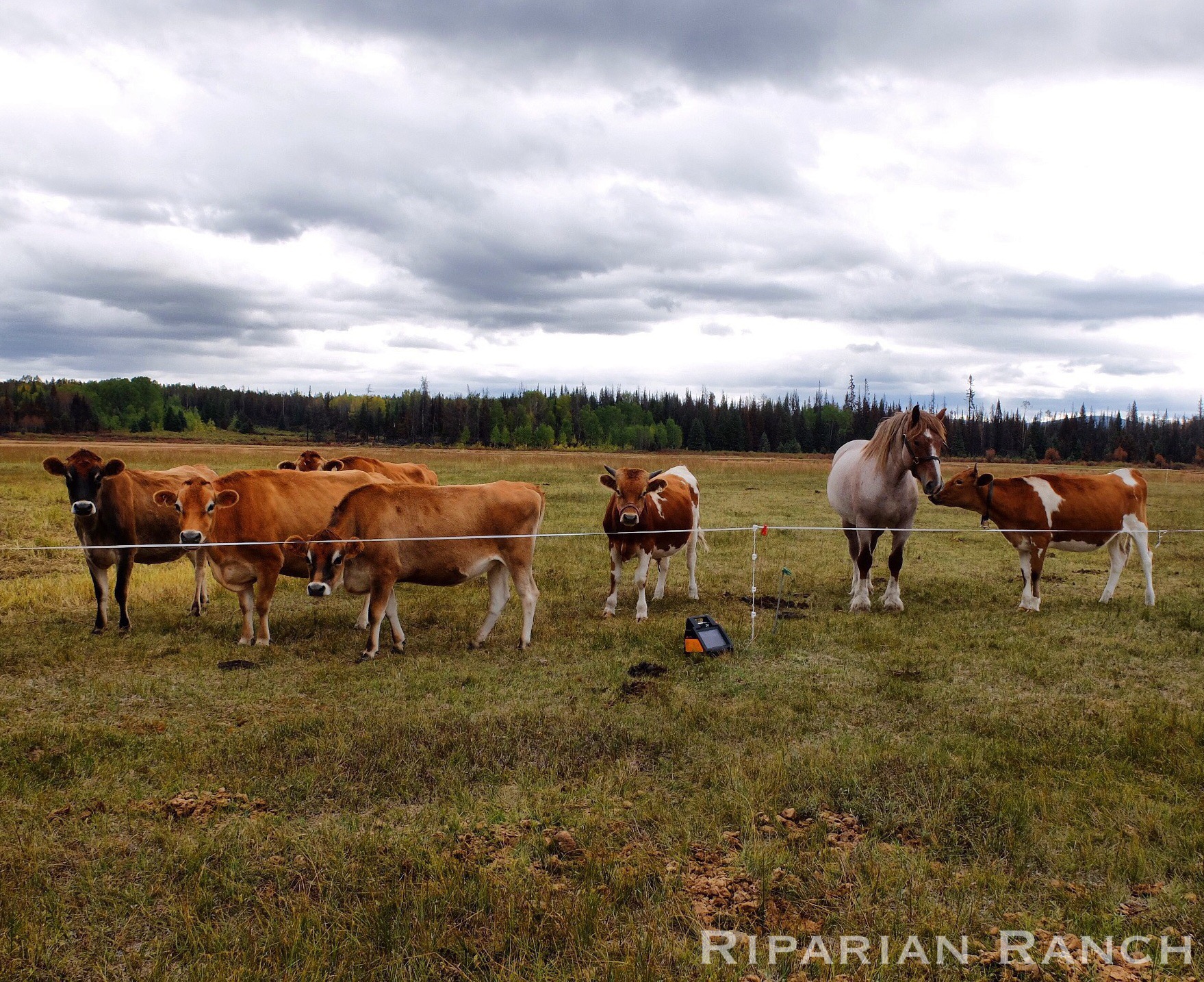
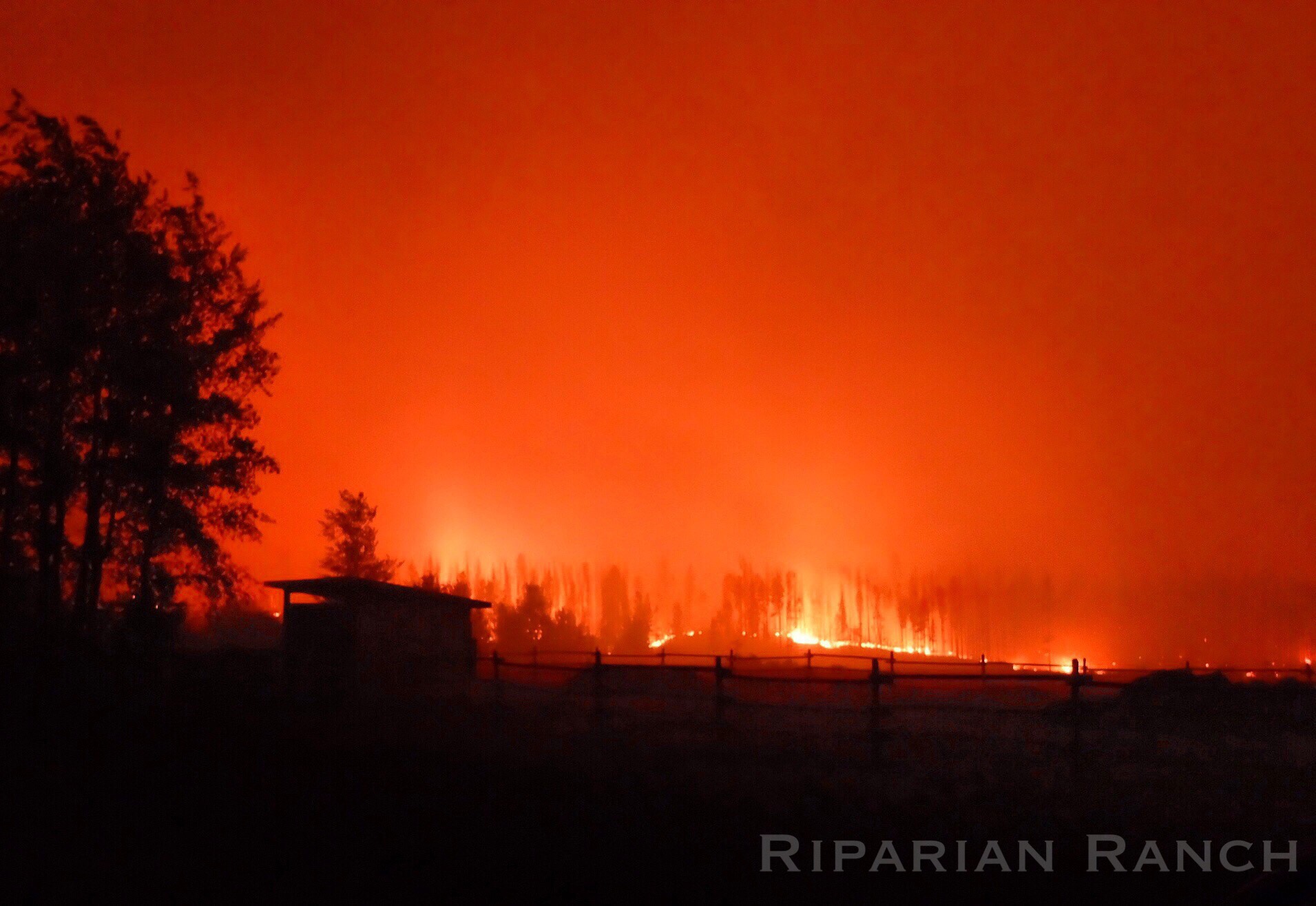
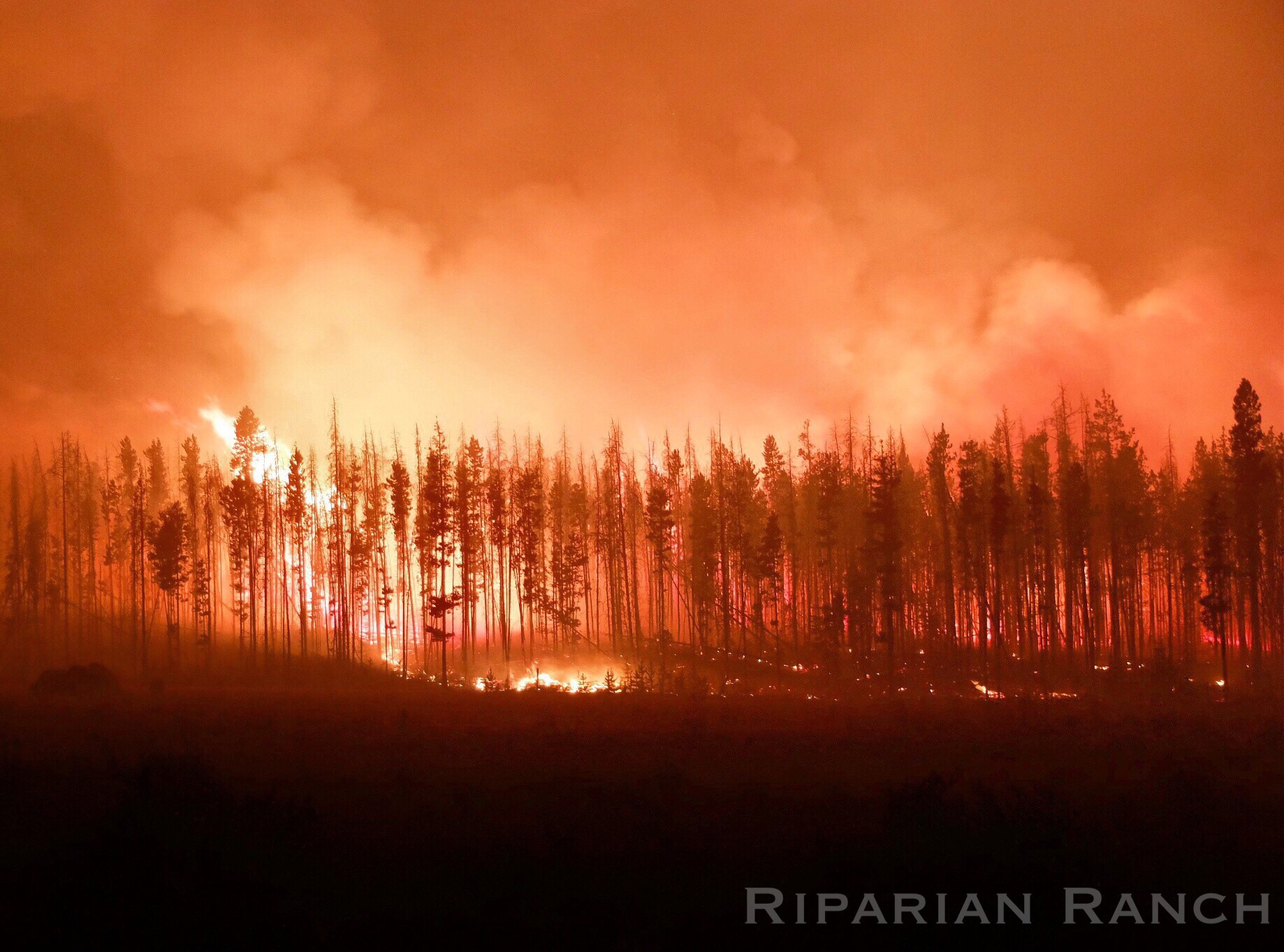
Wildfires scour the landscape around Riparian Ranch

Shanti Heywood

This story first appeared on the Young Agrarians website.

Protecting my home was just something I had to do. People keep commenting on how brave I was—but I like to think everyone has some grit inside of them somewhere to fight when they have to. My heart goes out to those who have lost their homes and those who are still fighting to save homes.

We bought 256 acres of cleared but poor quality (and consequently, affordable) land out in the middle of nowhere. My husband wanted to live off the grid and I grew up off grid, so it wasn’t a huge stretch buying this place. With technology these days we have a lot more creature comforts available off grid than I did as a kid in the ‘90s.

The only catch was my hubby has a company down in Burnaby so I’m up here by myself 90% of the time learning to do a lot of things I never dreamed I’d be doing. Since the land needed improving and was not fenced we bought some solar powered fencers and step in posts and got to work. With affordable solar fencers, the voltage isn’t that much, so you really have to work with the psychology of the animals. If they’re not satisfied they will just leave. Solar fencers definitely let you know if your animals are happy in a hurry.

I moved them last year every 24 to 48 hours, and I saw a good deal of improvement. This year we dedicated a lot of time to fencing. I would only move them once per week but it still did what it was supposed to do.

The forage stayed green a lot longer than the ungrazed areas despite extreme drought conditions. Once the fire started I kind of knew we were in a good spot. Some of my friends, bless their hearts, were heavily involved in helping people evacuate livestock. They were quite insistent that I should get my animals out of there, but I refused. They’re as much my coworkers as they are livestock and they had as much of a job to do during the fire prep as I did.

I put my cows and horses in the hay field (the only area that had not yet been grazed…lots of fuel growing in peat soil) and started to move the step in posts closer to the forest every time they had finished a section. The fire danced around me for a month and finally made a pretty decisive b-line for me. Once the fire started to come I moved the posts back to the grazed area so they wouldn’t burn and set up a second water source in case the first source had fire near it. I moved the animals’ loose mineral tub back to where I thought was safest so they knew that was the best area to hang out, and that was that.

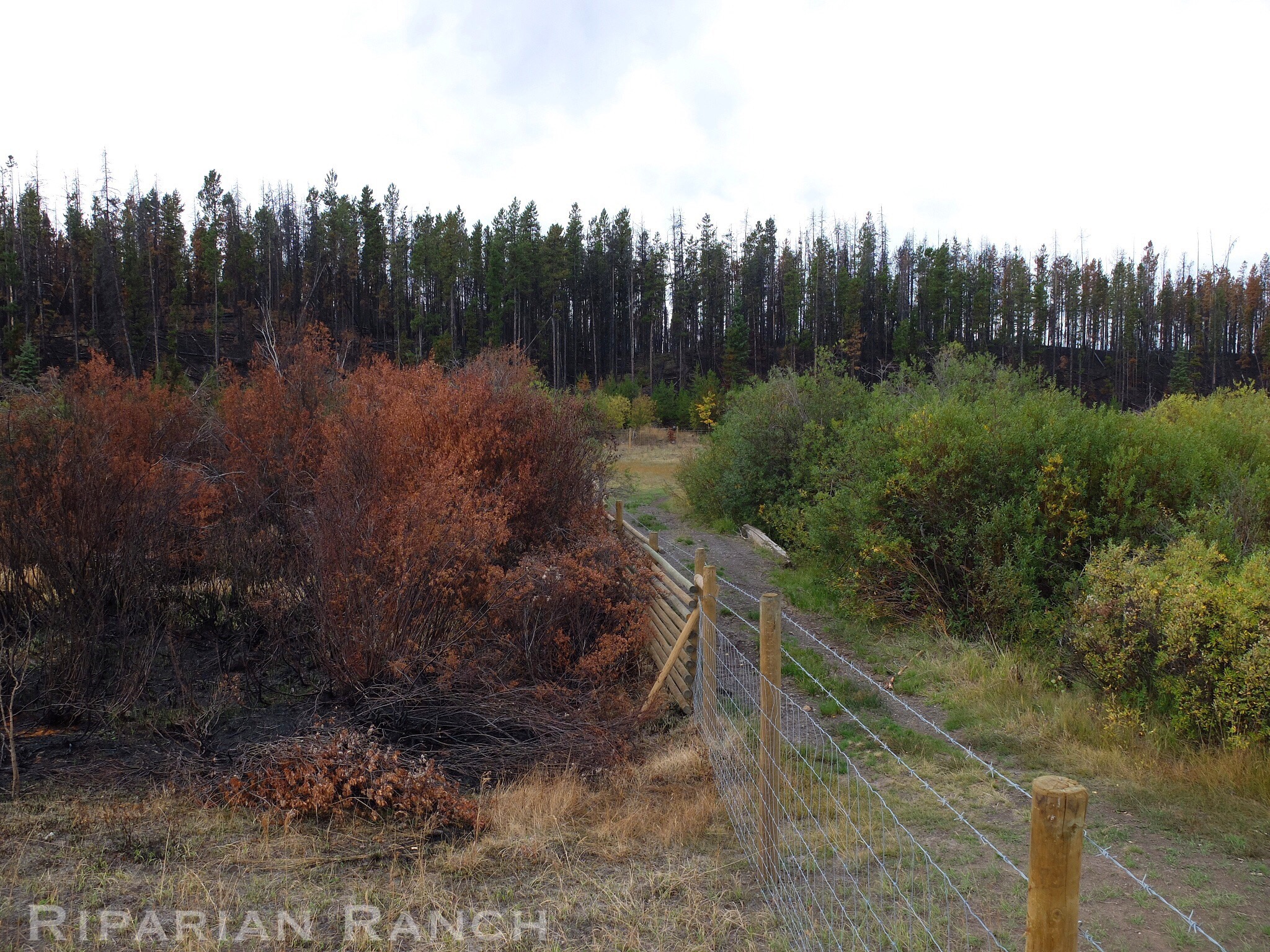
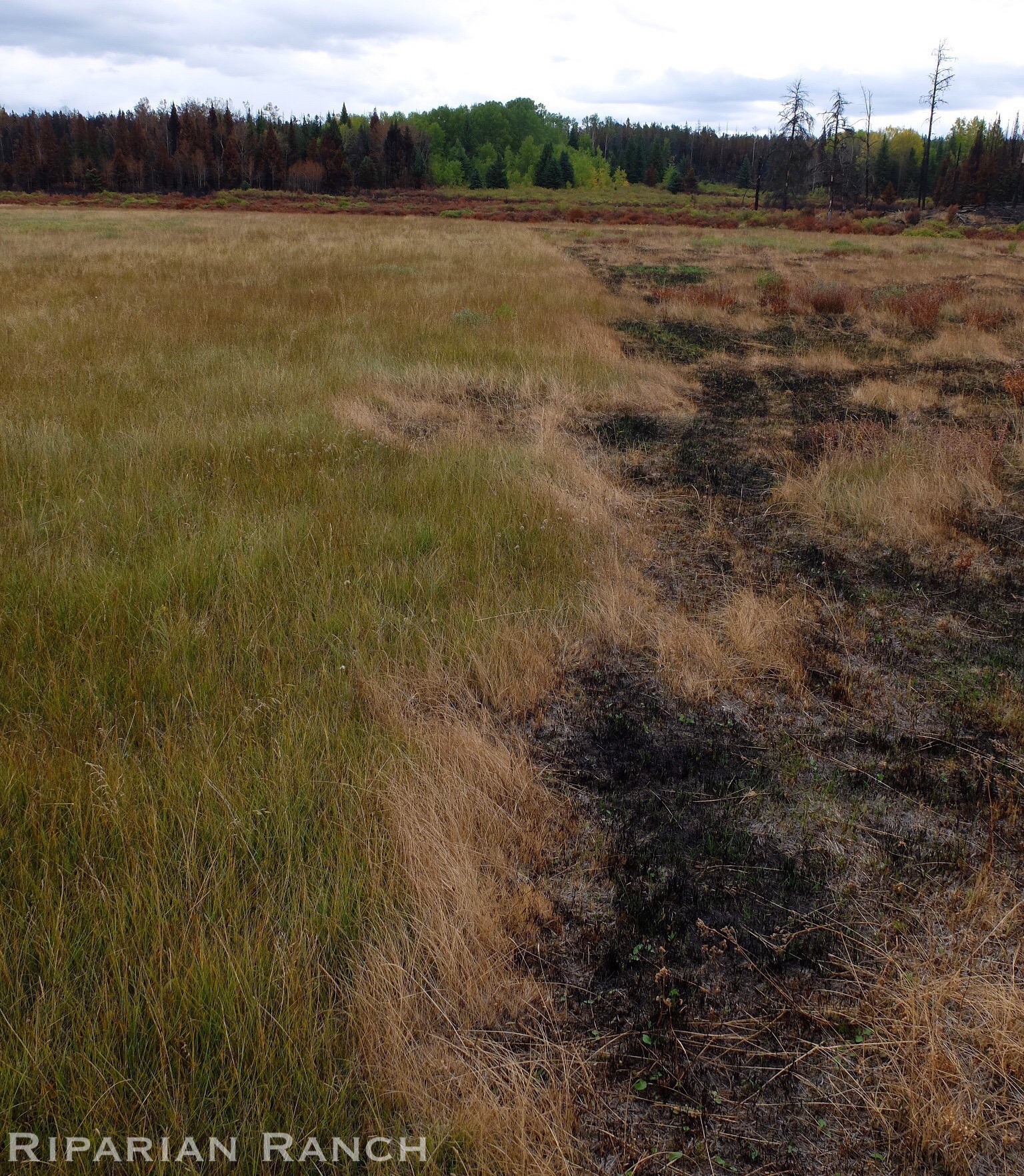
Intensively grazed pasture stopped the spread of fire

We watched the fire come in on all sides in one wild night. There’s no way I can describe the power of this fire so I’ll just give a rundown of what happened. August 11—I kind of knew it was the day the fire would come. Five weeks of waiting, watching, and preparing. That morning I got my chores done early and headed inside for a nap. I woke up in the afternoon to roaring fire on three sides and hot—I mean HOT—wind.

My neighbours Becca and Darrel showed up not long after. Darrel was worried about a cabin in the woods, Mikey’s cabin, and wanted to go check that the pump was still running. He went one way and Becca and I went the other way to break a dam upstream to let more water in to the creek for Mikey’s pump. There we are, two girls sitting in the mud listening to the roar of the fire behind us. Once we started heading back we quickly realized the fire was already almost at my property and became pretty worried about Darrel. He never made it to Mikey’s pump because the fire was already in the surrounding forest. We all figured the cabin was a pile of ash.

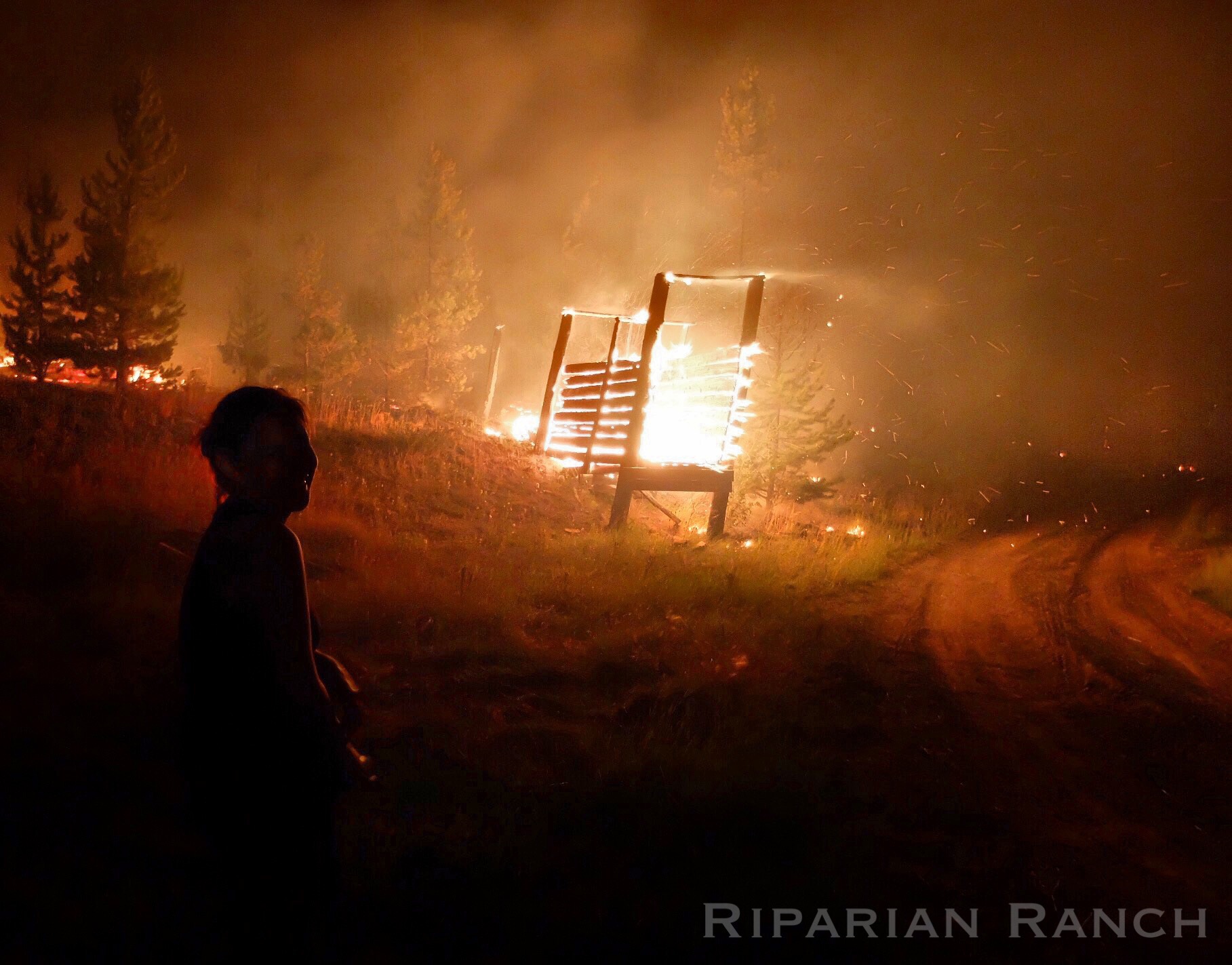
Another neighbour, Robert, showed up at that point, as did the one and only guy we had ever seen from Quesnel (who is supposed to be managing this fire). He quickly left. There wasn’t much we could do. We stood and watched the flames come in on all sides, completely surrounding us and cutting off all exits.

Once the fire had come in close I turned the waterfowl and billy goat loose and went in to the field that the goats and dogs were in. I called them all out of their huts as I was worried the roofs might catch a spark and led them to the sprinklers. They seemed to understand what I was showing them, as they never walked back in to their huts that night. I was not concerned about the cows and horses out in the hay field. We do managed intensive grazing, which proved very effective at stopping the fire in its tracks. I was pretty confident they were completely safe.

Then the smoke came down on us and for most of the evening we were choking on smoke and couldn’t see a thing. We had a couple little hot spots in paddocks and pastures throughout the night but they either burnt themselves out or were put out.

About midnight the fire calmed down on the Northern side and much to our surprise we heard the buzz of Mikey’s pump in the distance—the cabin had survived. The water from the dam had finally made its way down to us so we used it to put out a few fires and wet certain areas down. At the end of the night we all stood in awe of what had happened and what was still going on. Robert cut his way through my driveway to get home and we headed to bed. Darrel stayed up to keep watch.

The next day my husband finally was able to make it home and the fire ripped through two of our neighbour’s properties (they both made it). We weren’t able to be there for either of them but we cut our way through and went to help as soon as we could. Later that evening Robert’s wife Mamie said, “Who’s even going to believe this? Two people in their mid ‘60s running around with hoses fighting a wildfire.”

The fire burnt right up to where they had grazed and stopped. It was very hot and burnt pretty much anything in its path including green marshes and willow bushes. In one spot where I had just grazed but didn’t move the posts back to the grazed area the fire actually burnt the hot tape but not the posts because the cows had reached under and grazed around them.

Peat soil is quite notorious for burning underground for months…even through the winter…but for whatever reason the field appears to be just fine. My poor neighbour who owns another part of this field about two km away is still battling underground hot spots in his peat soil and he had the fire pass through one day after me. We’ve been over a few times to help him put out spots and move hay.

We have major wolf problems in the winter so fencing and LGDs (livestock guard dogs) are actually more important than this fire ever was. I shocked the heck out of the structure protection crew when I told them my puppies in training were more important than their hoses and I would NOT move them out of their field. Never a dull moment around here.

Horse and cows happy to be safe and sound!

None of us are able to get fire insurance due to our remote off the grid locations, so of course we all stayed to fight. We have been spending every day since checking on the properties and putting out little hot spots. It won’t be something I will ever forget, nor will this area ever look the same within my lifetime.

In the end, we didn’t lose anything to the fire. There’s no damage other than a few singed fence posts and of course my canoe I forgot about until we had gone to break the beaver dam when the fire was here. All the prep I did made it a fairly easy experience and the people that stayed with me of course helped immensely. I was never very good at studying for tests in school but this one I feel like I did my homework and was pretty well prepared for.

The fire is still blazing to the East of me. I can see plumes of smoke rising as I type this but for the most part we are safe. It’s never a dull moment here but I think it is safe to say this was one of the most exciting.

facebook.com/riparianranch


Shanti Heywood manages Riparian Ranch, an off grid ranch in the Chilcotin working towards providing humanely raised meat and livestock in the most natural and peaceful setting possible.

All photos: Riparian Ranch/Shanti Heywood

Foodlands Cooperative of BC

in 2018/Grow Organic/Organic Community/Summer 2018

Breaking New Ground

Michael Marrapese

Spring is often a time of optimism and renewed expectations. This will be Ariella Falkowski’s first year breaking ground for her new Sweet Acres Farm.She is leasing two acres of land at Lohbrunner Community Farm Cooperative on the outskirts of Langford, BC. She’s still getting to know the land and is excited by its potential. “It’s been really busy,” she says, “but some parts of the field dried up fairly early so I’ve been able to get crops in the ground earlier than I expected. My two projects this month are to finish putting up my hoop house structure and installing the drip irrigation.”

The Lohbrunner Farm is also home to Vitality Farm. Farmer Diana Brubaker and her husband Doug have been growing market vegetables on the property since 2012. When Brubaker first arrived on the property it was held in trust by the Land Conservancy of British Columbia (TLC). Norma Lohbrunner had wanted the 40 acre property with its rich peat soil and rolling wooded hills to be preserved as a working farm and wildlife sanctuary. Brubaker and a group of community volunteers signed on to maintain and enhance the existing crop beds and berry bushes after Norma Lohbrunner died in 2011. However, TLC was facing financial difficulties and the fate of the farm was uncertain.

There were hopes that TLC would still function in some manner and that the group of fledgling farmers could arrange to lease the seven acres they were hoping to farm. “We tried for about four years but it just didn’t happen. Our second option was to buy it,” Brubaker explains. “We were trying to develop a co-op and buy the property. TLC couldn’t do that because they were in the courts trying to resolve their difficulties.”

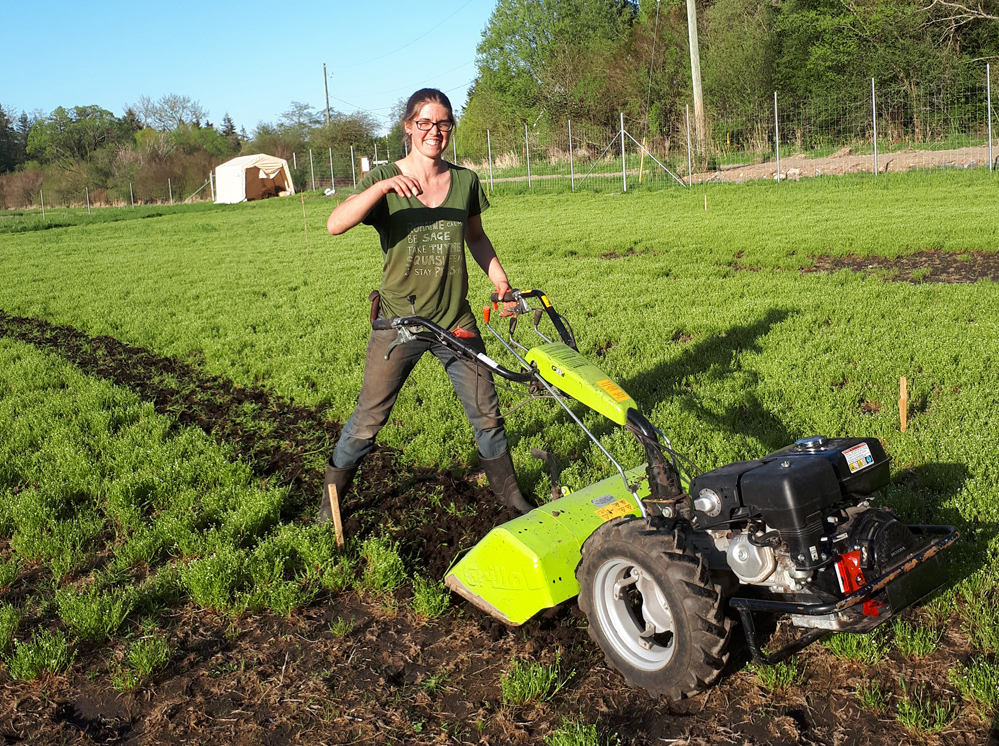
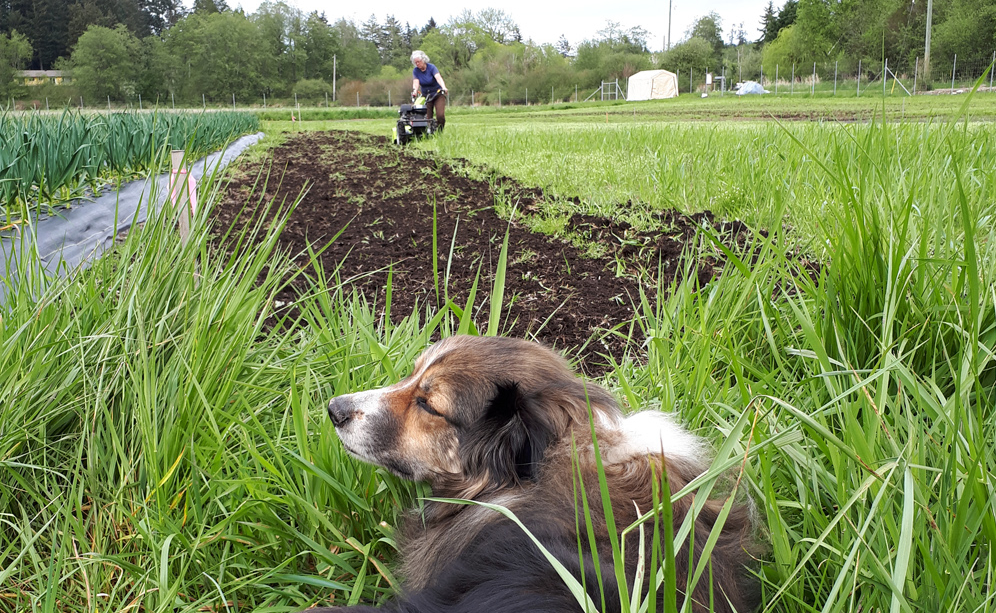
Ariella Falkowski with her walk-behind tractor
Ariella Falkowski with her walk-behind tractor. Credit: Diana Brubaker

Unfortunately, the process ended up with a court order to put the Lohbrunner Farm and other properties up for sale in order to cover some of TLC’s funding shortfalls. Brubaker and her farming group had to scramble to find another option. “The last option for us was to look for someone to transfer the land to who could hold it as a farm for eternity. That was our main drive: how do we keep this farm as a farm forever.”

The group turned to the newly formed Foodlands Cooperative of BC (FLCBC). FLCBC’s visionary mandate is specifically to hold farmland in trust and ensure that it is actively farmed, managed by a community group, and accessible to the broader community. Heather Pritchard, the co-op developer with FLCBC, notes the process of developing Lohbrunner Cooperative and taking a farm in trust is new ground for all involved. “The leases, agreements, governance processes, and Cooperative structure of Lohbrunner are essentially the template for how other farmlands can be held in trust,” she says. “The lessons learned from Lohbrunner Community Farm will be the basis for other lands held by the Foodlands Cooperative.”

However, FLCBC hadn’t finished incorporating and couldn’t act quickly enough to take the Lohbrunner lands into trust. Pritchard met with funders and stakeholders and arranged to secure the funding and have FarmFolk CityFolk hold the title until FLCBC had fully incorporated and secured charitable status.

Celebrating the Fall harvest web. Credit: Michael Marrapese

Brubaker recalls that, even though the farm had been secured, the co-op members at Lohbrunner soon realized there was still much to be done. The governance and management structure, the co-op’s constitution and by-laws, and core operating agreements all had to be worked out. “The Foodlands Cooperative has been so supportive in helping us establish our own co-op. It’s given us lots of flexibility to design something that works for us. It’s truly incredible to be in this place of options and choices. We’re extremely blessed,” she says.

While cooperative ownership can be challenging, it has big benefits, particularly when starting a new enterprise. Principally, with the high cost of farmland, pooling personal and community resources can be one avenue to secure financing. Falkowski notes that there are other practical benefits. “One of the things that initially drew me to leasing land at Lohbrunner was the opportunity to have a more stable long-term lease. Another benefit is that we have really helpful co-op members with really different skill sets. Different people have different experience and different connections that they can bring to the table.”

One of the current challenges is securing organic certification. As it turns out, the unusual ownership model has made organic certification more difficult. Initially, the Islands Organics Producers Association (IOPA) was suggesting an incubator farm model but it just didn’t fit. Brubaker reflects that, “the problem seems to be that we’re the ‘square pegs that don’t fit into their round holes’. I really liked the idea an incubator farm model where a new farmer, who doesn’t necessarily have the skills, could be mentored to help them get started. However, when they wanted to move on, they couldn’t take that certification with them—they’d have to start over again.”

Falkowski was involved in a lot of back and forth discussions. She recalls that, “what seemed to make the most sense for Lohbrunner was to certify as three different entities—as Vitality Farm, Sweet Acres Farm, and Lohbrunner Community Farm. One of the benefits of doing it this way is that if I were to leave the property or to lease some additional land elsewhere, my certification number would go with me.”

Diana Brubaker working the field while her dog Bella supervises. Credit: Ariella Falkowski

The downside to this process is that each certification will cost $500. “Using this approach we now may have to pay $1500 a year to be certified,” Brubaker says. “At this point, I’m not sure there’s enough revenue off the farm to justify the expense.” The further implication is that when other farmers come onto the property the costs could rise to $2000 or $2500 a year.

Brubaker also finds the certification process particularly arduous for their diverse market vegetable operation. She has many different inputs for the different crops. Chief among them are all the different seeds she purchases—three to four hundred different seeds from different catalogues. “I’ll have to detail why I choose one over the other and whether they are organic or not. If we were just growing one or two crops it would be far less work.”

Despite the difficulties, Brubaker asserts that the certification process has been valuable for her. “As part of my professional career as a leader in health care one of my roles was quality improvement. When I apply those similar principles to the certification process I appreciate that it is a really good process to go through. I look differently now at everything I buy, everything I bring to the farm. I think that, in the beginning, we had the very basic principles of organic farming but this process has taken us a step further.”

Trying new processes and new approaches, breaking new ground, is difficult but in the spring, the season of optimism, it seems possible. “It’s not going to be easy,” she says, “and there are lots of unknowns. We’re hoping this year has more laughter and hugs than tears.”

foodlands.org

lohbrunnercommunityfarm.org

sweetacresfarm.ca


Michael Marrapese is the IT and Communications Manager at FarmFolk CityFolk. He lives and works at Fraser Common Farm Cooperative, one of BC’s longest running cooperative farms, and is an avid photographer, singer and cook.

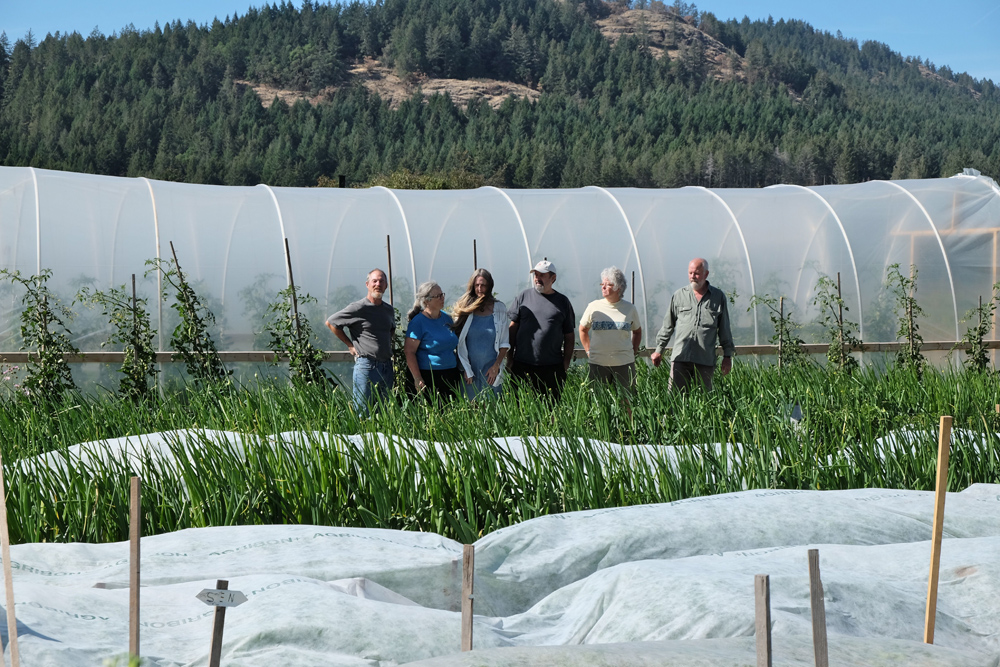
Feature photo: The Lohbrunner Farm crew with their garden hoophouse. Credit: Michael Marrapese

Organic Farming to Enhance Native Species

in 2018/Grow Organic/Land Stewardship/Living with Wildlife/Organic Standards/Summer 2018

Tanya Brouwer

Agricultural activities are often blamed for the demise of the planet’s environmental systems. It is not uncommon to hear about deforestation, drained wetlands, and dying grasslands when referencing agriculture. Yet the Canadian Organic Standard specifically states that “organic agriculture should sustain and enhance the health of soil, plants, animals, humans and the planet as one and indivisible.” This puts organic farmers in a unique and invaluable position as environmental stewards of some of the last large tracts of fertile land in the country.

Unfortunately, this noble mandate, while inspirational on paper, lacks the specific steps that organic farmers need to turn this goal into reality. It becomes necessary, then, for organic stewards to first turn inwards and understand the local, biogeoclimatic zone in which they operate. With this understanding, it becomes easier for farmers to recreate or retain habitat elements of the zone’s numerous ecosystems in order to bolster often dwindling populations of native species. At the same time, a knowledge of regional ecosystems allows organic operators to minimize farmer/wildlife conflict. The result is a scenario where farmers and wildlife form mutually beneficial relationships.

For example, many of the South Okanagan’s organic operations lie within the Bunchgrass biogeoclimatic zone (BG).  Very generally speaking, this zone is characterized by moderate winters, hot summers, and very little precipitation. Grasses are the dominant vegetation, interspersed with Rabbitbrush, Big sagebrush, and Antelope brush among others. The wildlife species native to this zone, including birds, bats, mammals, and insects, have evolved with the climate and resultant plant life and rely upon these ecosystems to fulfil certain life cycles. Agricultural plant species, on the other hand, are not part of this coevolution and, alone, can disrupt natural life cycles forcing some native populations to diminish and others to become perceived ‘pests’.

The good news: it is possible for organic farmers to coexist with native systems within the farmed environment without decreasing production goals. For instance, the South Okanagan is home to many snakes. The rattlesnake and gopher snake are some of the most well-known and misunderstood. Through persecution and habitat loss their numbers have dropped significantly. What many farmers fail to realize is that snakes, protected under the BC Wildlife Act, are an organic farmer’s friend for effective and ‘approved’ rodent control, so populations should be encouraged in a safe manner.

In the South Okanagan, rocky slopes are often used as denning sites. These should be maintained with a buffer of natural habitat. In order to prevent farmer/snake conflict, habitat hiding spots like piles of rocks or wooden boards can be created and placed away from busy work areas. If all else fails and conflict cannot be avoided, particularly with rattlesnakes, a farmer may opt to install snake barrier fencing.

Wetlands are also a vital element of the dry BG zone and support at-risk species like the Blotched tiger salamander and the Great Basin spadefoot toad. Healthy wetlands help farmers by reducing mosquito populations, recharging aquifers, and minimizing flooding to non-wetland areas. With over 85% of the Okanagan’s wetlands destroyed, farmers would be wise to protect them. Ensuring organic fungicides are applied on low wind days avoids negatively impacting amphibians. Exclusion fencing is a good first step for livestock operators and appropriate buffers with native plantings are also recommended in non-livestock settings. Wetland re-creation is another option in fields where wetlands have been drained.

Admittedly, many organic farmers, particularly those growing fruit, might be hard pressed to find room for a relationship with birds. Many birds, however, are voracious eaters of insects that are also detrimental to fruit crops. And, like other native species, numerous populations of native birds are on the decline due to human related habitat loss and competition from non-native species like the European starling. For these reasons, the Lewis’s woodpecker, found in the South Okanagan, is considered threatened. To encourage its comeback, large standing dead or live Ponderosa pine or Cottonwood trees should remain intact as they provide important habitat for this species (BOX). Ensuring that vineyard netting is tight and not hanging loosely will prevent stolen grapes and inadvertent bird catch. As a final incentive, Lewis’s woodpeckers, like all migratory birds, are protected under the federal Migratory Birds Convention Act so meddling with this species and many others is considered illegal.

Of course, the tiny but mighty native pollinators should not be forgotten. Native species of bees, flies, moths, butterflies, and beetles are responsible for one of every three bites of food we take. Unfortunately, many of these populations are also on the decline. This is where native plants are especially important. In the South Okanagan, for example, the Mining bee is the first to emerge in the spring and benefits from Yarrow’s early bloom. As another example, the female Northern Checkerspot will lay her eggs on the underside of Rabbitbrush leaves. By planting a hedgerow or strip of native plants (or maintaining existing native habitat), organic farmers will help preserve species that are vital to crop success.

Obviously, many of these projects require some financial input. Additionally, learning this information requires time that many organic farmers simply do not have. Several communities and regions have stewardship societies with experts that will assist farmers in identifying critical habitat on their property. These groups are also aware of potential grants and other funding that can help fulfil conservation goals. Okanagan Similkameen Stewardship, Delta Farmland and Wildlife Trust, the Kootenay Conservation Program, the GOERT society on Vancouver Island, and the Environmental Farm Plan are great regional programs that farmers can access.

At the end of the day, organic farmers are also ecologists, managing the interrelationships of soil, water, plants, and animals to create a thriving, healthy operation. While the specific knowledge of local ecosystems may be new to some, it is likely that the nurturing of these ecosystem elements is a long time practice for many. Learning the details of a region’s biogeoclimatic zone is an extra step that will ensure the organic farmer is well on the way to fulfilling the organic standard’s mandate to protect Canada’s environment.

BIOGEOCLIMACTIC ZONE

BC is divided into 14 biogeoclimatic zones. Zones are large geographic areas with relatively uniform climate. They are named after 1, 2, or 3 of the dominant climax species. Spruce-Willow-Birch, Mountain Hemlock and Coastal Douglas-fir are some examples. Other provinces use different classification systems.

WILDLIFE PROTECTION

BC Wildlife Act: protects virtually all vertebrates from direct harm, except as allowed by regulations (e.g. hunting). Anyone who kills or harms an endangered or threated species can be fined $500,000 and three years in jail.

Migratory Birds Convention Act: federal legislation that protects all of Canada’s migratory birds, including their nests and eggs, unless allowed by regulations.

Large standing dead or live trees that provide valuable habitat for the conservation of wildlife are referred to as Wildlife Trees.


Tanya Brouwers is the Ecostudies coordinator for the Okanagan Similkameen Conservation Alliance. She also is an organic verification officer and a farmer. For any questions related to this article or to book a workshop, email her at ecostudies@osca.org.

Photo: Keith Manders, rancher, helping Okanagan Similkameen Stewardship plant native trees and shrubs to enhance a riparian buffer (along Aeneas Creek) on Garnet Valley Ranch in Summerland. Credit: Okanagan Similkameen Stewardship

1 18 19 20 21 22 29
Go to Top