Eva-Lena Lang
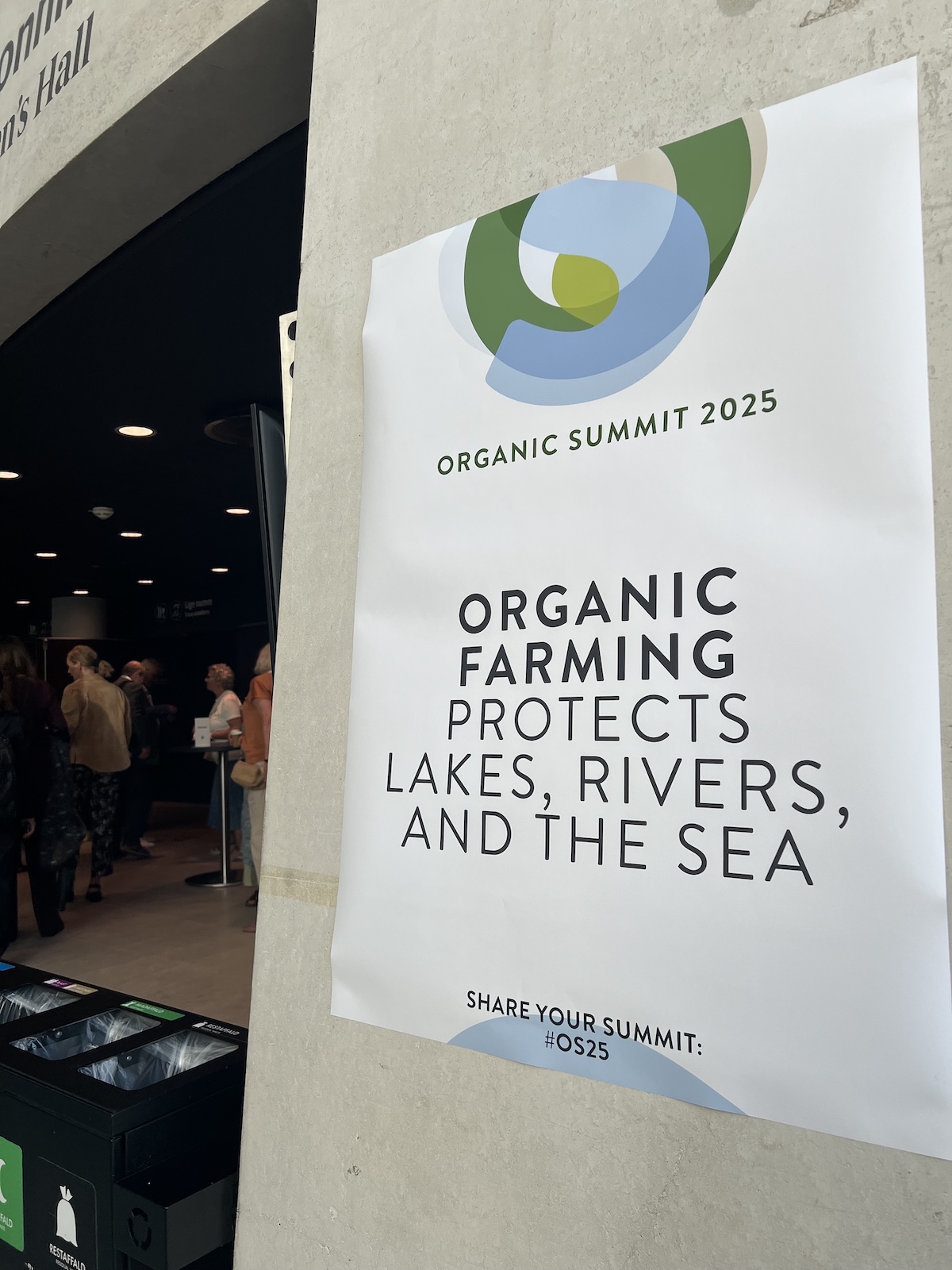
This past August, thanks to a generous donation from Renewal Partners, Gillian Flies, Katie Fettes, and I had the opportunity to attend the Organic Summit in Copenhagen, a dynamic gathering of minds committed to shaping the future of organic food and farming in Europe and beyond. The Summit brought together around 450 diverse and passionate individuals—farmers, policymakers, scientists, conservationists, business leaders, and innovators.
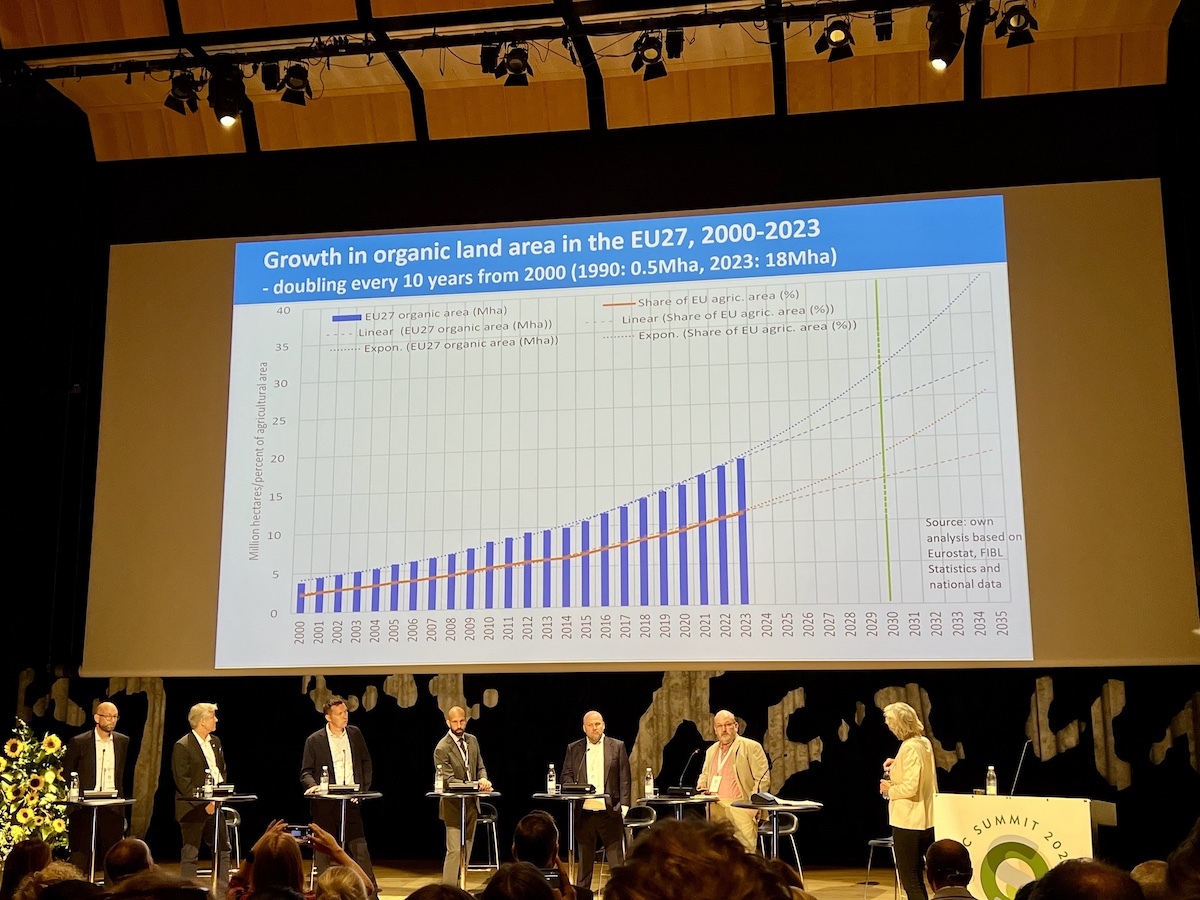
The European Union (EU) aims to transition 25% of its agricultural land to organic by 2030—an ambitious but critical goal aimed at achieving various other sustainability goals and building a resilient food system. Denmark, a leader in organic growth and the Summit host during its EU presidency, has shown how investment pays off, with 10.5% of EU farmland now organic—well ahead of Canada (3%) and the USA (1%). However, much work remains, and the Summit explored pathways to accelerate progress.
Prior to the Summit we met with the non-profit association Organic Denmark. They have built a highly strategic and collaborative model for growing the organic sector by partnering closely with dominant retailers to tailor retailing strategies that help them differentiate and increase their organic offerings.
Their approach focuses on leveraging data, storytelling, and public procurement goals while supporting farmers, processors, and the broader food system through innovation, education, and capacity-building. With a strong emphasis on market development—both domestically and internationally—Organic Denmark also plays a key role in shifting narratives around organic as a tool for biodiversity, sustainability, and affordability for consumers.
The Official Welcome set the tone for the Summit by positioning organic as a cornerstone of a sustainable food system, with an emphasis on the urgency of transition: the time for change is now, to protect soil health, biodiversity, and food security. Speakers called for bold political action, farmer support (as farmers are part of the solution), and the recognition that food is a right—not a privilege.
The opening panel addressed the path to achieving the EU’s 25% organic farmland goal, highlighting policy-driven incentives, consumer education, simplified systems, fair pricing, and aligning public funds with public goods across the organic value chain.
Over the two days it was clear that organic is more than certification or a method of farming—it is a holistic approach that addresses health, environment, and resilience. Organic agriculture, as many participants emphasized, is increasingly being seen as a part of the solution to multiple, interconnected challenges: biodiversity loss, soil degradation, water pollution, climate change, animal welfare, and even social and economic inequalities in the food system. While the energy at the Summit was inspiring, there was also a healthy dose of realism. Challenges were openly discussed and examined.
We heard from award-winning organic initiatives from across Europe—spanning farms, cooperatives, retailers, and public procurement—demonstrating how organic principles can drive soil regeneration, biodiversity, animal welfare, and community-led innovation.
From biodynamic vineyards in Spain to school meals in Copenhagen and regional bio-districts in Sweden, it was made clear: organic success comes through collaboration, farmer-to-farmer learning, long-term vision, youth engagement, and a deep commitment to nature-based, resilient food systems.
A particularly powerful moment came from a winemaker with wineries in France and Spain, who shared that without organic practices, producing wine would no longer be possible—reflecting how many now see organic not only as viable, but essential. He named how essential it is to take care of the soil through organic methods. He talked about diversity for resilience and all the different species of plants he uses for cover crops—growing the soil for a good product. Vineyards are now irrigating, which is not normal in Europe; instead of irrigating, this winemaker focused on building healthy soil.
Farmers from Ukraine, Uganda, and beyond shared how organic practices support resilience in times of war, climate disruption, and economic instability—allowing them to maintain production without external inputs, rebuild soils, and strengthen communities. Their stories highlighted the value of nature-based practices, diversified systems, and long-term relationships. For them, organic is a pathway not only to sustain food production but also restore ecosystems and social structures in times of crisis.
A panel on trade explored how organic trade can offer resilience and fairness amid global volatility. Key discussions included maintaining standards to prevent fraud, supporting farmers and processors in export countries, and ensuring fair pricing. Simplified trade frameworks, public-private partnerships, and integrity in the organic supply chain were emphasized as essential for continued market growth.
Enabling policies, research, and market development are urgently needed to reward the climate- and nature-positive outcomes of organic practices. Copenhagen’s achievement of nearly 90% organic procurement in public kitchens stood out. They combined political will with practical training, strategic procurement, and local partnerships—demonstrating high-impact change is possible without increasing budgets. Their success underscores the impact of empowering staff, starting with pilots, and embedding organic into broader sustainability efforts.
Retailers also have a critical role. At the Summit and in subsequent meetings, we heard how retail chains can drive growth by setting ambitious goals, investing in consumer education, and collaborating across the supply chain. Transparent pricing, regional adaptation, and strategic marketing can increase accessibility and trust in organic products.
The Danish organic journey showcases a collaborative, multi-sector approach—from motivating farmers with innovation and community support to protecting natural resources and advancing strategic environmental goals.
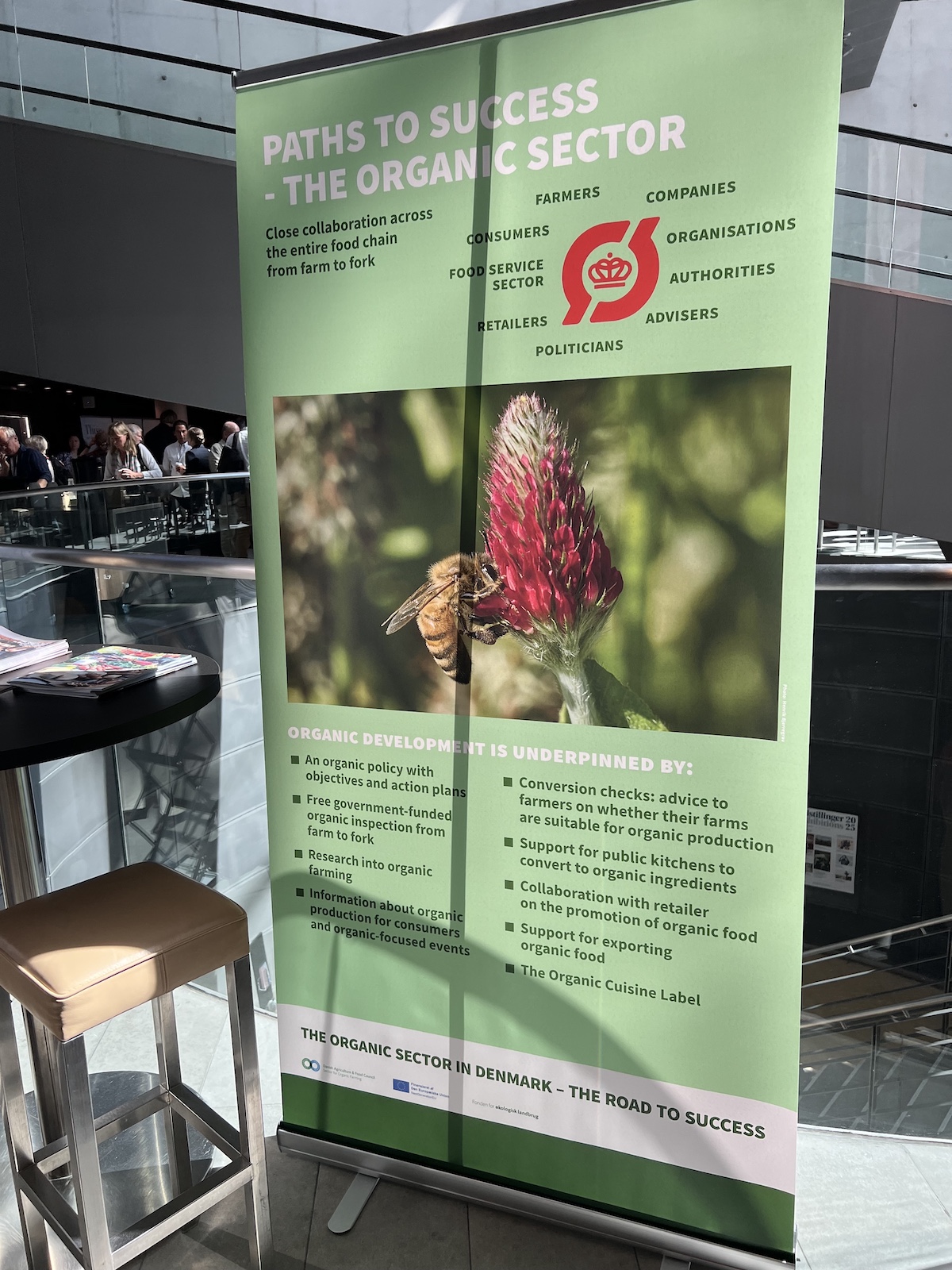
Strong government-backed labeling, industry partnerships, and public trust have driven market growth to 15% market share, while public meal programs and culinary initiatives further embed organic as a key tool for health and sustainability, emphasizing the need to shift narratives beyond price to highlight organic’s true value.
To end the Summit, Connie Hedegaard, former EU Climate Commissioner, and Nicolai Halby Wammen, Danish Finance Minister, compared organic to a Swiss army knife—a multifunctional tool for addressing health, resilience, climate, and economic priorities.
I was joined at the Summit by wonderful colleagues from Ontario, Katie Fettes of Canadian Organic Growers and Gillian Flies of the New Farm Centre. Together we also met with several organizations in the days following the Summit. We toured Danish retailer Meny, as well as the Hospitality College of Copenhagen, which includes education of organic ingredients in their programs and the Organic Cuisine Label, heard from various innovative processor businesses, and visited a farm north of Copenhagen.
We met with the Danish Agriculture and Food Council and learned about their organic strategy. The Council considers organic a tool in the green transition addressing climate, biodiversity, and ground water, and they established the non-profit Innovation Centre for Organic Farming with Organic Denmark.
We also met with Food Nation, a public-private partnership that is moving the agriculture and food sector in Denmark forward through building collaboration between industry, academia, and government. Food Nation covers the whole value chain, and organic, like climate, gastronomy, collaboration, or health are strongholds that are integrated across sectors.
Coming out of the Summit and the many conversations surrounding it, the message was clear: business as usual is not an option, and the organic sector has proven that real change is possible. What’s needed now is accelerated action, political will, and deeper collaboration to scale impact and create truly sustainable food systems.
Eva-Lena Lang lives on the traditional territory of the Syilx Okanagan people and is the executive director of Organic BC.
Learn more about the organizations mentioned in the article:
Organic Cuisine Label:
Danish Agriculture and Food Council:
Innovation Centre for Organic Farming:
Organic Denmark:
Food Nation:
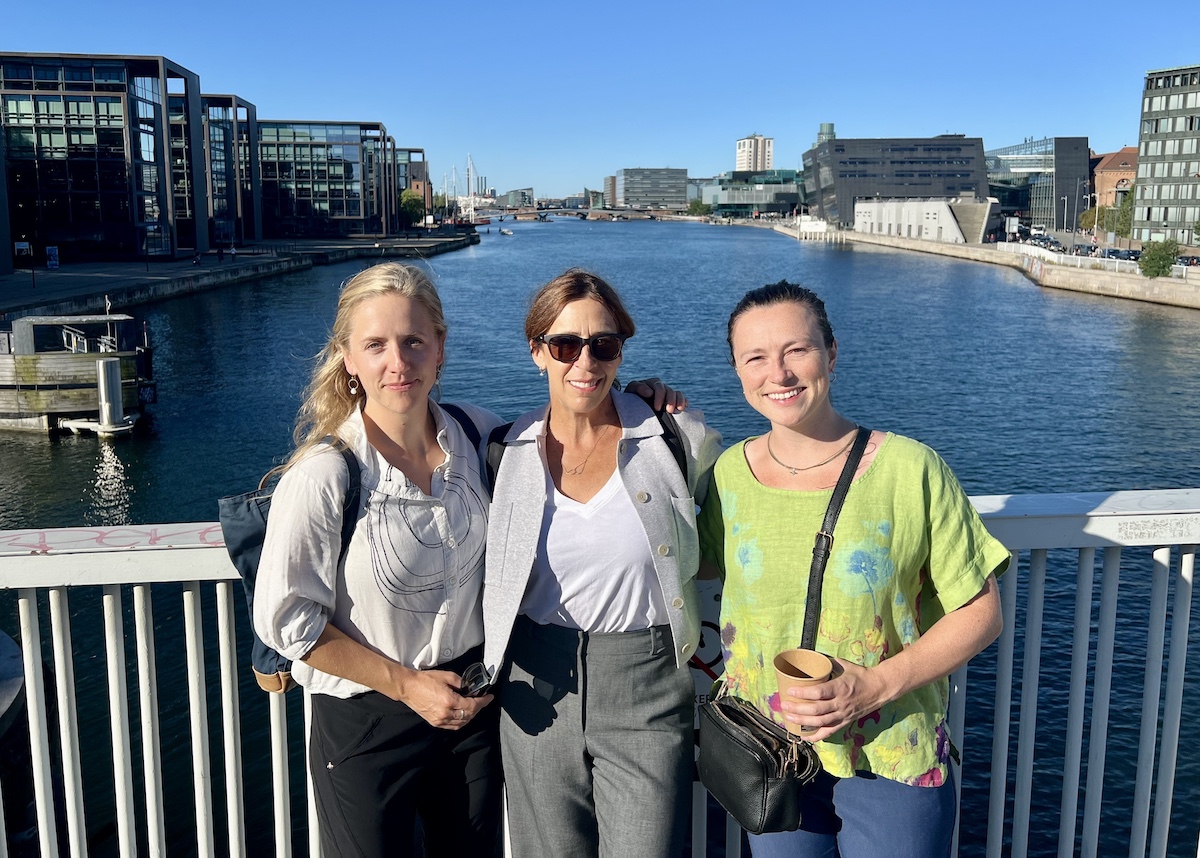
Featured image: Eva-Lena Lang, Gillian Flies, and Katie Fettes on their way to the first day of the Organic Summit in Copenhagen. Credit: Eva-Lena Lang.