
Author

Darcy Smith - page 28

Darcy Smith has 283 articles published.

Sky Harvest Microgreens: Small But Mighty
in Crop Production/Grow Organic/Winter 2016
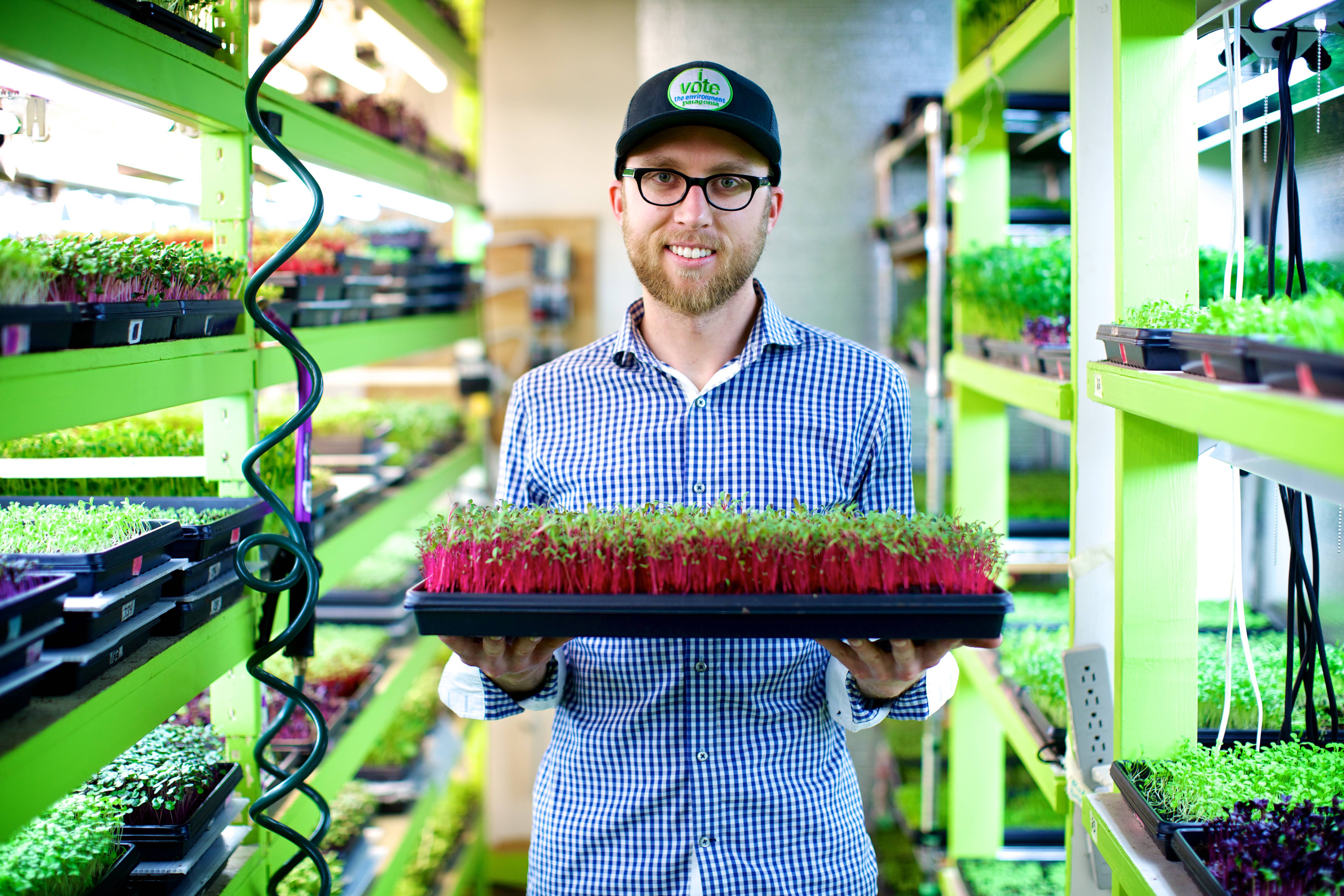
Aaron Quesnel in the Sky Harvest headquarters.

Carolyn Mann

Canada’s First Certified Organic Urban Farm

Our farm is measured in feet, not fields, and our next door neighbour is a bottle return depot. Our crop rotations are counted in days rather than months, and we rely on a fleet of bicycles to get around the city.

Our farm is small, but our dream was big: to become Canada’s first truly urban Certified Organic farm.

Sky Harvest is located in the heart of East Vancouver, where we grow microgreens, the tiny, nutrient- packed greens often used as garnish in fine dining. Sky Harvest was founded by Aaron Quesnel in 2012 and is based on a vision of a more sustainable cityscape in which food is grown closer to where it’s eaten, and where chefs can meet their farmer face to face.

In order to accomplish this, Sky Harvest employs unconventional farming techniques: we grow in the lower level of a warehouse, and all of our greens are delivered by bicycle throughout Vancouver. We are located just 3km from downtown, and our greens don’t travel farther than 10km to meet our customers.
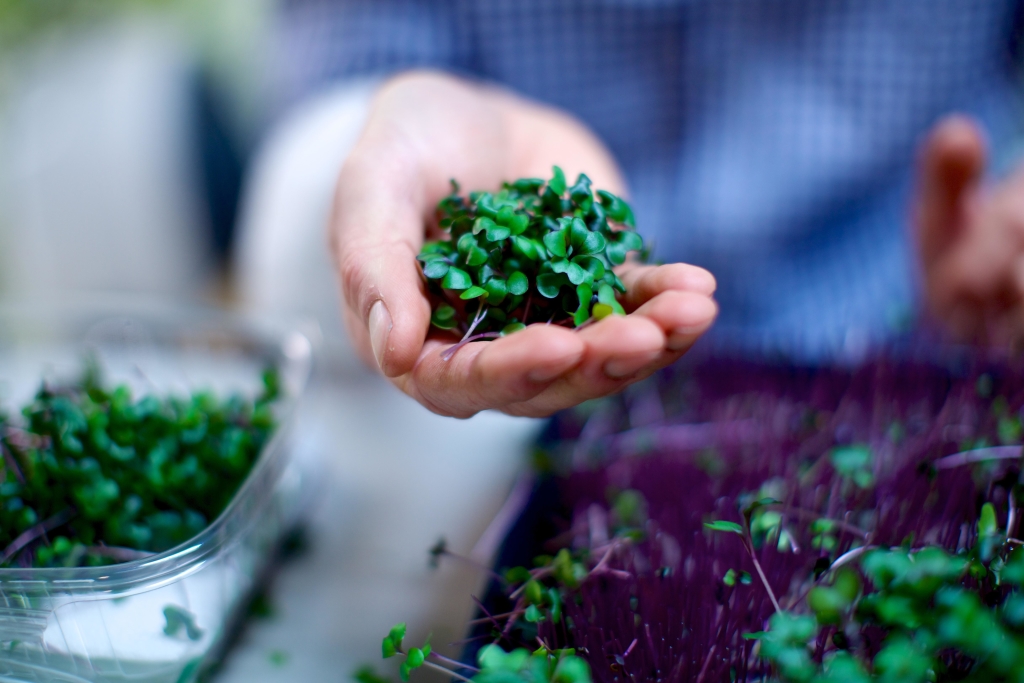
Sky Harvest microgreens
Credit: Nic West

Introducing Microgreens

Typical microgreen varieties include arugula, kale, peas, radish, sunflower, basil, cilantro and cabbage. At Sky Harvest, we grow about 15 varieties, including a few unconventional types – here you’ll find nasturtium leaves, lime basil, and micro sorrel.

Microgreens are noted for packing in 6-40 times the nutrients per weight as their full-grown counterparts, depending on the variety. Recent studies have noted the importance of the nutrients found in microgreens for fighting cancer, maintaining healthy skin and eyes, and promoting liver and bone development.

Microgreens are very different from their full grown counterparts, often boasting unique flavour profiles and a more delicate texture. Their flexibility is incredible: appetizers, entrees, drinks, and even desserts are all places that microgreens find themselves at home. When it comes to microgreens, though, Sky Harvest specializes more in the growing than in the recipe creation.

Because of their delicacy, microgreen growth requirements are extremely particular. Each crop has unique nutrient, water and light requirements, and getting the balance wrong can mean crop failure. This adds a layer of complexity to our daily tasks and makes automation of the process unfeasible.
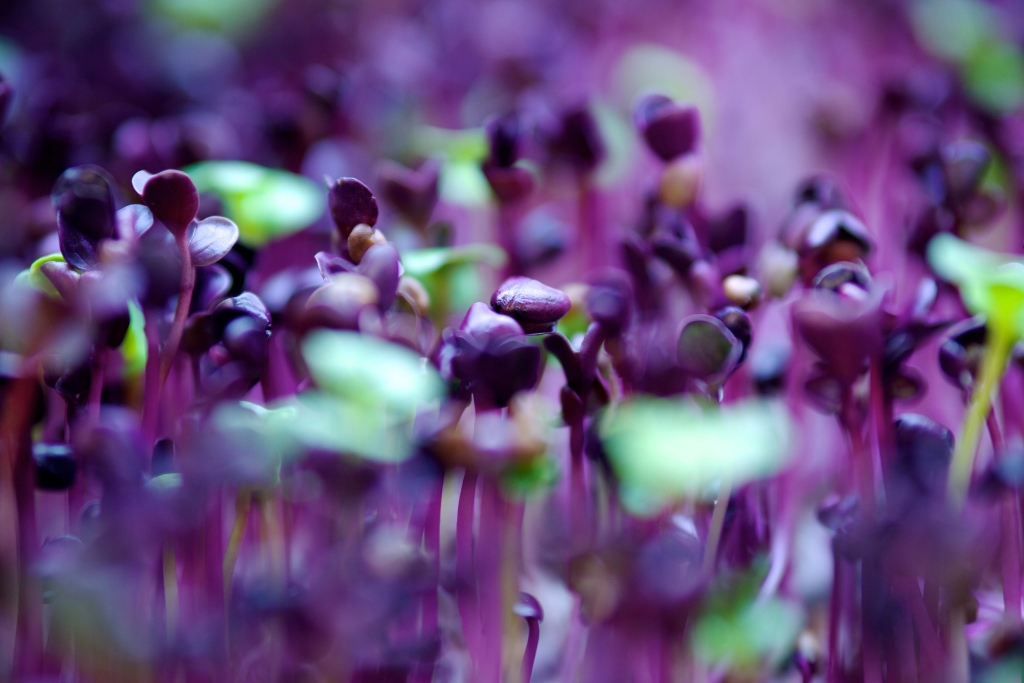
Sky harvest purple cabbage micro greens
Credit: Nic West

A Day on the (Micro) Farm

Every day of the year, someone from the Sky Harvest team heads down to the farm, where they’re greeted by a warm, almost tropically moist atmosphere and a somewhat magical scene: shelves and shelves of tiny plants, stretching eagerly toward the light.

The day’s tasks are laid out on a whiteboard, but that doesn’t mean it’s a simple job. Each individual tray must be checked and watered by hand. Trays planted in the past few days are all examined to see if they’ve germinated yet, and then are uncovered and slotted under their own lights.

In this way, every tray is looked after by hand, so that we can be sure everything is going well. We’ve always strived to grow with care, and we have always grown organically – but getting certified was a recent step, and, given the resources involved in the process, a decision not taken lightly.

Microgreens have been exploding in popularity over the past few years, becoming staples for many different kinds of restaurants, food trucks, and the home cook. To match the growing demand, Sky Harvest greens are now found in various grocery stores around Vancouver, including Choices Markets, Spud.ca, and Pomme Natural Market.

Sky Harvest micro greens on canapes
Credit: Joey Armstrong

The Importance of Certification

While many of our chefs have visited our farm for a tour of the operations, we no longer have the opportunity to meet all of our customers face to face. Getting certified became an important way to communicate our values and practices to our expanding customer base.

The process of organic certification seemed very daunting from the outside. It was always a dream – but one whose paperwork, financial requirement, and time commitment were hard to work into an already busy day. It wasn’t until recently that we realized the benefits were beginning to out-weigh the costs and it would help illustrate our ongoing commitment to sustainability and innovation in urban farming.

There are certain aspects about our farm that made it easier to go through the certification process than it might be for others. Our farm is small and quite concentrated in only 2,000 square feet. We grow in containers, indoors, which makes it easier to control our inputs and our soil quality.
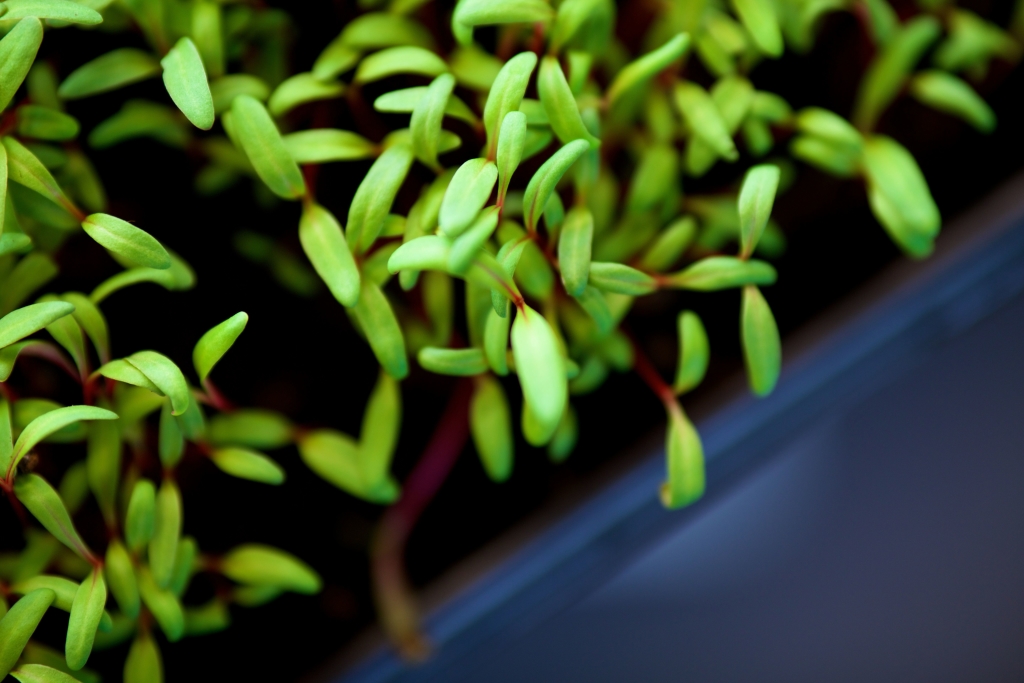
Sky Harvest microgreens
Credit: Nic West

However, as microgreen growers, we also face some unique challenges. Because our greens are harvested so young – some are only six days old – we face different regulations. All of our seeds must come from certified organic sources, even if organic seed is not available on the market, making suppliers’ seed shortages not just a headache, but a potential nightmare.

Overall, even though the process was complicated, it was an exciting step, especially when we officially became Canada’s first truly urban Certified Organic farm. There are still challenges, and being only a few months into our official certification, many more challenges are likely to pop up.

For now, we’re proud to have taken this step and to have become leaders in our field. We will continue to push this boundary with innovation and sustainability as our goals, all while providing the best quality product. We love eating local, healthy and organic food – and we hope that by becoming certified, we’re helping to drive this growing industry.


Carolyn Mann is Sky Harvest’s Marketing and Development Guru. She is currently working on her Master’s in Agriculture, studying soil health in organic agriculture.

Edamame: Just Add Salt

in Crop Production/Grow Organic/Winter 2016
Edamame Tohya

Sue Takarangi

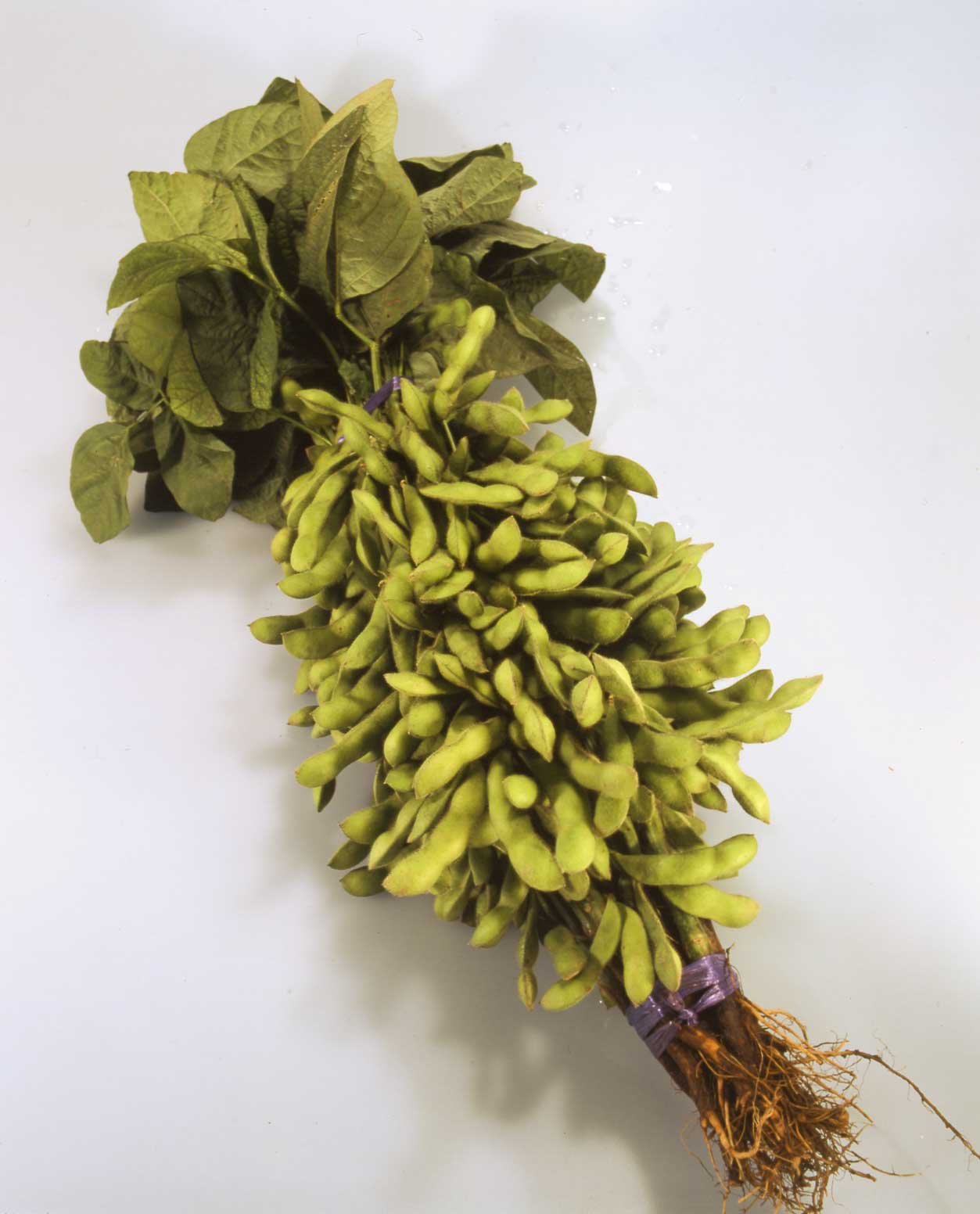
North Americans are a recent converts to edamame, while our Chinese and Japanese neighbours across the Pacific have enjoyed this nutrient rich food for centuries. Edamame means “beans on a branch,” and unlike other soybeans they were adapted to be harvested when the seeds are green and plump – perfect for enjoying freshly steamed and sprinkled with salt.

This year, West Coast Seeds experimented with growing several varieties of non-GMO edamame varieties from Japan. They were direct seeded in late May at our location in Delta. The only attention the plants received was a watering once a week during our heat wave. In late August after walking past the plants many times, we finally parted the leaves and were surprised to find cascades of beans hanging from the branches.

The edamame are harvested by cutting the stalks of the plant, and they can be sold at market by the branch, much like those impressive stalks of Brussels sprouts. This makes harvesting a breeze and also ensures a fresh product for the customer.

Edamame is riding a wave of popularity in North America, driven by the popularity of sushi and a growing focus on health. Start a conversation at your Farmers Market with a table piled high with edamame stalks. After all, the frozen offerings found in grocery stores are no match for the sweet, buttery texture and flavour of the fresh beans.


Sue Takarangi is a customer service representative with West Coast Seeds. She has 15 years experience with organic growing.

Promoting Productive Pastures

in Crop Production/Land Stewardship/Livestock/Tools & Techniques/Winter 2016
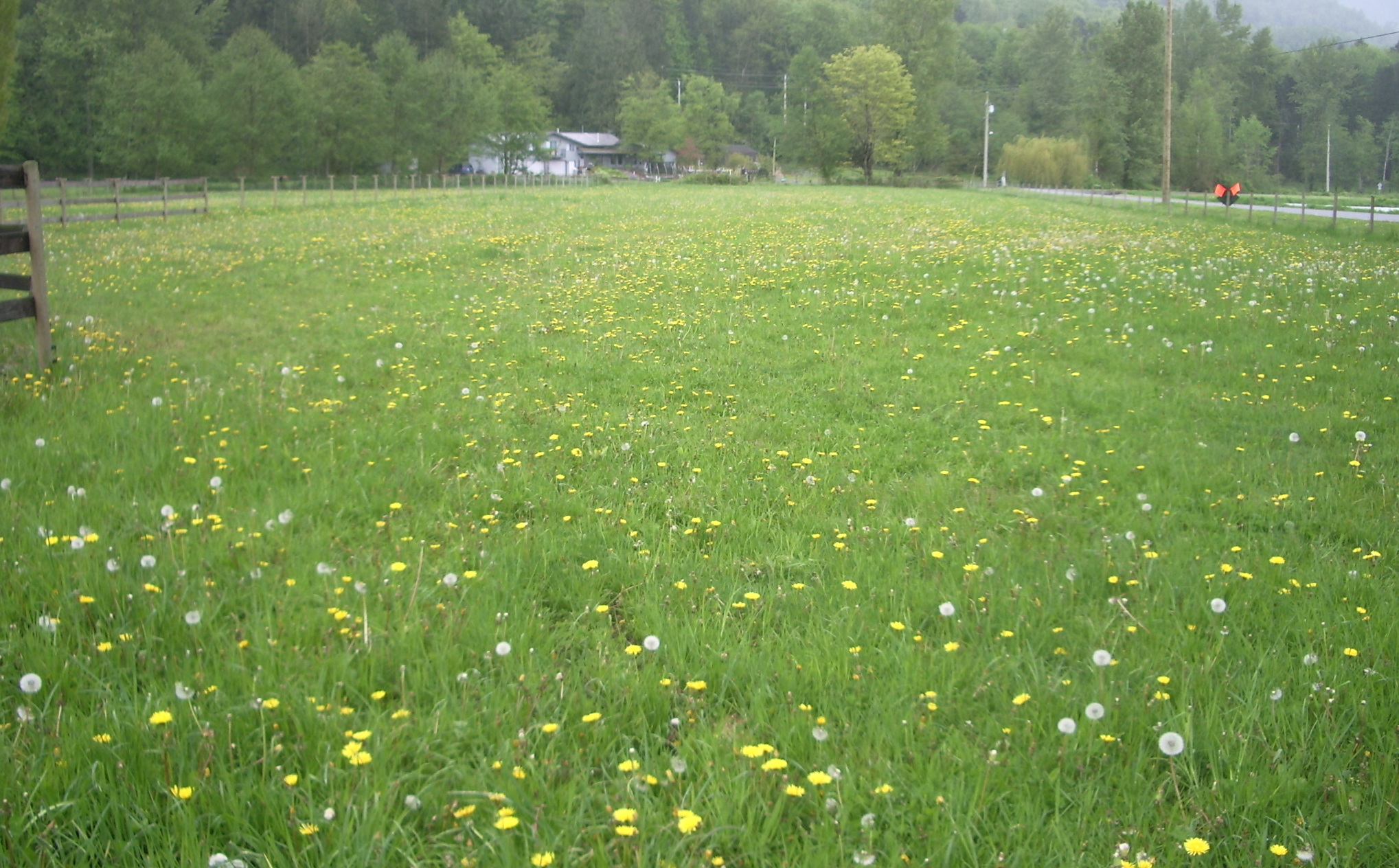
Well managed pastures

Andrea Lawseth, B.Sc., M.Sc., P.Ag. AEL Agroecological Consulting

Pasture management is one of the main challenges for organic livestock producers throughout the province. In the lower mainland and on Vancouver Island, we struggle with wet climates and waterlogged grazing areas, while in the interior of the province the hot and arid climate poses other challenges that can be equally difficult to manage. Despite these difficulties, there are some techniques and tricks that you can follow to maximize the pasture that you have available and utilize your land more effectively.

Rotational and Limited Grazing

In order to maintain sales and productivity, livestock producers want to have as many animals on their land as the land can support. Sometimes we increase the numbers too much, which can result in overgrazing of pastures. Overgrazing occurs when 50% or more of the grass plant is grazed all at once. This can completely stop root growth and severely reduce grass production. Table 1 shows how grazing can affect root growth of grasses.

As the saying goes, “build your fence horse high, pig tight, and bull strong.” Fencing for rotational and limited grazing is often the best tool for reducing grazing pressure and overgrazing on your pastures. Rotational grazing involves breaking larger pastures up into smaller sections and only grazing one section at a time to allow the others to regenerate. This encourages even grazing of pastures as well as many other benefits such as: increased amount and quality of forage, increased growth of desired grass species, reduced weeds, better parasite control, better manure distribution, and more frequent animal-human contact.

As the saying goes, “build your fence horse high, pig tight, and bull strong.”

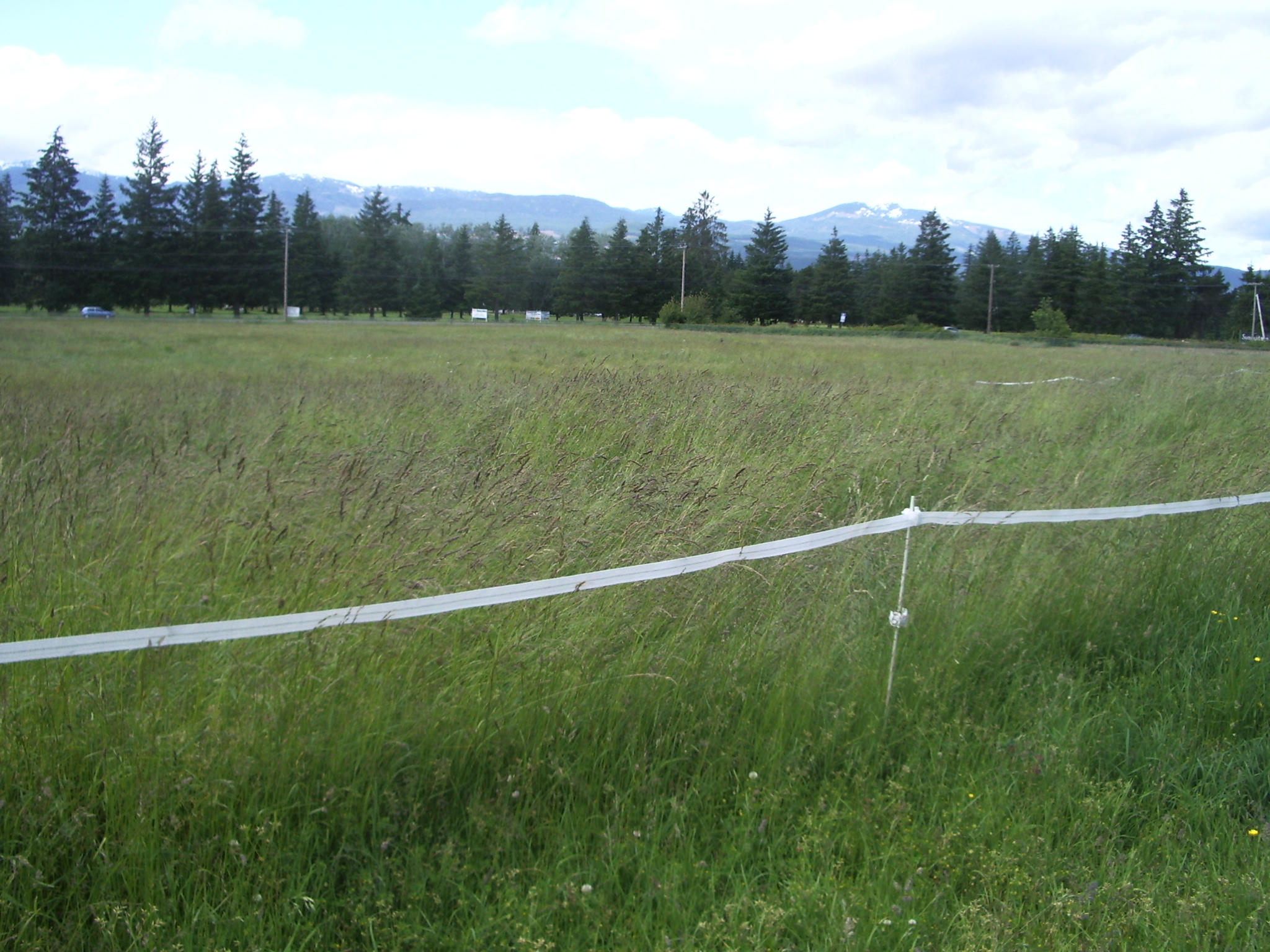
If you decide to implement rotational grazing then it is best to start by dividing a large pasture in two and grazing each of these separately. You can then divide further later on. Ideally it is best to have 4 pastures that provide enough grazing for 7 to 10 days as this gives each pasture a rest for 3 to 5 weeks. To divide pastures you can use electric fencing or tape at a height of approximately 90 cm (3 feet) or chest height of your livestock. This is a relatively inexpensive method that has proven to be highly successful. It is important to remember that you will need to monitor pasture growth at different times of the year and rotate accordingly.

Limited grazing involves turning your animals out for limited periods of time (once or twice a day, before or after work, for a few hours at a time). More supplemental feeding will be required and grass height will need to be monitored, but it provides the same benefits as rotational grazing.

IMGP2911

Pasture Renovation

Most pastures in BC are in need of some repair due to overgrazing, wet winters, alkaline or acidic soil types, or dry summers. Grass that is lacking density with 50% weed growth or more will need to be renovated to some degree. Management strategies could include a combination of improved pasture drainage, fertilizing, harrowing, liming, and re-seeding depending on budget constraints.

The first step in dealing with an overgrazed or mismanaged pasture is to evaluate what you have to work with. Find a good weed guide to help you identify which weeds exist on your property and take some samples of your pasture soils to send them to a lab for analysis. Your lab of choice will be able to guide you on their most desired sampling technique and will be able to determine the full composition of your soil and nutrient needs.

Improving drainage through the use of surface or subsurface methods such as French drain tiles can eliminate standing water and ideal conditions for weed growth. Aerating the soil will also help water to penetrate below surface soil layers. Additionally, fertilizing with well composted manure will greatly improve soil structure and drainage. Spreading a thin layer of compost will help soil to increase its water holding capacity and will provide a great medium for spreading grass seed. It is recommended to spread once in the spring and again in the fall. Furthermore, harrowing with either a chain harrow or a tractor will also help to improve drainage and break up any clumps of manure compost you have spread.

Liming is an excellent technique for areas with very acidic soil. Weeds such as buttercup (Ranunculus spp.) or field horsetail (Equisetum arvense) are good indicators of acidic soil as they are well-adapted to these conditions. Liming should be carried out in the spring and fall and more often if needed. Again, a soil test will help to determine the pH of your soil.

Finally, re-seeding with an appropriate seed mixture for your property will help to out-compete weeds and maintain good forage production. The key to choosing a mixture is diversity. The varying grass species in a mix will grow in their respective microclimates within your pastures, which will lead to lower vulnerability to disease and pest outbreaks. However, it is still important to tailor your grass mix to the type of soil on your property and the expected use of the pasture (i.e. grazing, sacrifice area, or hay).

Make sure you mention the topography of your pastures and soil characteristics (gained from a soil analysis) to your seed retailer so that they can help identify the right mix for you. The best time to broadcast overseed your pastures is in late September to early October after you have spread your manure compost. Seeding rates will vary with grass species so check with your retailer before seeding.

Before allowing livestock onto the pasture to graze you should allow newly seeded pasture grass to reach a height of 15 to 20 cm (6 to 8 in) and remove your animals when they have grazed the grass down to 8 to 10 cm (3 to 4 in). This will ensure that the grasses have enough food reserves to permit rapid re-growth. Re-growth can take up to 2 to 6 weeks, depending on the time of year, so it is important to keep animals off wet, overgrazed pastures. Wet pastures can also lead to health problems such as foot rot and parasite infestation.

Keeping pastures mowed to a uniform height of 3 inches will help to stimulate equal growth of your grass plants. This will also help to control perennial weeds that do not respond well to mechanical control methods.

Properly managing pastures generally requires a shift in thinking from viewing the crop as a way to feed the animals to viewing the animals as a way of managing the pasture. As a grass farmer, your main goal is to ensure that the grass on your pasture is healthy enough to outcompete the weeds. Through rotational grazing and prevention of overstocking pastures, you will create the right environment to allow your grass to thrive and the soil to remain healthy and productive.


Andrea is the Principal/Owner of AEL Agroecological Consulting and a Professional Agrologist with over 11 years of experience in food system and agricultural land use planning, sustainable agricultural promtion, organic certification, and food security. AEL Agroecological Consulting provides agri-environmental consulting services to all levels of government, non-profit organizations and individuals.

Farmers’ Markets Go Festive!

in Farmers' Markets/Marketing/Organic Community/Winter 2016

Chris Quinlan

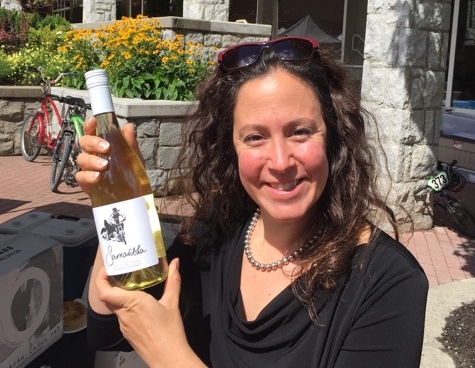
What’s food without a nice glass of BC Pinot to pair with it? The sale and sampling of beer, wine, and spirits at BC Farmers’ Markets brings the market experience one step closer to maturity.

In 2014, the Whistler Farmers’ Market became the first to have a liquor producer approved for the sale and sampling of liquor at a market. The first producer was Pemberton Distillery, producers of Shramm Vodka amongst other spirits.

In 2015, the Whistler Farmers’ Market had 15 initial applications from liquor producers to vend at the market. There are currently three or four producers sampling and selling their products at both the Sunday and Wednesday markets. It is not unusual for a winery to sell out at a Whistler market.

This is a win for markets, producers, and customers. Regional producers gain access and exposure to customers who are tuned into their product. Customers are able to meet and talk to producers about how their product is made. And Farmers’ Markets come closer to meeting their mandate of providing a complete regional shopping experience.

Moving Away from Teetotaling

How can markets and producers take advantage of this opportunity? That requires understanding how we got here.

Before 1986, if you wanted a drink on a Sunday, outside of your home, you either went to a restaurant, few of which were open on “the day of rest”, or you had to go to a private “sports club.” Arguably, this was a large part of the business plan for many of the racquet clubs that flourished in my hometown of Nanaimo. We definitely smashed more Caesars than volleys as members of the Quarterway Racquet Club.

Then came Expo 86 and the beginning of the evolution of liquor laws in British Columbia. It all began as an experiment to ensure that the international tourists who visited Expo 86 did not have to endure the trauma of not being able to get a drink on a Sunday. Fortunately for the hospitality industry, the experiment became the norm and Sunday liquor sales opened up a whole new business opportunity.

Fast forward to 2013. As a result of the long-awaited provincial liquor review, and possibly an Okanagan MLA making his seat available for a seat-less Premier Clark, consultations began with industry and the BC Association of Farmers’ Markets with the aim of enabling the sampling and sale of BC-produced beer, wine and spirits at Farmers’ Markets.

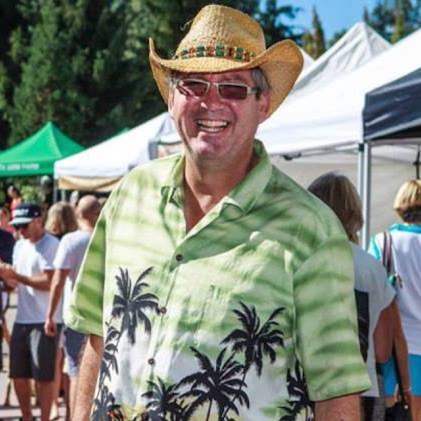
Quinny at the Market

Overcoming Fears

While the move to bring the Farmers’ Market experience in line with that of markets around the world was met with great enthusiasm by the majority of markets and municipalities, it was amazing how many of these organizations still feared this move would somehow result in rampant liquor consumption and public inebriation at Farmers’ Markets. At one consultation meeting a local market manager expressed the fear that the proposed legislation might result in “non traditional” customers attending the market to purchase a bottle of wine and then heading over to the neighboring park to drink it out of a brown paper bag.

One year after the legislation came into effect many markets are still struggling to obtain zoning from their municipal governments that would allow them to host liquor vendors. Much of this is because most municipalities were unaware of the legislation themselves. They were, and some still are, scrambling to enact the necessary zoning and business regulation bylaws.

Whistler Seizes the Moment

How did Whistler become the first to have vendors approved under the new legislation? We were fortunate to be part of the initial consultations with the province and as a result had some insight and input into what was coming. As a former municipal councilor I understood the need to keep the municipality informed as to what was coming down the pipe. By working with municipal staff we were able to ensure that the required business regulation and zoning bylaws were in place when the legislation came into effect, just in time for the Canada Day long weekend market. Pemberton Distillery was already a member of our market, selling their line of non-alcoholic elixirs and syrups. We made certain that we kept each other informed. So when the legislation came in, I called them and they had their application filed within the hour. They were the first, and they continue to be regular vendors at the Whistler Farmers’ Market.

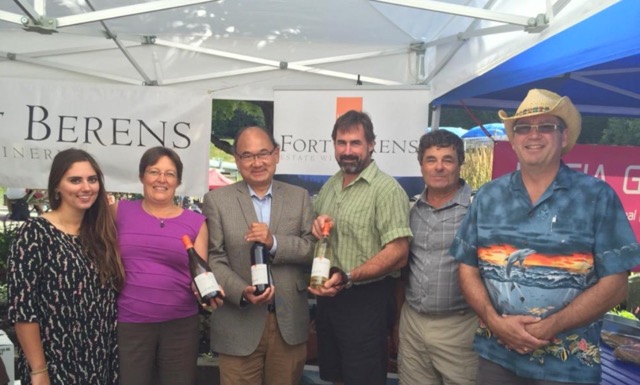
Wine Sampling

Over the past year I have walked many producers through the process of obtaining their permit to sell at Farmers’ Markets, in addition to consulting with Farmers’ Markets on specific liquor vendor policies and municipal relations. From these experiences, and observing liquor vendors at the market, I offer the following:

For a Farmers’ Market, this is one of the greatest opportunities to gain not only excellent revenue from a new vendor category, but also to draw in new customers, as well as retain existing ones with a new product offering.

For the producers, whether you are making beer, wine, spirits, or even Honey Meade (that was a new one this year) it is critical that you go beyond “sending a rep” to sample and sell at a Farmers’ Market. As a rule, we are “make, bake, or grow”, so sending “staff” to cover the market is not acceptable.

Farmers’ Market customers are very specific in what they are looking for. They are educated consumers and can be demanding of producers. The reason they come to a Farmers’ Market is to connect with their farmer, their artist, and their crafter. They want to know and trust the product they are taking the time to purchase. Respect their investment in time away from a big box retailer by investing in the best representation of your product and you will be successful.


Chris Quinlan is a former Business Operator and Municipal Councillor who found his a way to satisfy his passions managing the Whistler Farmers’ Market. Innovating and pushing the boundaries of conventional market management, Chris has grown the Whistler market into one of the largest animist successful in British Columbia. He has worked as a project facilitator and coordinator for the BC Association of Farmers’ Markets, Strengthening Farmers’ Markets’ program and recently launched Marketwurks.com, an online Vendors Application and Management program for Farmers’ and Artisan markets.

Species at Risk

in Footnotes from the Field/Winter 2016

Marjorie Harris

Species at Risk Partnerships on Agricultural Lands and Critical Habitat Protection

Good News! Environment Canada has rolled out a new initiative aimed at protecting critical habitat for endangered species on commercially farmed agricultural lands. This is great for those species that took eons to adaptively evolve for just those particular critical habitats that are being threatened. The Species at Risk Partnerships on Agricultural Lands (or SARPAL, since that’s a bit of a mouthful) initiative may also help to support organic farmers who are conscientiously implementing the Environmental Guidelines in British Columbia Certified Organic Production Operation Policies and Management Standards Section 7, Book 2 Version 10: Environmental Protection Guidance:

Organic operators should adhere to the strictest possible management program in order to protect and enhance soil and water quality in the environment. Organic farmers, and others in the trade, have a commitment to environmental protection.

This is a basic principle of the organic movement and must be respected before all other considerations.

The theory of evolution developed by the 19th century English naturalist Charles Darwin was based on the premise of natural selection. Organisms are naturally selected for survival, competition, and reproduction by acquiring small, inherited adaptations over many gen- erations spanning millenia.

In today’s world, organisms are faced with a succession of environmental challenges from habitat loss to fatal and mutagenic toxins as they grow and develop.

With the rapid pace of current imposed environmental challenges, the adaptive plasticity of most organisms becomes overwhelmed and they are placed on a path to extinction. SARPAL may help to restore breeding habitat by assisting with costs associated with developing and implementing species at risk protection on agricultural lands.

The new initiative to protect critical habitat is funded by the federal government through the National Conservation Plan under the SARPAL umbrella program. The species being targeted have to be listed on the federal Species at Risk Act (SARA). SARPAL will include two phases:

  • A 5 year pilot/‘proof-of-concept’
  • An on-going implementation phase

The on-going implementation phase will focus on achieving protection of the species at risk on agricultural lands in ways that will ideally benefit both species and producers.

Currently, demonstration projects have been set out with the assistance of the BC Cattleman’s Association. The demonstration projects are focusing on two ranch land habitat species: the Yellow-breasted Chat and Lewis’s Woodpecker. The recovery strategy includes identifying critical habitat geographically and assessing the environmental features such as plants, water, and needs of the species to live and reproduce.

Funding is available to pay for the infrastructure to establish Best Management Practices (BMP) that protect the endangered species’ critical habitat and a Stewardship Agreement may be entered into that benefits the landowner and the species at risk.

The Yellow-breasted Chat
Scientific Name: Icteria virens auricollis

Only 40 breeding pairs are currently known of in the Okanagan/Similkameen region. The Yellow-breasted Chat prefers woodland riparian zones composed of dense tickets of wild rose and ooded oxbows.

Recovery Plan Best Management Practices:

  • Protect nesting area by improving fencing and adding cross fencing to exclude livestock from accessing the riparian zone
  • On-going maintenance for fencing
  • Restore some water ow to marsh lands and re-flood oxbows
  • Control invasive plants
  • Install alternative watering facilities for livestock (troughs)
  • Develop public education material.
  • Reduce livestock grazing in riparian zones known to have Yellow-breasted Chat

If you are interested in this program or want more information on SARPAL, contact Danielle Prevost, Environment Canada: Danielle.Prevost@ec.gc.ca
Marjorie Harris, BSc, IOIA V.O., P. Ag. Email: mar- jorieharris@telus.net

“Let food be thy medicine and medicine be thy food.” – attributed to Hippocrates

Intentional Peasantry at Tipiland Organic Produce

in Farmer Focus/Organic Stories

Marjorie Harris

The Way of the Past is Hope for the Future

What a magical adventure it was to visit Tipiland Organic Produce in Argenta, BC!

The ideals of the Aquarian Age generation are manifest in every aspect of Tipiland’s success, demonstrating how the dreams of social interconnectedness, collective action and co-operative systems can become a positive and sustainable reality.

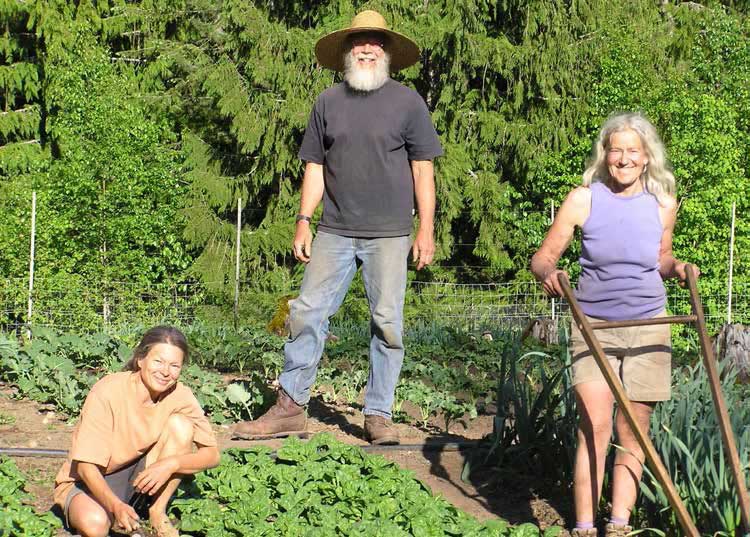
Tipiland celebrated their 25th year of operation in 2014, another milestone in their success story which is rooted in the back-to-nature, counter culture movement of the 1970s. The journey has been a fulfilling one for lifelong gardeners Inanna Judd, Gary Diers, and Sarah Ross. Their collective commitment has been to provide the purest, freshest, most nutrient dense, and beautiful certified organic produce possible from their market garden.

To reach Tipiland I headed to to the northern head of Kootenay Lake and then turned south, driving along the base of Mount Willet’s evergreen covered slopes that rise up out of the steel blue waters of the lake and climb high into the sky to form a brilliant white peak. The gravel road only got me as far as Tipiland’s upper level garlic patch. From there I embarked on a 15-minute hike downhill through an enchanting forest, enjoying the aromatic scents and the springy soil underfoot that creates gentle earth music, like drum beats in your walking. As I lifted my eyes way, way up, 150 feet through the trees to the sky above, I was in awe of such a forest and such a location for this very special organic garden patch. I could sense the meditative pace of daily living here, even during the feverish work of the growing season: the forest calms the soul.

The ideals of the Aquarian Age generation are manifest in every aspect of Tipiland’s success, demonstrating how the dreams of social interconnectedness, collective action and co-operative systems can become a positive and sustainable reality.

In 1989, Tipiland’s founding farmer — the young and brave Sarah Ross, then in her mid-twenties — had a vision to start a market garden. She set about very carefully selecting a 2-acre garden plot near the middle of the 200-acre virgin forest held in common by the members of the Kootenay Co-operative Land Settlement Society. The land co-op was established in Argenta in 1972, emerging out of the back-to-the-land movement and locating itself next door to a Quaker Intentional Community. Both communities shared common goals to live more locally, consume less energy, and make positive changes while having fun.

One of Tipiland’s current farmers Gary Diers, explains how without Kootenay Co-op, Tipiland would simply not be Tipiland: “We have grown together hand-in-hand,” says Gary. “A farm on a land co-op, selling to a food co-op: what a great fit!”

Thus began their long relationship. “Kootenay Co-op clearly lead the way,” remembers Gary. ‘Local’ is natural for the Co-op, it is an organization embedded in the community. The members are the Co-op. So when Sarah approached the Co-op about selling them local organic produce they quite naturally said, “Yes!”

Gary continues, “the management of the Kootenay Co-op didn’t stop there. They decided to make what was then a radical commitment to sell only organic produce. They were listening to their members, and I think that they, like Sarah, sensed the blossoming of the organic movement.”

By the mid 1990’s Inanna and Gary took over operating Tipiland Produce fulltime, finally realizing their dreams of farming. This coincided with the time when Kootenay Co-op was instrumental in getting the Kootenay Organic Growers Society (KOGS) started. Gary recalls how every winter local organic farmers would meet with the produce team of the Kootenay Co-op to decide who would grow what in the following year. “They certainly didn’t enjoy the task of trying to filter out just who was really organic, or who wasn’t — a ridiculous task for a store. So KOGS was born.” Tipiland was one of the founding members of KOGS, which was kind enough to issue them with the certification number #00l, which remains with them to this day.

Gary enthusiastically remembers how Tipiland helped develop the market and has grown with the market. “Every single year Tipiland has sold more vegetables than the year before. We now sell 15 times more produce than when Inanna and I first took over the reins of Tipiland and we still have more capacity.”

When Inanna first suggested growing kale, the Co-op manager was skeptical, since kale had never been seen in local stores before — but was willing to give it a try. The rest is history. Kale is now Tipiland’s second largest crop, with 10 varieties planted this year. They still sell their kale to the Co-op, and to eight other businesses.

Tipiland also has a flourishing business in certified organic flowers. Again, the Kootenay Co-op was their first buyer, and continues to retail their bouquets. Inanna has trialed hundreds of varieties of vegetables and flowers and saves seeds of over a hundred varieties. Gary says with a smile, “ Inanna can run circles around anyone with a wheel hoe!”

In Gary’s estimation, in order for a farm to truly be sustainable it must employ farm workers from its local community. And for farm work to be viewed as an honourable occupation in our society, the workers must receive all the same rights and pay as other workers in Canada. Early every Wednesday and Thursday morning a crew of locals, ranging in age from 18 to 72 years old, from Argenta to the Lardeau Valley, assembles to fill farm orders. Gary proudly notes that Tipiland has not missed one delivery from May to November in all these years.

In Gary’s estimation, in order for a farm to truly be sustainable it must employ farm workers from its local community.

Farming at Tipiland is mostly unmechanized. As Gary says, “We have always enjoyed working with our hands and believe it is not only the way of the past, but the hope for the future. One might call us intentional peasants. The beauty of all this for us at Tipiland is that this model works. With our low capitalization we have never needed to secure a loan. We pay our farm workers above average agricultural wages, providing jobs in our community. The bottom line is definitely working.”

Tipiland uses almost no electricity in its operation. Their home and farm are completely off the grid. They do not need a cooler as all produce is picked, then hydrocooled and delivered to stores within 24 hours. Tipiland is labour intensive, not energy or capital intensive. Everyone walks or bicycles to work.

But as Gary is quick to point out, “We’re not purists. We do have an Italian rototiller and a truck. Our rototiller has a diesel engine and last year we used almost 40 litres of fuel for our entire operation. Our Japanese import delivery truck is also diesel with a 4 cylinder engine and we can deliver almost one and half tons of produce all the way to Nelson and back for about $40 in fuel.”

Gary’s final take home message is a quote from Wendell Berry, “Never farm more than you can garden!


Marjorie Harris, BSc, IOIA V.O., P. Ag. Email: marjorieharris@telus.net 

“Let food be thy medicine and medicine be thy food.” – attributed to Hippocrates

Wild & Woolly at Robson Valley Sheep Farm

in Farmer Focus/Livestock/Organic Stories
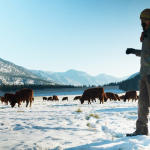
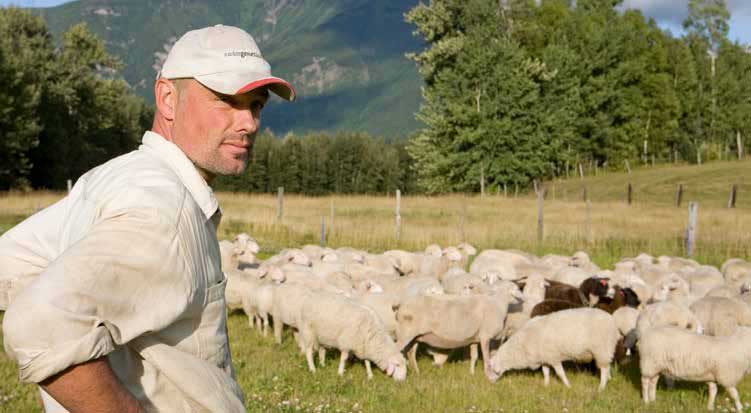
Hani Grasser looks out over his sheep at Robson Valley Sheep Farm

Marjorie Harris

Raising Sheep Demands Constant Vigilance

Not far from McBride, BC, nestled in the beautiful Robson Valley bottom land that frames the Fraser River, is a wilderness paradise known as the Robson Valley Sheep Farm. Owned and operated by Theres and Hani Gasser, the certified organic farm is dedicated to raising high quality meat sheep, who share the land with a few dozen Angus beef cows, a few riding horses and some poultry for home use. Like most paradises, the Robson Valley Sheep Farm’s idyllic appearance is the result of careful planning, good management, and lots of hard work.

The Swiss Family Robson

Hani and Theres, along with their three little children, came to BC from Switzerland in 1988. Hani was fresh out of a four-year training program from a Swiss agricultural college, which included two years of hands–on apprenticeship and two years of classroom study. Hani had taken extra courses in organic farming, and was eager to put his knowledge to work in his new country.

After spending their first four years in Canada managing a biodynamic beef operation near Chase, BC, in 1992 the Gassers were ready to take the leap into farming for themselves. They bought land in Chase and for the next 14 years they very successfully ran the well known certified organic Mountain Meadow Sheep Dairy, producing sheep milk cheeses and yogurt.

Then, in the fall of 2006, the Gasser took an even bigger leap: they moved north to McBride, onto 535 acres of beautifully forested wilderness in the Robson Valley. Situated on a big bend of the Fraser River, their new domain came complete with an oxbow lake, a full mile of river frontage and a large acreage of fertile wetland full of local and migrating birds, which the Gassers now maintain as a bird sanctuary.

What the property did not include was livable space for the Gassers. The farm hadn’t been occupied for over a quarter of a century, and Hani and Theres’ first project was to change the large equipment shop into a dual service timberframe home and shop. Using their own pine beetle killed timber, the couple spent several years doing all of the renovations themselves.

A Hardy Herd for a Northern Climate

The sheep on the Robson Valley farm are a variety of mixed breeds, resulting in a robust and healthy herd that can tolerate the cold winters and thrive in the wilderness environment. The Gassers brought their original dairy herd north with them, and since then have crossed the sheep with breeds that can lamb out at one year old, successfully mother the first time with a single lamb and then mature into an ewe that gives twins, while living on grass and hay alone. The Robson Valley sheep do not receive any grain. The size of the flock each year varies from about 100 to 300 mother sheep depending on the amount of hay produced by the start of winterfeeding. The sheep live outdoors all year round except during lambing, when the ewes are moved close to the house into the lambing barns where they can be checked every three hours.

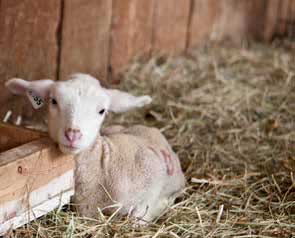
Lamb at Robson Valley Sheep Farm

Since sheep and parasites love each other, parasite prevention dictates the rotational grazing schedule for the Robson Valley flock. The Gassers are careful to rotate their sheep out of a pasture ahead of the parasites’ maturation cycle. This means moving the sheep every week, or at the very longest, before 14 days. Thanks to electric fencing, the paddocks are kept small enough so that the sheep can be moved easily.

This rotational grazing pattern mimics natural ruminant behaviour of grazing the valley bottoms in the spring and winter and moving up to fresh mountain pastures during summer and autumn.

This rotational grazing pattern mimics natural ruminant behaviour of grazing the valley bottoms in the spring and winter and moving up to fresh mountain pastures during summer and autumn. The Gassers also practice multi-species grazing, keeping cows and horses in the pasture along with the sheep. Combined with regular haying, the practices help to prevent the sheep from grazing in the same paddock more than once a year.

Inevitably though, occasionally a parasite appears. Whenever the Gassers detect evidence of parasites in one of the sheep, they are quick to administer their custom-order herbal de-wormer. The de-wormer, developed by the Gassers themselves with assistance from the staff at Urban Spice in Vancouver, contains wormwood, fennel seed and gentian. The Gassers’ have now started growing their own wormwood to ensure a ready supply of this key ingredient.

A Machine-Free Farming Lifestyle

Since neither Hani nor Theres enjoy doing mechanical repairs, they have reduced their reliance on farming equipment down to haying and fencing machines. When the pastures are in need of reseeding with red and white clover, timothy and orchard grasses, the Gassers simply hand broadcast the seed into a pasture just before the sheep flock is moved in, and rely on the sheep to trample the seed into the earth.

Alternatively, in the summer they add seeds to the cattle salts and let the cows do the work of spreading them — with organic fertilizer included for free! While these methods are slower than working the soil with equipment, the Gassers find them simpler, much less expensive, and less work-intensive. Currently their biggest problem in pasture maintenance is the encroaching advance of hawkweed and foxtail barley. Hani and Theres would love to hear from other farmers with suggestions for combating these weeds.

Because sheep require a diet much higher in protein than beef cattle do, growing, growing high-quality hay is crucial to sheep herd health, Hani explains. This is partly due to the fact that a cow weans a calf when it only about half the weight of its mother and a ewe weaning twin lambs has to raise nearly double her own weight.

That need for protein can make sheep fussy eaters, and very talented at nibbling off all the leaves and discarding the rough stems of the hay. And that can lead to a lot of wastage, so the Gassers have solved the problem with winterfeed by allowing only their sheep into a pasture to feed on a new hay bale first. When the sheep have finished picking over the bale, the following day the cows are brought in to clean up the leftovers. This method leaves very little waste and helps keep the Gassers’ collies busy herding all winter long too.

Doggy Defenders

Because of intense predator pressures in this neck of the woods, very good livestock guard dogs are required to be on duty at all times. Two or three Akbash or Akbash-crossed dogs (preferably Comondor) live with the flock all year long. The dogs are with the flock 24/7 — except when a female is in a ‘standing heat’ and needs to be temporarily kenneled.

The critical trick to developing a excellent sheep guard is that between its 6th and 10th week of age, the puppy must bond with livestock.

Thanks to the watchfulness of their guard dogs the Gassers lose very few animals. In fact, in the last nine years they report they have lost only 5 ewes — to an attack by a pack of wolves. The secret to their success? According to the Gassers, the critical trick to developing a excellent sheep guard is that between its 6th and 10th week of age, the puppy must bond with livestock. And they’re careful not to make pets of the dogs. As Hani says, “A livestock guard dog has no business in your yard, in a kennel, or on your porch. And it should only be fed and receive affectionate petting when by the flock. We are the Alpha dog to our guard dog pack and they come when called.”

Where the Akbash specialize in guarding the sheep flock, the Gassers use Border Collies and one New Zealand Huntaway to herd the sheep from pasture to pasture. Theres and Hani love to train and work with their guard and herding dogs and occasionally sell puppies.


If you would like more information on sheep farming, Hani and Theres are happy to share their ideas, opinions, and their years of experience and wisdom on shepherding. You can reach them through their website: www.sheephappens.ca

Marjorie Harris, BSc, IOIA V.O., P. Ag. Email: marjorieharris@telus.net 

“Let food be thy medicine and medicine be thy food.” – attributed to Hippocrates

Fresh Starts at Shalefield Organic Gardens

in Farmer Focus/Organic Stories
Veggie crops at Shalefield Organic Gardens

Hannah Roessler

You don’t need to be young to succeed as a new farmer, as this intrepid pair from the Columbia Valley are proving.“There is just so much shale in the field, we’re always picking up rocks – so there you have it: “Shalefield Farm” was born!” explains Yolanda Versterre when I ask her about the name of the farm in Lindell Beach, BC she owns with her partner Brian Patterson.

The story of Yolanda and Brian’s entry into farming puts a fresh twist on the new farmer tale: as Yolanda puts it, “we are old young farmers.” While discussions of the aging farmer base and the challenges faced by young entrants into farming are a frequent theme in farming news, its not often we hear about people embarking on farming careers later in life.

“There is just so much shale in the field, we’re always picking up rocks – so there you have it: “Shalefield Farm” was born!”

Brian has owned the 10-acre property south of Chilliwack, near Cultus Lake, for many years, but Shalefield Organic Gardens only started taking off in 2005, when Brian began his professional life as a farmer — at the ripe young age of 55! He had been laid off from his job as a printer, as new mechanization and technology made his job of 35 years obsolete. It was an opportunity for a new start, and Brian began growing blueberries, raspberries and garlic — no longer as a hobby, but with an eye towards making money.

Inevitably, there were challenges in the transition from hobby farmer to professional grower. As Yolanda describes it, “Brian had been growing one row, so then he just started growing 10 rows! But of course, everything changes with scale, doesn’t it?”

Yolanda and Brian of Shalefield Organic GardensWhile Brian had years of experience growing vegetables for family and friends, Yolanda was completely new to farming. She had moved to BC after working as an operating room nurse in Holland, and met Brian while they were both enjoying their other hobby – trail running. Did this athletic training prepare them to be the successful farmers they are now? Certainly farming requires stamina: “It’s a LOT of work,” Yolanda sighs, noting that they’ve given up trail running, along with tennis, since farming provides all the exercise they have time or energy for!
 

Today, Yolanda and Brian and their dedicated staff have nine acres in production, growing strawberries, blueberries, raspberries, and a variety of field crops. They have a few experimental crops, such as ginger, which they source certified organic from Hawaii; it’s done very well this year, and it’s a hit with market customers. Sprouts are another Shalefield specialty crop, one they started to develop a source of farm income throughout the winter months. Their sprout blends, which they create using over 10 types of sprouts, are a customer favourite at the market.

Using Technology to Build Customer Loyalty

Yolanda explains that they mostly sell at farmers markets, and have started using a market share program to help retain customers. Customers can purchase a market share for either $500 or $250 and then receive a gift card for the amount, which they bring to the market with them. Yolanda scans the card with an iphone app, which subtracts the amount of their purchase and sends an email to the customer to let them know how much credit they have left on their card.

This year they are expanding into a CSA program and they are determined to provide a veggie box to a family in need. They’ll need to attract 50 CSA box customers to attain this goal, and are well on the way there. As Yolanda notes, “how many times do you just have the one bunch of carrots left that didn’t sell, just because it’s that last bunch of carrots? I’ve asked for a lot of help from other people to get to this stage of farming and I am so, so very grateful for what I get to do in my life, because farming allows me to eat so healthy and live well. And I really want to help someone else access that.”

Yolanda and Brian’s experiences starting their farming business at Shalefield Organic Gardens makes it clear that, whatever age you begin farming, a willingness to learn new things and take chances is the first requirement.

A Biodynamic Commitment

Growing up in Holland, Yolanda became familiar early on with the use of homeopathics for healing. Today, she and Brian practice biodynamic agriculture at Shalefield, and Yolanda feels the philosophy behind biodynamics fits with the ethic of healing holistically. Following biodynamic cycles can be challenging given the tight rotations of market growing, but the pair are committed to making it work for their operation. Yolanda and Brian’s experiences starting their farming business at Shalefield Organic Gardens makes it clear that, whatever age you begin farming, a willingness to learn new things and take chances is the first requirement. Add a big measure of love and commitment to the job and you’ve got a recipe for success: “We just love what we are doing. We are so excited about the fact that we are still here. We made it! It’s do-able. You can do it. You can make it happen.”


Hannah Roessler has farmed in Nicaragua, Washington, and BC, on permaculture farms, polyculture cafetals, organic market farms and a biodynamic vineyard. She has an MA in Environmental Studies and her research is focused on climate change and small-scale organic farming. She currently farms on the Saanich Peninsula on Vancouver Island.

Sea Cider Farm: Hard Pressed for Sweet Success

in Farmer Focus/Organic Stories

Hannah Roessler

As Kristen Jordan of Sea Cider Farm can attest, building a farm business is never simple. Planning, preparation and plain hard work are the main ingredients in her recipe for success.

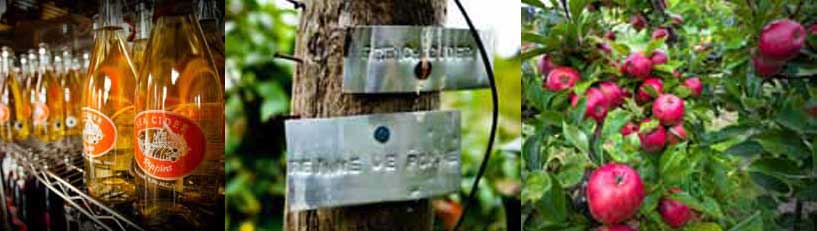
“Cider is a humble beverage,” says Kristen Jordan, the owner of Sea Cider Farm and Ciderhouse. We’re sitting in the cidery’s grand tasting room, gazing out over acres of orchard apples reaching to the Salish Sea. The rows of glorious apples in deeply blushing reds and warm yellows, bathed in sparkling dew, invite you to frolic barefoot in the grass, sampling sweetness in luscious appleform as you skip along.

It’s a gorgeous setting for this “humble beverage.” And for Kristen Jordan it’s been a long journey.

Finding Her Way to the Garden

In the early 70’s Kristen’s parents bought a waterfront orchard property at Eagle Bay on Shuswap Lake. They spent summers enjoying the land and eating apples, but managing the orchard wasn’t a priority. When Kristen’s father passed away, the orchard was left to her. Away at university in Wales, Kristen would sometimes think of her orchard as she drank cider at a pub, but meanwhile the forest grew over the property.

In the 1990s, married and with children of her own, Kristen moved back to BC with her family to run the orchard, intending to build a legacy she could leave for her children, just as her father had for her.

We had the idea, oh yeah, I’ll just start a cidery with this orchard, how hard can that be?”

“We had the idea, oh yeah, I’ll just start a cidery with this orchard, how hard can that be?” laughs Kristen, “My ex-husband and I thought, okay, he can make the cider and I’ll sell the cider, and that’s all we’ll need.” Not everything went according to plan. The old orchard on Shuswap Lake eventually had to be abandoned as a growing site. “It was this beautiful hidden orchard dream, but it didn’t work out for us,” says Kristen.

In 2003, Kristen and her husband bought the site of the Sea Cider Farm on the Saanich Peninsula. It had been a sheep pasture, and prior to that a loganberry farm producing berries for the first commercial winery in BC. Kristen planted 1000 trees over 4 acres of the 10 acre property, leaving the rest as forest.

Putting the Pieces Together

Though she took chances, Kristen did not jump into the cider-making business blindly. She went to “cider school” at Washington State University, which ran a cider-making course through their extension office in Mt. Vernon. Her teacher was Peter Mitchell, an English cider guru. “He had a big influence on me in my early years of cider making,” Kristen remembers. “His course was very extensive, and it took us through everything from organoleptics, [taste, smell, etc.] to industrial design, to biochemistry.”

Sea Cider opened its doors to the public in 2007 after 3 years of learning and development. Initially, 90% of the business was from walk-in customers. “I remember when someone would drive up to do a tasting, and we’d all be down working in the orchard, so someone would have to run up the hill, wash their hands, and do the tasting,” Kristen laughs.

The initial 1000 trees were mostly English bittersweets and bittersharps. As luck would have it, Kristen found a hobby grower in Langley with 1000 whips of English cider varieties. Because of all she had learned from Peter Mitchell, Kristen was convinced that BC would fall in love with English cider.

“English cider is very tannic and very phenolic, which means it’s got a lot of minerality, a lot of appleyness on the nose. Compared to Growers Cider – it’s night and day,” notes Kristen. “I also wanted to grow varietals that I wouldn’t have access to on the market. No one is selling yarlington mills, dabinetts, or brown snouts, so that’s what I wanted to grow.” Today the orchard has nearly 1500 trees, and over 60 varieties of apples.

Success Through Experimentation

“You make the cider that you like and you just do lots of experiments. We made a lot of funny ciders by accident… for example the Rumrunner cider,” recalls Kristen with a smile.

For Rumrunner, Kristen sourced Winter Bananas and Stayman’s Winesaps from the Similkameen valley, and aged the cider in a rum barrel. She called the Newfoundland Liquor Corporation and asked them to send used screech barrels, where she let the cider sit for 1.5 years. It came out a beautiful colour, with a lot of flavourful depth; Rumrunner is now a staple Sea Cider product.

You make the cider that you like and you just do lots of experiments. We made a lot of funny ciders by accident… for example the Rumrunner cider,” recalls Kristen with a smile.

Another lucky accident happened when a member of the BC Fruit Tasters Association called to say they had found a Perry orchard in North Stanch.

“Perry pears are very tannic, inedible, really astringent,” explains Kristen. “But if you grind and ferment them, those tannins drop out, and you are left with this softly tannic, slightly off-dry pear drink which is called Perry.” Kristen began experimenting with different yeasts, fermenting the brew in oak barrels, and soon produced a beautiful Perry cider.

Even before she planted her first trees, Kristen was experimenting with brewing cider. She kept 30 carboys of cider on the go, using different yeasts with different apples, and she took notes religiously. She learned a lot about different varietals: which were good growers, which were good fermenters, which worked well with particular yeasts. She envisioned the final product she wanted to create, the taste and mouth-feel of the cider, and worked towards this idea. Kristen admits it hasn’t all been easy: “We made a lot of mistakes. It came down to these big three: how to grow apples, how to make cider, and how to sell cider – that last one is huge.”

Navigating the regulatory world of cider sales involved a daunting learning curve, but Sea Cider is now selling in Alberta, Manitoba, Saskatchewan and the Yukon, as well as Washington, Oregon, Chicago, Northern California and New York.

“In the beginning, liquor stores would be excited about our product, but also a little confused.

“They would say things like: ‘there’s Mike’s Hard Lemonade and Growers, do we put you between the two of these? And you’re in a champagne bottle, not a big plastic bottle?’ It was like trying to introduce a whole new concept into the cider category.”

The Cider World Today

In the last few years much has changed in the cider industry. Today, the market for cider is exploding, and big companies are getting into cider production. While craft-beers have long been holding court for foodies and connoisseurs, cider is squeezing its way into the picture, and being accepted with open arms as more people become aware of the differences wild yeasts and bittersharps can make in ciders. Cider is taking the world by storm.

But there are some downsides to this popularity. Cideries are now forced to compete for the best apples for cider making. This makes Kristen especially grateful that Sea Cider, a BC pioneer in cider-making, grows old English varieties that always make a good cider.

Sea Cider is also pioneering community-building initiatives. The farm partners with the Lifecycles Project Society, a non-profit that promotes food security and urban agriculture, working on the Victoria Fruit Tree Project – an initiative to harvest apples that would otherwise go to waste in urban back yards to brew a cider created from a blend of local King apples and Sea Cider’s English Spies. The farm has also launched a “Canadian Invasion” series of ciders: proceeds from sales of the cider support efforts to combat invasive species in sensitive ecological areas.

We built this space as a place for community and a place for gathering. It was meant as a place where you could raise a glass of cider together. And you know cider is a humble drink.

Although much has changed for Sea Cider over the years, they’ve remained true to their original vision. As Kristen says, “We built this space as a place for community and a place for gathering. It was meant as a place where you could raise a glass of cider together. And you know cider is a humble drink. You don’t ask people to pay attention to it if they don’t want to, they just want to sip on it and enjoy the company that they are in.”

“We don’t need to go into the phenolic character and the minerality, you know, we just enjoy the drink. The fun thing about cider is that it is a very approachable drink, you don’t have to be a wine snob, you don’t have to know anything to enjoy cider.” Kristen pauses, then adds “ …I wanted to create a space where the experience was not just about the specifics of the cider, but an experience that you are sharing with friends and family, where you are enjoying a beautiful setting at the same time.”


Hannah Roessler has farmed in Nicaragua, Washington, and BC on permaculture farms, polyculture cafetals, organic market farms and a biodynamic vineyard. She has an MA in Environmental Studies and her research is focused on climate change and small-scale organic farming. She currently farms on the Saanich Peninsula on Vancouver Island.

Kenta Farm: for the Love of Weeds

in Farmer Focus/Organic Stories
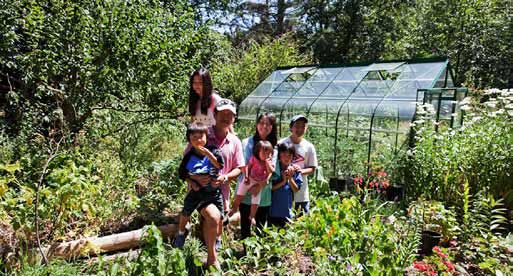
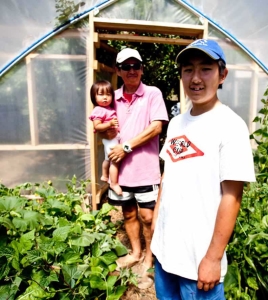
Kenta Family Organic Farm

Hannah Roessler

The No-Weed Philosophy of Pender Island’s Kikuchi Family

Boarding the ferry early one summer morning en route to a unique family farm on Pender Island, I am reminded how lucky we are to live in beautiful, diverse British Columbia. I am on my way to meet Arthur Kikuchi, to see if the rumors are true – a farmer who doesn’t weed.I meet up with Arthur at the Pender Island school garden rather than his farm because it is Sunday, which means soccer day for the kids. When I arrive, kids are dancing around the schoolyard with a soccer ball while their parents are gathered next to the garden plot in the shade.

A cob-building workshop is underway, keeping these parents and other community volunteers hard at work. Soon the kids jump in to help do what they do best: play in the mud. Cob walls rise rapidly from the ground, forming a combined garden shed, teaching space, and gathering space with a cob bench and oven included.

“Soon we will cook the veggies from the garden in the oven,” says Arthur with a smile. “It is all so that we can teach the children.”

Farming, connecting with the plants and the earth, was the path to a better life for him and his family.

It is evident that growing food is Arthur’s second love: his first is sharing his knowledge and skills with children and youth. One of the first things he says to me, as I greet him and his eldest son, is that he feels it is very important to teach the next generation about growing food because “they are the future. My generation is past. This learning is very important.”

Farming as Healing

Arthur and his wife Sanae (whose name means “newly germinated sprout of a grain of rice”) don’t come from an agricultural background. “Not at all!” laughs Sanae. Their journey towards growing food started when Arthur was living in Paris as a spiritual healer, working with energetic medicine in the Shumei tradition. Unfortunately, he fell ill and was forced to return to Japan to seek healing himself. But no doctors were able to cure him, or even identify what was ailing him.

While Arthur and his healers searched for answers, he began working on a farm on Kishima Island, located in the south-western part of Japan. Within a month he began to see signs of his health returning. This was when he realized that farming, connecting with the plants and the earth, was the path to a better life for him and his family.

Kenta Family Organic Farm

A Natural Farming Philosophy

Eventually, Arthur and his family came to Pender Island, where they quickly fell in love with the hills and trees that reminded them strongly of Japan. Arthur also felt a connection to the landscape where fellow Japanese farmers had previously farmed, and this tie to the past inspired Arthur and Sanae to settle and farm on Pender Island, bringing with them their unique brand of Natural Farming techniques. In 2000, they founded Kenta Farm on the island.

Arthur bases his practice of Natural Farming on the techniques prescribed by Masanobu Fukuoka, a famed Japanese agriculturalist and the author of “The One-Straw Revolution,” as well as the philosophy of Shumei. The basic tenet of this philosophy of farming involves modeling the agricultural system after natural systems.

An example is modeling the garden after the forest, allowing for a canopy layer, shrub layer, herbaceous layer, etc. This might mean leaving the weeds to grow. Yes. Leaving the weeds. To grow.

Weedy Pioneers

Arthur laughed as I asked him, several times, about his philosophy on weeds. Dealing with my own “weed explosion” on the farm is like dealing with a niggling, guilty conscience. Bunches of weeds about to go to seed stand upright in my field, proudly displaying their amazing ability to grow taller (overnight?!) than my crops.

“The weeds are just like the pioneer species in a forest ecosystem,” says Arthur, explaining, “I let them be. I just cut them down with my kana (a Japanese garden tool similar to a sickle), and leave their root structure intact. I believe that this helps maintain the soil structure, and overall, helps my garden grow.”

The weeds are just like the pioneer species in a forest ecosystem,” says Arthur, explaining, “I let them be.”

If weeds interfere too aggressively with a specific crop, Arthur will pull them, but mostly he lets the whole system of plants thrive, believing that nature knows best when understanding the role of each element of the system.

On This Farm, Everything Comes Full Circle

In keeping with this holistic approach, Arthur also doesn’t reach for outside inputs. He gathers a thin layer of soil from the forest floor to build his raised beds, as he finds this to be the best soil for growing. When I ask about potential issues with acidity, as forest soils in this region are known for their acidic qualities, he nods and agrees, but then gestures graciously to his garden beds where all sorts of crops are flourishing.

Lettuces, brassicas, chard, curcubits and corn all grow in a happy jumble, a testimony to the success of Arthur’s practice of intercropping. While he groups crops roughly by plant family, if a volunteer kale pops up in the lettuce patch, he will leave it to thrive.

His children have adopted this mixed method of growing and they’re clearly very knowledgeable about plants, though I have to pry it out of them because of their generous humility. Arthur’s children lead their school’s garden club, where groups of children from the school and around the island meet regularly to learn about seeds and work in the garden, learning and having fun all the while.

Standing in the shade next to the thriving school garden his children have created and the brand new cob gathering space he is helping to build, I’m impressed by the family’s commitment to growing community. With a family so passionate about sharing their knowledge and holistic vision, Pender Island is lucky to have the Kikuchi family.


Hannah Roessler has farmed in Nicaragua, Washington, and BC on permaculture famers, polyculture cafetals, organic market farms and a biodynamic vineyard. She has an MA in Environmental Studies, and her research is focused on climate change and small-scale organic farming. She currently farms on the Saanich Peninsula on Vancouver Island.

Go to Top