
Where Organic Matter Matters
Darcy Smith
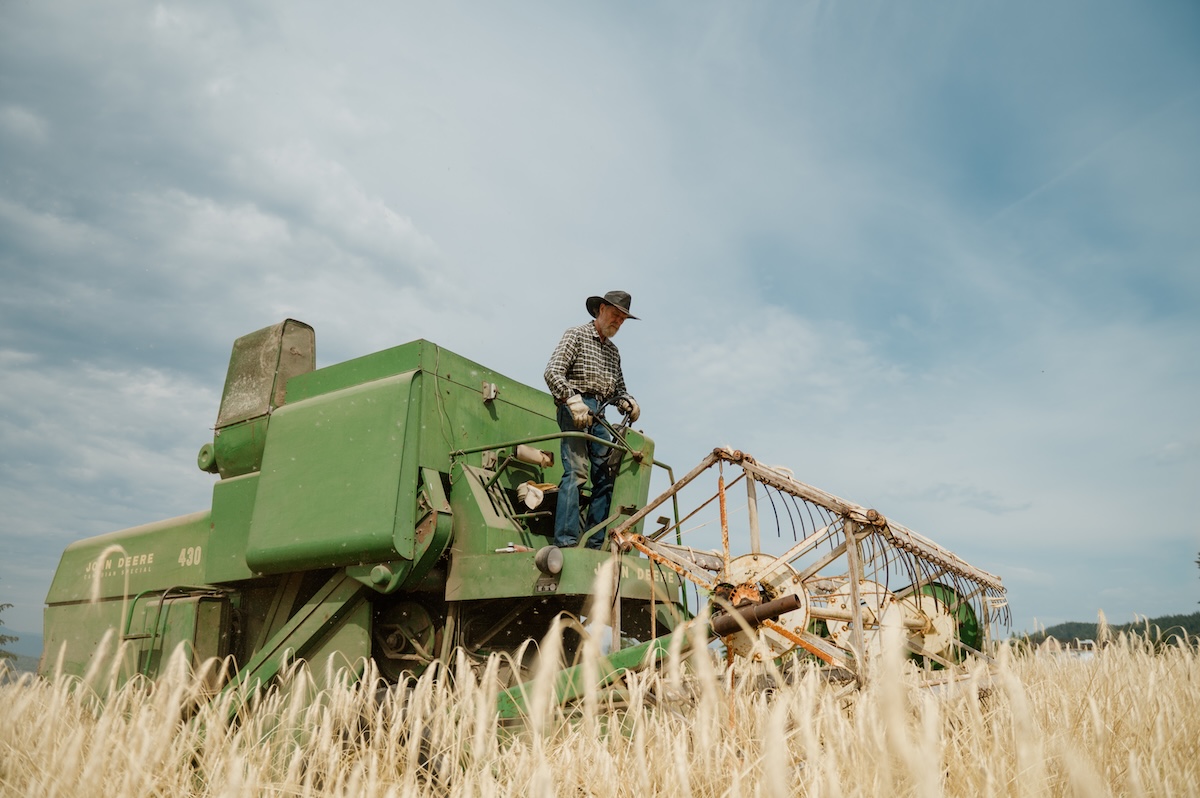
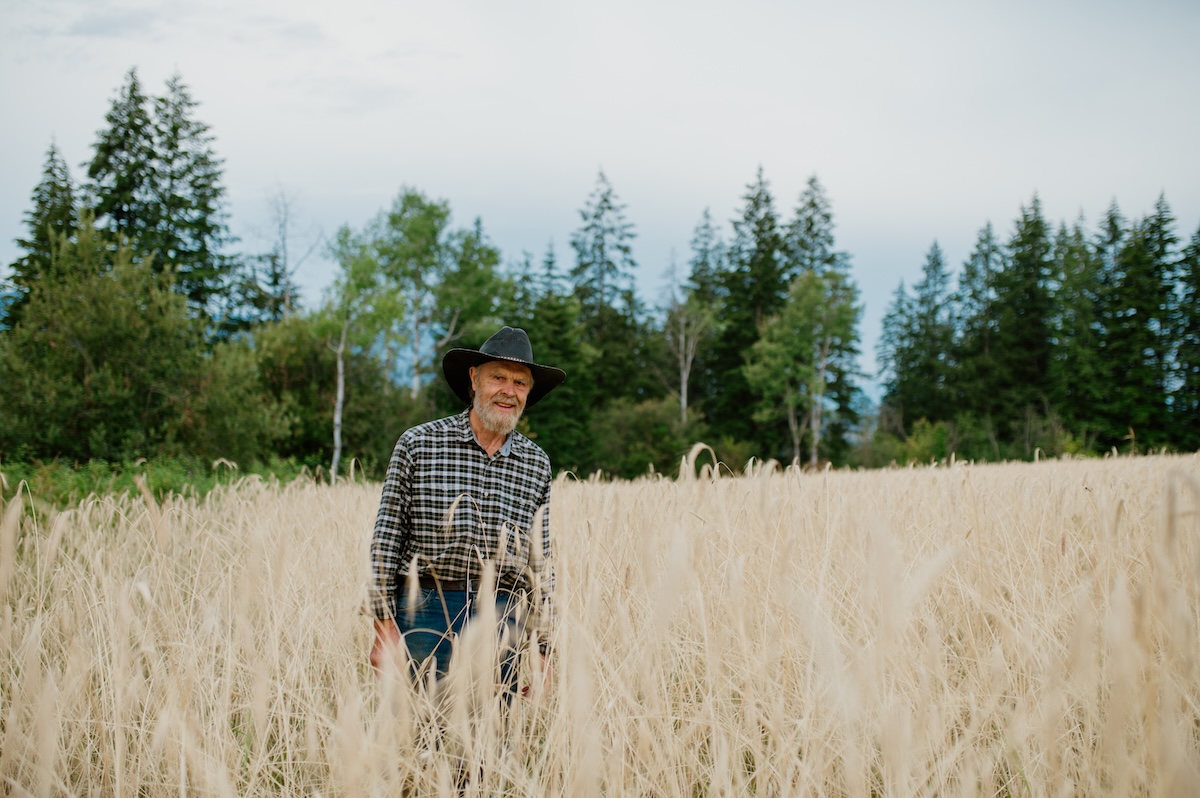
More than 40 years in, Keith Boulter still calls his farm a “work in progress.” Sweet Haven Farm was born from a deep respect for the land and the soil, and that’s one of the few things that hasn’t changed over the years. The grain, hay, and forage farm in Tappen, BC covers about 250 acres of homestead and leased land, with 75 acres organically certified. Now 79 and “semi-retired” (I’ve heard that one before!), Keith, along with his wife Naomi Silver, has being “trying to do well by the land and the animals” since the farm’s inception. The homestead features large vegetable gardens and a home orchard, along with pasture and a small amount of hay land. Grain and hay is mostly produced on his leased acres.
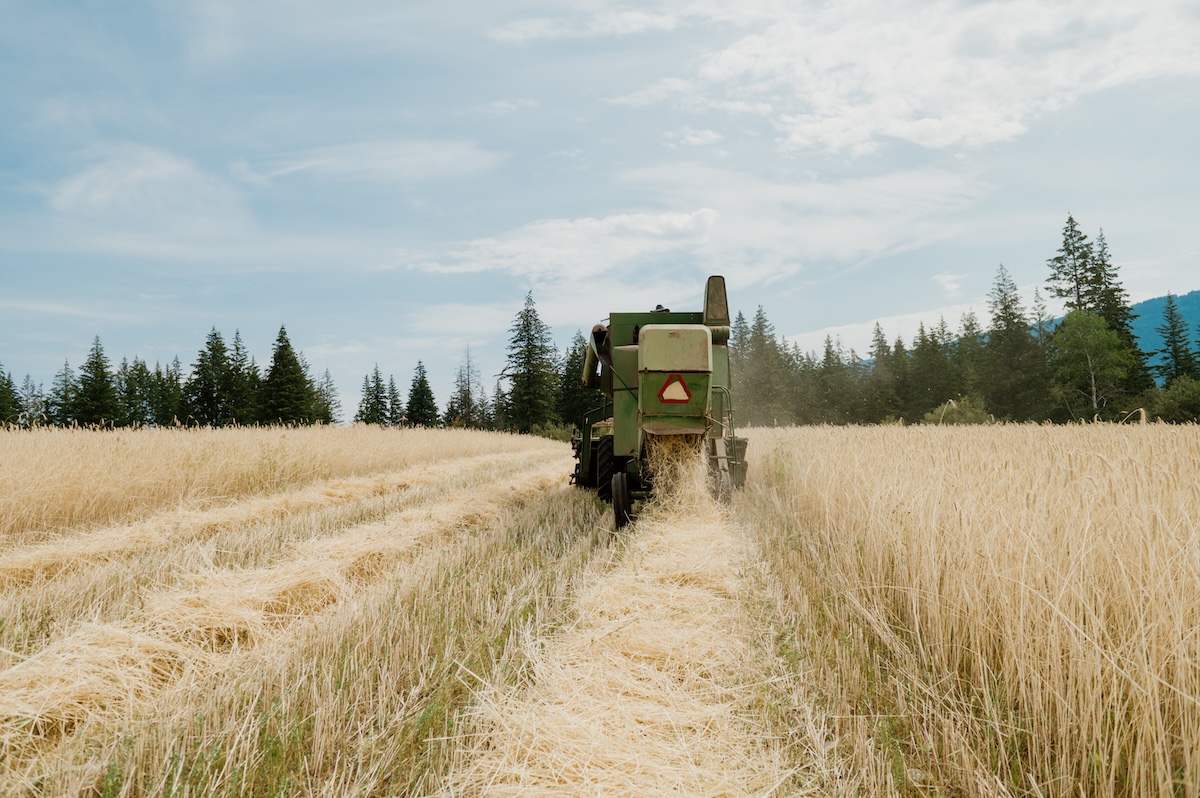
At its peak, Sweet Haven was doing about 60 acres of grain, which Keith calls “a very incidental, inconsequential amount,” as grain is normally counted by the section. This was when Keith was involved in an organic milling co-operative that was the precursor to Fieldstone. Only a few other people locally produce grain, and today, Keith and Naomi are mostly growing grain for themselves, for their livestock, and for livestock feed for a small market of neighbours.
Keith was “born into farming” in Alberta, where he grew up on a small mixed farm with “pigs, cows, chickens, geese, all that sort of thing.” He describes himself as “always very oriented towards plants and animals,” and remembers being out in the yard digging shrubs—anything to get his hands in the dirt.
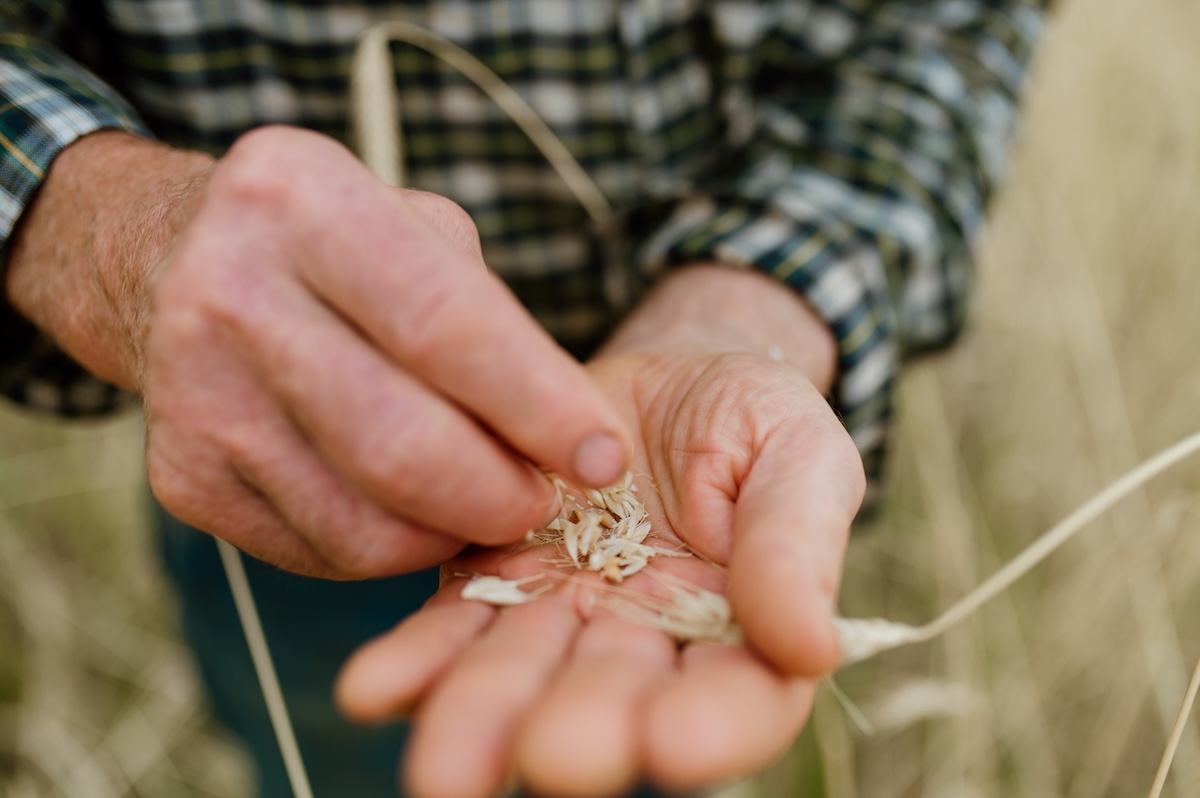
His family was “one of the last to quit using the old threshing machines with horses where we threw bundles onto wagons,” he says. During threshing, his mom would bring home a box of Macintosh apples from BC: “It was the highlight of the year. I’ve always loved apples, and wanted to live somewhere where I could grow apples.”
After two years of agricultural college training in Vermillion, Alberta, Keith’s apple-growing dreams came true and he made his way to BC, first landing in the Kootenays in 1974, then, via Salmon Arm, making his home at Sweet Haven in 1979.
He describes finding the property as “happenstance.” He says he “fell into it” because he was looking for a rental home. He took a chance, moved to the land, and eventually he and Naomi began purchasing it from the landlady, who generously gifted the remainder of the land to them upon her death in 2001. “I hadn’t necessarily gone out to seek it, but I am very attached to whatever land I’m sitting on,” he says.
Keith found organics before he found Sweet Haven—or rather, organics found him in 1968, knocking on his door in the form of a high school student selling magazine subscriptions to make a little money for school. He didn’t think he needed anything, he says, “but then I spied this thing on her list called Organic Farming and Gardening magazine.”
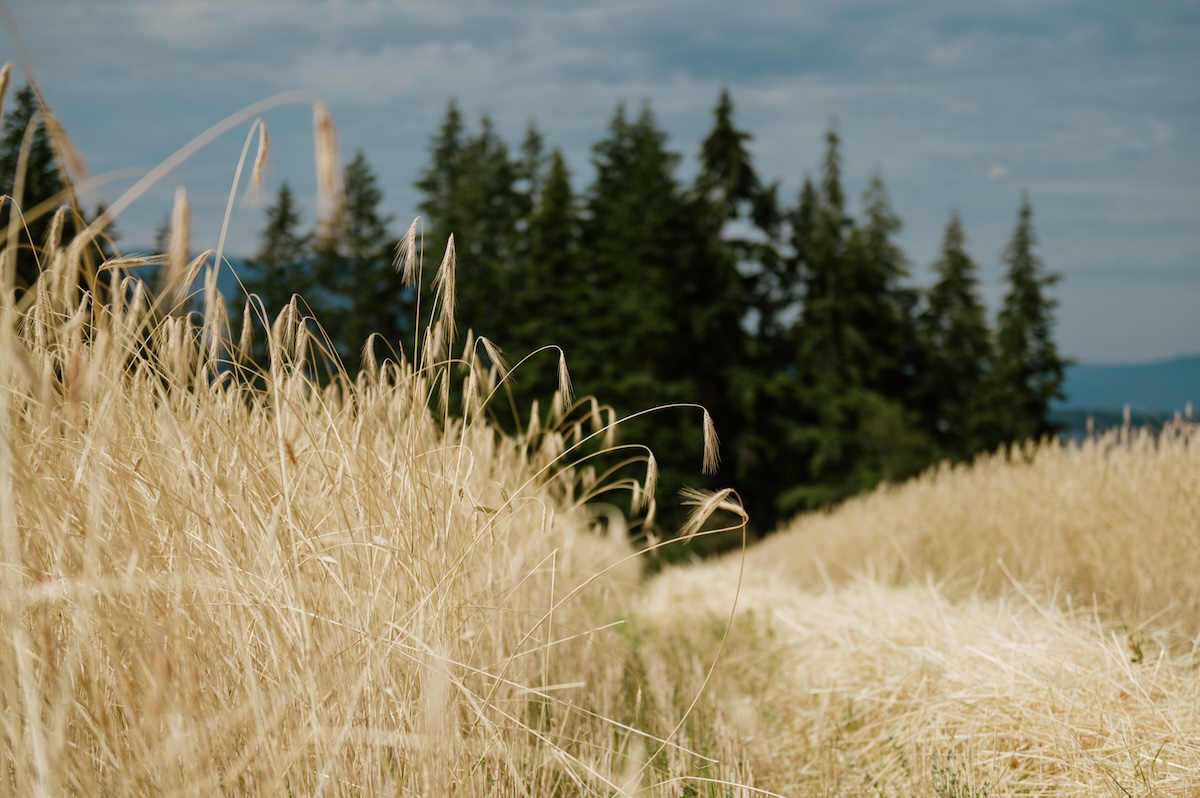
His father had been more of a conventional farmer, but unorthodox. He practiced crop rotations, which was unusual in the area at the time. The magazine sparked something for Keith: “I came across the association between humus and organic matter and fertility, and I started paying attention on our farm,” he says. “I saw that where there was more organic matter, the soil produced better.”
He also reflected on his time at the agricultural college, where he was trained to use chemicals. “I tried it once or twice after graduating and didn’t like the feel of chemical fertilizers on my hands, the smell of pesticides,” he says. “I didn’t like it on the land.” Ever since, he’s been dedicated to building organic matter.
Naturally, Keith certified Sweet Haven as soon as he could—meaning, in 1993 under the North Okanagan Organic Association, as soon as the BC Certified Organic Program became available. Like many other early adopters, he remembers driving many hours to attend meetings.
Today, he describes himself and Naomi as “both fairly reclusive” as well as busy, but he is nostalgic for the feeling of camaraderie of the days when there was a “younger energy—I was younger too!” he jokes. There was “a feeling like we were making a big difference by trying to push for standards and push for awareness of the methods,” he says. “There was an invigorating energy involved.”
For Keith, the important thing about organic farming is “the health of the soil, and the health of the people who are eating from it.” He’s seen the results first hand, both with family members who struggle with food sensitivities, and on the land he has caringly stewarded. He talks about being “in the zone” with a shovel or his hands in the soil. “I forget about time. I enjoy improving the soil.”
Naomi calls this tendency a gift. “When he works the fields in the spring, there’s a feel to it that I will remember for my whole life,” she says. “Being in deep relationship with the earth, if you’re born with it or you develop it, you’ve got it. It’s such a gift.”
Figuring out the unique ecosystem of the Shuswap brought more than a few challenges. Keith grew up on the Prairies, with rich black soil. “We had six inches of black topsoil,” he says. “The soil has much more reserves to grow with if it has organic matter.”
Contrast that with Sweet Haven, which is up on a bench, “not a valley bottom,” he says, slightly ruefully.
Sweet Haven doesn’t irrigate aside from the gardens, and the soil can get hardpacked. And it’s rocky, too! “It takes time to build up humus—unless you have a lot of money to throw at it.” Keith says. “It takes a while, but it’s going to be more critical in the future.”
“Things have shifted” since the mid-late 90s, Keith says. “The last 20-some years have been much drier than the previous 20-some.” The vegetable garden, which didn’t need irrigating in the early years, has become much more dependent on watering, with all the limitations that brings in an area with less and less rainfall. Sweet Haven doesn’t have enough water to irrigate the fields, which “has had some significant and relatively severe consequences for what we want to do.”
Keith finds that today, he can’t reliably start a hay crop in spring, and has to do it in the fall. He finds the same with grain. By spring, “the soil has started to dry out, and if you don’t get any rain, the crop doesn’t produce as well.” They used to get a second cut of hay “just about always” in the first 20 years, “but now it’s a rarity. Once the heat hits in July the grass goes dormant.”
Another victim to drier summers: the red clover they grew in their field rotations. “We were hand-picking red clover blossom and selling it down to California,” he says, with peak sales of over 350 pounds. “That’s a lot of clover blossoms when you’re picking by hand!” Once the weather got drier, the blossoms got smaller, making hand-harvesting less feasible.
Despite being semi-retired, Keith has plans, and most of them involve organic matter. He’s planning to do more subsoiling on the hardpacked soils, “so water can get in better and the soil can build more organic matter. It makes a huge difference to how much it dries out and what it’ll grow.”
As an organic farmer, he is, of course, contending with weeds. “Weeds try to fill in niches,” and right now, Keith is dealing with some “problematic pastures that have basically been invaded by chicory.” He pauses to say that chicory is “a beautiful plant, and cattle do eat it, a little bit.” But chicory has a very deep tap root, and when the grass goes dormant in July, “the chicory just keeps growing. It also produces seeds off the stem, and the cows just eat the leaves. It’s unfair competition.” His work over the next few years will be to rejuvenate the pastures.
“If I look around the place, I would say I haven’t done much in 46 years. But on the other side of it, there’s a lot that’s happened,” Keith says. All the changes at Sweet Haven are under the soil—you have to dig to see what has been accomplished. “This year, I started digging some early potatoes. This ground can go really hard—trying to put fence posts in in summer nearly impossible, but in the gardens, I can dig potatoes with my hands.”
To his satisfaction, there is now soft soil down six to eight inches. “I have put energy into getting rid of rocks and adding sufficient humus to make a big difference,” he says, but extending that impact to all the fields is more than a lifetime’s work.
Knowing that, Keith has been contemplating what’s next for Sweet Haven—should he ever fully retire, of course. He fears that as a labour of love, it’s “not something that’s easily passed on.”
He’s considering seeking out some young agrarians, but the problem comes back to limited water, and the need to build the soil. They sold 20 of the 180 home acres to one of their children (five between Keith and Naomi), which led to digging another well.
They got lucky: Keith “managed to douse a well that I wish I’d had 30 years ago when I was starting to grow vegetables.” This boon will enable them to pipe more water up to the rest of the property, and potentially open up new possibilities. Meanwhile, “we’ll keep going as long as we can,” he says. “I’m not slowing down much yet.”
Keith sees the soil improvements at Sweet Haven as a potential key to the future more broadly. “Science is telling us too much carbon is going into the air,” he says. “But I’ve always been impressed with the idea that soil with more organic matter has so much more water holding capacity.”
For every one percent of organic matter content, the soil can hold 16,500 gallons of plant-available water per acre of soil. That soil can also “store a heck of a lot more carbon. If all the agricultural land was to change from one or two percent to five percent organic matter, that would go a long way to solving the problem right there.”
Darcy Smith is the editor of the BC Organic Grower, and a huge fan of organic farmers. She is also the National Director at Young Agrarians, and, when coreopsis beetles haven’t eaten her entire crop, a coreopsis (and other dye flower) grower.
Featured image: Keith Boulter working the fields.Credit: Maylies Lang.