
Stacey Santos
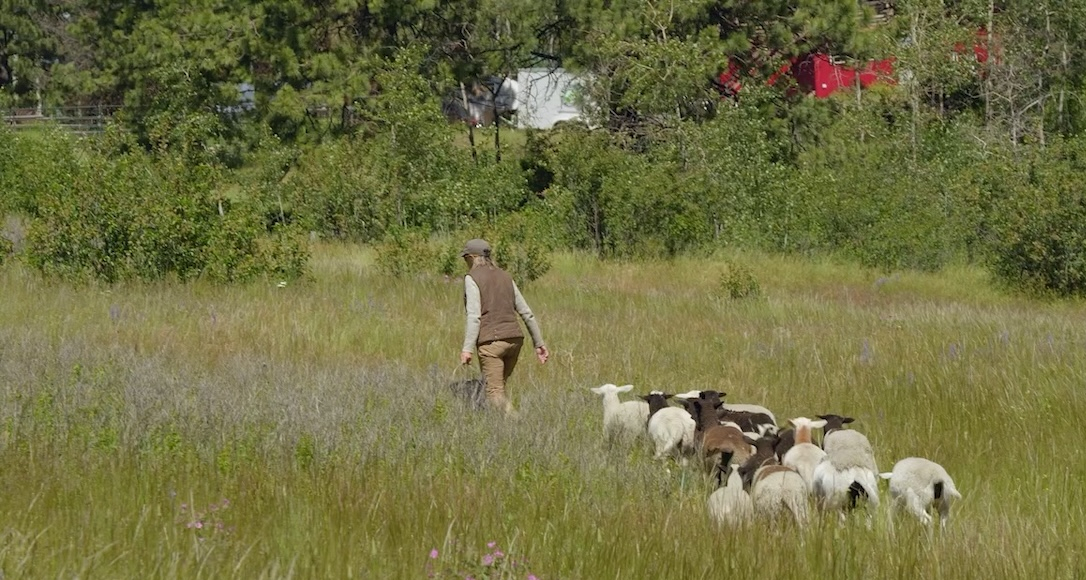
Drought, heatwaves, wildfires, and other climate-related challenges are taking a heavy toll on farmers in BC, including at Blue Sky Ranch in the Nicola Valley. There, farmer Julia Smith is working hard to keep a healthy pasture in the face of climate change by following the principles of rotational grazing: having the right species for your pasture, moving them frequently, and allowing the pasture enough time to rest and recover between moves.
Julia invited us to her farm to learn more about these practices and how she’s building up the land to be more resilient—all in a way that’s in line with her values, the way she wants to raise her animals, the way she wants to operate within her community, and the relationship she wants to have with her land.
The Right Species
Julia found that pigs were not the right species for her pasture, as they root around, dig giant holes, kill trees, and generally make a mess. Cows weren’t the right species either because there isn’t enough land for them.
The answer? Sheep, which are ideal for weed control in pastures and naturally fertilize the land as they graze.
“Sheep seemed to be a good fit for us because of our size of operation and the plant species we have,” said Julia. “It’s been really fun working with the sheep for the last couple of years. They’re a way better fit for the land. They sip water. They’re also easier to move and are much easier on the pasture—they’re actually a benefit to the pasture. They’re a kinder, gentler solution for land restoration.”
“The pasture looks way better than I thought it would with the amount of rain we’ve had this year. I just hope it’s going to keep improving in spite of everything Mother Nature is throwing at us.”
Not One Size Fits All
Many people who are starting out with rotational grazing want to know things like: How often do I have to move my animals? What size should my paddocks be?
The answer depends. What Julia’s doing won’t necessarily work for everyone. It depends on your weather, the species you’re using, the plant species you have in your fields, your stocking rate, and other factors.
“There are so many variables,” said Julia. “You can’t just tell someone, ‘Set up your paddocks at this size and move them every two days.’ You have to watch what your animals are doing. You have to watch what your plant species are doing. You have to watch what the weather is doing. Being out there every day, you get a feel for it pretty quickly.”
Multi-Species Intensive Rotational Grazing Plan
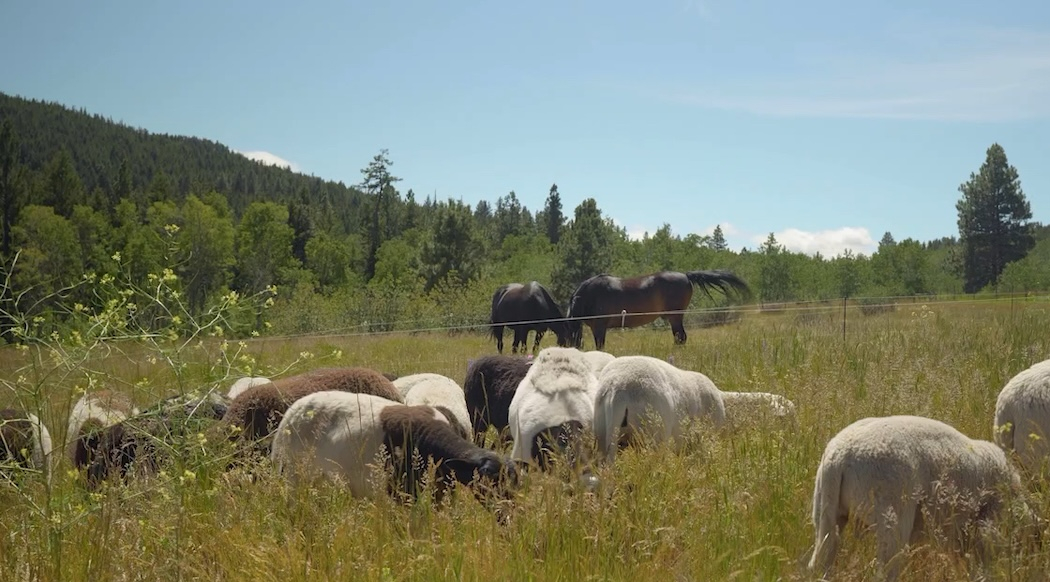
At her ranch, Julia uses a multi-species intensive rotational grazing plan, with the animals moved nearly every day (depending on how much they’ve eaten).
The sheep are first in pasture and are great at pounding down the weeds, but avoid some of the grass species.
“We find that the sheep seem to like the brome but are less keen on the fescue,” Julia explained.
Rather than leaving the sheep in the paddock and forcing them to eat the less-tasty species, Julia decided to introduce horses into the rotation. After the sheep are moved up to the next paddock, the horses are moved into where the sheep were—a plan that’s working well because the horses have a preference for grass.
The Gold Standard of Groundcover
When it comes to groundcover, Julia aims for an abundance of native bunch grasses.
“Sometimes they get outcompeted, but any groundcover is better than no groundcover,” Julia said. “So I’ve tried to change my relationship with weeds a little bit and embrace the groundcover. Nature decided that if grass wasn’t going to grow there, let’s put something there.”
The benefit of sheep being so into the weeds is that they knock the weeds back and give the grasses a chance to compete. With fewer weeds, the grasses can get more of the sunlight, more of the limited moisture that’s available, and have time to regrow so the plant can come back nice and strong.
“The idea being that the grasses will start to take up more and more space as we go along, and the weeds will diminish,” Julia explained. “We don’t want to take [the grass] so far down that there’s not enough roots for the plant to regrow. So that’s where we do the frequent moves.”
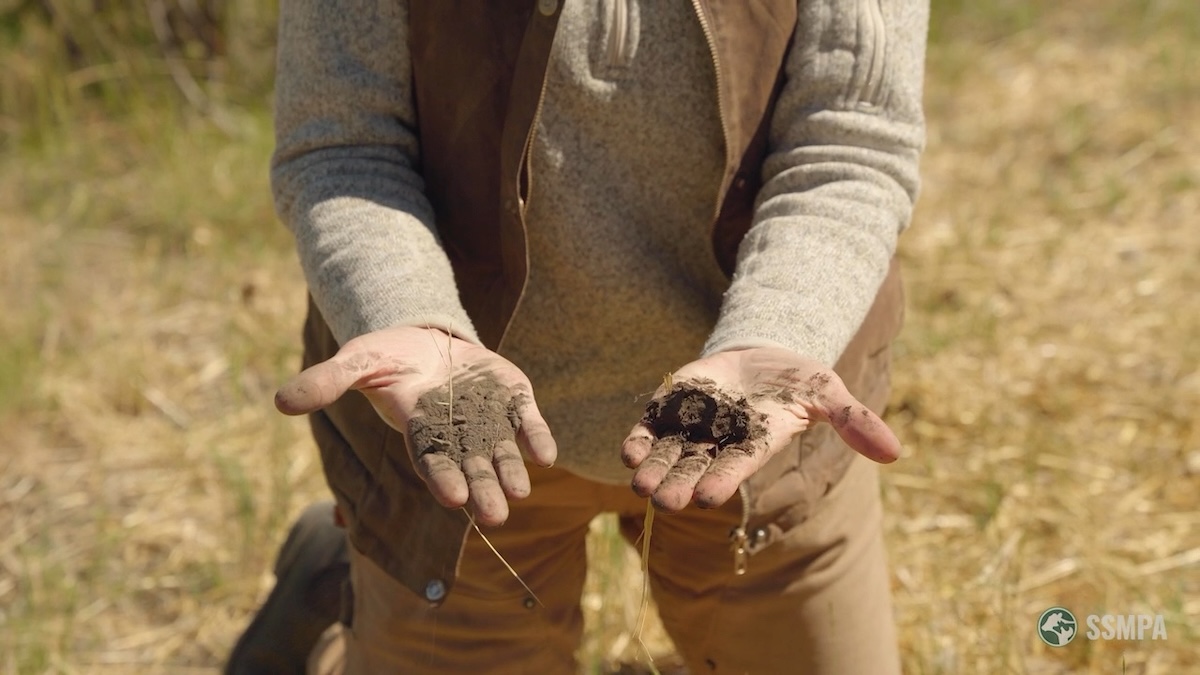
If all the munching of weeds and grass leave bare patches, Julia covers as much of the exposed areas as she can with hay litter to help hold the moisture in.
Bale Grazing
Last year, Julia ran out of forage earlier than she would have liked. Her plan this year, when she runs out of forage, is to start bale grazing.
Traditionally, bale grazing is a technique that’s used in the winter, where you set out a number of bales in a field and move the animals to the bales. It’s like rotational grazing, only they’re not grazing–they’re eating the hay.
This allows you to take advantage of any leftover hay residue, which keeps nutrients cycling back into your soil.
“I’m going to try doing this in the summer or fall when we run out of forage here. I’ll put the hay out and continue to move the sheep around the property,” said Julia. “The hay residue will stay on the ground, increasing the litter, and it’ll allow me to keep the nutrients from the sheep manure travelling around the pasture.”
The Right Enclosures for Your Species
There are so many fencing options available, with technology that makes relocating the fencing relatively easy.
But first, you need to choose the right kind of fence for your species.
Julia’s sheep are on a four-strand Smart Fence, which rolls up with a crank and is on wheels so it’s easy to move around. The horses have simpler infrastructure: Ring Top Posts with one line of Poly Wire.
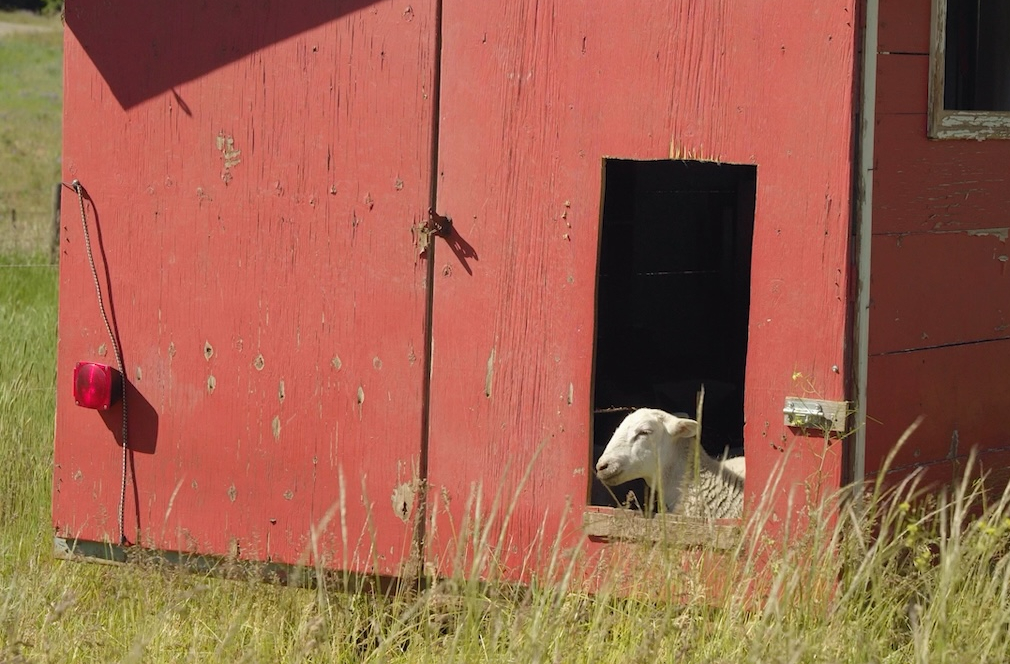
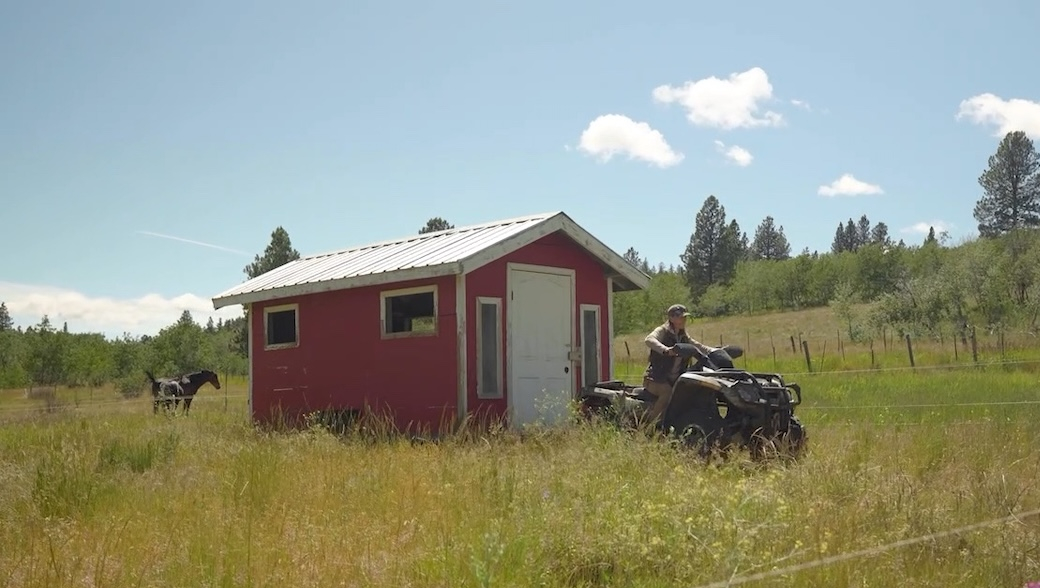
Within each pasture, you must ensure the animals have access to water, mineral salts, and some kind of shelter. Julia set up a fairly large structure for her sheep to use for shade and hiding from storms, with enclosed windows, a door, and a metal roof.
“You don’t necessarily need something as fancy as this,” Julia said. “This is on wheels—it’s a trailer. We keep the ATV hooked up to it because we move it every day. We just open up the fence and roll it into the next paddock when it’s time to move.”
While rotational grazing is a more labour-intensive practice, being hands-on allows you to become more familiar with the needs of the herd—and land.
“You’re out there all the time, so there’s really no excuse for missing these things,” said Julia. “If you’re out there watching your animals and your land, you get a pretty good feel for when it’s time to move. And it’s important to make sure that those moves are as easy as possible because you know, if it’s cold and windy, you might not feel like going out and moving them today!”
Want to see these practices in action? Watch the Blue Sky Ranch virtual farm tour at: youtu.be/ts-VwIUXFAE
Stacey Santos is the Communications Manager for Organic BC and the designer for the BC Organic Grower. She lives, writes and gardens in the beautiful and traditional territories of the Lekwungen peoples, who are now known as the Esquimalt and Songhees Nations.
This project was funded in part by Agriculture and Agri-Food Canada through the BC Climate Agri-Solutions Fund delivered by the Investment Agriculture Foundation of BC.
Featured image: Sheep in the pasture. Credit: Small Scale Meat Producers Association.