Fionna Tough
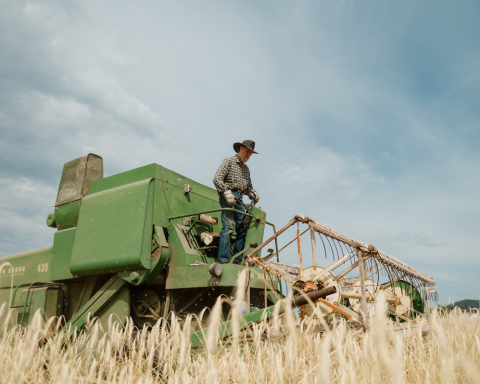
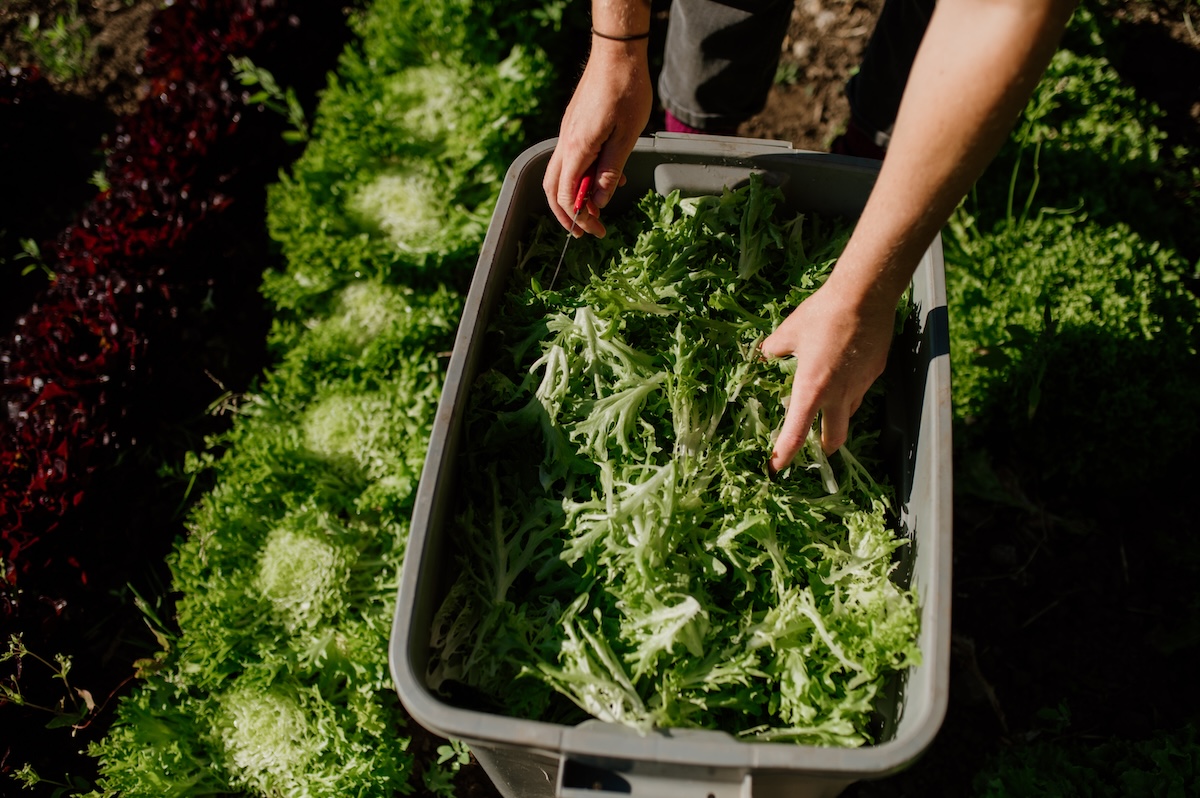
As farmers wrap up their seasons by finishing fall harvests, attending the last outdoor markets, and delivering the last fall Community Supported Agriculture (CSA) boxes, salad greens remain an important, cold-hardy crop. For many, the early morning harvest and careful packing of tender greens continues right into the winter months. Meanwhile, farmers who grow for seed have watched rows of mixed greens slowly stretch into “towers,” bloom, and then offer tiny, hopeful seeds for salads-to-come. These practices are known to farmers. They know the satisfaction and the risks that come with each growing season, producing crops like greens for salad, and for seed.
But what many farmers, and their customers, do not yet know, is how new genetic engineering (genetic modification or GM) techniques of gene editing could impact future harvests of crops such as salad greens, and the future of various other fresh fruits, vegetables, and seeds across Canada.
Gene editing techniques, such as CRISPR, are new ways to genetically engineer plants and animals to express new traits. These techniques aim to delete, insert, or otherwise change a DNA sequence. Unlike traditional plant and animal breeding, genetic engineering makes changes directly to the genetic make-up of organisms, without mating, in the laboratory. These techniques are particularly controversial because, at the same time that they are set to lead to many new different types of genetically modified organisms (GMOs), like gene-edited salad greens and strawberries, most of the new products will not trigger government regulation in Canada.
No Regulation for New GMOs
Gene-edited seeds and foods would be introduced to the market with even less transparency than earlier genetically engineered foods such as the corn, canola, and soy that came to market in the late 1990s.
In 2022 and 2023, the Canadian government removed regulation for most gene-edited plants (if these new GMOs have no DNA from other species). These exemptions to regulation were designed by a corporate-government committee called the “Tiger Team” made up of representatives from the biotechnology and pesticide industry lobby group CropLife, which includes Bayer (formerly Monsanto), with other industry lobby groups and government officials.
Now, many gene-edited plants and foods can enter our food system and environment without any government safety assessments or independent science. These GMOs can also enter the market without any notification to the government or to farmers and consumers.
GM Gene-Edited Mustard Greens Stalled
In September 2024, the Canadian Biotechnology Action Network (CBAN) began investigating the potential introduction of GM gene-edited mustard greens (Brassica juncea) by Bayer, intended to be sold in packaged salad mixes. The greens were gene edited to remove their mustardy flavour, so they could be marketed as “a mustard green that eats like a lettuce.”
These greens were poised to be the first gene-edited vegetable sold in Canadian grocery stores and the first GM vegetable seed made available to home gardeners in Canada. Bayer said it planned to release the greens in Canada and the US in late 2024 or early 2025. However, in May 2025, despite April promotion on social media, Bayer confirmed to CBAN that it was not growing the GM greens commercially and no longer had a specific target date for commercialization.
Targeting Home and Market Gardeners
Despite this delay, farmers and gardeners cannot celebrate with non-GMO victory salads quite yet. Bayer, and other companies, are still testing the market to sell various gene-edited fruits and vegetables to consumers and gene-edited seeds to small-scale farmers and home gardeners.
Although Bayer has not rolled out its much-hyped GM salad greens and seeds, the small biotechnology company GreenVenus quietly started selling a limited quantity of gene-edited romaine seeds online in packets sized for small growers in the US only. The company recently removed this product from its website, but it is part of an alarming attempt by the biotechnology industry to target home and market gardeners with GM seeds for the first time.
This is the beginning of a very serious threat to heritage seeds, organic, heirloom, and open-pollinated seeds, and to seed biodiversity more broadly.
Market Status of GM Fruits and Vegetables in Canada
There are only three fresh GM fruits and vegetables sold in Canada, and only one of these—GM sweet corn—is grown here, with seeds sold in quantities targeting large-scale production.
With GM whole foods on the horizon, CBAN has released a new report on the market status of genetically engineered fruits and vegetables. The report profiles the three GM fruits and vegetables on the market in Canada (GM sweet corn, pineapple, papaya), three new GM whole foods that could soon be introduced (GM greens, strawberries, purple tomato), and three prominent GM products that are not yet on the market despite many years of promotion (GM potatoes, apples, bananas).
Some of these GM whole foods made with gene-editing would be the first genetically engineered foods eaten in Canada without safety assessments from Health Canada, and like all GMOs in Canada, they will be sold without any labels. You can read the report at: cban.ca/GMfoods2025
What We Can Do
CBAN and the organization Kids Right to Know have launched a new petition for mandatory labelling of genetically engineered foods in Canada. The Parliamentary e-petition can be signed until November 3, 2025 at: ourcommons.ca/petitions (search the petition number e-6768)
Customers can take action by supporting local organic and ecological farmers, and by writing to the head office of their grocery store to demand a non-GMO produce section. For more information, visit: cban.ca/ProtectOurProduce
Just as we ended production of the GM salmon, we can use the collective power of farmers and eaters to resist the agenda of companies like Bayer, which seek to dominate our food system. By acting now, we can uphold a food system rooted in seed and food sovereignty, committed to ecological and social justice.
Fionna Tough supports outreach and campaigning at the Canadian Biotechnology Action Network (CBAN) which brings together 15 groups to research, monitor, and raise awareness about issues relating to genetic engineering in food and farming. CBAN members include farmer associations, environmental and social justice organizations, and regional coalitions of grassroots groups. CBAN is a project of MakeWay Charitable Society.
Featured image: Harvesting organic salad greens. Credit: Maylies Lang.