Drew Bondar
What is On-Farm Demonstration Research?
Trialing something new on the farm can feel daunting. Farmers face numerous demands each day, and improving an existing system takes time and resources, and carries potential risks. On-farm demonstration research is a practical tool that allows farmers to evaluate a new practice, product, or technology in a way that minimizes risks and reduces demands on producers’ time and resources.
Whether trialing a new variety of cover crop or reducing tillage without impacting yields, on-farm demonstration research can help growers evaluate the economic and environmental impacts of a new practice and enhance their operations. Guided and implemented by producers, demonstration research supports the development of practical, relevant solutions that are more likely to be adopted on-farm. When linked with case studies or field days, demonstration research can provide the broader farming community with experience and information about a new practice, product, or technology.
Demonstration research incorporates scientific elements in the process but is not as meticulous as traditional research. It allows for a more nimble and simple approach to trialing something on-farm than is otherwise possible with more rigorous scientific studies. The availability of land for a trial, the size of treatment area needed, and day-to-day operations are important factors to consider. Demonstration research can be conducted on a smaller scale with limited required resources that fit within a farm’s operations.
It is important to note that it is challenging to draw definitive conclusions from demonstration research as the results are not statistically significant due to a lack of replication. Through multiple seasons of data collection, however, confidence in the results is improved. Demonstration research is a great tool to evaluate if a new practice, shown to be beneficial through traditional research, will work for a particular farm, industry, or region.
Regional Extension Program Project
For the past two years, the BC Ministry of Agriculture and Food has been supporting on-farm demonstration research through its Regional Extension Program. Demonstration trials are underway across the province. The goal of the project on the South Coast is to promote the adoption of beneficial management practices (BMP) and to increase growers’ knowledge and skillset in conducting on-farm research. E.S. Cropconsult, which provides crop consulting and research services in the Fraser Valley and Pemberton, has been contracted to deliver the project. This includes supporting growers in the development of research manuals, setting up trials, data collection, and reporting.
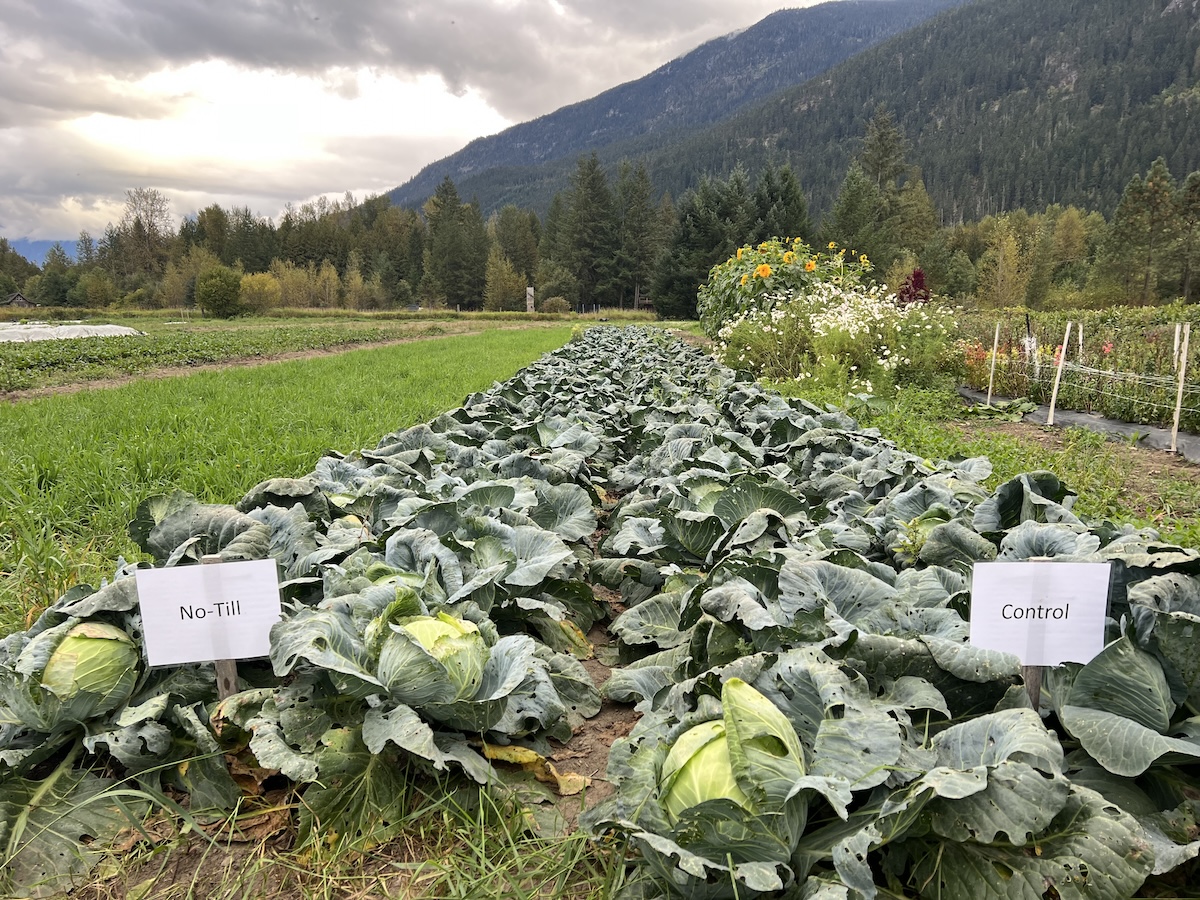
BMPs trialed to date have been evaluated for their impact on improving soil health, supporting beneficial insects, and/or improving crop yields. The trials completed have typically been two years in length, which includes two seasons of data collection and consist of a side-by-side comparison utilizing a control (i.e. standard practice) and the treatment (i.e. new practice).
Each trial begins by partnering with an interested grower who is facing a particular management challenge and has a potential solution in mind. The contractor and the grower then work together on formalizing the topic and develop a research manual over the winter season. The manual contains all the relevant information needed to undertake the trial, including required materials, trial set-up, and data collection. A rough cost estimate to undertake the trial is also included. Although the manuals are specific to the grower, they are standalone documents that are available to the broader agricultural community, who may be interested in undertaking similar trials.
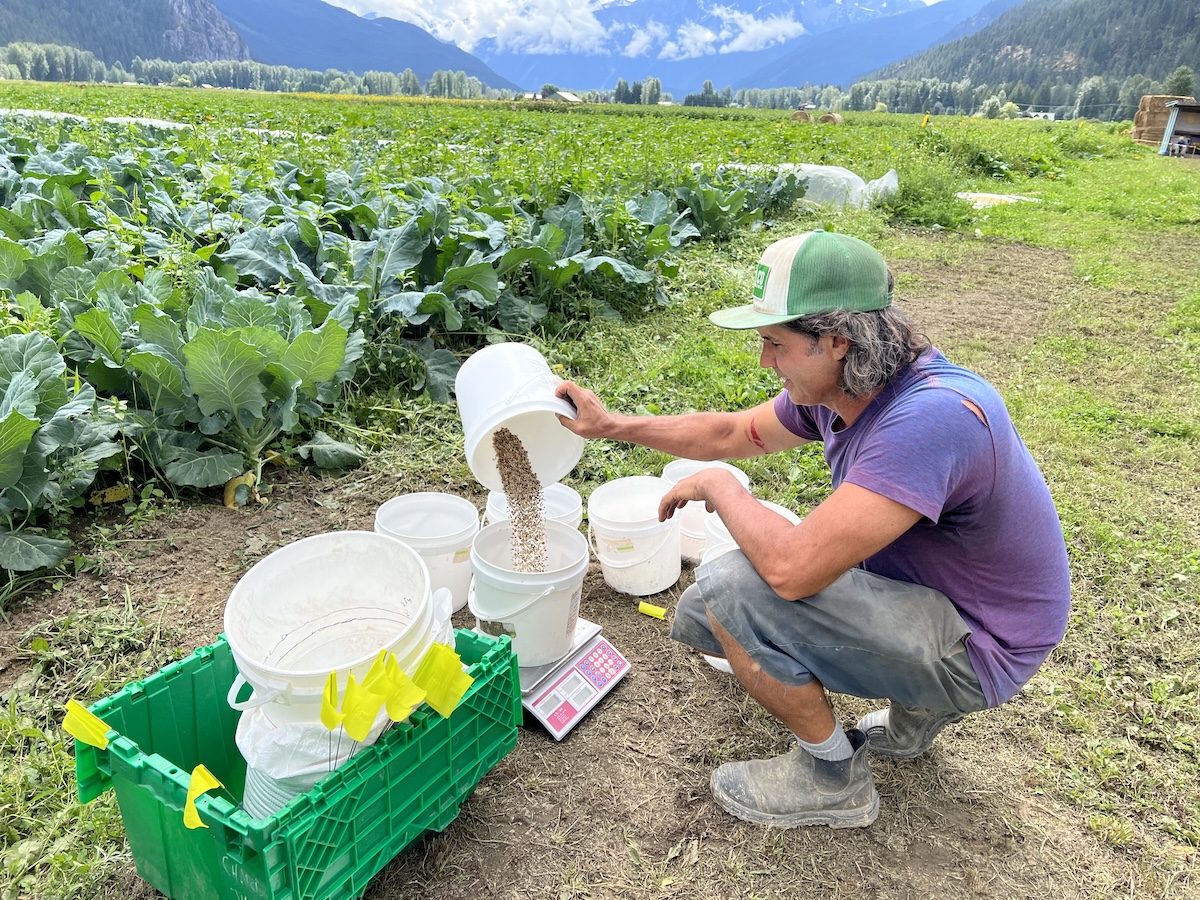
The first year of trial begins in the spring. Trial setup is completed in partnership with the consultant and grower. Typical operational tasks, such as field preparation and seeding, are completed by the grower. Data is then collected through the season, which may include soil samples to assess changes in soil health, pest and beneficial insect abundance, and crop yield. After two seasons of data collection, a final research brief is completed that provides an overview of the trial and highlights the results.
To date, six farms have completed trials across the Lower Mainland and Pemberton, and another four farms began new trials this year. The first six trials were completed with organic field vegetable and blueberry producers.
Trial topics included assessing the impact/efficacy of: no-till on cabbage and lettuce; interseeding cover crops with broccoli; mustard biofumigation control of parasitic nematodes in blueberries; planting blueberry alleyways with cover crop mixes to increase habitat for predatory ground beetles; liming of acidic soils to improve nutrient availability and yield in potatoes; and planting headlands with perennial plants to support beneficial insect populations in cabbage and lettuce fields.
The four new trials that began this year include: fall application of gypsum to improve sulphate availability; humic acid application to improve soil compaction and crop health in blueberries; mustard biofumigation to suppress wireworm and improve soil health; and using a nitrogen-fixing biological to improve nutrient management. Stay tuned for the trial results, which will be available next year! The research manuals should be available online soon.
Conclusion
While finding the time for on-farm research can be challenging with demanding farm schedules, the growers that participated in the first round of the project found that the trials were less difficult and risky than anticipated and plan on continuing with some version of the trial.
If you have a pressing question about a new practice or product on your farm, we encourage you to explore the resources developed through this project, including completed research manuals and briefs, which are available online. We hope these resources encourage you to undertake a similar demonstration trial yourself.
Explore the South Coast research briefs and results here: bit.ly/428myVf
Drew Bondar is the Regional Agrologist for Metro Vancouver with the BC Ministry of Agriculture and Food and is a co-lead of the South Coast on-farm demonstration research project.
We’d like to acknowledge the growers that have participated in the project to date, E.S. Cropconsult for doing the heavy lifting of supporting the implementation of the trials, and Conley Keyes, who was instrumental in developing the project as a whole.
Financial support was provided by the governments of Canada and British Columbia under the Sustainable Canadian Agricultural Partnership, a federal-provincial-territorial initiative.
Featured image: Layout of no-till cabbage trial. Credit: E.S. Cropconsult.