
Jessica Chiartas
The Organic Science Cluster 4 (OSC4) is a national initiative aimed at advancing organic agriculture and enhancing the sustainability of Canadian agriculture through cutting-edge research and innovation. Funded by Agriculture and Agri-food Canada’s AgriScience Program and contributions from over 80 funding partners, OSC4 leverages public-private partnership to drive collaboration amongst researchers (10 universities and 13 research centers), producers, industry partners, and NGOs in five key categories: field crops, horticulture, pest management, livestock, and the environment.
The Regenerative Climate Resilient Organic Vegetable (RCRV) project is one of 14 research activities currently conducted under OSC4. RCRV is a groundbreaking five-year project to address critical gaps in our understanding of how organic farming practices in diversified vegetable systems can mitigate climate change and enhance on-farm resilience and profitability.
This interdisciplinary collaboration between the University of British Columbia (UBC), Agriculture and Agri-Food Canada, the BC Ministry of Agriculture, industry specialists, non-governmental organizations including Organic BC, and 17 organically managed vegetable farms across British Columbia will: 1) develop tools to enable effective monitoring, reporting and verification of the climate mitigation and related co-benefits of regenerative and organic vegetable production; 2) identify a set of management practices with the greatest benefits across a diversity of soil and climatic conditions; and 3) assess social and economic barriers to adoption; and 4) develop strategies to overcome barriers.
RCRV uses a participatory approach to co-develop research priorities, identify regionally relevant treatments and implementation strategies, and disseminate results through demonstration and the development of farmer-to-farmer networks. Engaging partners on the ground, the project collectively determines which vegetable crop, regenerative organic practices, and treatment levels to investigate in each of the three agricultural regions that represent a diversity of climate and soils. Practices may include specific crop rotations, targeted compost applications, advanced nutrient management, cover cropping, and/or conservation tillage.
Participatory Approach: A Two-way Exchange
RCRV builds on a research project that began in 2015 at UBC Farm, investigating the impact of organic farming on soil health. In 2017, recognizing that BC has a vast diversity of climates, soil types, and production systems that may respond differently to similar management, UBC researchers and 19 local farms came together to expand the project, adopting a “parent-child” design. UBC and Green Fire would serve as “parent” sites, where long-term rigorous research is conducted through controlled experiments using state-of-the-art instrumentation. The 18 other farms would serve as “child” sites: working farms across BC where farmers implement and test the same practices under diverse, real-world conditions.
Every two years, the data is analyzed, discussed, and used to inform subsequent research questions, methodologies, and experimental design, creating a dynamic, two-way exchange. This dual approach ensures that research is both scientifically robust and practically relevant, while strengthening the relationship between researcher and grower. The result is more appropriate and relevant research questions on one end and more dissemination and adoption of research findings on the other.
For instance, on Vancouver Island, growers were interested in cover cropping, but were unsure when to seed, how to terminate, and how to adjust nutrient management to minimize nutrient losses and maximize yields. Together, researchers, industry specialists, and growers identified treatment plans including two tillage options: standard bed preparation or reduced (mowing and tarping prior to planting); and four nutrient management strategies: typical (standard fertilizer and compost application), summer cover crop + compost + feather meal (rate based on soil nutrient levels and crop removal of nitrogen (N) and phosphorus (P)), Compost + feather meal (rate based on soil nutrients and crop removal of N and P), and Winter cover crops (Rye, peas, and crimson clover).
Digging into the Practices: Project Treatments
The project focuses on a suite of organic practices hypothesized to have regenerative outcomes, including:
- Advanced Nutrient Management: conduct soil testing to assess nutrient levels and develop a nutrient management plan based on test results and crop demand. Apply targeted amounts of compost and feather meal to optimize nutrient use efficiency.
- Cover Cropping: Planting a diverse mix of species in winter and/or summer for diverse outcomes (i.e. summer for weed suppression and nitrogen; winter for erosion control).
- Crop Rotations: Adding crop diversity over space and time by incorporating a summer cover crop to reduce the need for external inputs.
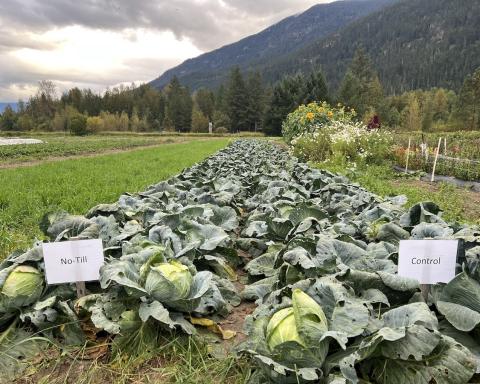
- Conservation Tillage: Reducing tillage intensity to maintain soil structure and minimize loss of soil (erosion) and organic matter.
Measuring Outcomes
To assess the effectiveness of these practices, UBC researchers will measure:
- Greenhouse Gas Emissions: Using rigorous in-field monitoring of nitrous oxide, carbon dioxide, and methane emissions at UBC Farm throughout the year.
- Soil Carbon Sequestration: Quantifying changes in soil organic carbon using samples taken before the implementation of practices and again at the end of the project.
- Soil Health: Assessing soil physical, chemical, and biological properties as soil health indicators, including bulk density, soil nitrogen, and phosphorus annually.
- Crop Yields and Quality: Evaluating the productivity and quality of crops, including biomass, total cover (%), total plant nitrogen.
- Costs and Farmer Perceptions: Tracking management, inputs, labour, and farmer feedback on the implementation of the practices.
The data will contribute to the adaptation of a greenhouse gas emissions model developed for Canadian agriculture, to better predict outcomes from diversified organic vegetable production. The data will also be used to identify barriers to adoption and strategies that might address them.
Timelines and Progress
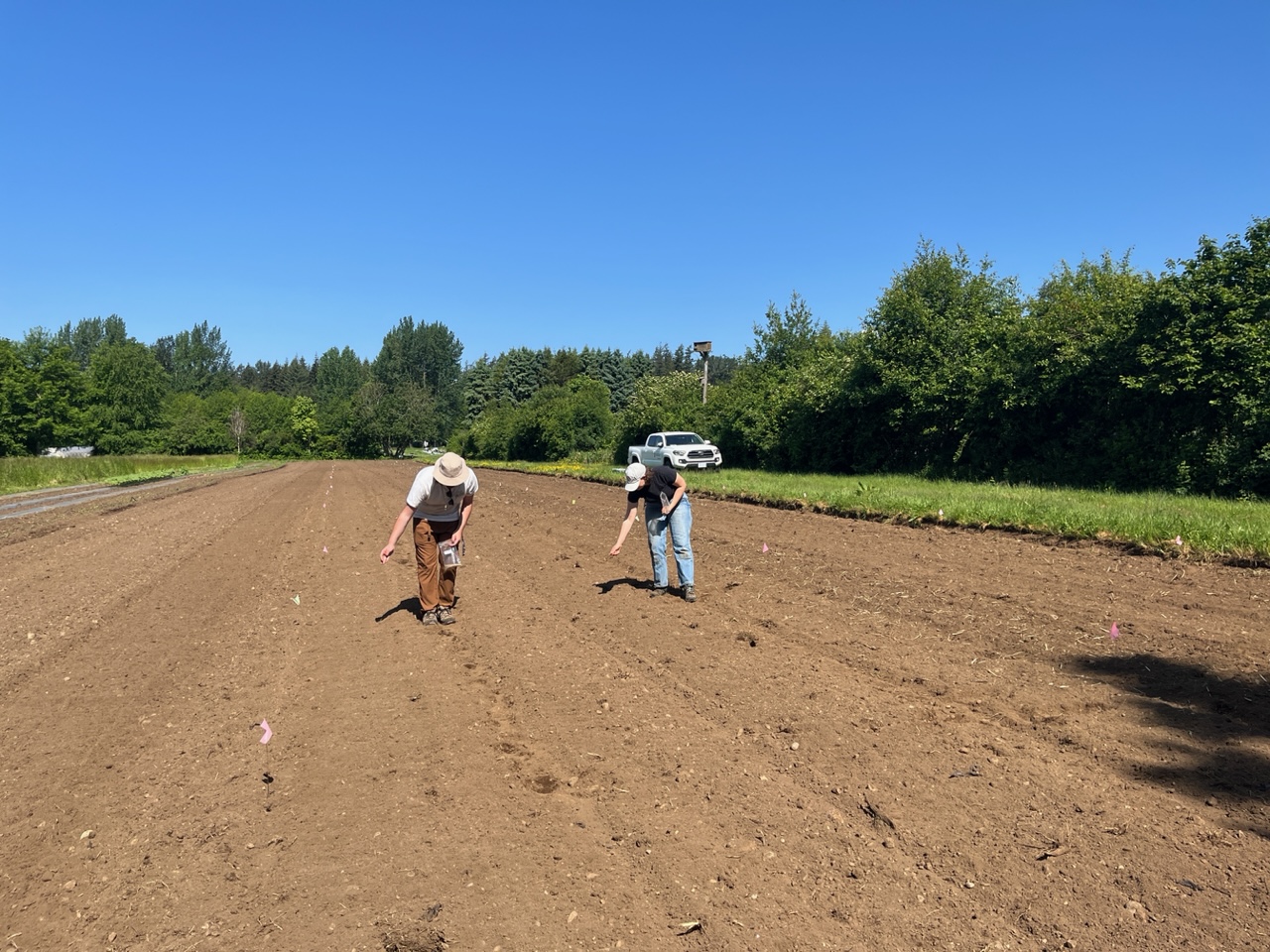
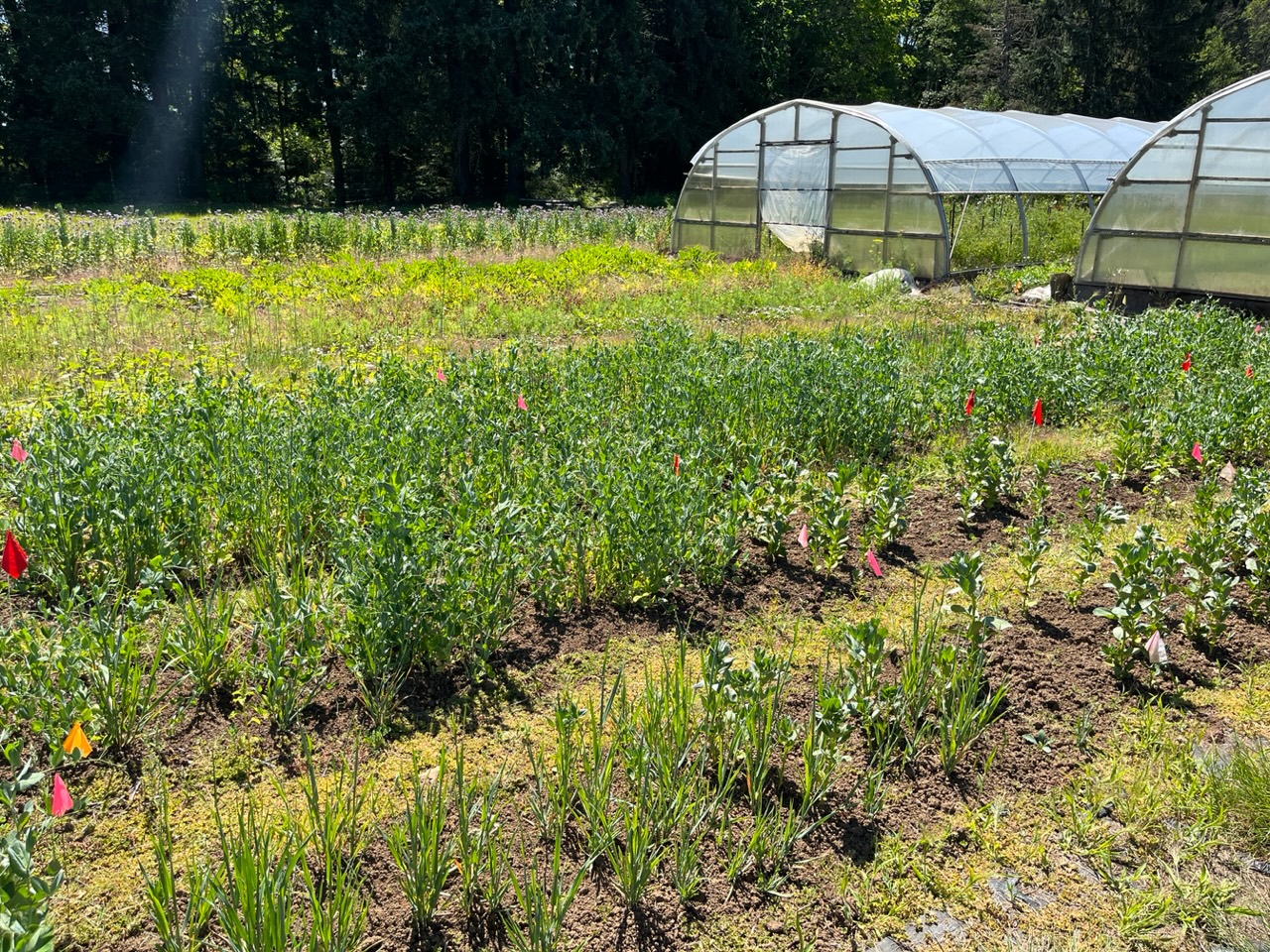
In spring of 2023, UBC researchers established nutrient management experiments at UBC Farm and Green Fire Farm, measuring outcomes of eight different management approaches. Field trials were also set up at UBC Farm, Green Fire Farm, and two child sites to identify optimum summer cover crop mixes (peas, oats, and/or fava bean) for soil nitrogen, weed suppression, and overall performance with and without irrigation.
The following year, UBC researchers launched an experiment at UBC and Green Fire farms focused on minimum tillage and crop rotations. They recruited five child farms on Vancouver Island, facilitated a dialogue, and co-developed research priorities, treatments, and experimental design. Soil and plant samples were collected at the onset and after the first growing season at all seven sites and are currently being processed and analyzed.
In 2025, UBC researchers plan to integrate their learnings from field trials on Vancouver Island to recruit an additional 10 child farms in the Kootenays and Lower Mainland. Sampling will continue annually, and the resulting data will be used to inform management the subsequent season. In 2028, all project data (agronomic, environmental, and socioeconomic) will be synthesized to develop and disseminate recommendations.
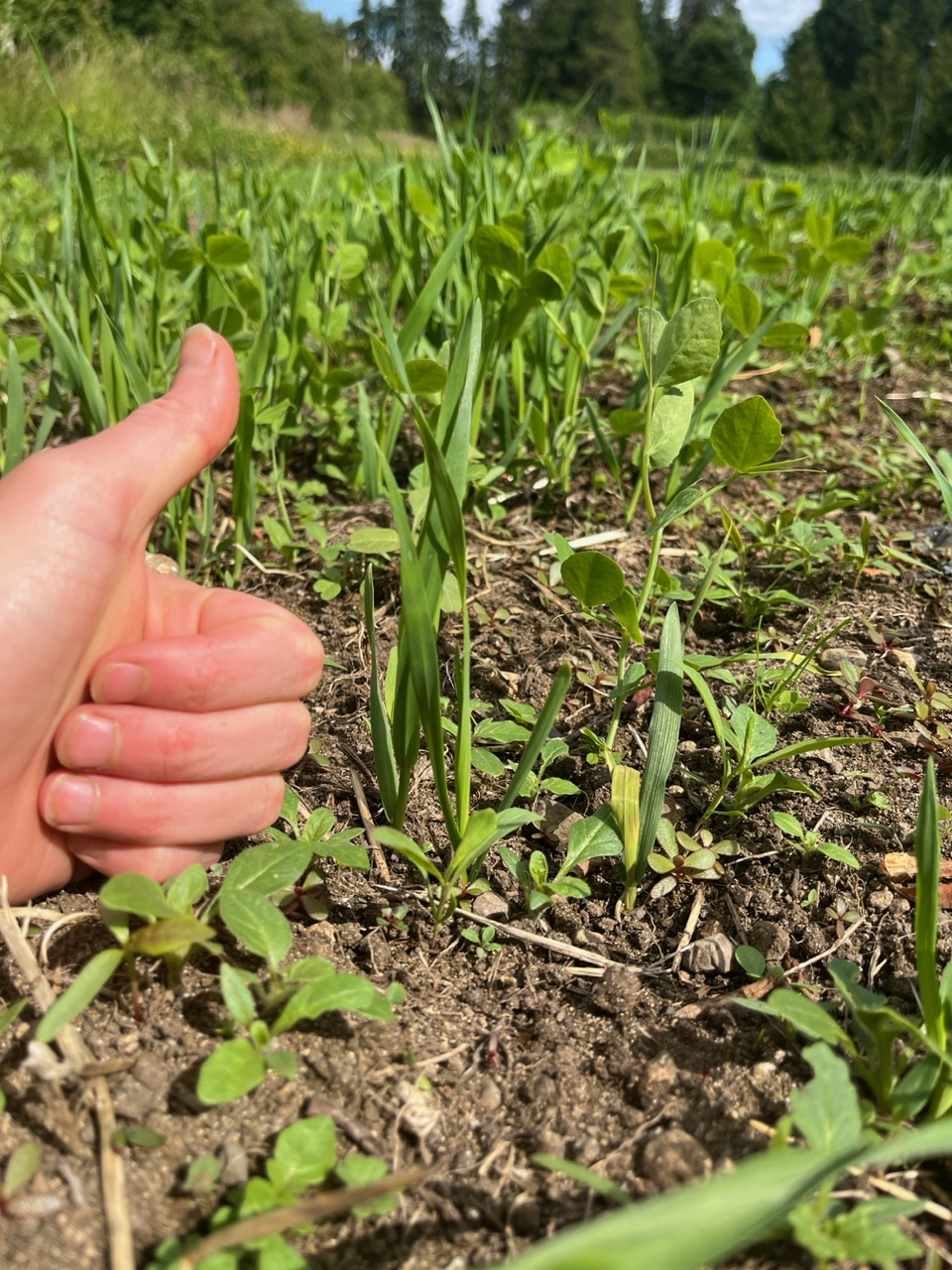
Data collected from the summer cover crop field trials showed higher cover crop biomass and percent cover under irrigation relative to no irrigation with no significant differences by species. Weed biomass was also higher under irrigation with significantly higher weed pressure under fava bean relative to all other mixes. Fava bean may require a higher seeding rate or different termination date. It was noted that all species were a bit more mature (i.e. seed pods/heads emerging) at time of termination than ideal for N turnover through decomposition. Further analysis will be conducted to estimate N release from the different cover crop mixes available for uptake for subsequent crops.
Grower Benefits and Getting Involved
Joining the RCRV project offers growers a unique opportunity to enhance their farm’s sustainability, resilience, and profitability while contributing to the larger organic regenerative movement! Participants will not only have access to cutting edge research but will help inform it. Insights gained from the research can be applied directly on farm to improve soil health, conserve water, increase biodiversity, and boost on-farm resilience, while optimizing input use and yields to maximize profitability. Growers in this project also benefit from the knowledge and support of like-minded growers in their own region, who understand the unique risks and challenges, can share from their own successes and failures, and can help troubleshoot viable solutions.
Growers also receive support from an interdisciplinary team of researchers and industry specialists as well as access to resources, training, and tools. This includes comprehensive nutrient analysis of soil, cover crop, and amendments (each spring); free or reimbursed inputs for the trial area (including cover crop seed, compost, etc); analysis of crop nutrient levels and yield; detailed nutrient balances and support for nutrient management plans; and individualized analyses of financial and climate-related benefits of management (requires interview participation). Finally, growers will be given the opportunity to influence agricultural policies and the future of organic farming; sharing their views on how government/industry can support.
Growers interested in getting involved can sign up for project communications; attend project workshops and field days; and/or participate in on-farm trials. The UBC Farm Research Manager will follow up with interested parties to discuss individual farm goals, select the size and location of field trials, and determine treatments, implementation approach, and trial design.
ubcfarm.research@ubc.ca
Jessica Chiartas is a postdoctoral scholar and Research Manager for the Center for Sustainable Food Systems at University of British Columbia. She has a PhD in Soils & Biogeochemistry from the University of California, Davis and is founder and creator of Soil Life and RegenScore.
Featured image: Sustainable Agricultural Lab members Auguste Bruno and Olivia Sasson seed summer cover crop mixes (fava beans, oats, spring peas) for a trial at UBC Farm. Credit: Raelani Kesler.