Finding Laughter, Balance, and Community On The Farm
Kat Roger
Nestled in the Okanagan Valley, Lorna and Chris Church operate Grassy Gnome Acres on 65 acres of farmland in Coldstream, BC. At the start, Lorna and Chris never intended to become full-time farmers. In 2008, they were looking for a manageable five acres of forested land to develop a low-maintenance livestock operation that could provide high-quality food to their family and friends. Instead, they found themselves the stewards of a sprawling property which serendipitously backed onto Lorna’s parents’ farm. Despite their initial hesitation, “we had people and resources nearby to help if we got stuck, so it felt like the right decision,” Lorna says. Over time, this decision has blossomed into a thriving organic farm, full of all the joys and challenges of small-scale farming.
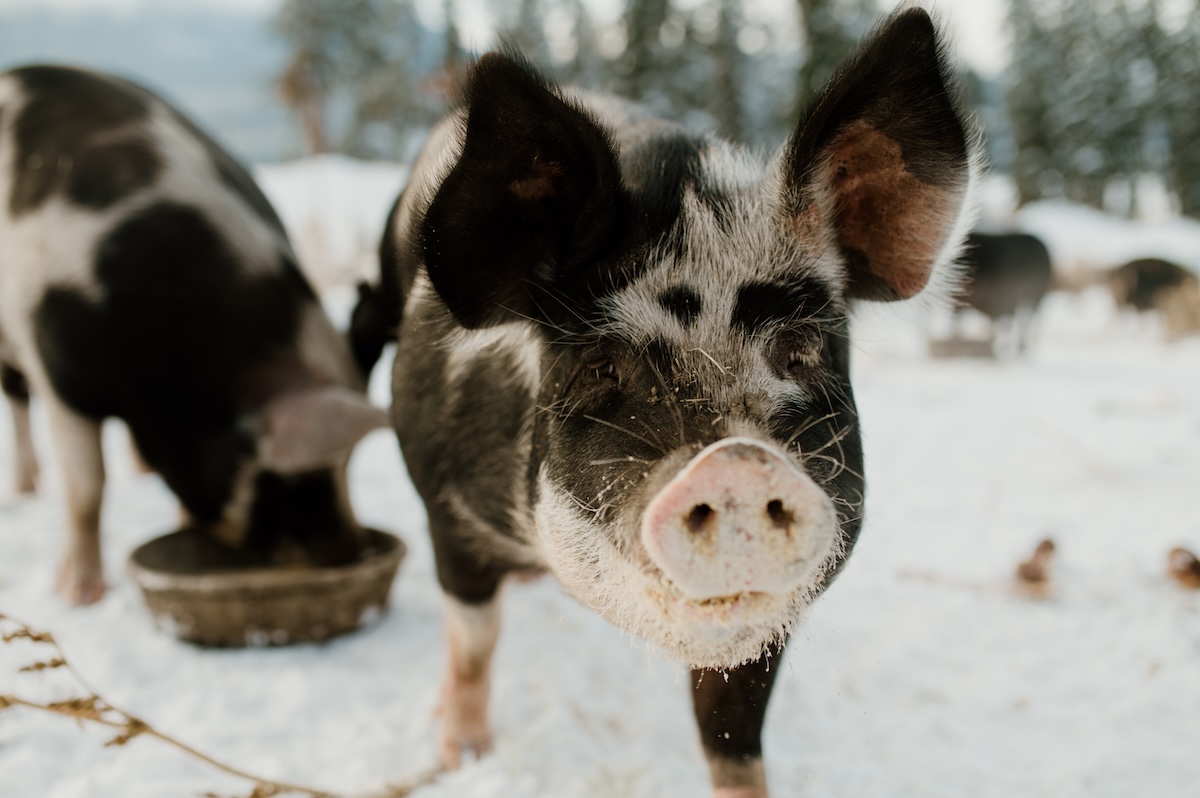
Grassy Gnome Acres started with 15 chickens for eggs and two pigs raised to finish. “People would ask us what we were doing, and then they wanted more, so we got more chickens and pigs,” Lorna recalls with a laugh. Initially, farming was just a way to care for the land and provide food for their family. But with her brother-in-law, sister, and mother running the nearby Vale Farms, Lorna was already deeply involved in local markets and the farming and food community. Following demand, Lorna and Chris’s livestock operation expanded with the support of their family, and soon they were raising chickens, turkeys, and pork to bring to market every week.
At the same time, the organic certification process sealed Grassy Gnome Acres’ transition from a hobby farm to a farm business. Lorna’s mother had long been a champion of organic farming, a commitment that grew from personal experiences with health and food. “After my dad’s head injury when I was young, my family became more aware of the connection between healthy eating and recovery,” Lorna explains. “Organic just made sense. It was never really a question for us.”
When she reflects about choosing to go organic, Lorna muses that, financially, the extra costs of organic production don’t always translate into higher profits. “When you have surplus, you often sell at a loss,” Lorna admits. Then there’s the ongoing paperwork: “It’s a lot to track, and it doesn’t give you added financial benefits.” But, Lorna says, “it feels right for us. I like knowing that I’m not putting anything on the farm that could harm the land or have unknown long-term impacts,” she says. “It’s a sense of pride to say our farm is organic.”
Beyond the health and ecological benefits of raising animals organically, Lorna is also passionate about participating in the community generated by the organic movement. As the organic sector continues to evolve, Lorna hopes it will stay relevant without losing its core principles. “Regenerative farming is the new buzzword, but organic doesn’t need to change to fit in,” she says. “There’s space for all kinds of sustainable farming, and we can all learn from each other.”
She and Chris believe strongly in the power of farmer-to-farmer support, whether in the organic community, with other livestock farmers, or across the spectrum of production types and farming practices. Lorna enjoys seeing fellow farmers in Lumby when she can, reminiscing about their time together in 4-H as kids. She says these moments of connection and solidarity are important to her—there’s a feeling that “someone thinks about me and knows what I’m doing,” spitballing ideas with other farmers and connecting shared experiences in what can often be a solitary profession. One of Lorna’s favourite opportunities for collaboration is a partnership with Spray Creek Ranch, who have been selling Lorna and Chris’s pigs and sheep for years. More than anything, farming on the land alongside their family has shown Lorna and Chris the value of working together. Lorna shares that living next door to her family has been a lifeline: “If I have a sick animal or an irrigation issue, I can call my brother-in-law for advice,” she says. “We’ve leaned heavily on them.”
With three generations on the land, raising children on Grassy Gnome Acres has brought its own joys and challenges for Lorna and Chris. When the kids were younger, the farm was a playground, complete with pig wallows and chicken coops. The name Grassy Gnome Acres was inspired by Lorna and Chris’s free-running farm kids, dreamed up atop the grassy knoll the farm sits on as they watched the kids run around like little gnomes.
Lorna fondly recalls moments from those early years, like her two-year-old hurtling naked toward the pig wallow as she moved electric fences, wrestling piglets into football holds, or impromptu “date nights” with Chris spent catching chickens by moonlight. “Half the fun of farming is the ridiculous predicaments you end up in,” she says. “That’s why we keep going—because it’s fun.”
In the excitement of those early years, she and Chris would finally sink into the couch after sunset in the summer, during the busiest season of haying, raising meat birds and turkeys, butchering, farrowing, and moving grazing animals, only to realize, “Hey, happy anniversary!” Lorna and Chris got married before they bought the farm, and Lorna reflects now: “Silly us, we chose to get married right in the middle of summer!”—leaving their anniversary between their busiest weeks of the year.
As the kids have grown, the balance between farming and family has become more complex. “Farming is a lifestyle, but it’s not the only thing we want in our lives,” Lorna says. Chris loves volunteering as a hockey coach in Lumby, while Lorna volunteers on the Okanagan Waldorf School board, and recreational activities like skiing and biking are priorities for their family, too. Beyond family fun, both Lorna and Chris have part-time and seasonal jobs off the farm. Lorna shares that in recent years, “we’ve consciously downsized to make room for other priorities. Farming is rewarding, but it can’t be everything.” They are working to balance their desire to farm with their need for sustainable income and time for non-farming activities with their kids.
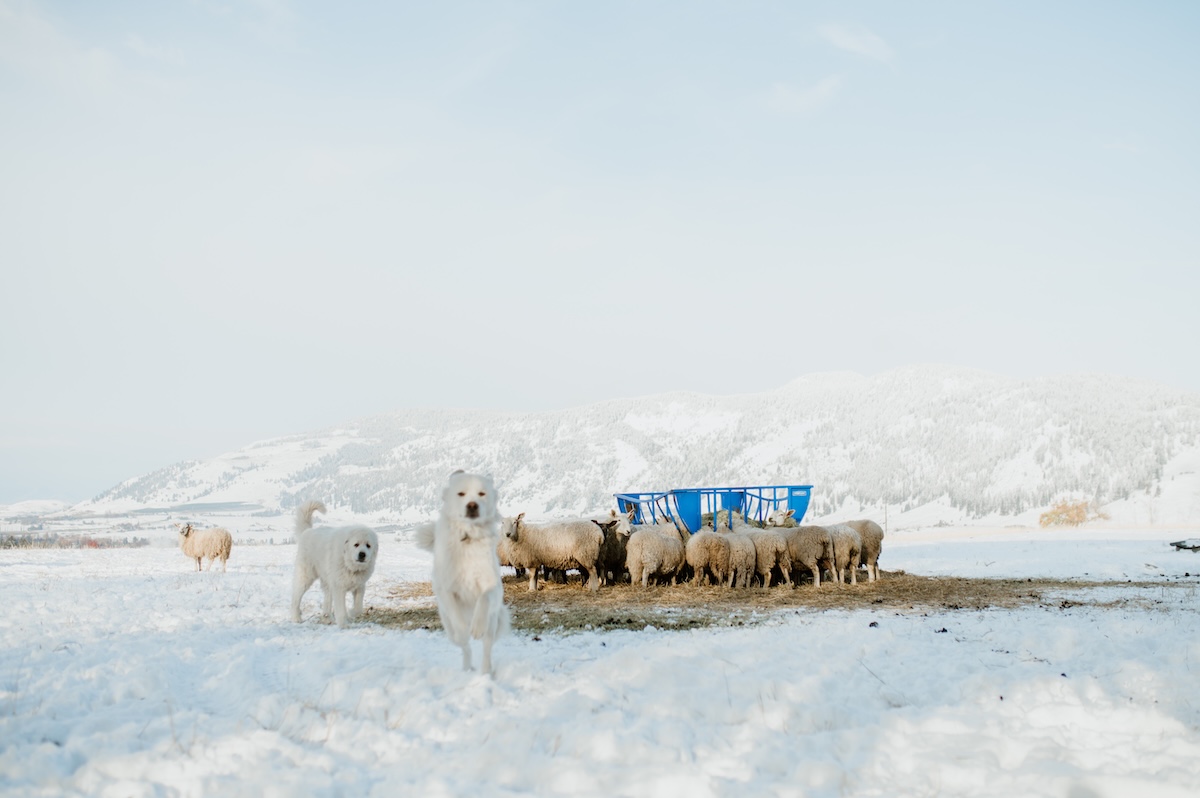
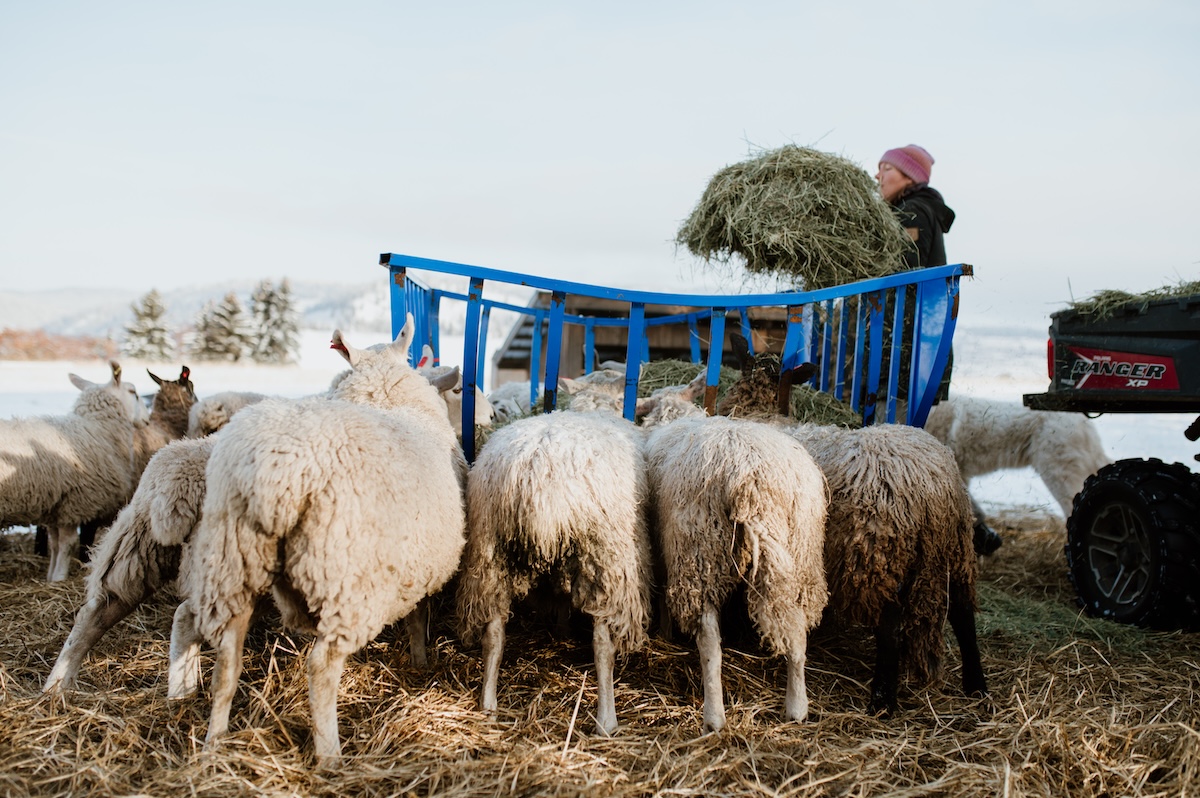
Regardless of the necessities and pulls of the outside world, the rhythm of daily chores grounds Lorna in her love for the farm. Nowadays in the colder season, mornings are filled with feeding the pigs and livestock guardian dogs, chipping ice in troughs, and letting chickens out.
Afternoons bring more feeding, egg collection, and seasonal tasks like irrigation or moving animals to fresh pasture. Over the years, Lorna’s confidence with the animals has grown, including working with animals she didn’t grow up with on her family’s farm. “The first time I castrated a pig, my hands were shaking,” she laughs. “Now, it’s second nature.” Likewise, she was touched to see her children confidently take on the animal chores when she was sidelined by a recent injury (now recovered). “Farming forces you to get outside,” Lorna reflects. “Some of my favorite moments are these little pockets of beauty—a sunrise over the fields, the sheep moving through the grass. Those are the things that you remember.”
This year, Lorna and Chris plan to shear their own sheep, a skill they’ve been honing in recent months. They would love to get back into the fibre market for their wool and explore shearing lambs as well as ewes. They are also replanting trees on parts of the property affected by beetle kill, creating windbreaks and shelters for the animals. Looking farther into the future, Lorna says, “in less than 10 years we may be empty nesters with time on our hands to grow our operation, or our kids may be a new generation of young farmers with plans of their own. Both options are exciting!”
@grassy_gnome
Kat Roger is a lover of food, farming, and storytelling based on the west coast of Turtle Island.
Featured image: Herding dogs, playing on the job. Credit: Maylies Lang.