
How the Rovabarn is Changing the Game
Julia Smith
Agri-tech gets a lot of airtime these days, but it often seems irrelevant to smaller-scale, organic producers. We picture robotic milking barns, precision spraying drones, and complex greenhouse operations—technologies typically designed for large conventional farms. The scale and investment required for many of these innovations put them out of reach for most BC farms. However, two certified organic livestock producers have found a promising technology that aligns with their pasture-based systems: the Rovabarn.
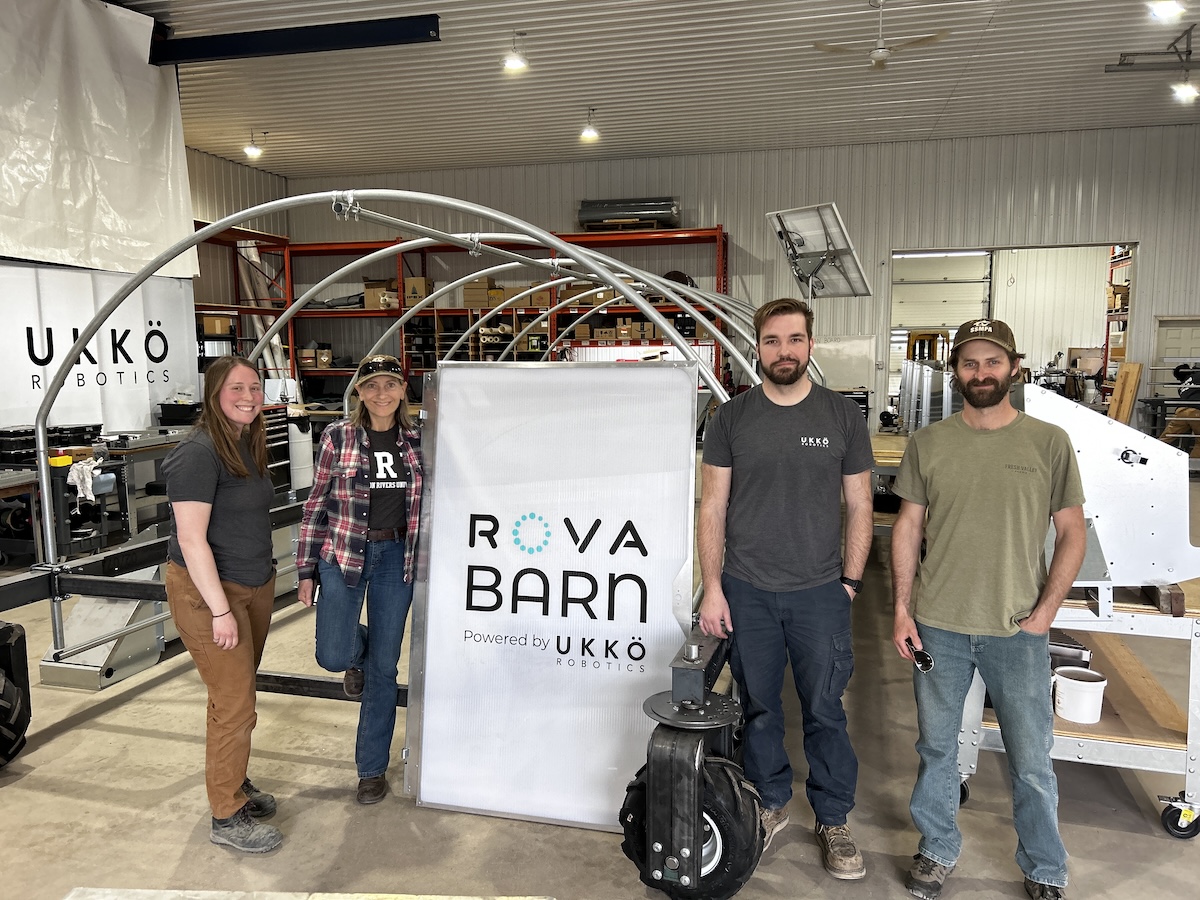
Daniel Badiou, raised on a dairy farm, developed an early interest in using machinery to solve livestock production and management challenges. After designing an autonomous barn for his own farm, he partnered with mechanical engineer Katrina Jean-Laflamme to launch Ukkö Robotics in 2016. Their Rovabarn brings the benefits of a high-tech barn to pasture-based poultry operations.
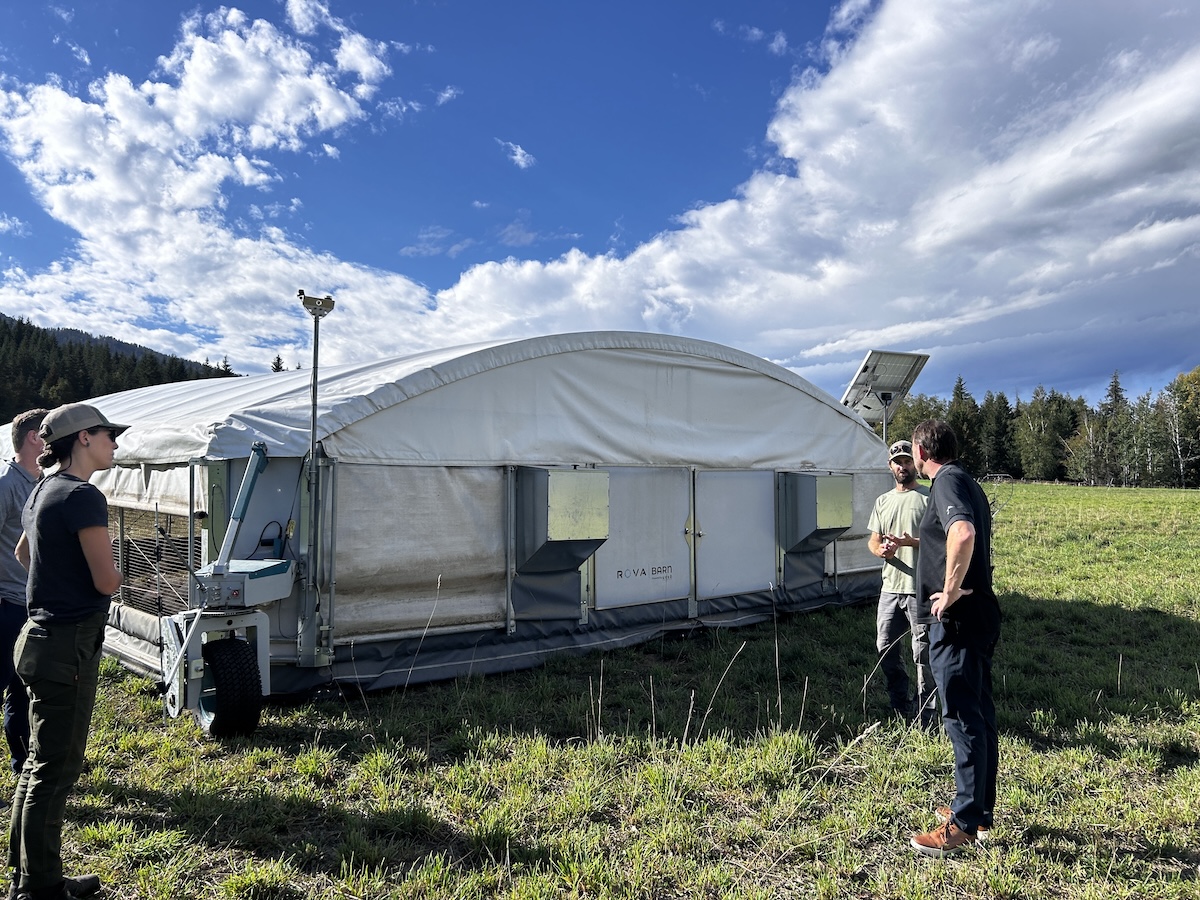
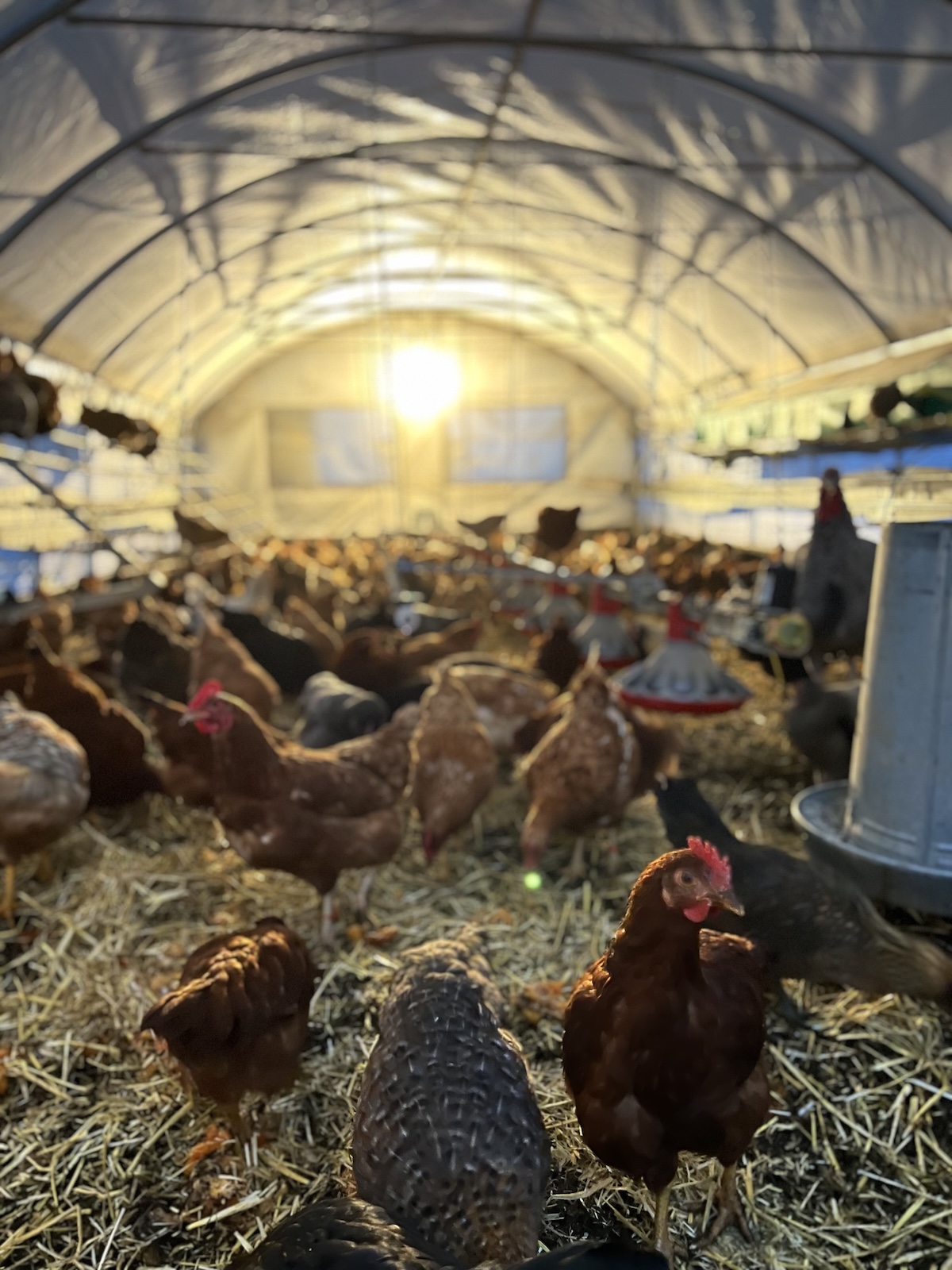
Moving autonomously, the Rovabarn provides fresh forage throughout the day. Automatic feeding and watering systems offer close to a week of storage capacity, while an intelligent ventilation system regulates temperature via a mobile app. Electrified skirting prevents predation while adapting to uneven terrain.
BC Organic Farmers Leading the Way
At Fresh Valley Farms in Armstrong, early adopter Steve Meggait saw the Rovabarn as a way to reduce soil compaction, improve pasture health, and cut down on poultry labour demands. Funding through the BC Climate Action Fund’s Beneficial Management Practices (BMP) program and the Shuswap Watershed Council covered about half of the $40,000 investment.
The Rovabarn became an integral part of Fresh Valley’s rotational grazing plan, moving three feet per hour across a 15-acre hayfield. Unlike previous mobile coops that left patchy fertility, this system distributes manure evenly, improving pasture quality. “Now I’m seeing a 30-foot-wide swath of evenly fertilized, healthy pasture wherever the Rovabarn has been,” says Steve. “The chickens are also more engaged—they chase insects and graze more actively when they hear the warning beeps before each move.”
However, temperature control has been a challenge, particularly in hot weather. While the app sends alerts when temperatures rise, the roll-up sides were unreliable, forcing Steve to manually operate misters and fans to keep birds cool. Electrical breakdowns in the first season also required frequent repairs, making mechanical troubleshooting a necessity.
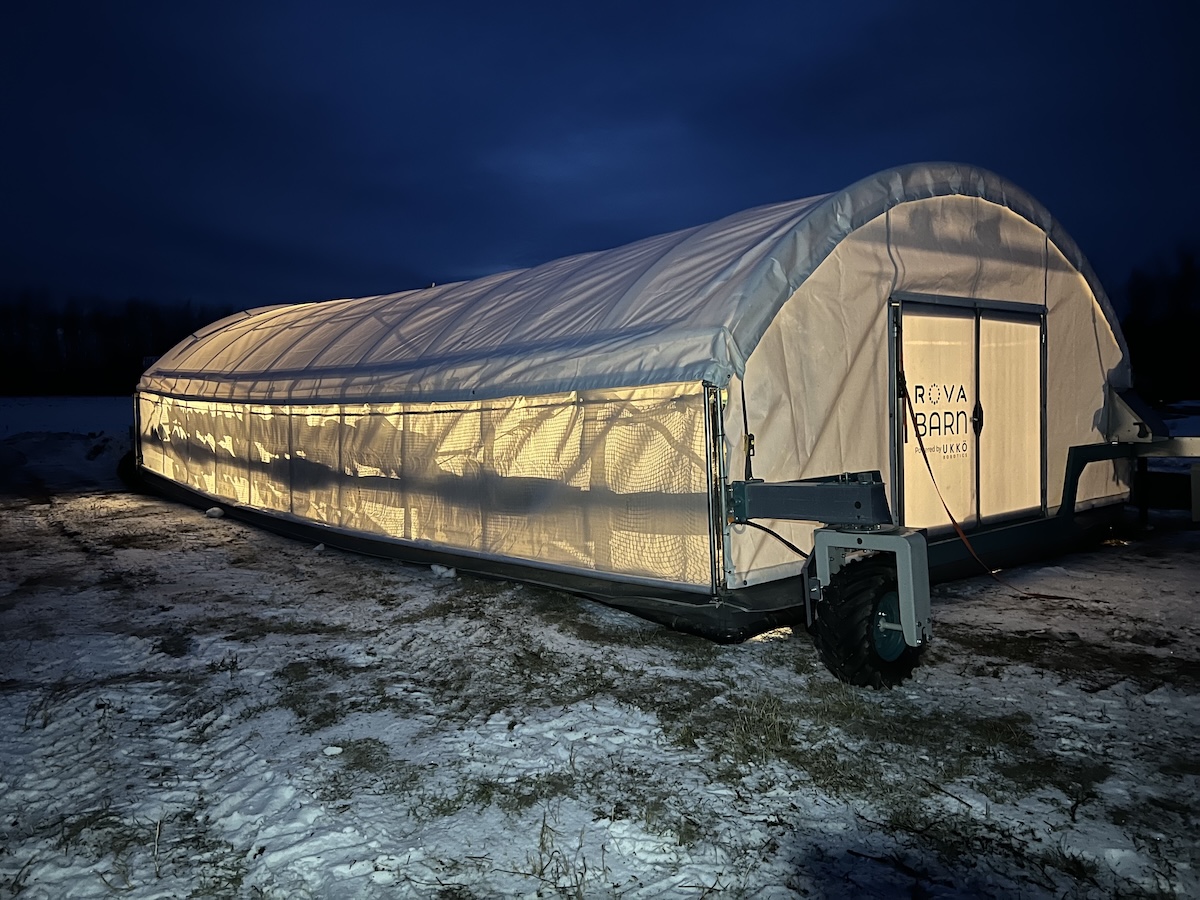
At Whiskey Creek Ranch in Rose Prairie, Michelle Schaeffer adopted the Rovabarn for her year-round laying hen operation, attracted to its Canadian-made design. Managing layers in extreme winter conditions was a concern, but Michelle felt confident in handling challenges after consulting with Ukkö founder Daniel Badiou. Like Steve, she was able to secure partial funding—this time through the BC Hydro Site C Agricultural Compensation Fund.
Whiskey Creek Ranch has yet to have the Rovabarn available for a full grazing season, but is appreciating the Rovabarn’s autonomy, bulk food and water storage, and automated notifications, which simplify management. However, she encountered issues with the roll-away nesting boxes, which frequently needed adjustment to respond to varied terrain, and water nipples that leaked in freezing weather, creating ice buildup and humidity concerns.
Technical Support & Innovations
Both Steve and Michelle emphasize that while Ukkö Robotics is highly responsive, farmers should expect to troubleshoot and handle some repairs themselves. Daniel often resolves software issues remotely, and parts are shipped quickly, but hands-on mechanical skills remain essential.
Last year, Steve and I visited Ukkö’s manufacturing facility in Manitoba to learn more about their process. Ukkö had already incorporated farmer feedback into their new ‘S’ model, a streamlined version of the Rovabarn which is more modular, making it easier to transport and assemble on-site with easier maintenance. Enhanced structural integrity will enable it to withstand more extreme weather conditions and heavy use over time. The new design reduces maintenance needs and long-term costs. Software updates enable more frequent livestock moves, customizable LED lighting schedules, and improved cooling with optimized misting and ventilation. The roll-up sidewalls are now easier to replace and repair, ensuring greater durability.
Daniel explains: “We believe in continuous improvement. Farmers like Steve and Michelle have given us invaluable feedback, and we’ve made changes to ensure long-term durability and ease of maintenance.”
The Future of Pastured Poultry & Agri-Tech
Ukkö is already successfully raising sheep and pigs using the Rovabarn on their pilot farm and seeing similar benefits in terms of animal and pasture health. They are also developing an improved mobile app that will track data, push notifications, and potentially monitor soil carbon sequestration, which could provide valuable insights into pasture health.
As consumer demand for pasture-raised poultry grows, the Rovabarn offers an exciting opportunity for small-scale commercial growers to reap the many benefits of rotationally grazing poultry while mitigating the increased labour needs, improving biosecurity, and reducing disease risks like Avian Influenza. But current supply management regulations make it very difficult for operations like Steve’s and Michelle’s to achieve economies of scale. Without policy shifts or practical quota options for pastured poultry, innovations like the Rovabarn will remain underutilized in Canada.
Steve sees a lot of potential for the future if these barriers could be removed. “When chickens are managed well, they can add significant value to a pasture system while also commanding a premium price,” he says. “If we can overcome the limitations of the supply management system, I could see us raising 10,000 birds a year with this technology.”
Julia Smith farms entirely off-grid near Merritt, BC where she owns and operates Blue Sky Ranch. She is Executive Director of the Small-Scale Meat Producers Association, working to strengthen and expand opportunities for small-scale meat producers across BC.
Julia’s commitment to policy and regulatory work stems from her drive to enhance the stability and growth of the small-scale meat sector and its vital role in regional food security.
This project was funded in part by Agriculture and Agri-Food Canada through the BC Climate Agri-Solutions Fund delivered by the Investment Agriculture Foundation of BC.
Featured image: Rovabarn lit from within at Whiskey Creek Ranch. Credit: Michelle Schaeffer.