Tristan Banwell
What is a regenerative farm? Perhaps it is easiest to contrast the opposite—a degenerative farm; agricultural practices that degrade the land. As we travel around our own province, we can see many farms where the farmer has taken too much without giving anything back. We commonly see farming methods where the whole focus is on maximizing production. As the natural fertility of the land has been mined, eroded away by wind and water, consumed by tillage and export of nutrients, increasing amounts of synthetic inputs are required to maintain productivity, and those inputs damage the soil environment.
Agriculture does not have to be this way, as every organic producer knows! Regeneration is the way that nature and ecosystems function. When there is a disturbance, life moves back in and toward a balance until the next disturbance.
Regenerative agriculture is defined and described in many different ways. A fascinating 2020 journal article looked into definitions and descriptions of regenerative agriculture, both in research papers and directly from producers. They noted that these definitions are based on processes, outcomes, or combinations of both1.
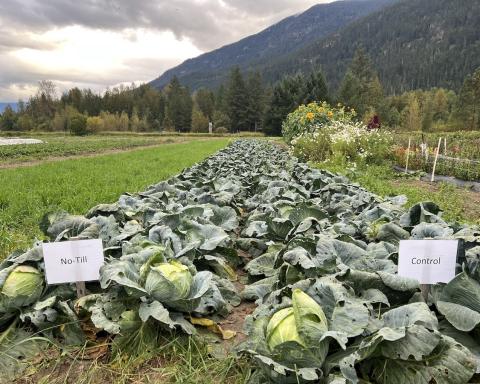
The most frequently mentioned processes were reducing or eliminating tillage, the integration of livestock, the use of cover crops, reduction of external inputs and use of on-farm inputs, and reduction of synthetic fertilizers or pesticides.
The most frequently mentioned outcomes were improvements to soil health, sequestration of carbon, increased biodiversity, improved water resources, and supporting the social and/or economic well-being of communities.
Principles of Regenerative Agriculture
From an assessment of many organizations promoting regenerative agriculture, we can get down to some basic principles that many seem to agree on. These principles are rooted in agroecology. This is the understanding that a farm is a part of the greater environment, that we are living and working in an ecosystem that we manage for production, and that our farming practices are linked to natural processes that derive their resilience and productivity from diversity.
Regenerative agriculture asks you to understand your context and work within that on minimizing disturbance, keeping living roots in the ground, keeping the soil covered, utilizing biological and non farm sources of fertility, and enhancing biodiversity within the crop systems as well as further afield, which in theory, will provide ecosystem services to your farm.
This approach is not unlike the four principles of organic:
- Principle of Health: Organic agriculture should sustain and enhance the health of soil, plant, animal, human, and planet as one and indivisible.
- Principle of Ecology: Organic agriculture should be based on living ecological systems and cycles, work with them, emulate them, and help sustain them.
- Principle of Fairness: Organic agriculture should build on relationships that ensure fairness with regard to the common environment and life opportunities.
- Principle of Care: Organic agriculture should be managed in a precautionary and responsible manner to protect the health and well-being of current and future generations and the environment.
These organic principles describe the goals of practicing agriculture in a way that enhances, rather than degrades and exploits, ecosystems—including human ones. Soil health and carbon sequestration are often cited as top desired outcomes from the adoption of regenerative agriculture processes. Organic farmers nourish soil naturally by using quality compost, cover crops, mulches, integrated crop and livestock production, and other considered practices. Healthy soil supports optimum plant growth, has increased capacity to retain water and intercept runoff, resist erosion, filter out nutrients and pathogens, and suppress pests, weeds, and diseases. We also know that healthy soils sequester carbon, helping to mitigate climate change.
The History of Regenerative Agriculture in BC and Beyond
There is increasing interest in regenerative agriculture of late, but the ideas behind it are not new. Looking at the history of food production practices worldwide can lead to a better understanding of the regenerative movement.
Indigenous food production practices around the world are diverse and sophisticated, and are specific to the place and the tools available. There are countless examples of peoples living rich and abundant lives with food systems that sustained their cultures for thousands of years in the same place. Chinampas, terra prieta, sea gardens, the creation and maintenance of prairies and food forests, cultural burning practices, and more—there is a lot to be learned from traditional foodways.
The history of organic agriculture traces back to Indian Vedic agriculture and peasant farming knowledge that are still used throughout the world today. Abraham Lincoln was talking about sustainable agriculture in 1859. A 1911 book called Farmers of Forty Centuries by F.H. King documents the agricultural practices in use throughout Asia in the early 1900s that enabled the productive use of those lands for upwards of 4,000 years, and contrasts them with the practices developing in the United States at that time.
Organic pioneer Robert Rodale promoted regenerative agriculture throughout the 1980s as a useful term for broadening the positive impacts of low input, ecological farming methods beyond strict organic production. Here in BC, the BC Association for Regenerative Agriculture was founded and began certifying farms in 1988, and it is still in operation today.
The 2020 study mentioned above cites references to regenerative agriculture in a research journal article as early as 1982, and there was a flurry of interest in regenerative agriculture through the ’80s. They show a steady increase in the use of the term in scholarly articles over time, with a surge beginning in 2015.
That surge in interest is what we are experiencing today, and new techniques and technologies are popping up to support regenerative farming. But, we need to look back and remember that there is a long history of alternative methods of production and farmer-led innovations that show promise and success in all bioregions and all commodities.
Initiatives
As interest in regenerative agriculture rises again, there are many organizations promoting, defining and certifying regenerative agriculture. These include very high-bar certifications involving on-farm audits, monitoring and verification of soil health, animal welfare and worker wellbeing. And unfortunately, they range down through commodity production self-assessments and even some claims with no public-facing standard that, in some cases, may be nothing more than a public trust campaign meant to sign off on current practices without requiring any real change or improvement.
Some of the largest companies in the world are getting behind the idea of regenerative agriculture, and this understandably makes a lot of organic and grassroots champions nervous, because some would say that organic is regenerative by nature. Despite the range in the validity and meaning of regenerative, the attention on issues of agriculture and the environment is overall positive. If companies are promoting this, it is because consumers are asking about it, and that represents an opportunity for change. These changes may not be as fast as we’d like, but changes are coming at all scales.
Regenerative Standards and Certifications
Currently, anyone can call themselves regenerative, creating both opportunities and challenges. Organic certification has clear, prescriptive standards and mandatory labelling requirements, providing transparency and trust for consumers. However, for organic producers, certification is not simply about prohibited practices—it fundamentally aims to enhance soil health through ecological approaches.
Emerging certifications, such as Regenerative Organic Certification and A Greener World’s regenerative standards, combine rigorous standards around soil health, animal welfare, and social fairness. Meanwhile, groups like Regeneration Canada advocate broadly for regenerative principles. On the commodity side, companies like General Mills, Ocean Spray, McCain’s, Cargill, and Kellogg’s use self-assessment frameworks to align with consumer demand. The Global Farmers’ Consultation on Regenerative Food Systems, held at the World Farmers’ Organization Annual Meeting in South Africa (WFOGA2023), highlights the global momentum behind regenerative approaches.
Divisions in Regenerative
With all these different voices in the regenerative conversation, you can imagine that there are some divisions. These include viewing regenerative agriculture as either a panacea or merely hype, making extreme claims versus relying on long-term science, activism contrasted with agronomy, and debates between practice-based approaches versus those based on monitoring and measurable outcomes.
There’s tension around measurement itself—attempting to quantify and box-in natural processes that can be inherently complex and dynamic. Many organizations claim to offer definitive tools for assessment, while in reality, these tools are often still in development. Further, there’s ongoing debate around regenerative versus organic practices, whether agriculture should aim for maximum production or seek optimum sustainable yields, and whether to focus support on innovators and early adopters or to bring along the late majority and laggards. Finally, there’s a philosophical divide, sometimes characterized as “Wizards versus Prophets”—techno-optimists believing technology can solve our agricultural challenges versus those advocating for simpler, more ecologically-aligned practices.
What Does All This Mean on Your Farm?
Most farmers want to improve the health of the land. Many are interested in the concepts of regenerative agriculture, and many would benefit from implementing some of these ideas. However, what does our current paradigm and economic model value? The prevailing system encourages farmers to maximize yield and decrease cost. This trajectory can lead to degradation or degeneration of farm lands. This model generally misses the value of all the other ecosystem services and benefits to human and planetary health that a regenerative farm can produce. It also allows us to pass along costs as negative externalities which must be borne by ecosystems, society, and individuals.
Given the many different interpretations of regenerative agriculture, it is important to give some consideration to what the term means to you. Every producer is doing something good, and has made positive changes in their operation! And conversely, every single one of us can take action to improve and do something better.
After you have an idea of what regeneration means to you, you may find it easier to implement it on your farm by focusing on your goals rather than specific practices or certifications. When you see someone else working toward the same goals as you—whether that is climate resilience, reduced input costs, or improved soil health—work together with the knowledge, experiences and resources you bring to the conversation. Focusing on our specific production practices, and looking at our methods in good/bad binaries, such as organic vs conventional, has caused unneeded divisions and stopped a lot of useful listening and learning that we all need right now.
Farmers are risk averse in terms of making change. There are enough other risks without mucking around changing things, right? I joke that everyone is farming using the best ideas from their grandparents’ generation.
The other one we hear all the time is “That would never work for me because…” Seeing a technique implemented successfully by another farmer in your region is a huge boost towards trying it yourself. This is why I believe that field days, pasture walks, and other on-farm events are the best way to spread information and increase adoption of innovations. And I know from experience—sometimes the neighbour has to see that practice working for quite a while before they are willing to give it a try.
So have those conversations, get out of your box, ask folks what they are doing that works and what doesn’t. When the farmer next door sees change just over the fenceline, they might just come around.
Tristan Banwell manages Spray Creek Ranch, a diversified organic livestock operation in St’at’imc Territory near Lillooet, BC. The ranch has been BC Certified Organic since 2017, raising cattle, sheep, pigs, and poultry on pasture and operating an on-farm abattoir, direct-marketing meats to local communities. spraycreek.ca
References
1 Newton, P. et al. (2020) What Is Regenerative Agriculture? A Review of Scholar and Practitioner Definitions Based on Processes and Outcomes. Frontiers in Sustainable Food Systems, volume 4. doi.org/10.3389/fsufs.2020.577723
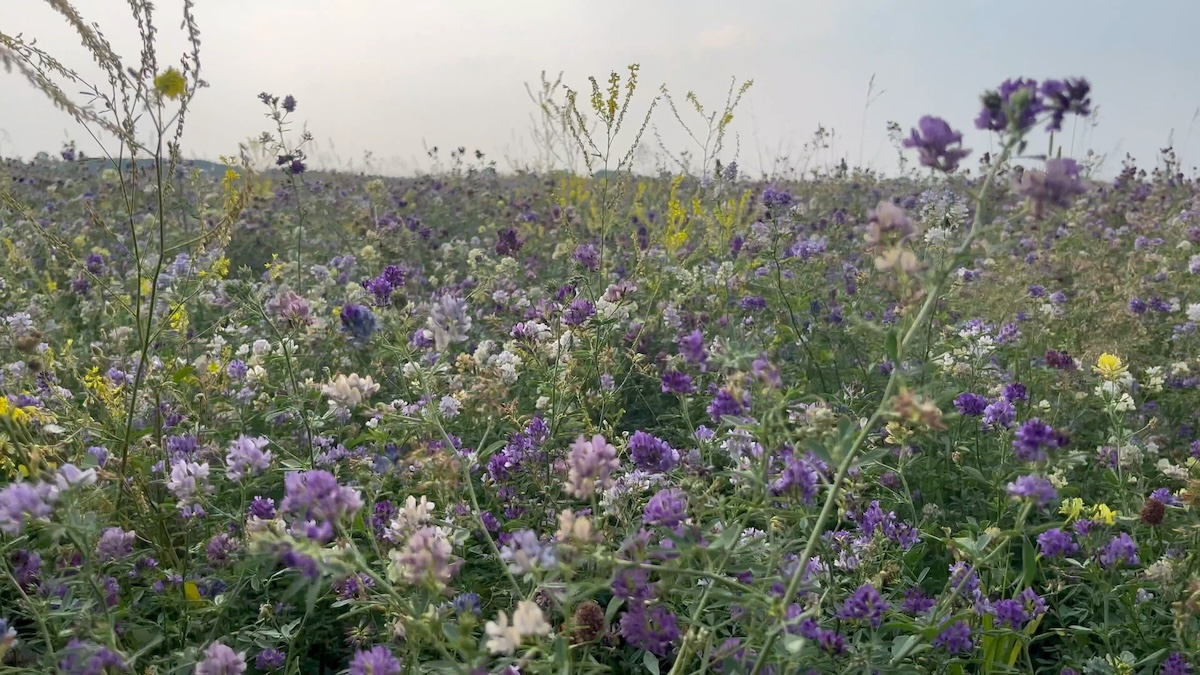
Featured image: Alfalfa in bloom. Credit: Organic BC.