
David Hanam and Kelly Wang
According to Agriculture and Agri-Food Canada, potatoes are the fifth largest primary agriculture crop in Canada. In 2023, approximately 5.8 metric tonnes of potatoes were produced across Canada, with British Columbia contributing to approximately 2%1.
Since 1988, E.S. Cropconsult Ltd. has provided monitoring services to various potato growers in BC’s Lower Mainland region. We utilize integrated pest management (IPM) to ensure our growers are up to date with the latest pest news for their cropping systems. IPM uses biologically informed decision-making processes to prevent or manage pests while minimizing pesticide use and maintaining optimal crop yields.
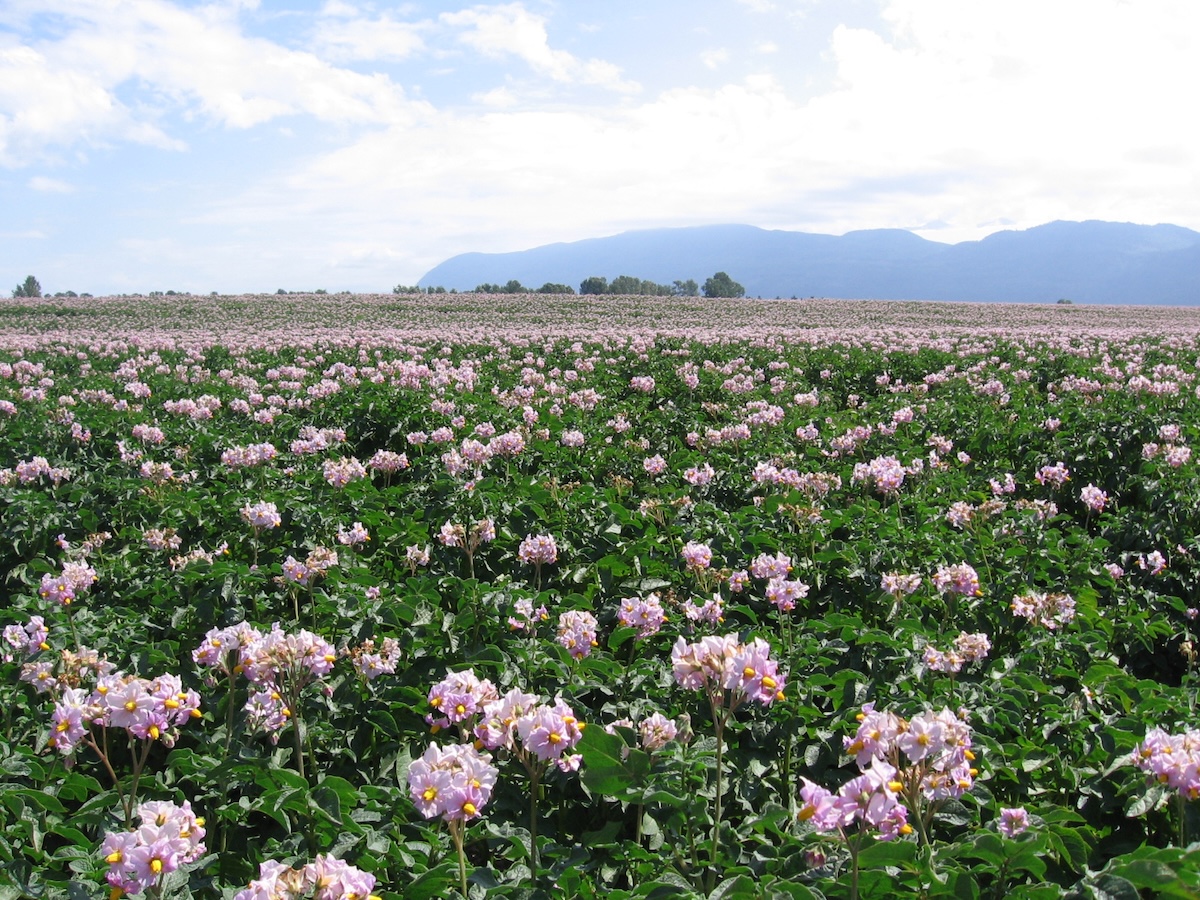
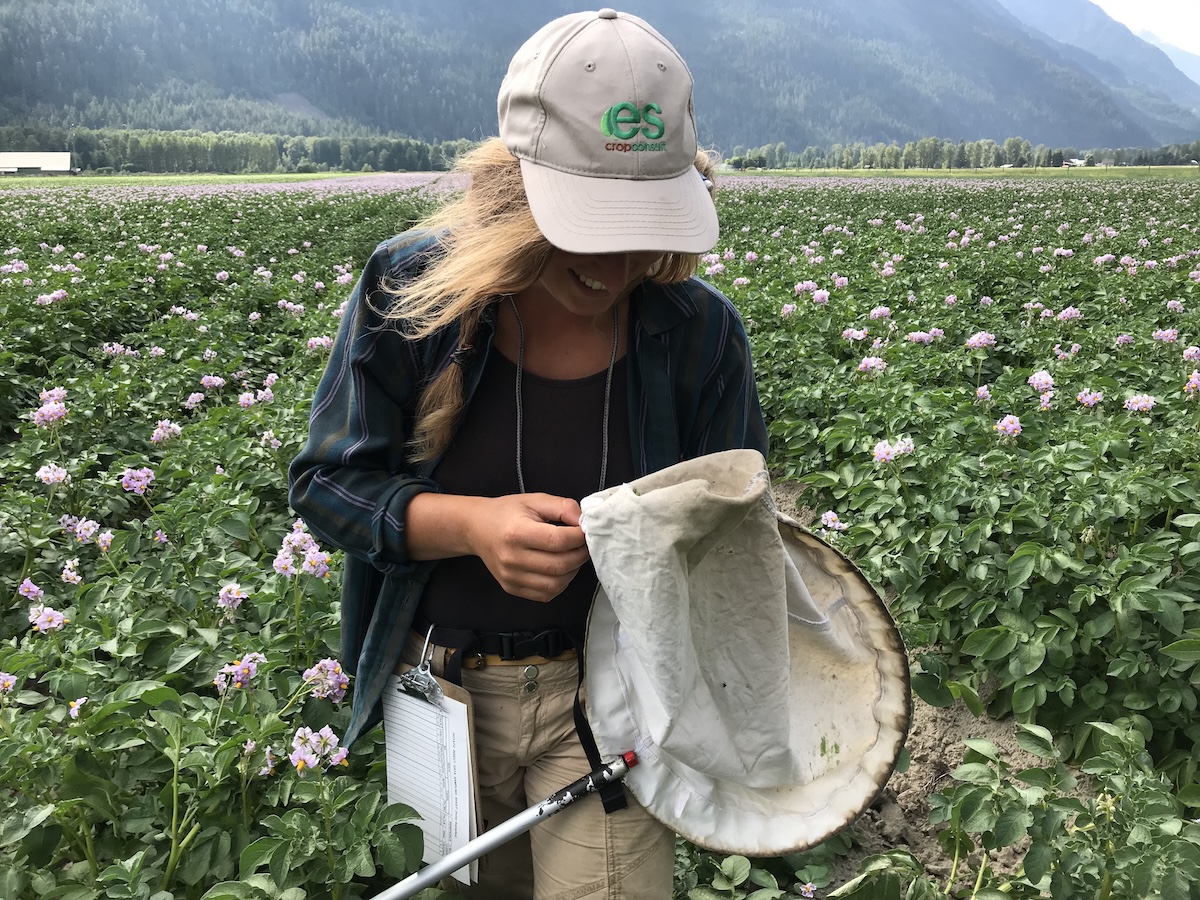
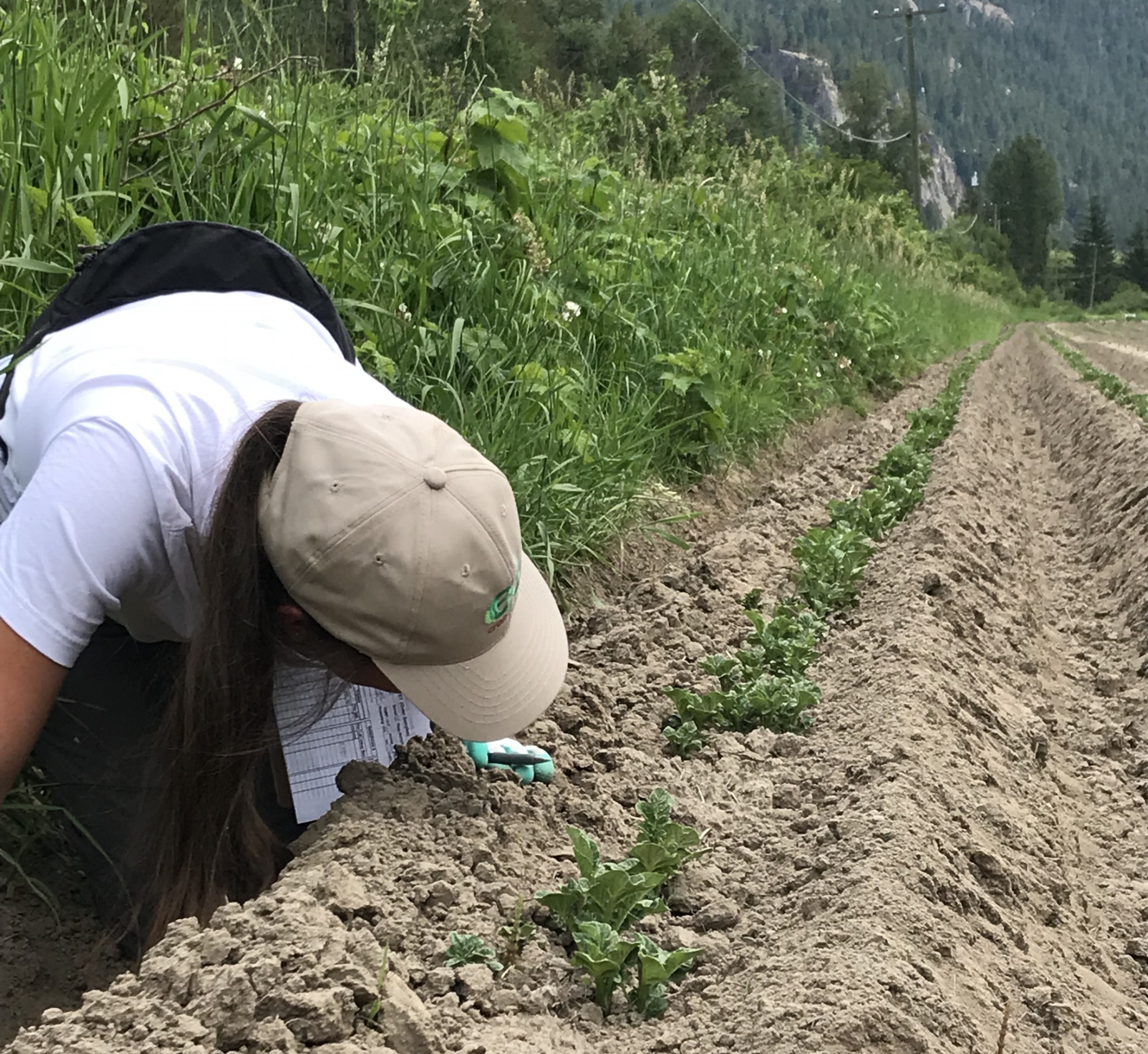
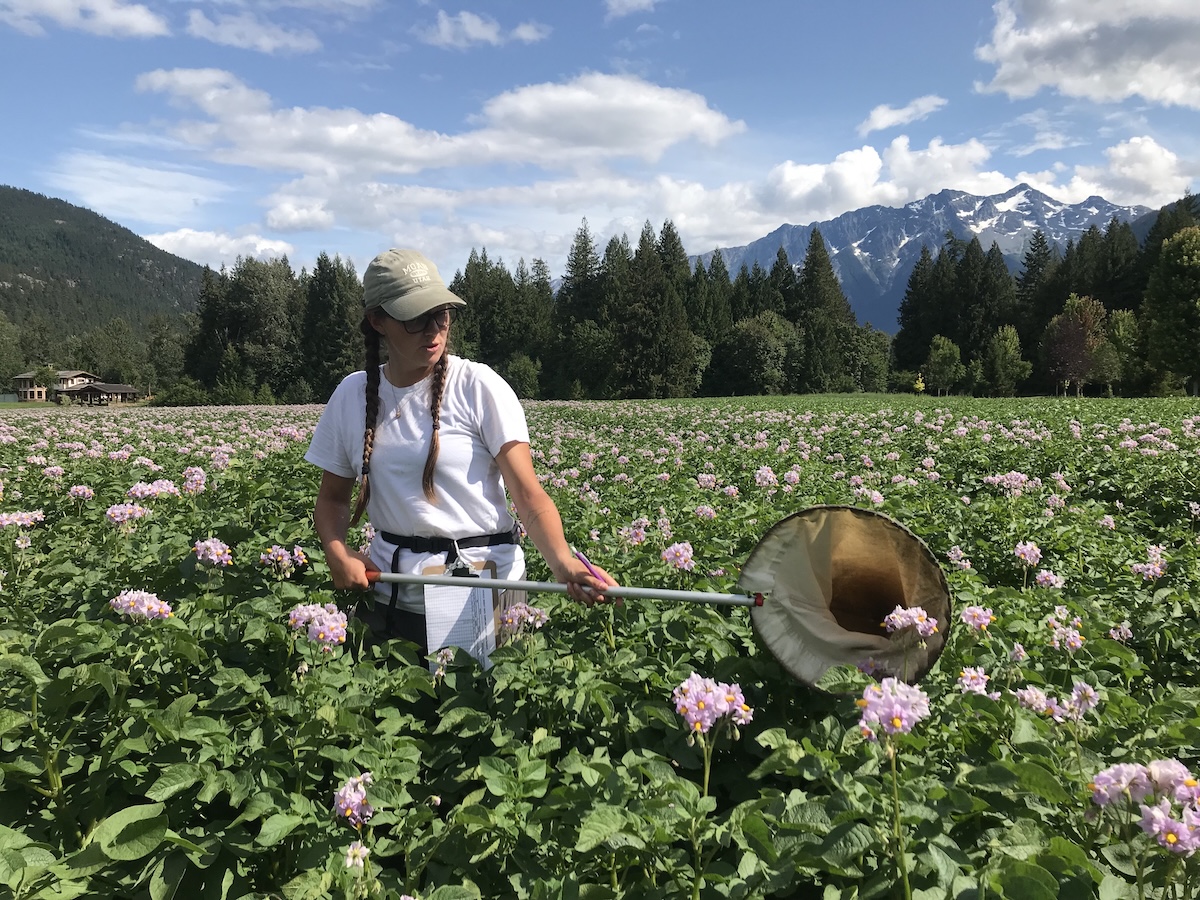
Early pest detection from weekly monitoring, often called scouting, is key to effective management. In organic production, the timing of management is crucial to prevent pest development due to the limited use of chemical controls. We monitor fields by visual inspecting for pests when plants are small (“crawling”). When plants grow taller as the season progresses, potato fields are swept for pests (“sweep-netting”).
Pest levels are recorded, and data are analyzed to determine if management is necessary to prevent reaching the point where the monetary crop loss is more than the cost to manage the pest (action or economic threshold). Weekly monitoring also allows for management actions to be followed up on to determine if they were effective or if further management of the pest will be necessary. Late blight of potato, Phytophthora infestans, and tuber flea beetles (TFBs), Epitrix tuberis, are the top pests of concern in Fraser Valley potatoes due to the risk they pose for crop damage and losses.
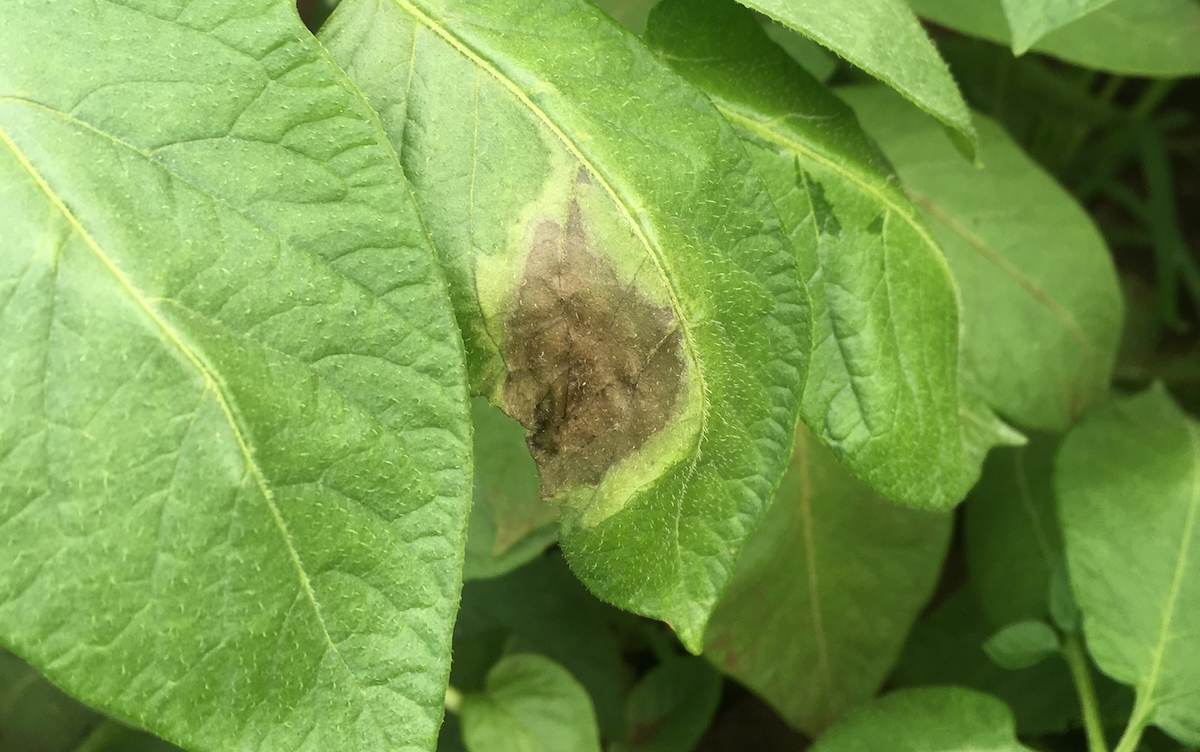
Late blight is most prevalent in moderate temperatures and when free moisture is present2. Foliar symptoms include circular or irregularly shaped water-soaked lesions that turn dark brown and are usually surrounded by a light green halo. When conditions are humid, a white fungal-like growth (mycelium) may be present in the lesions on the underside of the leaf. Brown to black lesions may also be present on the stems and petioles. Tubers can become infected when spores are washed into the soil from infected foliage, or if tubers are dug while infected vines still have active lesions. Maintaining a consistent fungicide spray interval can help to protect plants against late blight.
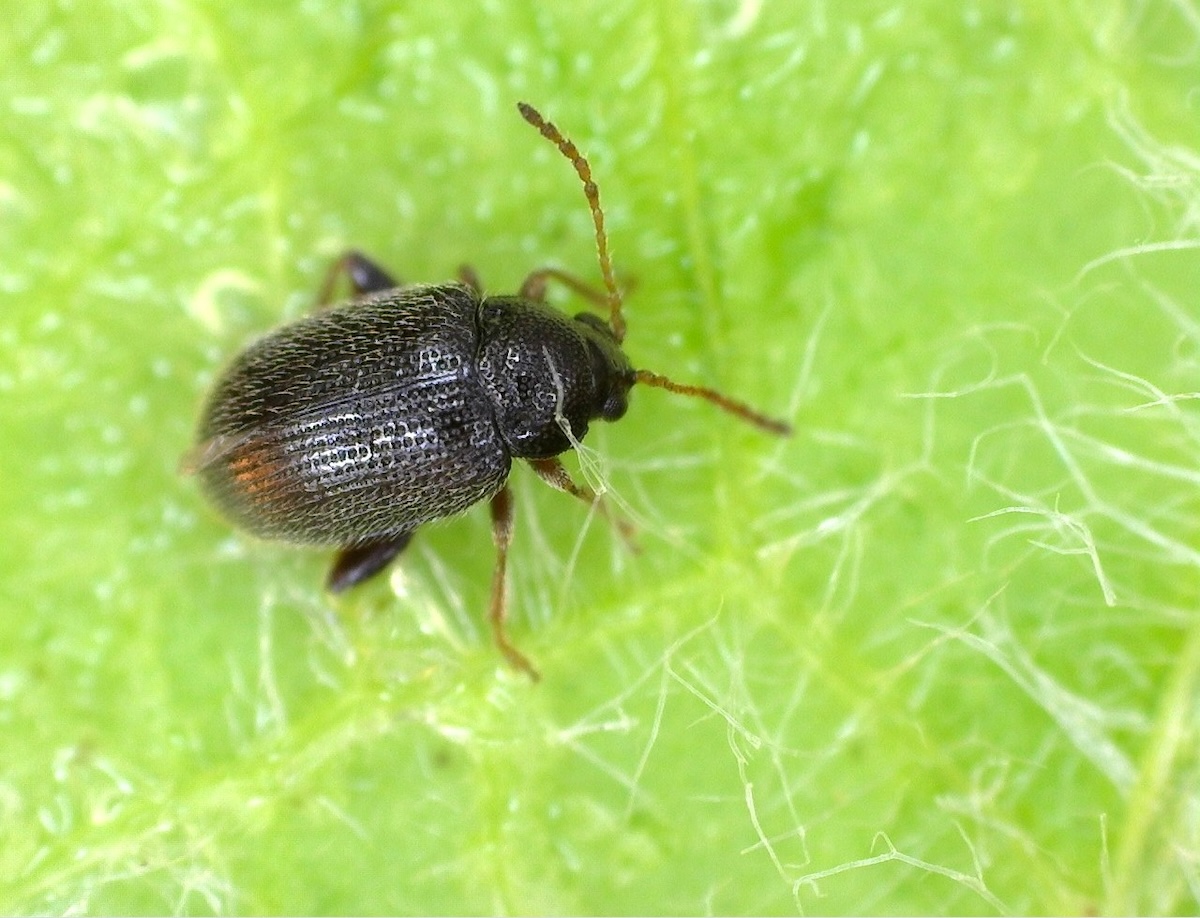
Tuber flea beetles (TFBs) are insect pests that have two generations per year with three adult peaks3. Adults can be identified by their enlarged jumping legs, reddish antennae and legs, dull colour, and striations along their backs. Adults will feed on foliage causing small circular holes (“shot holes”) and when disturbed will quickly jump. The larvae are whitish and slender, growing up to five millimetres long and have a brown head. The larvae will feed on tubers, which can reduce potato marketability and create an introduction point for disease.
The first generation begins in mid-May, when overwintering adult TFBs emerge, before mating and laying eggs in the soil. Timely management of these overwintering adults can help reduce the population of subsequent generations. From June to July, larvae hatch and feed on roots and underground stems for three to four weeks before pupating. In mid to late July, these pupae emerge as the summer-generation adults that again mate and lay eggs, which hatch in August. Management of the summer-generation adults can help to reduce tuber damage done by larvae, since they have the potential to cause the highest damage to tubers. The larvae develop into adults which will overwinter until next spring.
Due to the limited use of chemical controls for organic growers, the use of alternative management practices is important. Cultural management practices create less suitable environments through preventative actions. These include removing pest host plants, such as Solanaceous weeds and volunteer potatoes, and using a crop rotation program to prevent pest populations from building. Strips of potatoes (“headlands”) can be planted beside the main crop to act as a buffer to minimize the movement of pests further into the field. Creating habitats to promote beneficial insect populations can aid in reducing pest levels through predation.
To learn more about IPM and E.S. Cropconsult Ltd, please visit: escrop.com
David Hanam has a B.Sc. in Environmental Sciences from the University of British Columbia. He is currently the IPM Consultant for organic potatoes at E.S. Cropconsult Ltd.
Kelly Wang has a B.Sc. in Environmental Sciences and M.Sc. in Plant Science from the University of British Columbia. She is currently the Research Project Lead at E.S. Cropconsult Ltd.
References
1 Agriculture and Agri-food Canada. 2024. Potato Market Information Review 2023-2024.
agriculture.canada.ca/sites/default/files/docu ments/2024-12/Potato_MI_Review_2023_2024_EN.pdf
2 Ontario Ministry of Agriculture, Food and Rural Affairs. 2009. Late blight.
cropipm.omafra.gov.on.ca/en-ca/crops/potatoes/diseases/804fa9d9-c964-4fc1-ab30-153137c3c6e1
3 E.S. Cropconsult. 2021.Tuber Flea Beetle – A BC Small-Scale Farmer’s IPM Guide. B.C. Climate Change Adaptation Program.
bcclimatechangeadaptation.ca/library/tuber-flea-beetle-ipm-guide
Featured image: Crop scout inspecting net. Credit: E.S. Cropconsult Ltd.