BC Living Lab Sets Sights on Increasing Forage Quality
Stacey Santos
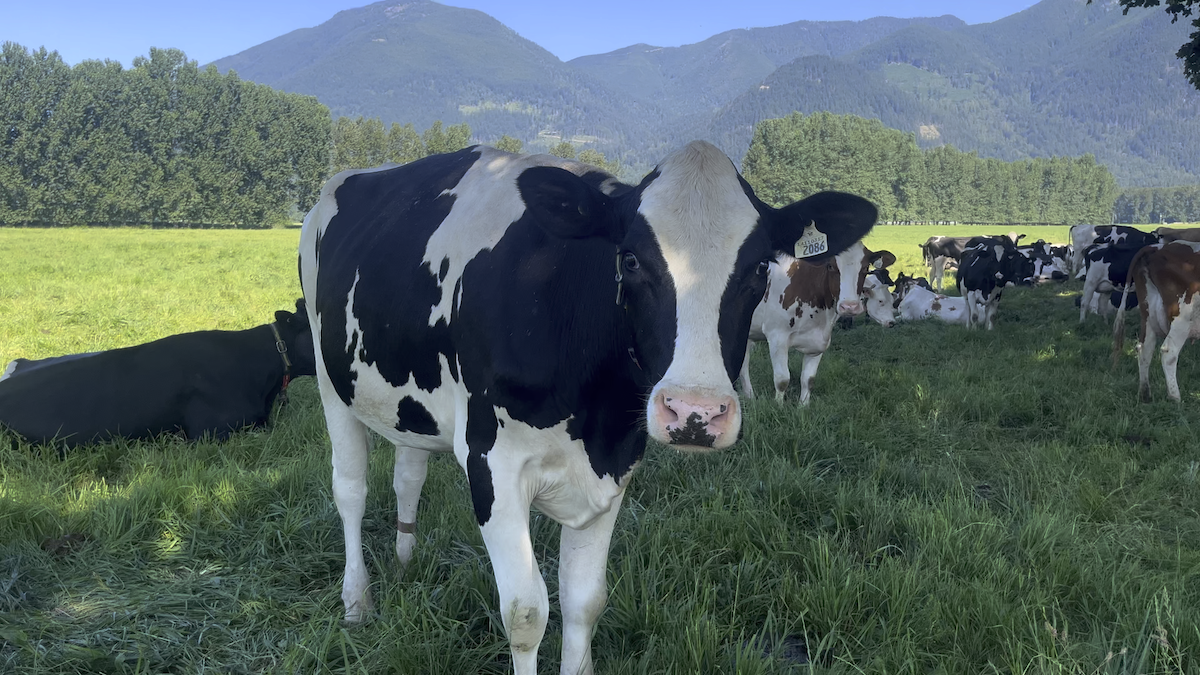
Nicomen Farm sprawls over 350 acres on Nicomen Island, nestled between the farming community of Deroche, BC and the fertile Fraser River. Ripe for agriculture, this region grows diverse commodities, including Nicomen Farm’s three main streams of revenue: producing grass-fed milk from 120 cows in mixed herds, harvesting silage and hay, and also raising additional animals and replacement cows for other dairies.
But what makes Nicomen Farm especially fertile is its underlying philosophy and its abundance of land. Since 1955, it has operated on the principle of feeding their cows predominantly through intensive rotational grazing, a practice that improves plant, animal, and soil health. Young stock are all grazed from four months old, and bred heifers and dry cows are in the back 40 on rough pasture.
Because Nicomen Farm has fields that are both grazed and cropped when opportunity allows, the location provides a great—and rare—opportunity to look at the incorporation of legumes within those two systems.
What is BC Living Lab?
BC Living Lab is a producer-centric innovation project focused on climate change mitigation that benefits the environment while meeting farmers’ needs. It brings together farmers, scientists and other partners to co-develop and test beneficial management practices that have the potential to increase carbon sequestration, mitigate greenhouse gas emissions, and increase producer adoption.
BC Living Lab is led by the Investment Agriculture Foundation of BC (IAF) and is part of a nationwide network of living labs under Agriculture and Agri-Food Canada’s Agricultural Climate Solutions – Living Labs program. To learn more, visit: bclivinglab.ca
BC Living Lab at Nicomen Farm
Mike Witt is the project agrologist for the dairy BC Living Lab activities, which focus on Beneficial Management Practices including low emissions manure spreading and alternative methods of manure handling, relay cropping, and, specific to Nicomen Farm, incorporating legumes into perennial forage stands to help with nitrogen balancing.
“Legumes can fix their own nitrogen, so there are two benefits to this, both from a forage quality perspective—if we can increase the protein or the quality of the protein within the forage—or else there could be a yield benefit,” Mike explains. “Additionally, if we can reduce the outside nitrogen inputs onto the farm, we can make the farm more efficient.”
Even before partnering with BC Living Lab, Nicomen Farm owner John Kerkhoven had already experimented with including legumes in pasture and forage to both benefit the soil and increase milk yield. He had incorporated mostly clovers over the past few years, and after the project kicked off about a year ago, he started to include birdsfoot trefoil in the grass mixes, both for overseeding and for new pasture.
“It’s really a win-win in many ways, and it’s also good for soil health,” John says, echoing Mike’s hopes for the project.”
“We attempt to be a low input farm,” John adds. “The hope is that we will be able to reduce fertilizer cost. The secondary benefit of course is greenhouse gas emissions—if we are able to use less chemical fertilizers, that will lead to a smaller greenhouse gas footprint.”
Why Legumes?
Incorporating legumes is of interest to BC Living Lab because they’re nitrogen fixers, meaning they’re able to take nitrogen from the atmosphere as long as they have a symbiotic relationship with the correct bacteria on the roots. This symbiosis leads to the formation of nitrogen-fixing nodules, and the nitrogen is then used by that plant, and can also transfer to some of the plants around it, regardless of their species.
In addition to the nitrogen fixing ability of the legumes, they’re also beneficial from a soil health standpoint. Introducing a new plant species group with different root architecture and different abilities to feed soil microbes as compared to the grass species allows for increased diversity in the stand, helping cycle nutrients and improve soil health and tilth over the long run.
As well, legumes in general can tolerate a wide range of conditions, which is why BC Living Lab chose trefoil for this location. Trefoil has a good bloat tolerance for grazing situations, can tolerate a wide range of pH, can persist in wetter soils (even flood situations), and has the ability to self-seed if it’s allowed to mature. And, the BC Living Lab provides access to some Canadian genetics, so trefoil that’s bred for local climatic conditions can be used.
The Trials
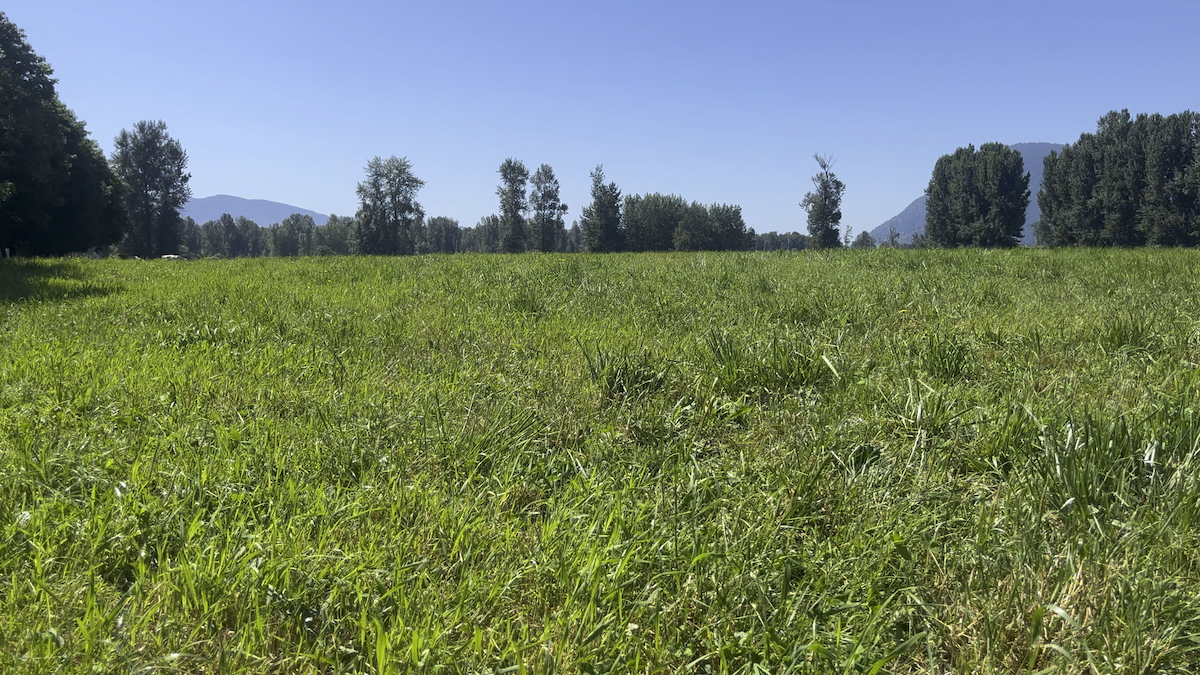
For the BC Living Lab project, the pastures at Nicomen Farm are seeded with only orchard grass in the control fields, and with a mix of orchard grass and birdsfoot trefoil in the test fields.
As far as results go at Nicomen Farm, researchers are working together with farmers and other project partners in measuring a wide range of attributes: soil testing for carbon, yields and forage quality, inputs and outputs from nutrients on the farm, and potential impacts on production and economics. Additionally, the project is examining any environmental benefits in terms of changes in emissions or environmental degradation due to residual nitrogen or other loss factors.
And while Nicomen Farm is rare in that it has plenty of land and practices rotational grazing, these results can be translated to any dairy farm that grows their own forage for their cows.
What’s Next?
On-farm projects like these can be challenging, whether it be because of drought, excess moisture at seeding times, or other unforeseen circumstances. At Nicomen Farm, researchers had a difficult time getting the field established the way they like around seeding windows and moisture conditions, so they don’t have all the results they expected at this point. But still, with two years left in the project, Mike hopes to see the trials roll out across more acres.
“While all the results of this project aren’t in yet, there’s a lot of optimism around it and its future potential for farms in BC,” Mike says. “I think that the practice of incorporating legumes into perennial stands could be applicable throughout the province.”
Stacey Santos is the Communications Manager for Organic BC. She lives, writes and gardens in the beautiful and traditional territories of the Lekwungen peoples, who are now known as the Esquimalt and Songhees Nations.
Funding for BC Living Lab has been provided by Agriculture and Agri-Food Canada (AAFC) through the Agricultural Climate Solutions (ACS) – Living Labs program. The publication of this article was made possible through AAFC’s ACS – On-Farm Climate Action Fund.
Featured image: Dairy cows enjoying the shade. Credit: Organic BC.