
The Miracle Place
Darcy Smith
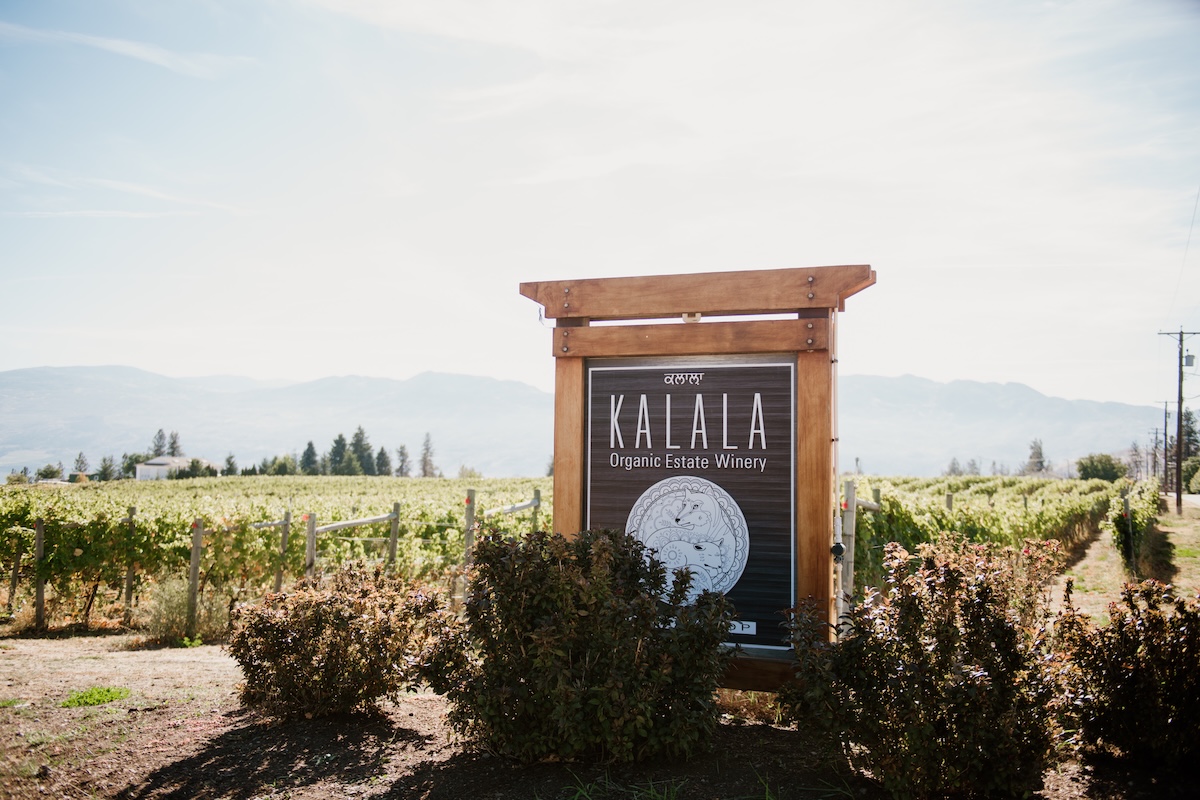
From one Kalala to another, Karnail Sidhu crossed continents and decades to bring Kalala Organic Estate Winery to life. The winery’s name honours the village in Punjab, India, where he was born. Kalala means “miracle place,” says Karnail. “My birthplace has a little legend about how it got its name. One morning, when a farmer came to check on his animals, he saw a wolf and lamb sitting together—a miracle, right?” The people decided to move the village there to capture the harmony of predator and prey coexisting peacefully. “In pursuit of this harmony,” Karnail says, “and to keep my heritage alive,” he chose the name Kalala for his winery.
Karnail grew up on a family farm in Punjab growing wheat, rice, and cotton, to name a few, before studying electrical engineering in school. When he moved to Canada in 1993, he “learned very quickly that they didn’t recognize foreign credentials, so I went back to my roots doing farming.” Karnail’s organic wine journey began at Summerhill Winery under the mentorship of Alan Marks, where he started working in the vineyard in 1996 and eventually became vineyard manager.
While growing grapes in the Okanagan is much different from farming in Punjab, Karnail didn’t struggle to adapt. “If you know how to grow one thing, you can learn to grow other things, if you’re willing to learn. That’s why my farming background helped me a lot here,” he says.
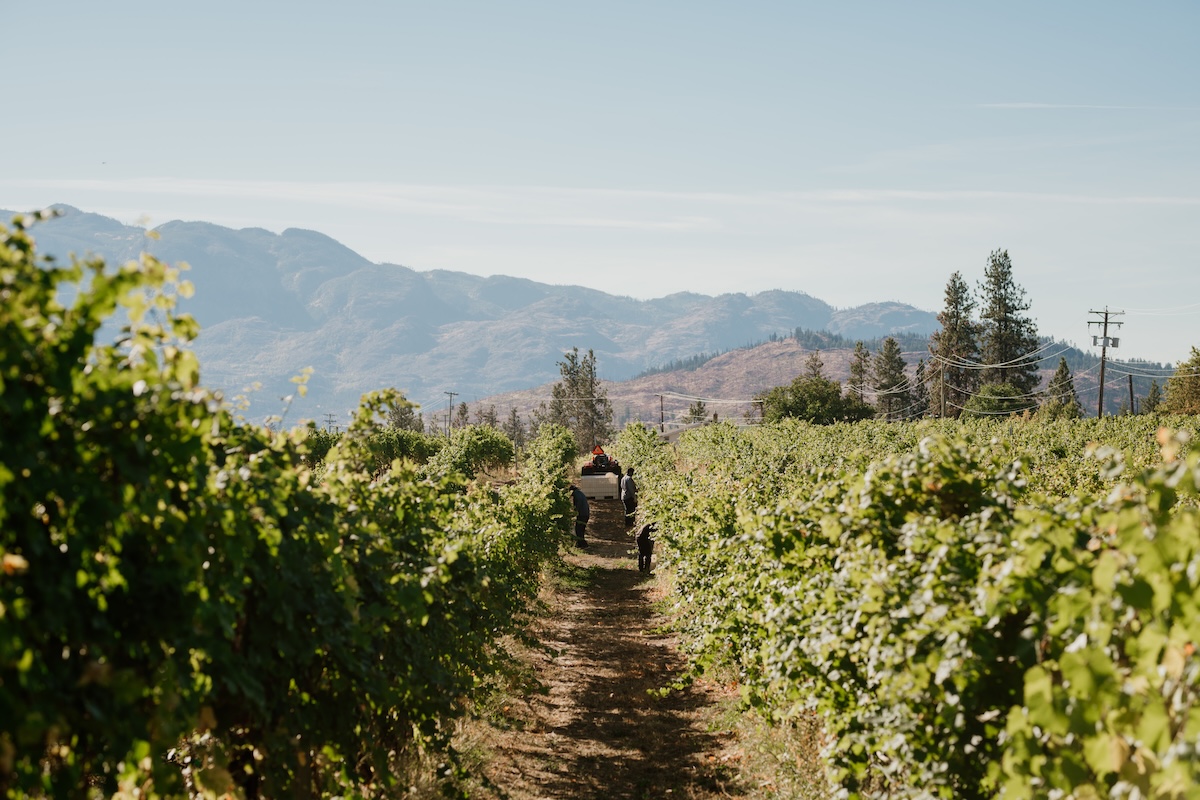
After a decade at Summerhill, Karnail was ready to pursue his dream. “I took over my first vineyard in 2001 and turned it organic—we have been organic ever since,” says Karnail. For him, “there’s no other way to do farming if you want to stay healthy.” Especially since farmers, and their families, often live on the farm, he affirms. “Being organic, you are also doing some good through your local community,” he says. “Pesticide spray can travel kilometers, and people might not even know they’re being affected.”
Today, Kalala Organic Estate Winery spans about 70 acres on the upper bench of West Kelowna, cultivating 20 grape varieties, along with apples. Karnail and his team farm six properties in West Bank, one in Oliver, and one in Peachland, with about half the land owned and half leased. All the wines are made using grapes they grow, produced at two facilities: the main Kalala winery and Little Straw Vineyards, which they purchased a few years ago and are transitioning to organic. In addition to wine, they make juice from their own apples and grapes and run a service called Mobile Juice Factory, which processes and packages juice for other farmers.
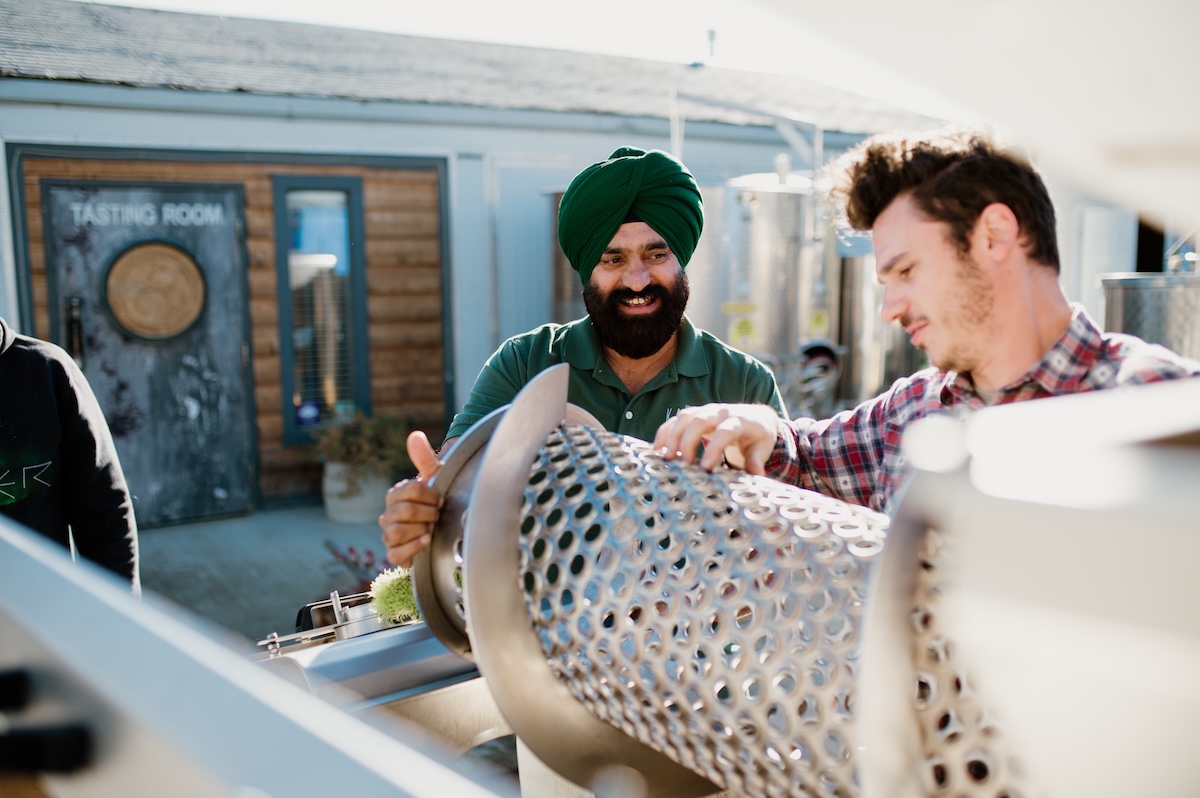
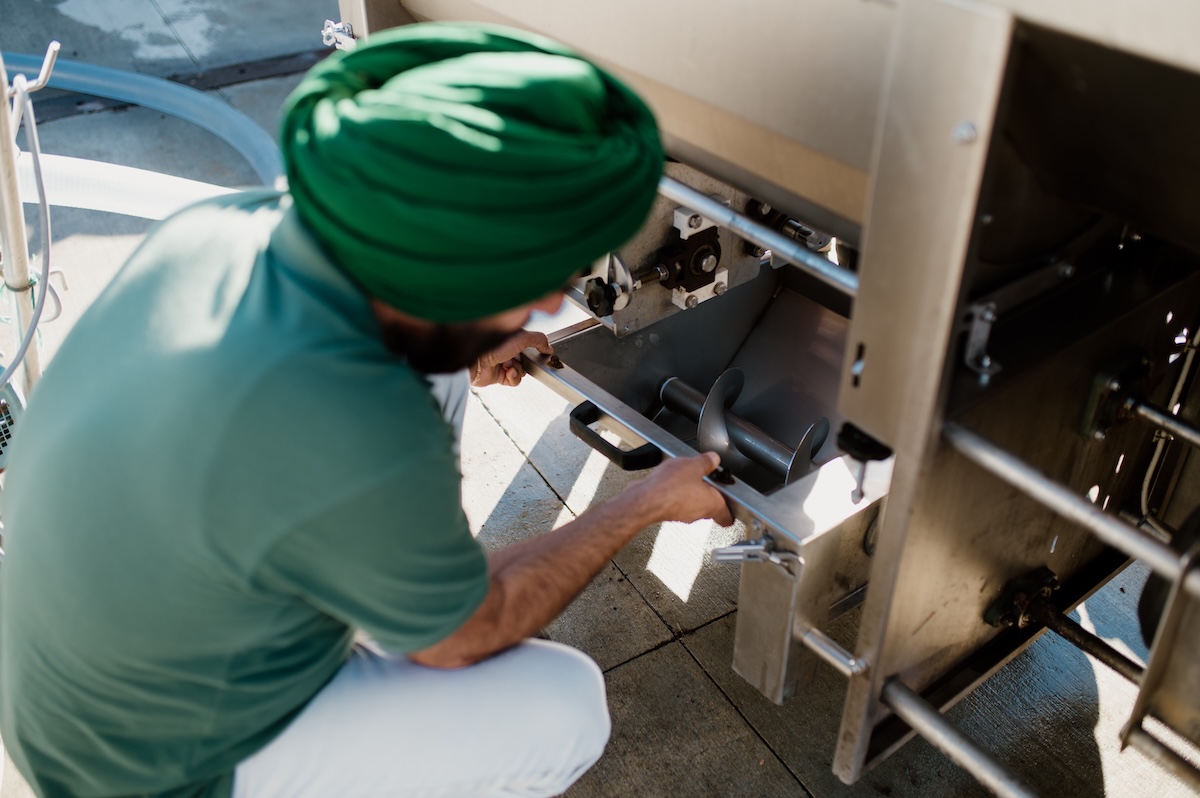
Karnail is a big fan of “simple wine making,” he says. “We don’t use any high-tech equipment.” Since much of the winemaking process takes place in winter, they ferment the wine outdoors, relying on nature to regulate temperatures. “We monitor the grapes, the tank’s surface area, and how much heat it loses. That’s a big part of my life.”
This might be where his engineering background proves an unexpected benefit. “One winemaker told me, ‘I want to make this wine but control the temperature.’ I asked him how much juice he had, did the math, and picked the right tank size to let the heat disperse naturally,” he says. “Otherwise, you need a tank, a jacket, and a cooling system.” Similarly, when they do cold stabilization, a method of bringing the temperature of wine down in order to keep tartaric acid crystals from forming, Karnail says “why not just put the wine outside in January, instead of using glycol?”
Karnail has done every job at the winery, “from growing grapes to bottling the wine and everything in between.” But the tasting room might just be his favourite place: “I love to meet people —I’m a very social person,” he says. “Every day in the tasting room is memorable. I enjoy seeing people love our products.”
That said, not every moment in the tasting room has been easy. “Building a winery as someone from a different ethnic background, especially in a field not typically associated with people like me, comes with challenges,” he admits. “Sometimes you do face prejudice because you look different.” He recalls a memorable exchange: “One person asked who made the wine. I said I did, and after tasting it, they said, ‘It’s better than I thought.’ What a compliment! I asked why they thought it wouldn’t taste good, though I already knew the answer. It wasn’t the first time, and it won’t be the last.”
Discrimination is a reality he acknowledges. “People who haven’t experienced it, will never understand it,” Karnail says, though he remains hopeful. “My take on that is people need to be educated about it. Discrimination comes from not knowing and fearing, and with fear comes discrimination. If you can get rid of first two, you will get rid of the last.”
Despite occasional difficulties, Kalala has been well-received, both in the wine industry and with customers. One of his proudest moments was Kalala winning the Chardonnay du Monde award in France: “We are just a small little winery, so to win that was incredible!” And what does one have to do to beat out all those storied French wines? “You have to grow good grapes,” he says. “Wine making is 90 to 95 percent done in the vineyard. If your grapes are good, you can make good wine.” Reflecting on the award-winning 2007 vintage, he laughs, “You can’t make good wine from bad grapes, but you can make bad wine from good grapes!”
You might think that this global award-winning Chardonnay would hold a similar place in Karnail’s heart, but his favourite grape is a lesser-known variety called Zweigelt. “It’s a great producer and makes fantastic wine,” he says. “It’s one of few I always say you can drink with Indian food—light red, not too heavy bodied, soft tannins (tannins don’t go well with spicy food), very soft and a little spicy itself too.”
Like many winemakers in the Okanagan, the last few years have brought new challenges. Kalala has been impacted by fires, cold, and other climate events. Typically, both the vineyards and wines are certified organic, but last year Karnail had to drop the certification on the wine because they didn’t have enough grapes, and had to use grapes from a vineyard that they are currently transitioning to organic. Still, the impacts on Kalala have not been as severe as some. “I believe organic grapes are a bit more resilient,” he says. While other vineyards have had to do complete or near-complete replants, “I still have plants going. I don’t need to pull out the whole vineyard and replant.” The highest rate of damage in one Kalala vineyard is 22 percent, and in others just one or two percent. “All of my plants are alive.”
Looking ahead, Karnail is focused on preparing for the future. “We can’t game the climate—we have to adapt.” He plans to experiment with climate-resilient varieties and relies on research from places such as the University of Manitoba for cold-hardy grapes.
Kalala is looking to the future in other ways, too. Karnail’s children, who grew up on the farm and were involved as kids, are also showing interest in the family business. His eldest daughter, Simran, has joined the family business after finishing her degree, and his younger daughter, currently studying science, may follow suit. “Kalala will be waiting when she’s ready,” Karnail says. “I’ve always told my kids to go to school to learn, not to become something. You’ll figure out what you want to be later.”
The future is bright for Kalala. Karnail dreams of expanding production and creating an education centre to teach people about organic farming. “We need to teach kids about agriculture—it’s the most important education we can give. Agriculture grows on you when you start young. That’s how you build a passion for it—and new farmers.”
In the meantime, Karnail is simply looking forward to next year’s crop. “After a couple of tough seasons, I can’t wait to see what the vineyard gives us.”
Darcy Smith is the editor of the BC Organic Grower, and a huge fan of organic farmers. She is also the BC Program Manager for Young Agrarians, where she previously managed the BC Land Matching Program.
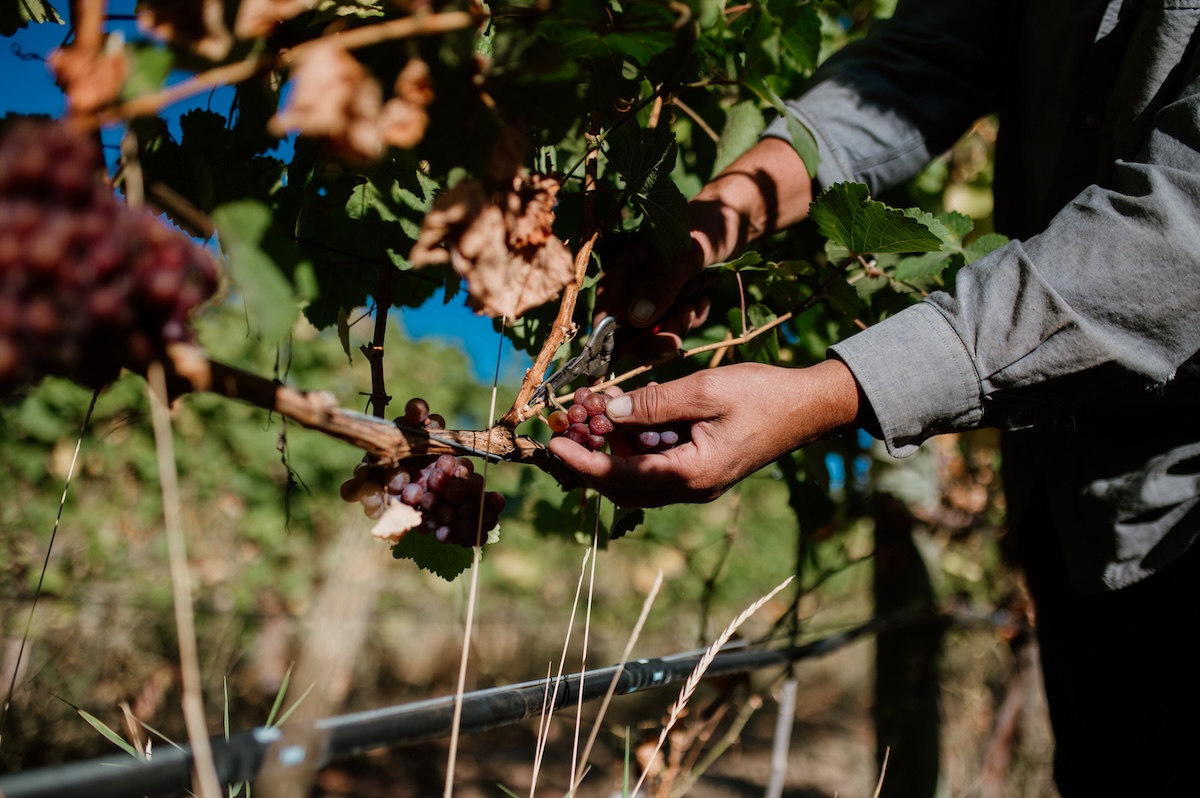
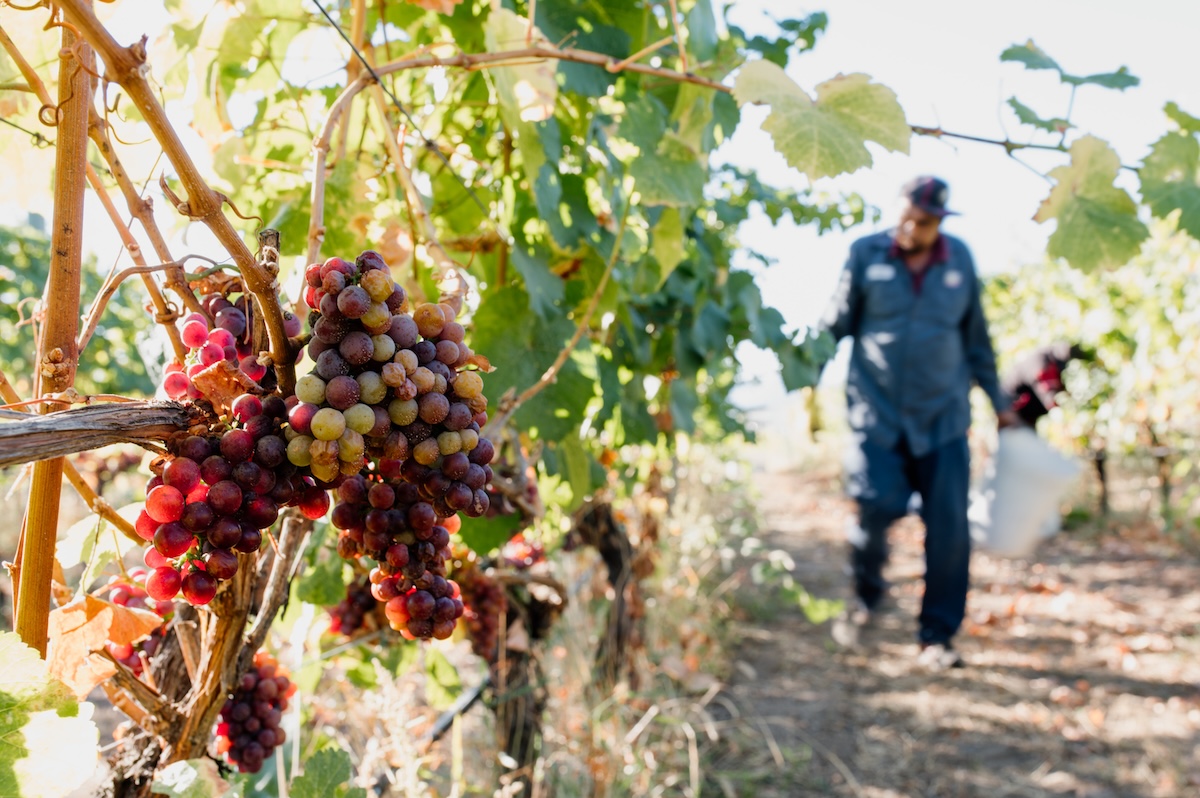
Featured image: Grape harvest at Kalala Organic Estate Winery. Credit: Maylies Lang
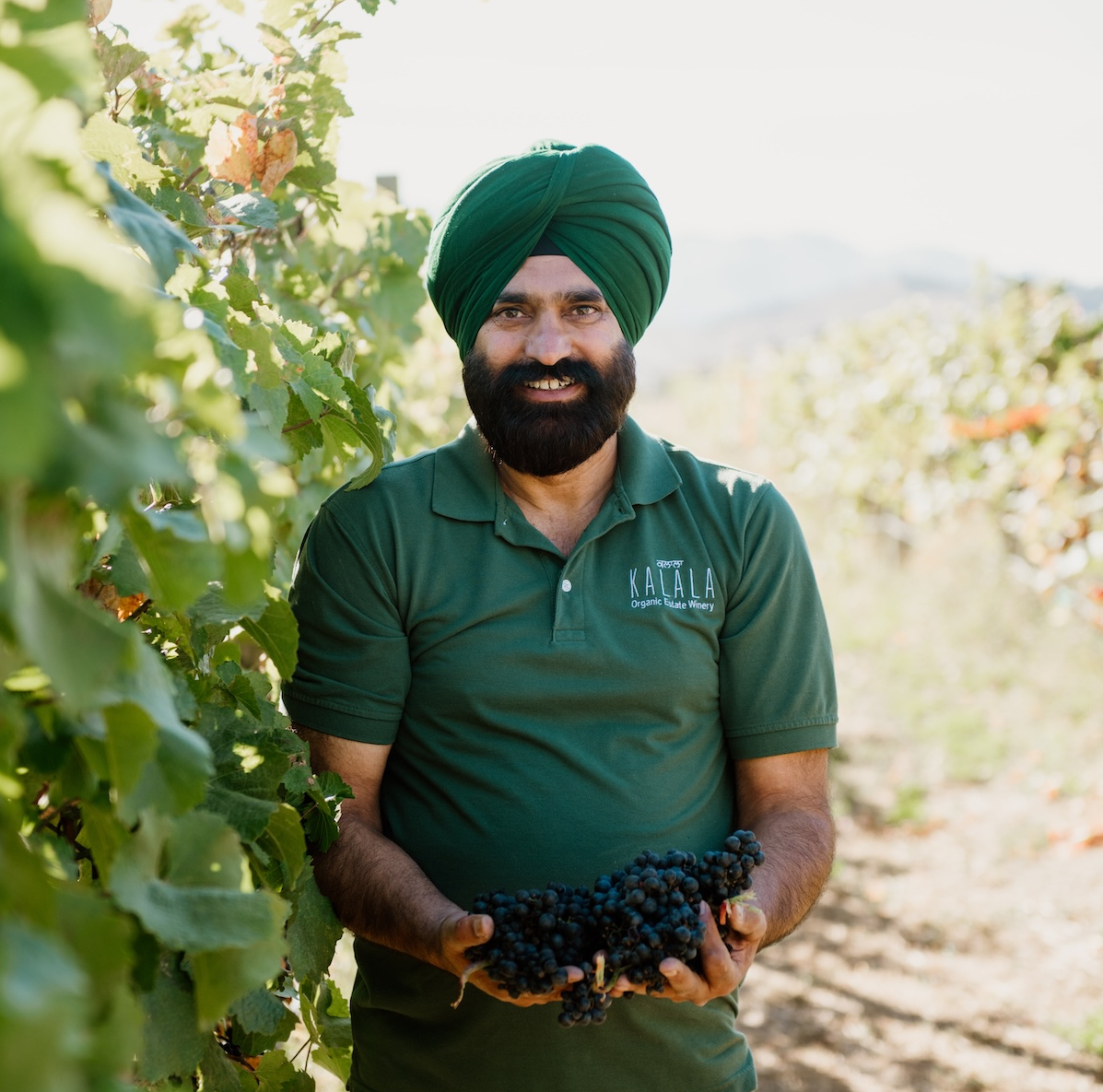
Credit: Maylies Lang.